Monday, March 15, 2010
Sports Training on the other side of the weight room with Sensory-Motor Perception
Follow @mcphoo
Tweet
Does Make me Stronger Make Me a Better Athlete? When athletes talk about getting stronger for their sport, what's the goal behind that quest? Is that because we think that strength is the missing ingredient that will actually make us *better* athletes in a game situation? If so, why? We want to hit the ball harder, throw faster, kick further and we think strength's it? Is that the key part of our game that's weak? And if that's it, is raw strength the real issue?
If we're swinging a bat, and our hips and pelvis move as a unit rather than serially into the swing (bacause they can't move separately), that's a power leak that where more strength mayn't make much of a performance difference without correcting that hip/pelvis issue. If we're going to grab the bar for a deadlift but our wrist mobility is shonky, are we going to be able to control our grip with the strength it takes to make the pull? More leg strength isn't the issue. If we want to kick a football really far but our balance is off so our coordination is a bit askew, more power may continue to be directed away from optimal contact.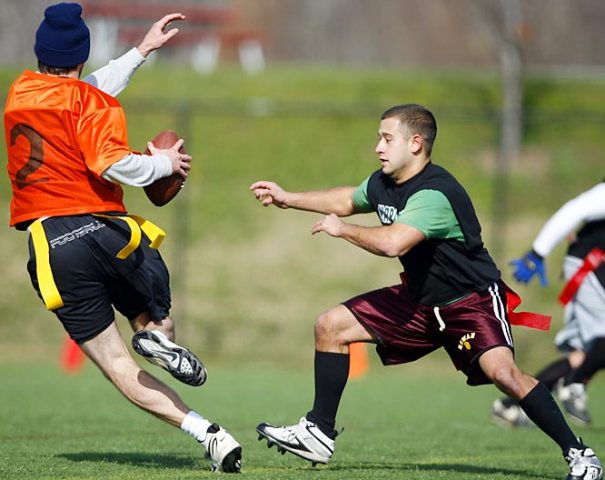
likewise, there's a lot of decision processing going on whether on the court or on the field, right? Our brains are making tons of decisions so quickly from where to put a ball on the opponent's side of the tennis court, to where the best path is to run a ball down the field, to who's open for a shot. If we're not really seeing the field, we can't make optimal decsisions about it.
So maybe we need to consider the sensory-motor connections of visural, vestibular and proprioceptive perception and associated skills to enhance our sports performance training. Each of these systems can be trained deliberately to behave more reflexively to these very normal sports situations.
In the following sections, we'll look at these areas of the sensory-motor processing within our sensory systems AND there'll be some quick self-checks you can run to check parts of these perceptual systems' performance. We'll also consider the time a person would have to put into this program to see real performance change, and i've peppered in links for resources either to doing each bit at a time, or training to put each part together at once.
The goal is that with this overview you can begin to ask the questions - and have some answers - about how to assess yourself in terms of performance, not just strength. You may find that your strength simply improves as a consequence of better work here, too.
Tuning Sensory-Motor Performance.
By way of a quick overview the proprioceptive system, as i've written about at b2d rather a bit, is the monitoring system in our bods that lets us know what's happening to us from a range of awarenesses: pressure, temperature, chemical shifts, elecro-magnetical sensing, and particular for athletic movement, positional and noxious (aka pain in many cases) awareness.
For positional awareness, we're wired up with propriocpetive mechanorecptors ( a special class of mechnoreceptors), with a good many of them being around the joints, the bendy bits of the body (makes sense - good to know where the mobile parts of a limb can be) and in the musles that detect stretch, motion, pressure. This being the case - that these receptors convey alot about the state of our limbs moving in space - the corollary of this is the better a joint can move, or the better the range of motion and the control of that range of motion around a joint, the better the information that joint is putting out.
 Eric Cobb talks about this enriched sensory action as "map clarity" - the more data points the more detailed the map; the more mechanoreceptors available to give positional information the more options the body has about where and how it can go somewhere. If there's restrictions in the ankle or knees so that range of motion is not available there's in effect a sensory deprivation and a performance decrement: the body doesn't tend to go down blind alleys; it makes the best decisions it can based on the available map. Which can mean - you body don't have the resources to step quickly over that stump, you're going down suddenly. Ugh! shock! sprain!
Similarly if an athlete's restricted in their hips for instance (the hip and pelvis behave like a fused unit rather than separate joints) how the heck are they going to perform optimally? What will pay for this lack of mobility? the Low back maybe?
Preliminary Assessment
So one key part of athletic training can be a good movement assessment before any training takes place. An assessment helps discover where an athlete may need to do some work to reduce restrictions in mobility in order to open up better movement options - and thus the athlete has a better set of options for responding to situations without getting hurt when in play: yes the body has a very clear sense of where it is and (b) with lots of range of motion available, has more options for moving the ankle rather than going over on it.
At an even more basic level, mobility work is simply the practice of the joint movements to make sure an athlete can they move the joints well on demand and effortlessly.
Aside: such assessments can also check visual and vestibular performance too.
Movement Quick Check: Here's a simple check you can do with yourself or your athletes to explore joint freedom for greater movement options. Stick a leg out in front of you, and then put the leg out and straight so that it crosses the body where the foot of the outstretched leg goes past the foot of the stance leg. Check in a mirror: is the pelvis torquing around to let the leg reach this far? Now make little circles there with the knee locked out and the leg crossed over: is the pelvis torqued over? still? going up and down? If the pelvis is still and not torqued forward as if moving towards the other leg, in that position at that speed, super. Try going slower and faster. Still good? super duper. If not, that may be a sign that the pelvis and hip don't know how to work independent of each other - and so the mechanoreceptive information is less clear/accurate, and the functional options for movement less optimal. Mobility work can often address this and recover that more discrete hip/pelvis function.
Time to train: every joint in the body takes 10 mins a day, once a day. Can work different speeds/drills on different days.
Roles: So mobility work has two main functions: (1) ensuring optimal signal for optimal options of movement in live situations (Example programs for self-development).; (2) practicing movements in a variety of positions with the joints so that getting into weird (eg accident) type positions are not shocking, but relatively adaptable (program for self-dev)
Vestibular Acuity.
The middle of the neural hierarchy is the inner ear: it is predominantly the balance system of the body. BUT it also relates to motion detection, proprioception and even muscle tone. Everything is interconnected. That's really critical to understand that these systems in the neural hierarchy are not independent of each other: an issue in one has consequences in the other, and multiple systems contribute to different degrees in different contexts to the same thing. Here, for short hand, we're focusing on the balance role of the vestibular system.
The balance system is mainly located in the inner ears. We have two inner ears - one for each ear. That sounds obvious, but just like each eye may be slightly different in strenghts/weaknesses, likewise the inner ears may have different dominances. How well are they behaving in general to support sports movement? And how well are they behaving in concert?
Assessments of the vestibular system may show a discrepency on either side specifically, or generally that there may be some weaknesses. The cool thing is, the balance system can be trained. Intriguingly this doesn't mean stepping onto unstable surfaces. IT may mean skills development on very stable surfaces (see middle of this post) .

Quick Test: Here's an example. Stand on one foot for more than fifteen seconds. Now stand on the other. Is one side more wobbly than the other? Why is that? How common is it for someone on a sports field to have one leg off the ground at a time? So might it be valuable to ensure that one can be as stable as possible in that circumstance?
Time to train: 3x's a week, 10 mins/session, 8 weeks. Then maintenance.
Visual Accuity
At the top of the neural hierarchy is visual acuity - not eye sight, but they get sports vision evaluations to see how they're doing, and they practice visual acuity (here's one example) so that they can respond quickly to what's happening on the field - so their ability to perceive the situation under pressure improves.
When we work on visual accuity, we not only look at the function of the two eyes and how well they're working together, but we also work on improving the time, complexity and distractions that can be processed concurrently for quicker visually lead responses to action in the environment.
Quick Test - check out the near/far drill modelled in the link above.
Time to train: basic drills, 2 mins a day, can be combined with mobility work.
Practice sessions for cognitive load, 15 mins a day, 3times a week, 8 weeks, then maintenance.
Great program for self-development: great visual drills and speed work, too.
Putting This Sensory-Motor Work into Practice: Speed/Quickness:
As said in vision, we work with athletes to improve visual acuity of eye performance like speed of changing focus, but also work on processing dynamically changing visual information more quickly. When we have discrete loaded mobility, balance and visual acuity firing, we can also consider putting these together at "sports speed."
But speed is also a skill, too. Strength and conditioning has for awhile now been looking at sprining mechanics and technique and training - like plyometrics - to improve quickness. All sorts of things like towing a partner or being towed can get into faster turn over.
There are other techniques, too, though, that have to do with putting all the mobility and visual and vestibular accuity to work to move quickly and more efficiently at quickness. So sometimes speed is speed, but sometimes it's being faster in response to something than the opponent.
Speed in Context.
This one seems so obvious - to move fast is a good thing. And that's where our example athlete came in at the beginning: someone who wanted to move faster (i think that's what the fast twitch is about) but the skills described here would be not about making the person faster once they're up and running (how far do they have to go on a field?) but
I've bet guys much younger than i am that i can beat them getting turned around or i can get a faster start off the line from a standing start than they. What's the difference? Technique and practice of technique for moments of change where the technique is efficient and it respect the brilliance that is the athletic ready position.
Strength: what kind of strength. Finally, after all the above neural stuff happens, we might want to come back to the question: so do you really need to be stronger in your current deadlift to be a better socer player?
I generally find that most guys who have been playing for awhile are plenty strong on the teams but their endurance in the last part of the game can flag. So if anything gets added to the program, kettlebells can be great and very efficient for brute strength and stamina: two simple moves - swings and turkish get ups.
Quick Test If ya don't believe me, try this for ten minutes:
- (assuming you know how to swing a kb safely) you swing a heavy kb while your partner TGU's left and right with a medium bell, then swap and keep going non-stop for ten minutes. These two moves have the advantage of also developing hip and lat strength, pretty key for that athletic ready position.
Time to train - 20-40 mins every other day except in season. In season, coach's discretion.
Ask any coach if the strongest athlete in the dressing room is their best athlete on the field.
Taking the Pieces Further: getting more drills and skills and program plans. If the above kinda program sounds interesting to you, beyond the links to various bits above, there's a three day workshop that gives a great intro to self-assessment and practice on this performance pyramid of vision, vestibular, proprioception calledessentials of elite performance (overview).
Some of us also coach this stuff (look for S-phase (review) in the training certifications). If you can't find someone in your neighborhood, i also coach via email/skype. Contact me with the email link at the bottom of this post if you're interested in neural hierarchy for sports training.
Take Away: Better is not necessarily Stronger.
 Assuming the goal is to be a better field player, not just stronger, there may be more and other ways to look at performance than just raw strength. And that OTHER which we may often think of as rather fixed - vision, balance, movement - is highly plastic and trainable. When we start with the nervous system, too, the biomechanics seem to come online, stronger, faster, better.
Update: related new resource (may 2010)
DVD Mini Course - 6.5 hours of the essentials of elite performance workshop on three divds. If you can't make the workshop, or just want to get going on this stuff NOW, this new dvd mini course is a great way to get going. I'll have a full review soon, but in the meantime, there's way more self-tests and practices than covered above. Please check the link for the full nine yards on the details.
Get it, love it, sign up for the essentials workshop or R-phase cert (overview) within 30 days of purchase and get $100 off tuition of either course.
Great way to get a richer sensory-motor training tool box and tune up. Tweet Follow @begin2dig
If we're swinging a bat, and our hips and pelvis move as a unit rather than serially into the swing (bacause they can't move separately), that's a power leak that where more strength mayn't make much of a performance difference without correcting that hip/pelvis issue. If we're going to grab the bar for a deadlift but our wrist mobility is shonky, are we going to be able to control our grip with the strength it takes to make the pull? More leg strength isn't the issue. If we want to kick a football really far but our balance is off so our coordination is a bit askew, more power may continue to be directed away from optimal contact.
likewise, there's a lot of decision processing going on whether on the court or on the field, right? Our brains are making tons of decisions so quickly from where to put a ball on the opponent's side of the tennis court, to where the best path is to run a ball down the field, to who's open for a shot. If we're not really seeing the field, we can't make optimal decsisions about it.
So maybe we need to consider the sensory-motor connections of visural, vestibular and proprioceptive perception and associated skills to enhance our sports performance training. Each of these systems can be trained deliberately to behave more reflexively to these very normal sports situations.
In the following sections, we'll look at these areas of the sensory-motor processing within our sensory systems AND there'll be some quick self-checks you can run to check parts of these perceptual systems' performance. We'll also consider the time a person would have to put into this program to see real performance change, and i've peppered in links for resources either to doing each bit at a time, or training to put each part together at once.
The goal is that with this overview you can begin to ask the questions - and have some answers - about how to assess yourself in terms of performance, not just strength. You may find that your strength simply improves as a consequence of better work here, too.
Tuning Sensory-Motor Performance.
By way of a quick overview the proprioceptive system, as i've written about at b2d rather a bit, is the monitoring system in our bods that lets us know what's happening to us from a range of awarenesses: pressure, temperature, chemical shifts, elecro-magnetical sensing, and particular for athletic movement, positional and noxious (aka pain in many cases) awareness.
For positional awareness, we're wired up with propriocpetive mechanorecptors ( a special class of mechnoreceptors), with a good many of them being around the joints, the bendy bits of the body (makes sense - good to know where the mobile parts of a limb can be) and in the musles that detect stretch, motion, pressure. This being the case - that these receptors convey alot about the state of our limbs moving in space - the corollary of this is the better a joint can move, or the better the range of motion and the control of that range of motion around a joint, the better the information that joint is putting out.
Eric Cobb talks about this enriched sensory action as "map clarity" - the more data points the more detailed the map; the more mechanoreceptors available to give positional information the more options the body has about where and how it can go somewhere. If there's restrictions in the ankle or knees so that range of motion is not available there's in effect a sensory deprivation and a performance decrement: the body doesn't tend to go down blind alleys; it makes the best decisions it can based on the available map. Which can mean - you body don't have the resources to step quickly over that stump, you're going down suddenly. Ugh! shock! sprain!Similarly if an athlete's restricted in their hips for instance (the hip and pelvis behave like a fused unit rather than separate joints) how the heck are they going to perform optimally? What will pay for this lack of mobility? the Low back maybe?
Preliminary Assessment
So one key part of athletic training can be a good movement assessment before any training takes place. An assessment helps discover where an athlete may need to do some work to reduce restrictions in mobility in order to open up better movement options - and thus the athlete has a better set of options for responding to situations without getting hurt when in play: yes the body has a very clear sense of where it is and (b) with lots of range of motion available, has more options for moving the ankle rather than going over on it.
At an even more basic level, mobility work is simply the practice of the joint movements to make sure an athlete can they move the joints well on demand and effortlessly.
Aside: such assessments can also check visual and vestibular performance too.
Movement Quick Check: Here's a simple check you can do with yourself or your athletes to explore joint freedom for greater movement options. Stick a leg out in front of you, and then put the leg out and straight so that it crosses the body where the foot of the outstretched leg goes past the foot of the stance leg. Check in a mirror: is the pelvis torquing around to let the leg reach this far? Now make little circles there with the knee locked out and the leg crossed over: is the pelvis torqued over? still? going up and down? If the pelvis is still and not torqued forward as if moving towards the other leg, in that position at that speed, super. Try going slower and faster. Still good? super duper. If not, that may be a sign that the pelvis and hip don't know how to work independent of each other - and so the mechanoreceptive information is less clear/accurate, and the functional options for movement less optimal. Mobility work can often address this and recover that more discrete hip/pelvis function.
Time to train: every joint in the body takes 10 mins a day, once a day. Can work different speeds/drills on different days.
Roles: So mobility work has two main functions: (1) ensuring optimal signal for optimal options of movement in live situations (Example programs for self-development).; (2) practicing movements in a variety of positions with the joints so that getting into weird (eg accident) type positions are not shocking, but relatively adaptable (program for self-dev)
Vestibular Acuity.
The middle of the neural hierarchy is the inner ear: it is predominantly the balance system of the body. BUT it also relates to motion detection, proprioception and even muscle tone. Everything is interconnected. That's really critical to understand that these systems in the neural hierarchy are not independent of each other: an issue in one has consequences in the other, and multiple systems contribute to different degrees in different contexts to the same thing. Here, for short hand, we're focusing on the balance role of the vestibular system.
The balance system is mainly located in the inner ears. We have two inner ears - one for each
ear. That sounds obvious, but just like each eye may be slightly different in strenghts/weaknesses, likewise the inner ears may have different dominances. How well are they behaving in general to support sports movement? And how well are they behaving in concert?Assessments of the vestibular system may show a discrepency on either side specifically, or generally that there may be some weaknesses. The cool thing is, the balance system can be trained. Intriguingly this doesn't mean stepping onto unstable surfaces. IT may mean skills development on very stable surfaces (see middle of this post) .
Quick Test: Here's an example. Stand on one foot for more than fifteen seconds. Now stand on the other. Is one side more wobbly than the other? Why is that? How common is it for someone on a sports field to have one leg off the ground at a time? So might it be valuable to ensure that one can be as stable as possible in that circumstance?
Time to train: 3x's a week, 10 mins/session, 8 weeks. Then maintenance.
Visual Accuity
At the top of the neural hierarchy is visual acuity - not eye sight, but they get sports vision evaluations to see how they're doing, and they practice visual acuity (here's one example) so that they can respond quickly to what's happening on the field - so their ability to perceive the situation under pressure improves.
When we work on visual accuity, we not only look at the function of the two eyes and how well they're working together, but we also work on improving the time, complexity and distractions that can be processed concurrently for quicker visually lead responses to action in the environment.
Quick Test - check out the near/far drill modelled in the link above.
Time to train: basic drills, 2 mins a day, can be combined with mobility work.
Practice sessions for cognitive load, 15 mins a day, 3times a week, 8 weeks, then maintenance.
Great program for self-development: great visual drills and speed work, too.
Putting This Sensory-Motor Work into Practice: Speed/Quickness:
As said in vision, we work with athletes to improve visual acuity of eye performance like speed of changing focus, but also work on processing dynamically changing visual information more quickly. When we have discrete loaded mobility, balance and visual acuity firing, we can also consider putting these together at "sports speed."
But speed is also a skill, too. Strength and conditioning has for awhile now been looking at sprining mechanics and technique and training - like plyometrics - to improve quickness. All sorts of things like towing a partner or being towed can get into faster turn over.
There are other techniques, too, though, that have to do with putting all the mobility and visual and vestibular accuity to work to move quickly and more efficiently at quickness. So sometimes speed is speed, but sometimes it's being faster in response to something than the opponent.
Speed in Context.
This one seems so obvious - to move fast is a good thing. And that's where our example athlete came in at the beginning: someone who wanted to move faster (i think that's what the fast twitch is about) but the skills described here would be not about making the person faster once they're up and running (how far do they have to go on a field?) but
- how to get off the ground from a fall or tackle quickly,
- foot work on how to follow,
- turn and
- cut,
- techniques for how to accelerate for a critical 10 yards to get past their opponent.
I've bet guys much younger than i am that i can beat them getting turned around or i can get a faster start off the line from a standing start than they. What's the difference? Technique and practice of technique for moments of change where the technique is efficient and it respect the brilliance that is the athletic ready position.
Strength: what kind of strength. Finally, after all the above neural stuff happens, we might want to come back to the question: so do you really need to be stronger in your current deadlift to be a better socer player?
I generally find that most guys who have been playing for awhile are plenty strong on the teams but their endurance in the last part of the game can flag. So if anything gets added to the program, kettlebells can be great and very efficient for brute strength and stamina: two simple moves - swings and turkish get ups.
Quick Test If ya don't believe me, try this for ten minutes:
- (assuming you know how to swing a kb safely) you swing a heavy kb while your partner TGU's left and right with a medium bell, then swap and keep going non-stop for ten minutes. These two moves have the advantage of also developing hip and lat strength, pretty key for that athletic ready position.
Time to train - 20-40 mins every other day except in season. In season, coach's discretion.
Ask any coach if the strongest athlete in the dressing room is their best athlete on the field.
Taking the Pieces Further: getting more drills and skills and program plans. If the above kinda program sounds interesting to you, beyond the links to various bits above, there's a three day workshop that gives a great intro to self-assessment and practice on this performance pyramid of vision, vestibular, proprioception calledessentials of elite performance (overview).
Some of us also coach this stuff (look for S-phase (review) in the training certifications). If you can't find someone in your neighborhood, i also coach via email/skype. Contact me with the email link at the bottom of this post if you're interested in neural hierarchy for sports training.
Take Away: Better is not necessarily Stronger.
Assuming the goal is to be a better field player, not just stronger, there may be more and other ways to look at performance than just raw strength. And that OTHER which we may often think of as rather fixed - vision, balance, movement - is highly plastic and trainable. When we start with the nervous system, too, the biomechanics seem to come online, stronger, faster, better.Update: related new resource (may 2010)
DVD Mini Course - 6.5 hours of the essentials of elite performance workshop on three divds. If you can't make the workshop, or just want to get going on this stuff NOW, this new dvd mini course is a great way to get going. I'll have a full review soon, but in the meantime, there's way more self-tests and practices than covered above. Please check the link for the full nine yards on the details.
Get it, love it, sign up for the essentials workshop or R-phase cert (overview) within 30 days of purchase and get $100 off tuition of either course.
Great way to get a richer sensory-motor training tool box and tune up. Tweet Follow @begin2dig

 PDF
PDF

Friday, March 12, 2010
asha wagner: 24kg weighted pistol, pull up, press success with Greasing the Groove emphasis on Technique
Follow @mcphoo
Tweet
What do you say of a gal who can one arm strict military press a 24kg kettlebell, do a single leg squat (pistol) with that 24, and do a pull up with said 24kg (53lbs) tied to her waist? Anything she wants? Usual introductions, however, would be to Asha Wagner, and this post is an interview with this super athlete. Indeed, I thought this interview was mainly going to be about Asha's Beast work and her tips for other aspiring tamers, but it turns out that there's so much more to Asha's sports-person-ship and outlook on both life and athletic practice that i'm just frickin' inspired by her attitude and approach to sport. I hope you will be too.
For context, then, a bit about the deal with the three particular lifts of the Beast Challenge that initiated connecting with Asha about this piece, and how for some of us, they've become a sinecure of strength.
At every kettlebell RKC certification, Dragon Door pulls out the Beast Challenge opportunity, named after the nickname for the 48kg kettlebell the guys must use. For guys, therefore, the challenge is a pistol (one legged squat), pull up and press with a 48kg kettlebell. For women, the load is 24kg (the women's challenge has recently been renamed the Iron Maiden. No comment). There are under a dozen men who have completed the BC. And so far, it seems, two women.
Statuesque, serene and really nice fire fighter Asha Wagner is one of them. Asha won the challenge in 2008. Not content to sit on her laurels, as it were, just for fun, she casually pistoled both a 32kg and 36kg kettlebell at the cert.
Asha kindly agreed to have a chat about her beast challenge experience, training, where kettlebells (those cannonballs with handles) and athletics fit into her life, and what an RKC certified kb (kettlebell) trainer does for fun.
Asha, would you say you've always been involved in some kind of sport or athletics?
Now to the heart of the matter: you're one of only a couple of women to have done the 24k version of the beast challenge. When/where did you pass that challenge?
 Cool, no? Strength is a skill. How do ya win the iron maiden? practice practice practice.
Take away: there is no spoon; just technique, practice and enjoying the moment.
Related Links
For context, then, a bit about the deal with the three particular lifts of the Beast Challenge that initiated connecting with Asha about this piece, and how for some of us, they've become a sinecure of strength.
At every kettlebell RKC certification, Dragon Door pulls out the Beast Challenge opportunity, named after the nickname for the 48kg kettlebell the guys must use. For guys, therefore, the challenge is a pistol (one legged squat), pull up and press with a 48kg kettlebell. For women, the load is 24kg (the women's challenge has recently been renamed the Iron Maiden. No comment). There are under a dozen men who have completed the BC. And so far, it seems, two women.
Statuesque, serene and really nice fire fighter Asha Wagner is one of them. Asha won the
 challenge in 2008. Not content to sit on her laurels, as it were, just for fun, she casually pistoled both a 32kg and 36kg kettlebell at the cert.
Asha kindly agreed to have a chat about her beast challenge experience, training, where kettlebells (those cannonballs with handles) and athletics fit into her life, and what an RKC certified kb (kettlebell) trainer does for fun.
Asha, would you say you've always been involved in some kind of sport or athletics?
I've been involved in some type of athletics since I was 8 years old - Peewee league baseball 1 year, softball 3 years, basketball 1 year, rode the bench the entire season so I switched over to volleyball after that and stuck with through college. I was first introduced to volleyball when I was 12, but didn't start playing on a team until I was 14. Now I mainly coach volleyball for a club team here called Starlings Oakland, rock climb, and just started playing rugby.Cool. why rugby?
I've always been interested in rugby. It always looked like orchestrated chaos to me. While very physically and mentally challenging, climbing to me is more meditative than sport for me. Now, I'm joining mainly for the comraderie, to be a part of a team, and workout, suffer and celebrate as a group.How has this passion translated into a day job or has it?

I currently work as a firefighter. Firefighting is basically an athletic event.While biathletes have people skiing behind them with guns, i'm not aware of olympic events that include running through burning buildings. You are being modest. Have you or will you however take part in any of the firefighter challenges (the dragging the hose, going up the stairs, dragging the dummy, etc)?
Yes, the Firefighter Combat Challenge is one of the things I'm training for currently. Along the same lines, I'll be participating in a stair climb at the end of this month, 52 stories, full firefighting gear, breathing air from an SCBA bottle. Should be fun.To come back to the role of sports in firefighting...
My involvement in sports has been invaluable in helping to prepare me for firefighting. Beyond working out and becoming physically strong, sports helped me to develop, teamwork and communication skills, discipline, determination and work ethic.How do the above these approaches in particular to fire fighting?
In firefighting we all have specific jobs that need to be accomplished. We have to work as a part of a team. We have to able to effectively communicate our findings, actions and needs to others on the fire ground, especially when conditions change. There will usually be something unexpected that happens, and good communication and problem solving skills go a long way towards mitigating that.When not being Sport Asha, what sets your hair on fire to do?
As a direct result of the workouts I've been through, I'm used to being physically uncomfortable and gutting my way through it. When you're clawing your way with a 100 lbs on your back up a hill so steep you have to grab on to shrubs to keep from falling over backwards, it helps to focus on the moment, forget about the top of the hill, and just be determined to take one more step. That's something I learned from athletics
I also enjoy mountain and road biking, swimming, skateboarding, snowboarding, unicycling, and pretty much anything where I get to get out and move and play.
I love the arts, music reading, hanging out with friends and family, traveling, camping, puzzles and games, again pretty much anything where I get to play and have fun.Great that there's the emphasis on fun. How do you bring that to the volleyball team you coach?
With the kids it's a balancing act. I have the older group of girls in the club, the 18 and unders. I usually throw in a good amount of variety in the drills to keep them engaged. I try to make sure that I compliment as much or more than I criticize. They seem to respond well when they see the other coach and I hop on the court and let our love of the game come through.From what we talked about when we were at the Cert, you've been a volley ball player and are getting into Rugby: where do kettlebells come into this?
The other side of the coin is that we push them very hard. We have high standards and expectations for them, every point, every play. Ten or 15 years from now, they probably won't remember the scores to any of these games, but the life skills and lessons mentioned above will stay with them their whole lives. There will be practices where they are absolutely miserable, but oddly enough when they go away to college and come back to visit, those are always the ones they thank us for.
I didn't find out about kettlebells until a few years after I was done playing competitively.So what year would this be?
I played for Cal Poly San Luis Obispo '94-99Nice observation - i can imagine vball coaches taking notes.
When I was playing in college, I didn't really know what I was doing as far as weight training and conditioning, but I did a whole lot of it. If I had've known about kettlebells then, I would've been down right frightening on the court. The two handed kettlebell swing almost exactly replicates the bottom part of a volleyball approach jump. It teaches to load the hips and maintain balance and core stability through a dynamic movement. It also teaches linking the whole body together to generate power. For me, I always think of my volleyball swing originating at my toes and traveling up my body out through my arm. A more connected and flowing volleyball approach results in a more powerful arm swing. This is very similar to the kettlebell swing.
Although i just started playing rugby, so far kettlebells have helped my speed, agility, jumping in the lineouts, leg drive and core stabilization in the scrum, and most definitely stamina. I've been using Kenneth Jay's Viking Warrior Program for around six months or so and have noticed huge improvements in my recovery rate and muscular endurance. I'm very excited to add in the Viking Push Press [demo's in Return of the Kettlebell -mc] we learned about in RKC II.Have you been able to share these kettlebell protocols with your teammates? what's been their response to kb's?
I've only been practicing with the team for about two weeks now. My role for the time being, is to be a sponge, find out their ways of doing things, and learn as much as I can. I will start bringing a bell out to the pitch to warm up with a few swings before hand. If others are interested in learning, I'll be more than happy to share what I know.You've done both RKC certs now - why? Whay RKC 1? and then why 2?
I love to learn. I was hooked on kettlebells after a week of working out with them on my own, learning from videos and books. One meeting with Joe Sarti, an RKC in San Jose, improved my technique and ability to better utilize my strength.Cool. when was this?
I believe this was 2007 when Joe and I first met up. I wanted to learn more, so I signed up for the RKC I course.So this is June 2008?
February 2008Awesome.
There was an incredible wealth of information contained in the course. All of the instructors were incredibly knowledgeable and very effective teachers as well.
I wanted to learn more, so I signed up for the level II cert. Level II dissected the exercises in level I and gave me a whole new understanding of the movements and their benefits, and introduced a few new exercises that naturally built upon the movements from the one before it. Now, as I'm sure you've guessed, I want to learn more, so I signed up for the CK-FMS course in October.

Now to the heart of the matter: you're one of only a couple of women to have done the 24k version of the beast challenge. When/where did you pass that challenge?
I passed the challenge in 2008 at my level I cert in San Jose.Way to show up, Asha. What inspired you to go for it?
I like a challenge, and it seemed like a good measure of overall strengthDo you still think that it is?
Yes, very much so. While each of the exercises may seem at first glance to be upper or lower body exercises, they are all full body exercises. For instance, I start my military presses with my toes, gripping the ground, and then tense all my muscles in sequence from there on up to minimize strength leakage as much as possible.Lots of questions here: How long did you train for the Challenge? What was your training regimen for each event? Did you come to the challenge knowing that you could carry out each event? - had you tested each event in the challenge at test weight before competing?
My training for the challenge was by no means the most direct and efficient way to accomplish this goal. I guess you you could say i started training for the challenge before I even knew there was a challenge. i had been rock climbing for a few years and wanted to increase my pull up strength for that. i started doing unweighted gtg* pull-ups sets of 5-10 after every call that I went on at work. Gradually I began to add weight up until the point where i was doing sets of 5 pull-ups with a 60 lb pack on my back. this was around 3 years before the challenge.Ii started to develop a little tendonitis in my elbow, most likely from hyperextending on the bottom of the pull up, and not properly engaging my lats, and had to taper off. i still kept rock climbing with some regularity, off and on been working towards a muscle up, as well as really focusing on pulling the kb back down during military presses. That seemed to have reasonably maintained my pull up strength.Sounds cool. Do you remember when you first pressed the 24? What would you say clicked that it went up that day?
[*Note, GTG - short for Grease the Groove, a concept presented by Pavel Tsatsouline in the Naked Warrior, for frequent reps over the course of the day to develop strength in a move -mc]
The second part of it was the press. when i first started with the kettlebells in 2004, the description said that the average woman will start with a 12 kg and the average man will start with a16 kg. Me, being me, ordered the 16 kg. It sat in my basement untouched for 6 months. I could barely press the thing overhead. Then somehow I got a wild hair to pick it up again, watched the Russian Kettlebell Challenge video and used the tips in there to increase my press strength and get an introduction to the swing. The fast tens program in the winter 2005 issue of hard style greatly increased my pressing strength. Then a few years later I did the Enter the Kettlebell program and soon felt it was time for the 24 kg. While waiting for it to come I began doing push presses and cheat assisted presses holding both the 12 kg and 16 kg in one hand. When the 24 arrived, it was heavier than I thought it would be. I began doing long cycle push presses Grease the Groove until i eventually worked up to 1-2 presses every hour and after every call. This is where I met up with Joe Sarti who gave me a lot of good advice on breathing and maintaining body tension during the exercises.
I don't remember the exact day so well, but I do remember maintaining about as much body tension as I could muster.So let me get this straight: you had not EVER pistoled more than the 24, but you HAD been gtg'ing with the 12 and the 16? or mainly the 12?
For the pistol, I used pretty much the same regimen as the other lifts, GTG and adding weight over time. A couple of minor knee injuries kept me from going heavy with the pistols. In fact the most weight i had ever used for a pistol prior to the rkc was my 16 kg. I initially hadn't planned on doing the challenge that day and didn't raise my hand when they asked who was going to do the challenge. When everyone left for lunch I stayed behind, grabbed a 24 kg bell, and found I could pistol it fairly easily.
yuppers, before that day, I had not ever pistoled more than the 16 and before RKC II no more than the 24.And when you say GTG, how many reps, how many times a day would you say? and was that it? just gtg'ing? For how long would you reckon?
I'd been mainly doing 1-3 reps per leg around 6-10 times per day, 3-5 times per week. I had a partial achilles tear last year at work, so I've mainly been focusing on form and technique with the lighter weights while recoveringAlso, if you started with bodyweight pistols, how long would you say it took to get you from your first BW pistol to your 24 at the cert?
I'm not exactly sure on the timeline on this one. I think I started learning the pistol around 2 years prior to the cert. When I first learned the pistol, I wasn't even thinking of the challenge. I had read the description for Pavel's Naked Warrior book and liked the idea of being able to get a full body strength workout with two bodyweight exercises. The challenge just happened to include one of those exercises.Ok that's inspiring. Do you have a favorite event in the challenge? Which is your most challenging and/or least favorite?
Even though I had not done weighted pull ups for a while, I still felt pretty strong from rock climbing. I figured I'd give it a shot and see what happened. The pull up did prove to be tougher than I had expected. After taking the RKC II course I now realize it was much easier to maintain the hollow position with the 60 lb hose pack for pull ups vs having the kettlebell hanging around my waist. This was also long before I realized how much the hollow position and tucking my shoulders into their sockets would've helped my pull ups.
I really like all the events. Once I worked up to a full pistol, my strength increased in that one the quickest.Good to know
The press was the toughest one for me to accomplish.At the RKC II, you pistoled a 32 and a 36, i believe? and you'd like to see the women's event go up to 32kg. Could you expand on that a little bit: why isn't the 24 sufficient?
The 24 isn't sufficient for me simply because, i've accomplished it, i know that I am capable of more, and I like a challenge. I also know that having strength to accomplish this will directly translate into my work and play. When I pistoled the 32 and 36, that was more out of curiosity than anything else. I hadn't been specifically training to lift that weight. For the past two months or so before the cert, I hadn't pistoled anything heavier than 12. I had been using GTG at work, focusing on breathing, body tension and really drawing myself into the bottom of the pistol. When I pistoled the 36, I didn't want to convert it into pounds in my head before hand. I just wanted to go for it and see how it felt. With the tension and balance I had at the bottom, I instantly knew I'd be able to cleanly pistol the weight.Awesome to hear again how much form/technique plays a role in these kind of strength events. That's really cool. It's funny how sometimes when you grab a weight you just know it's going to click and move up - or not. Was it like that for you with the press when you got that?
The press was a bit more of a struggle. For me, getting my elbow higher than my shoulder is the sticking point. If I can get higher than that, then I know I have the press.What are your training tips for gals keen to do the newly named "iron maiden"
This directly translates into firefighting in that we are often called upon to lift in extremely awkward and unstable positions. Most of the things that we lift, don't have weights stamped on them. My goal is to have the balance, core stability, and generate the body tension, that will allow me to perform these awkward lifts, when need, in a safe manner.
My tips for training would be focus less on the weight and more on form, body tension, and breathing. Pavel's Naked Warrior book and DVD were instrumental for me for learning the pistol. GTG is a very simple yet highly effective routine for all three of the lifts.Just out of curiosity how was your hanging pull up at the cert?
The most I weight I used at the cert was hooking a 16 kg with a toe. I'll have to put a lot more work into the hollow position before I really test this one.Ah forgive me - i should have said hanging leg raise - could you speak to that one?
Don't you love those self-revelatory moments? So let me ask more generally, what are your current athletic goals?My hanging leg raise was less than stellar, which was extremely eye opening for me. Climbing had always done a great job of keeping my core in shape, without me really having to think about specifically working those muscles. As I took a bit of time off from climbing to let some minor elbow tendonitis heal, I neglected to continue specifically training my obliques. It wasn't until the cert that I realized how that weakness, along with my tight hammies, was limiting my strength.

Play, have fun, be healthy.Not make the rugby olympic team for 2012 or 16?
When I started playing volleyball in college, my coach used to have a row of picturesFocus on the technique not the weight; focus on the moment, not the stat. That's really potent stuff, Asha. Likely less stressful, too. And so within that frame, where do kb's fit into your regular training practice and why?on his wall of all the volleyball players that had made the school's all time top ten rankings. My goal was to get into the top ten and get my picture on the wall. After a while I soon realized that due to a lot of factors that were beyond my control, I wasn't going to get the playing time to rack up enough stats to be in the top 10. I abandoned that goal and instead focused on making the most out of the time that I was given, squeezing out every play for all it was worth. After my Junior year in college the athletic staff informed me I had the third highest single season hitting percentage in the school's all time history. I finished my college career ranked in the top 10 for single season hitting percentage, career hitting percentage, as well as three categories in the Big West Conference for that season.
So, after all that, now I just tend to focus more on making the most of the time that I'm given.

I tend to change up my main routines every few weeks or so. I like to mix things up. My body seems to respond best to variety in training. I've traditionally used kettlebells for the bulk of those routine. Right now I am primarily using bodyweight strength and conditioning routines. GTG and Viking Warrior are the two constants that are added on top of anything else I'm doing. While I tend to either plateau or get bored with other routines fairly quickly, these two routines have maintained fairly consistent benefits, and I keep them short enough where they still hold my interest.Super. thanks for taking the time Asha. All the best with your practice.
Hope this helps out. If you have any more questions, please let me know. Thanks for all your time and effort.Mein Bitte

Take away: there is no spoon; just technique, practice and enjoying the moment.
Related Links
- the perfect rep quest series
- move or die - why mobility's important
- Getting rid of crap around goals
- check "year end thoughts on RTK" for fawn friday pistoling the 24
- Viking Warrior Conditioning Review/Overview
- RTK, the Viking Push Press and Bone Rhythm
- RKC certification experience
begin2dig (b2d) on Facebook
Tweet
Follow @begin2dig
Thursday, March 11, 2010
Perfect Form Deadlift - at 16m old
Follow @mcphoo
Tweet
Of course if anyone was going to have a great deadlift, it would be Franz and Yoanna Sniderman's Marianna. Look at the natural knee position. Wild.
Awesome, no? A little bit of work tuning the eyes/head position and bam, super girl athlete.
Related Posts
Awesome, no? A little bit of work tuning the eyes/head position and bam, super girl athlete.
Related Posts
- arthrokinetic reflex
- return to the kettlebell front squat
- perfect rep quest series
- move or die
- why never train through pain
Wednesday, March 10, 2010
Brain Health Workouts for Elder Rejuvination: Posit Science
Follow @mcphoo
Tweet
If you have a person in your life/family who's saying they're  feeling a little less sharp, whether hearing things a little less clearly, or processing information a little less slowly, their may be an easy effective way to sharpen up the senses - literally. It's work (embodied in software) by a group at Posit Science (and it's on sale this week).
B2Diggers have heard me write about the Brain That Changes Itself many times. Well, Posit Science is the company founded by one of the authors featured in that book, Michael Merzenich. He's done work on so many ways to understand neural plasticity - how the brain maps and remaps skills onto our neural nets. That we know we are plastic people is in large part down to his founding work.
The software coming from this group is the stuff that has been peer reviewed to deliver what's on the tin. Other brain game nintendo-esque things have not.
I have personally purchased this group's software for elderly family members and been amazed at their response to it. They find the software "more fun than playing solitaire" and they are enpowered refining their neural plastic skills at audio processing, vision, and comprehension. Someone for instance may think they're going deaf and it turns out they're weak in skills they need for sound disambiguation. Skills can be trained. The software makes it easy. ANd this suff works so well because it is tapping skills development to recover cognitive function. THere's a test online a person can take to see what their neurological age is, too, so they can bench mark what a 10-20 year recovery of function would look like.
 Please please, if you have elders in your life who you are experiencing as verging on what might colloquially be called "losing it" - please check out this software.
I'll tell you right up front that the software is not shareware priced, but it's (in some cases less than ) half the price of Photoshop or Microsoft Office retail. When you consider that the software has been demonstrated to gain back 10-20 years of cognitive function, the price of the software against potentially decades more independent living is trivial, is it not?
I strongly recommend the Brain Fitness program in particular.
(that's my affiliate link if you care to use it - but i wouldn't be recommending this stuff if it didn't deliver beyond expectation)
Tweet
Follow @begin2dig
feeling a little less sharp, whether hearing things a little less clearly, or processing information a little less slowly, their may be an easy effective way to sharpen up the senses - literally. It's work (embodied in software) by a group at Posit Science (and it's on sale this week).B2Diggers have heard me write about the Brain That Changes Itself many times. Well, Posit Science is the company founded by one of the authors featured in that book, Michael Merzenich. He's done work on so many ways to understand neural plasticity - how the brain maps and remaps skills onto our neural nets. That we know we are plastic people is in large part down to his founding work.
The software coming from this group is the stuff that has been peer reviewed to deliver what's on the tin. Other brain game nintendo-esque things have not.
I have personally purchased this group's software for elderly family members and been amazed at their response to it. They find the software "more fun than playing solitaire" and they are enpowered refining their neural plastic skills at audio processing, vision, and comprehension. Someone for instance may think they're going deaf and it turns out they're weak in skills they need for sound disambiguation. Skills can be trained. The software makes it easy. ANd this suff works so well because it is tapping skills development to recover cognitive function. THere's a test online a person can take to see what their neurological age is, too, so they can bench mark what a 10-20 year recovery of function would look like.
 Please please, if you have elders in your life who you are experiencing as verging on what might colloquially be called "losing it" - please check out this software.
I'll tell you right up front that the software is not shareware priced, but it's (in some cases less than ) half the price of Photoshop or Microsoft Office retail. When you consider that the software has been demonstrated to gain back 10-20 years of cognitive function, the price of the software against potentially decades more independent living is trivial, is it not?
I strongly recommend the Brain Fitness program in particular.
(that's my affiliate link if you care to use it - but i wouldn't be recommending this stuff if it didn't deliver beyond expectation)
Dr. Merzenich TED Talk
Monday, March 8, 2010
Vibram FiveFingers Performa Sizing Note: Go UP
Follow @mcphoo
Tweet
This is a wee note on sizing Vibram's newish  Women's Performa. This is the all-leather rather slipper like VFF that's like driving gloves for one's feet. Indeed, they only have the rubbery sole bits on the toes, forefoot and heel - hence making them designed "for indoor use only."
Suggested uses are pilates, yoga and "fitness" - whacking a heavy bag is pretty cool too: no straps on top of the foot to get in the way of a good smack. For me, it's wearing indoors when i HATE wearing shoes but the floors are too cold.
The thing is, Vibram suggests that the sizing is the same for the Performa (the guy's version is the Moc) as it is for its Classic and Sprint (for reference, here's a very long post on sizing/fitting VFF's).
Personally, after trying a pair the same size as the classics/sprints - which are generous on me - i've had to go up a size from that. By the numbers, these are the largest fit VFF's i've put on.
I thought trying these that the left foot was fine, and the right foot, the big toe, was giving me the same feeling of tightness that i was experiencing in my initial KSO's - the experience that after months of wear caused me to go for a bigger size when it seemed that my feet got bigger after months and months of wearing vff's (discussed here). It's just one of those things that i KNOW if i say oh it will stretch oh it's just me will mean i end up not wearing the shoes - so back they go to see if the bigger size is better. It was.
Sole News. Not only did they fit - they were a bit snug even so to get on - but in a good way. Another fit plus that surprised is that these slightly larger foot gloves feel better on the bottoms of the shoe than the smaller, more closely fitted ones. it's hard to describe but these are different shoes than the regular VFF's. Regular VFF's have a one piece rubber sole running from heal to toe, and around the arch. In the Performa/Moc, as shown in the image above, the rubbery stuff is separately covering toes, forefoot, heal
In the intial (smaller) pair, i really seemed to *feel* the rubbery stuff on the heels. It wasn't particularly nice - it actually felt a wee bit unevent. When i put the larger size on and did up the elastic a bit, everything felt immediately more familiar and normal. Happily the same size Performa was working both bare foot and with Injinji sox. the one down side is the bit of slack in the heal i've grown accustomed to in the classic is back. sigh. still not the best fitting models of the line. The KSO's -for me anyway - still rock as the best fitting vff's
Stores. This experience surprised me since it had been the kso/flow that needed the size change - not the sprint/classic. Oh well. This kind of try it out and swap as needed is something that makes dealing with a store a Nice Thing and for me, that's what makes city sports in boston a fave vff test spot (i get nothing from city sports to say that - it's just been a good store experience - if you have a shop you like for vff's give it a go; if you're in Oregon, kayak shed is where to head - again, no recompense for saying they just do good service).
If you have a fave VFF shop, please post a comment.
Trying One On. As i said in the previous post about my ill fated efforts with fitting a men's Trek in the current absence of a women's Trek, the leather of these Performa's is delightfully one might say buttery soft - and reputedly highly durable. My road bike shoes are made from kangaroo leather and they have ruled resiliant for a decade (yes sad but i like to buy things that are good enough to only need to buy once, whenever possible). But despite how delightful they are, it's worth perhaps considering trying on a couple sizes rather than assuming that the Classic size will fit you.
Idiosnycratic or General? I can't give you rock solid advice here because it seems my feet no longer follow Vibram's recommendation which says that the flow/kso would be a size smaller than one's classic/sprint. WHile that's exactly how i started, i now take the same size in a Flow and KSO that i do in a Classic and Sprint. And to top that all off it seems the performa's need to be one size up from those. So *IF* you find yourself in the same boat, and would like some lovely loungers or actually want to skip the matt for yoga (like yoga in a hotel room), then travelling with a pair of Performas/Mocs is going to be far more condusive to packing than having to bring a mat as well.
I downward dogged on the hotel carpet quite a bit and was pleased that yup, one really could go without a mat: these things stick in a way that barefeet don't - they slide - and they slide more on carpet when sweaty and sheesh hotel carpets/gyms can be kinda grotty, no? So functional? yes.
Whether i use these as i hope - as a general purpose indoor vff - more than i do the classics right now remains to be seen. But they look and feel pretty durn nice.
Notes to b2d. Please let me know if you've tried Performa's what you use 'em for and what your sizing experience as been.
Related Posts
Women's Performa. This is the all-leather rather slipper like VFF that's like driving gloves for one's feet. Indeed, they only have the rubbery sole bits on the toes, forefoot and heel - hence making them designed "for indoor use only."Suggested uses are pilates, yoga and "fitness" - whacking a heavy bag is pretty cool too: no straps on top of the foot to get in the way of a good smack. For me, it's wearing indoors when i HATE wearing shoes but the floors are too cold.
The thing is, Vibram suggests that the sizing is the same for the Performa (the guy's version is the Moc) as it is for its Classic and Sprint (for reference, here's a very long post on sizing/fitting VFF's).
Personally, after trying a pair the same size as the classics/sprints - which are generous on me - i've had to go up a size from that. By the numbers, these are the largest fit VFF's i've put on.
I thought trying these that the left foot was fine, and the right foot, the big toe, was giving me the same feeling of tightness that i was experiencing in my initial KSO's - the experience that after months of wear caused me to go for a bigger size when it seemed that my feet got bigger after months and months of wearing vff's (discussed here). It's just one of those things that i KNOW if i say oh it will stretch oh it's just me will mean i end up not wearing the shoes - so back they go to see if the bigger size is better. It was.
Sole News. Not only did they fit - they were a bit snug even so to get on - but in a good way. Another fit plus that surprised is that these slightly larger foot gloves feel better on the bottoms of the shoe than the smaller, more closely fitted ones. it's hard to describe but these are different shoes than the regular VFF's. Regular VFF's have a one piece rubber sole running from heal to toe, and around the arch. In the Performa/Moc, as shown in the image above, the rubbery stuff is separately covering toes, forefoot, heal
In the intial (smaller) pair, i really seemed to *feel* the rubbery stuff on the heels. It wasn't particularly nice - it actually felt a wee bit unevent. When i put the larger size on and did up the elastic a bit, everything felt immediately more familiar and normal. Happily the same size Performa was working both bare foot and with Injinji sox. the one down side is the bit of slack in the heal i've grown accustomed to in the classic is back. sigh. still not the best fitting models of the line. The KSO's -for me anyway - still rock as the best fitting vff's
Stores. This experience surprised me since it had been the kso/flow that needed the size change - not the sprint/classic. Oh well. This kind of try it out and swap as needed is something that makes dealing with a store a Nice Thing and for me, that's what makes city sports in boston a fave vff test spot (i get nothing from city sports to say that - it's just been a good store experience - if you have a shop you like for vff's give it a go; if you're in Oregon, kayak shed is where to head - again, no recompense for saying they just do good service).
If you have a fave VFF shop, please post a comment.
Trying One On. As i said in the previous post about my ill fated efforts with fitting a men's Trek in the current absence of a women's Trek, the leather of these Performa's is delightfully one might say buttery soft - and reputedly highly durable. My road bike shoes are made from kangaroo leather and they have ruled resiliant for a decade (yes sad but i like to buy things that are good enough to only need to buy once, whenever possible). But despite how delightful they are, it's worth perhaps considering trying on a couple sizes rather than assuming that the Classic size will fit you.
Idiosnycratic or General? I can't give you rock solid advice here because it seems my feet no longer follow Vibram's recommendation which says that the flow/kso would be a size smaller than one's classic/sprint. WHile that's exactly how i started, i now take the same size in a Flow and KSO that i do in a Classic and Sprint. And to top that all off it seems the performa's need to be one size up from those. So *IF* you find yourself in the same boat, and would like some lovely loungers or actually want to skip the matt for yoga (like yoga in a hotel room), then travelling with a pair of Performas/Mocs is going to be far more condusive to packing than having to bring a mat as well.
I downward dogged on the hotel carpet quite a bit and was pleased that yup, one really could go without a mat: these things stick in a way that barefeet don't - they slide - and they slide more on carpet when sweaty and sheesh hotel carpets/gyms can be kinda grotty, no? So functional? yes.
Whether i use these as i hope - as a general purpose indoor vff - more than i do the classics right now remains to be seen. But they look and feel pretty durn nice.
Notes to b2d. Please let me know if you've tried Performa's what you use 'em for and what your sizing experience as been.
Related Posts
- Do your shoes pass the twist test?
- b2dVibram FiveFingers Article Index
- Why freeing your feet is so important athletically
Thursday, March 4, 2010
KSO Trek, Men's - fitting for women; punting to Performa
Follow @mcphoo
Tweet
So being once again in a town where i always  know i can find Vibram FiveFingers, i hoofed it to City Sports to see if *maybe* a pair of men's KSO Treks would fit. The answer is yes and no: yes the length, one step down from my usual size is fine. This is indeed what @citysports had suggested on twitter when i'd asked. Nice folks. Indeed, i might have even gone for the same size as my current KSO's if they'd had them in stock. But measuring heal to toe of my women's KSO agains this mens - they looked identical in length. So that's the yes part
The No Part. The width at the heal/instep, even with sox on, felt a bit loose. Compared with my regular KSO's which i kept swapping one foot on with one or the other of the Trek, this is just not right. Now they'd probably work ok if necessary, but ya know, knowing the women's will be out in another couple months, i just didn't want to do it - i like how the VFFs fit when they fit, and it's not like these are what you'd call cheap at $125 (just don't ask what they are in GPB; you'll weep you american readers you).
Other Points: Foot Feel; it's different. These are dandy with socks. Without sox, well, there's a lug that runs just at the top of the metatarsals, and i found myself really aware of that without sox on. With sox on it was fine. To me, the shoe felt like it was well designed for exactly what it's designed for: trails. I bet that sole would just chew up the trails. And there's the irony: that leather upper is just so NICE for the look of the shoe, it would be grand to have a regular soled KSO with this upper.
Saying that, the folks i've encountered wearing the KSO Trek like the lug sole for a bit more winter proofing. Dang though that leather/suede is nice. I'm sorry that there (has to be?) is any nylon material on the upper around the toes to allow for toe fit - that of necessity becomes a wet seep point, doesn't it?
Other Points: Insole. For some reason, and Justin Owings at Birthdayshoes.com pointed this out in an email exchange we had about Trek fit: the insole has a stitched vibram label on it. ick in bare feet. Likewise, the leather side of the insole is up rather than the suede side. Wouldn't the suede side be nicer for the bottom of the foot? Just asking. That's the way the Performa's done: suede side up inside. Hmm. Also a point i noticed in my brief time with them, and that Justin notes: the upper feels a bit snugger around the top - me i noticed this only particularly around the big toe. Not uncomfortable, that that's the only feel difference.
If you're interested in more nitty gritty of the Trek, take a look at Justin's full Trek review birthdayshoes. I think it's safe to say he likes 'em.
Please VFF, keep women in mind for ALL your models: Anyway gals, it was supposed to be Feb; now it's slipped to may when a suede leather shoe mayn't be as desireable in the warmer weather as the regular VFF's but if Vibram keeps the same colors for the KSO Trek for women, and you're into KSO's you will want to make this model part of your wardrobe.
As Justin's review says, these are the least obtrusive VFF's - but goodness they just feel so nice. I'm so looking forward to these coming out in women's. Let's hope VFF never does the men's only model thing again.
Addenda: Performa (men's moc)
So while i was at the shop i thought what the heck, i'll try on the performa, the Other Leatherslipper, just for something to wear on cold winter floors at home. Oh my. I literally forgot i had them on at one point walking around the store.
I had sorta written these off as very rather precious VFF's - when would i wear such things as they're not outdoors at all - they're just gym/studio things: answer - when it's too cold to go bare foot on the floors but i love to go barefooting on the floors - and that's a lot of the time recently.
They actually feel so good i can hardly wait to get home and slip out of the boots and into them. WHile they fit like the classic, they do not have the same kind of pull tab thingy elastic string that many folks just cut off so as not to cut into oneself - indeed these feel like they fit better than the classics (more on fit comparisons and FittingS at b2d here).
I can also imagine side kicking a heavy bag with them - something that is no fun to do in any VFF that has a velcro pull tab closure on it. These are just sweet. they disappear. With black sox on they go total ninja stealth feet mode. If i notice anything else about them, i'll post again, but for right now, i'd say they're definitely worth trying on to see if you want them to be part of your attire. Like butta.
Please let me know what you find if you're a gal trying the Trek or if you have the Performa what made you decide to give 'em a go.
Related Posts
know i can find Vibram FiveFingers, i hoofed it to City Sports to see if *maybe* a pair of men's KSO Treks would fit. The answer is yes and no: yes the length, one step down from my usual size is fine. This is indeed what @citysports had suggested on twitter when i'd asked. Nice folks. Indeed, i might have even gone for the same size as my current KSO's if they'd had them in stock. But measuring heal to toe of my women's KSO agains this mens - they looked identical in length. So that's the yes partThe No Part. The width at the heal/instep, even with sox on, felt a bit loose. Compared with my regular KSO's which i kept swapping one foot on with one or the other of the Trek, this is just not right. Now they'd probably work ok if necessary, but ya know, knowing the women's will be out in another couple months, i just didn't want to do it - i like how the VFFs fit when they fit, and it's not like these are what you'd call cheap at $125 (just don't ask what they are in GPB; you'll weep you american readers you).
Other Points: Foot Feel; it's different. These are dandy with
socks. Without sox, well, there's a lug that runs just at the top of the metatarsals, and i found myself really aware of that without sox on. With sox on it was fine. To me, the shoe felt like it was well designed for exactly what it's designed for: trails. I bet that sole would just chew up the trails. And there's the irony: that leather upper is just so NICE for the look of the shoe, it would be grand to have a regular soled KSO with this upper.Saying that, the folks i've encountered wearing the KSO Trek like the lug sole for a bit more winter proofing. Dang though that leather/suede is nice. I'm sorry that there (has to be?) is any nylon material on the upper around the toes to allow for toe fit - that of necessity becomes a wet seep point, doesn't it?
Other Points: Insole. For some reason, and Justin Owings at Birthdayshoes.com pointed this
out in an email exchange we had about Trek fit: the insole has a stitched vibram label on it. ick in bare feet. Likewise, the leather side of the insole is up rather than the suede side. Wouldn't the suede side be nicer for the bottom of the foot? Just asking. That's the way the Performa's done: suede side up inside. Hmm. Also a point i noticed in my brief time with them, and that Justin notes: the upper feels a bit snugger around the top - me i noticed this only particularly around the big toe. Not uncomfortable, that that's the only feel difference.If you're interested in more nitty gritty of the Trek, take a look at Justin's full Trek review birthdayshoes. I think it's safe to say he likes 'em.
Please VFF, keep women in mind for ALL your models: Anyway gals, it was supposed to be Feb; now it's slipped to may when a suede leather shoe mayn't be as desireable in the warmer weather as the regular VFF's but if Vibram keeps the same colors for the KSO Trek for women, and you're into KSO's you will want to make this model part of your wardrobe.
As Justin's review says, these are the least obtrusive VFF's - but goodness they just feel so nice. I'm so looking forward to these coming out in women's. Let's hope VFF never does the men's only model thing again.
Addenda: Performa (men's moc)
So while i was at the shop i thought what the heck, i'll try on the performa, the Other Leather
slipper, just for something to wear on cold winter floors at home. Oh my. I literally forgot i had them on at one point walking around the store.I had sorta written these off as very rather precious VFF's - when would i wear such things as they're not outdoors at all - they're just gym/studio things: answer - when it's too cold to go bare foot on the floors but i love to go barefooting on the floors - and that's a lot of the time recently.
They actually feel so good i can hardly wait to get home and slip out of the boots and into them. WHile they fit like the classic, they do not have the same kind of pull tab thingy elastic string that many folks just cut off so as not to cut into oneself - indeed these feel like they fit better than the classics (more on fit comparisons and FittingS at b2d here).
I can also imagine side kicking a heavy bag with them - something that is no fun to do in any VFF that has a velcro pull tab closure on it. These are just sweet. they disappear. With black sox on they go total ninja stealth feet mode. If i notice anything else about them, i'll post again, but for right now, i'd say they're definitely worth trying on to see if you want them to be part of your attire. Like butta.
Please let me know what you find if you're a gal trying the Trek or if you have the Performa what made you decide to give 'em a go.
Related Posts
- How to Fit vff's of all stripes
- Wearing a year on - the changing foot
- ALL b2d VFF articles
- Examples of running barefoot vs in any kind of shoe
- free your feet
Tuesday, March 2, 2010
Michael Castrogiovanni: Athleticism in Taking Kettlebells out of the Box
Follow @mcphoo
Tweet
Beautiful Strength. Kettlebells are heavy iron balls with handles. They are great for strength and conditioning work. They look like this:

Indeed, some of us have spent money to learn how to teach people how to use these things safely. Mainly by learning how to swing them between our legs up to above our heads in an arc. A simple move, but folks who watch this and do not know the technique, that simple gesture is pretty freaky. But let's say you've learned the techniques and you're out there practicing kb's - Michael Castrogiovani, an amazingly fit guy, RKC Team Lead, and creative athlete, makes the rather poignant observation is that all the movement happens in that same body zone. Not ot put to fine a point on it: between the legs. And so Michael asks, what happens if we move outside that box?
Athleticism & Strength. There was an interesting theme of discussion at a recent kettlebell certification course, the RKC II - it was athleticism. Athleticism had been ascribed to kettlebell practice, and so the question came up, ok what's athleticism. Fluid movement. Effortless looking movement - making movement look beautiful and easy.
The above video of Castrogiovanni seems a pretty cool example of athleticism, with kettlebells as the tool to let it be demonstrated. Beautiful, isn't it?
Delight. Awhile ago i wrote a post about the rarity of delight especially in one's practice. The live demo that Michael put on with with fellow RKC TL Jeremy Layport was that.
If you get a chance to work with Michael or to see him juggle or kb toss, you'll be delighted, surprised and no doubt inspired by the athleticism. A new way to think about heavy objects moving through space.
Related Posts
Update - Michael has agreed to an interview for b2d on his work with tossing kb's, so will look forward to that in the near future. Tweet Follow @begin2dig
Indeed, some of us have spent money to learn how to teach people how to use these things safely. Mainly by learning how to swing them between our legs up to above our heads in an arc. A simple move, but folks who watch this and do not know the technique, that simple gesture is pretty freaky. But let's say you've learned the techniques and you're out there practicing kb's - Michael Castrogiovani, an amazingly fit guy, RKC Team Lead, and creative athlete, makes the rather poignant observation is that all the movement happens in that same body zone. Not ot put to fine a point on it: between the legs. And so Michael asks, what happens if we move outside that box?
Athleticism & Strength. There was an interesting theme of discussion at a recent kettlebell certification course, the RKC II - it was athleticism. Athleticism had been ascribed to kettlebell practice, and so the question came up, ok what's athleticism. Fluid movement. Effortless looking movement - making movement look beautiful and easy.
The above video of Castrogiovanni seems a pretty cool example of athleticism, with kettlebells as the tool to let it be demonstrated. Beautiful, isn't it?
Delight. Awhile ago i wrote a post about the rarity of delight especially in one's practice. The live demo that Michael put on with with fellow RKC TL Jeremy Layport was that.
If you get a chance to work with Michael or to see him juggle or kb toss, you'll be delighted, surprised and no doubt inspired by the athleticism. A new way to think about heavy objects moving through space.
Related Posts
Update - Michael has agreed to an interview for b2d on his work with tossing kb's, so will look forward to that in the near future. Tweet Follow @begin2dig
Thursday, February 25, 2010
michael jackson's "this is it" - amazing example of 10,000 hours/reps for expertise
Follow @mcphoo
Tweet
This post is sort of about Michael Jackson. What's michael jackson got to do with a blog about wellbeing and being well? it turns out, there ain't no denying, he is the embodiment of talent combined with practice practice practice. If 10,000 hours is the minimum, then Jackson was an expert in performance - of moving his body and music - by the time he was 11 - 15 at the outside (calculations below). While his performance videos over the past - gosh - decade? have looked like charactertures of himself, his posthumous This is It, showing him working and working physically in versions of tunes demonstrates a fluidity and casualness of expertise reminiscent of another wiry little guy/athlete/dancer, Fred Astaire. And i can't believe i'm saying this. But credit and awe where it's due.
This meditation started on a long long flight from the UK to San Jos. i thought i'd listen to some tunes while working. "This is IT" the material put together after (very right after) Jackson's death to give a sense of Jackson's planned London shows was on. I have not considered myself to be a michael jackson fan, but i have to tell ya, seeing him *work* with a live band and dancers easily half his age, i was amazed.
Unfortunately seeing one youtube snippet doesn't do it (i don't think; it didn't for me seeing the promos for this.)
Ya have to see the continuous movement from work to work - as well as the working on. For what?
A fifty year old skinny man, let's face it, moving more fluidly than his very muscled, virile male cadre. The contrast is intriguing. One might assume that in order to do the moves, leaps and so on of the boys on set, that one would need to have their bowling ball shoulders. Well it seems not.
What may be hard to grasp unless you've tried it is that just walking at a clip and singing is no small thing. Give it a go. Now change the walking to fancy choreography. This guy is pretty sonically perfect while pulling off complex movements and NOT ever sounding out of breath. Who else doesn't look like "and now i'm gonna dance" - Even the mighty impresario Prince doesn't have the movement integrated into his being, i mean does he? no. He *looks* like he's dancing as opposed to well just being himself. Like Federer with a racquet?
What's that video he did with his sister - black and white, somewhere in space - most expensive video ever made? Scream, right. thank you google. - watch the two of them move - she's very good, but he's well, even more very good. Ya may not like all his music, but anyone who studies movement at any level, appreciates form, athleticism, coordination, has to be just a little slack jawed.
This is It is an opportunity to see at least a sense of where practice meets performance as effortlessness. Talk about the four parts of efficiency.
Tension/Relaxation/thousands of thousands of times.
How is it that it seems instantly one can tell Michael Jackson's signature dance moves when so many others repeat them? That smoothness that seems no one else has - and that he's always had.
How about practicing for hours at a time a day, starting at 5 years old?
The stories of how driven his brothers, and especially he was (by his dad), to practice practice practice, pay off.
As said, at that rate, not unlike Mozart set to practice at age 6, Jackson would have had the 10000 hours in with his brothers to be expert at performing and moving by the time he was 15 at the outside: let's average his daily grind out to 3hrs a day by 350 (assume something stops on sundays), that's 1050 hours. *10, 10500 hours
Looking at video of jackson at 15 he was already silky silky smooth.
Expert no kidding. No wonder watching him rehearse for the o2 shows is like a master class in precision detail. One of the musicians complements him for knowing his records so precisely. I thought, c'mon he wrote them; of course he knows them, so likely something else is meant - and when you see the film, it's more like the control he has - we never see him play an instrument - i have no idea if he plays anything. but we do hear him simulate a bass rif perfectly in terms of the tones he wants from line.
But before i wax further about the music, let me come back to the movement.
between him and his troope
bigness: it's all for show.
Male ballet dancers have big legs and big butts. perhaps that's all the jumping.
Fred Astaire was not big. But oh is he smooth. Smoother than gene kelley, donald o'connor, name it from that era.
Michael Jackson, in his own ilk, displays that.
I own when i had seen clips of his work previously i'd thought it repetetive - everything a reiteration of thriller on, but again, watching him rehearse, that just didn't seem to be the case. Signature moves but in a far more fluid context - or something.
You see him inventing moves with his lads and it's just SO effortless it feels a little inhuman. How did he do that? where did that come from - and you can feel the young guns catching the move, repeating it, but it's heavier for sure. despite the younger, faster reflexes.
I did not expect to be impressed, little own watch this film with attention.
I still don't understand the obsessive adoration especially of his dance group, many of whom were not even alive when thriller came out, to say nothing of his motown work.
but no matter what my response to jackson may be on so many levels, watching him rehearse/perform with his peers - the folks designing the show (which looks like it would have been an awesome spectacle -in a good way), there's no denying this rather magnificent example of motor learning, neural patterning, those several sets of ten thousand hours of work combined with some not small raw talent, into this embodiment of physical, performance excellence.
He's 12 in the above clip for "i want you back" Expert? For a real treat - 5 years later with Cher. Goodness. On Larry King, after Jackson's death, Cher said she was gobsmacked by his talent (ok she didn't say gobsmacked) and how it's his movement - the way he danced that was so amazing - and how he made her look good when she couldn't dance. Expertise again? DO watch her moving next to him. He's all over the place, and she's barely moving. But unless you were watching for it, would you see that? You do see a moonwalk precursor towards the end. oh heck here it is.
it's not a snatch test, but wow.
The point of this post?
Just i guess that it's amazing how one can be taken by surprise by excellence - i really had no idea this guy was THAT good, but malcolm gladwell i think missed a trick not having his profile in Outliers, too.
I don't know if having spent some time looking at motor learning, developing patterns, ideas on expertise development, 10,000 towards the perfect rep quest, etc, is what lead me to focus on this film on this long flight tonight, or just anyone seeing this film that is just one consecutive stream would be so moved.
But, to my surprise, i encourage you, if you're interested in athleticism and grace, and just sheer talent, check out This Is It, and please let me know what you think. Tweet Follow @begin2dig
This meditation started on a long long flight from the UK to San Jos. i thought i'd listen to some tunes while working. "This is IT" the material put together after (very right after) Jackson's death to give a sense of Jackson's planned London shows was on. I have not considered myself to be a michael jackson fan, but i have to tell ya, seeing him *work* with a live band and dancers easily half his age, i was amazed.
Unfortunately seeing one youtube snippet doesn't do it (i don't think; it didn't for me seeing the promos for this.)
Ya have to see the continuous movement from work to work - as well as the working on. For what?
A fifty year old skinny man, let's face it, moving more fluidly than his very muscled, virile male cadre. The contrast is intriguing. One might assume that in order to do the moves, leaps and so on of the boys on set, that one would need to have their bowling ball shoulders. Well it seems not.
What may be hard to grasp unless you've tried it is that just walking at a clip and singing is no small thing. Give it a go. Now change the walking to fancy choreography. This guy is pretty sonically perfect while pulling off complex movements and NOT ever sounding out of breath. Who else doesn't look like "and now i'm gonna dance" - Even the mighty impresario Prince doesn't have the movement integrated into his being, i mean does he? no. He *looks* like he's dancing as opposed to well just being himself. Like Federer with a racquet?
What's that video he did with his sister - black and white, somewhere in space - most expensive video ever made? Scream, right. thank you google. - watch the two of them move - she's very good, but he's well, even more very good. Ya may not like all his music, but anyone who studies movement at any level, appreciates form, athleticism, coordination, has to be just a little slack jawed.
This is It is an opportunity to see at least a sense of where practice meets performance as effortlessness. Talk about the four parts of efficiency.
Tension/Relaxation/thousands of thousands of times.
How is it that it seems instantly one can tell Michael Jackson's signature dance moves when so many others repeat them? That smoothness that seems no one else has - and that he's always had.
How about practicing for hours at a time a day, starting at 5 years old?
The stories of how driven his brothers, and especially he was (by his dad), to practice practice practice, pay off.
As said, at that rate, not unlike Mozart set to practice at age 6, Jackson would have had the 10000 hours in with his brothers to be expert at performing and moving by the time he was 15 at the outside: let's average his daily grind out to 3hrs a day by 350 (assume something stops on sundays), that's 1050 hours. *10, 10500 hours
Looking at video of jackson at 15 he was already silky silky smooth.
Expert no kidding. No wonder watching him rehearse for the o2 shows is like a master class in precision detail. One of the musicians complements him for knowing his records so precisely. I thought, c'mon he wrote them; of course he knows them, so likely something else is meant - and when you see the film, it's more like the control he has - we never see him play an instrument - i have no idea if he plays anything. but we do hear him simulate a bass rif perfectly in terms of the tones he wants from line.
But before i wax further about the music, let me come back to the movement.
between him and his troope
bigness: it's all for show.
Male ballet dancers have big legs and big butts. perhaps that's all the jumping.
Fred Astaire was not big. But oh is he smooth. Smoother than gene kelley, donald o'connor, name it from that era.
Michael Jackson, in his own ilk, displays that.
I own when i had seen clips of his work previously i'd thought it repetetive - everything a reiteration of thriller on, but again, watching him rehearse, that just didn't seem to be the case. Signature moves but in a far more fluid context - or something.
You see him inventing moves with his lads and it's just SO effortless it feels a little inhuman. How did he do that? where did that come from - and you can feel the young guns catching the move, repeating it, but it's heavier for sure. despite the younger, faster reflexes.
I did not expect to be impressed, little own watch this film with attention.
I still don't understand the obsessive adoration especially of his dance group, many of whom were not even alive when thriller came out, to say nothing of his motown work.
but no matter what my response to jackson may be on so many levels, watching him rehearse/perform with his peers - the folks designing the show (which looks like it would have been an awesome spectacle -in a good way), there's no denying this rather magnificent example of motor learning, neural patterning, those several sets of ten thousand hours of work combined with some not small raw talent, into this embodiment of physical, performance excellence.
He's 12 in the above clip for "i want you back" Expert? For a real treat - 5 years later with Cher. Goodness. On Larry King, after Jackson's death, Cher said she was gobsmacked by his talent (ok she didn't say gobsmacked) and how it's his movement - the way he danced that was so amazing - and how he made her look good when she couldn't dance. Expertise again? DO watch her moving next to him. He's all over the place, and she's barely moving. But unless you were watching for it, would you see that? You do see a moonwalk precursor towards the end. oh heck here it is.
it's not a snatch test, but wow.
The point of this post?
Just i guess that it's amazing how one can be taken by surprise by excellence - i really had no idea this guy was THAT good, but malcolm gladwell i think missed a trick not having his profile in Outliers, too.
I don't know if having spent some time looking at motor learning, developing patterns, ideas on expertise development, 10,000 towards the perfect rep quest, etc, is what lead me to focus on this film on this long flight tonight, or just anyone seeing this film that is just one consecutive stream would be so moved.
But, to my surprise, i encourage you, if you're interested in athleticism and grace, and just sheer talent, check out This Is It, and please let me know what you think. Tweet Follow @begin2dig
Tuesday, February 23, 2010
mc's balsamic vinegar diet: fat loss xtreme taste delight
Follow @mcphoo
Tweet
Diets as a regular approach to body comp, as opposed to good nutrition practices, are bad. They're evil. They show no respect for the complexity of us as humans. They say if you just eat this magic way you'll get the body you want. They have no respect for the neurological trespass that radical changes can invoke when broached without preparation or understanding: that for someone struggling with weight for a long time, it's rarely just about the food.
We see proof of this all the time: we know that folks who diet can get stuck in a cycle of deprivation/retaliation. Martha Beck describes this practically split personality response to the diet (a code word for denial) in here fabulous book about approaches to getting one's head right for food change in The Four Day Win.
In Beck's approach, one's way to "thinner peace" as she puts it, is by helping one's self prep for the kind of changes to habits a shift in food consumption really triggers, and offers strategies to help get ready for the change.
I've written about the cost of change before: we are rewiring ourselves, literally, both hedonically (our habits for pleasure/satisfaction/sufficiency) and homeostatically (what hormones for instance get triggered when to say "you're hungry; go get carbs). I really like Susan Roberts' approach to this shifting of "instincts" as getting one with what's going on inside and having some mercy towards oneself that there are reasons we're so driven to consume, and that changing these takes time.
It's just not only about the food (as i've said before).
And folks here know that my favorite approaches to getting knowledgable about nutrition is precision nutrition (why), and that i'm also intrigued with eat stop eat as a complementary strategy.
All good.
So where does balsamic vinegar come into it?
Well, whether you're getting set to make weight as an athlete or getting ready for a special event, or just want to kick start the sanity of a diet with some self-inspiration, there are times when one may wish to crash diet. Pray these are rare. Here's my own example: i'm getting ready for an event; i was away for more than a week on the road and ate terribly. And i know how to manage road food, so won't go into why this week was a bust, but i've been paying for it since, and i want to get back to the right weight for the event. Shallow, but there it is.
 So, what's the best way to do this? Well i don't know, but the way i do it is to turn to Lyle McDonald's Rapid Fat Loss Diet. McDonald offers the same caveats: a crash diet is a short-ish term thing; it is not a way of life, but there are times (not one's life) when drastic measures may be appropriate.
By drastic, we're talking what's usually known as a Protein Sparing Diet, with a few mods. The best part of the book is really the discussions around how to figure out how long to be on this, how to come off it, and how to gage what you need, why, and strategies to optimize your *short term* practice of this.
The diet part is largely getting your daily protein requirements from very lean sources (including protein powder), doing a multivitamin and calcium, doing your algae or fish oils to get the right fats, and eating all the greens you want. Leafy greens don't really add up calorically to a hill of beans. Well, literally they don't.
We're getting closer to the balsamic
Just eating a piece of protein is not so filling. However, what i've been finding is that raw leafy greens from salad greens to baby spinach, and throwing in some sprouts, is not only overwhelming to the eye (as in, 'that's a lot of food'), it's also slow going to chew. And that's great!
Normally, i'd put olive oil and balsamic on a set of veg like this, but that oil is too dear right now since it's fat i'm trying to burn, so for the first time i've been exploring well, what about just the balsamic? Oh wow.
Now, when i say balsamic here, i mean some really nice balsamic (what is balsamic?).
Getting Intrigued
Yes, like everything else made in the world, we can Get Intrigued about a particular food product. There are various types of balsamics just as there are wines and olive oils. Having had the pleasure to travel to spain at one point i got to try a bunch and learned about this incredible condoment. This is aged, pressed grapes. It's sweet and clean and oh so nice with just a hint of tartness. And also as with all things, the most expensive doesn't always mean the best either. There's a supermarket brand in the UK - selfridges - which is very very nice. And surprisingly another supermarket, waitrose, makes one too, that rivals more name brands. To my taste anyway.
AND the best thing is, it works on its own without the olive oil's fruity complement. Drizzle some of the really nice stuff on this stack of leafy greenery and it goes from a mouth full of fodder to something really quite delicious.
There are probably tons of chemical reasons for why the vinegar part of the balsamic is reacting with the lettuce to begin to cook it, and react with it, but oy, let me tell you, it's a way to make that plate of greens desireable.
Slow Down, Chew: create taste sensation and lasting delight
WHich brings us to two other great food tips we hear all the time: chew the food a lot, and eat slowly. Why? well, the mastication process brings out the flavours of the foods, and if you have a variety of greens and sprouts and balsamic notes on a plate, squishing, crushing, chewing those leaves cracks open their flavours. And heck, if you're on such thin gruel as this calorically, making a meal last as long as possible is also a good thing.
Indeed, concentrating on the food, tastes and flavours is another rewiring step that has been shown apparently to help people eat less. On this diet, no problem, one is eating less BUT in doing so, we're learning habits to carry back to Sane Eating to continue to get more from less.
Tucking Into Tastes.
Perhaps when one is so calorically restricted, creating savoriness and sweetness and just flavourfulness is truly a great practice to develop - chewing goes a long way; seasoning takes that a bit further - and while perhaps motivated by a keen focus on fat burning for the moment, for whatever short term necessary evil goal requires this (or possibly it's an aesetic rather than aesthetic one), these are useful habits to take back towards as said that sane eating (i mentioned precision nutrition if you're not sure what that looks like - here's a free ebook of most of it).
So if you find yourself in a place where you need to get a fat drop happening fast, by all means, consider the Rapid Fat Loss Diet, and bring the good quality Balsamic to the table.
And when you get a head start on where you need to go - really the time limits discussed in the book are IMPORTANT - to look at refeeds, duration, etc, and just stopping it - there are some great approaches, as said: pn, eat stop eat. All good, all sane, all healthy habits based.
Personally, i can hardly wait to get back to real eating, but balsamic and loads of leaves has been a revelation.
Related Links
Note:
A reminder, too, that Brad Pilon's free teleseminar is Feb 24 - the free slides that just got mailed around about calorie cutting for weight loss related to height and only height is worth the sign up alone. That's a head spinner. Tweet Follow @begin2dig
We see proof of this all the time: we know that folks who diet can get stuck in a cycle of deprivation/retaliation. Martha Beck describes this practically split personality response to the diet (a code word for denial) in here fabulous book about approaches to getting one's head right for food change in The Four Day Win.
In Beck's approach, one's way to "thinner peace" as she puts it, is by helping one's self prep for the kind of changes to habits a shift in food consumption really triggers, and offers strategies to help get ready for the change.
I've written about the cost of change before: we are rewiring ourselves, literally, both hedonically
(our habits for pleasure/satisfaction/sufficiency) and homeostatically (what hormones for instance get triggered when to say "you're hungry; go get carbs). I really like Susan Roberts' approach to this shifting of "instincts" as getting one with what's going on inside and having some mercy towards oneself that there are reasons we're so driven to consume, and that changing these takes time.It's just not only about the food (as i've said before).
And folks here know that my favorite approaches to getting knowledgable about nutrition is precision nutrition (why), and that i'm also intrigued with eat stop eat as a complementary strategy.
All good.
So where does balsamic vinegar come into it?
Well, whether you're getting set to make weight as an athlete or getting ready for a special event, or just want to kick start the sanity of a diet with some self-inspiration, there are times when one may wish to crash diet. Pray these are rare. Here's my own example: i'm getting ready for an event; i was away for more than a week on the road and ate terribly. And i know how to manage road food, so won't go into why this week was a bust, but i've been paying for it since, and i want to get back to the right weight for the event. Shallow, but there it is.
So, what's the best way to do this? Well i don't know, but the way i do it is to turn to Lyle McDonald's Rapid Fat Loss Diet. McDonald offers the same caveats: a crash diet is a short-ish term thing; it is not a way of life, but there are times (not one's life) when drastic measures may be appropriate.By drastic, we're talking what's usually known as a Protein Sparing Diet, with a few mods. The best part of the book is really the discussions around how to figure out how long to be on this, how to come off it, and how to gage what you need, why, and strategies to optimize your *short term* practice of this.
The diet part is largely getting your daily protein requirements from very lean sources (including protein powder), doing a multivitamin and calcium, doing your algae or fish oils to get the right fats, and eating all the greens you want. Leafy greens don't really add up calorically to a hill of beans. Well, literally they don't.
We're getting closer to the balsamic
Just eating a piece of protein is not so filling. However, what i've been finding is that raw leafy greens from salad greens to baby spinach, and throwing in some sprouts, is not only overwhelming to the eye (as in, 'that's a lot of food'), it's also slow going to chew. And that's great!
Normally, i'd put olive oil and balsamic on a set of veg like this, but that oil is too dear right now since it's fat i'm trying to burn, so for the first time i've been exploring well, what about just the balsamic? Oh wow.
Now, when i say balsamic here, i mean some really nice balsamic (what is balsamic?).
Getting Intrigued
Yes, like everything else made in the world, we can Get Intrigued about a particular food product. There are various types of balsamics just as there are wines and olive oils. Having had the pleasure to travel to spain at one point i got to try a bunch and learned about this incredible condoment. This is aged, pressed grapes. It's sweet and clean and oh so nice with just a hint of tartness. And also as with all things, the most expensive doesn't always mean the best either. There's a supermarket brand in the UK - selfridges - which is very very nice. And surprisingly another supermarket, waitrose, makes one too, that rivals more name brands. To my taste anyway.
AND the best thing is, it works on its own without the olive oil's fruity complement. Drizzle some of the really nice stuff on this stack of leafy greenery and it goes from a mouth full of fodder to something really quite delicious.
There are probably tons of chemical reasons for why the vinegar part of the balsamic is reacting with the lettuce to begin to cook it, and react with it, but oy, let me tell you, it's a way to make that plate of greens desireable.
Slow Down, Chew: create taste sensation and lasting delight
WHich brings us to two other great food tips we hear all the time: chew the food a lot, and eat slowly. Why? well, the mastication process brings out the flavours of the foods, and if you have a variety of greens and sprouts and balsamic notes on a plate, squishing, crushing, chewing those leaves cracks open their flavours. And heck, if you're on such thin gruel as this calorically, making a meal last as long as possible is also a good thing.
Indeed, concentrating on the food, tastes and flavours is another rewiring step that has been shown apparently to help people eat less. On this diet, no problem, one is eating less BUT in doing so, we're learning habits to carry back to Sane Eating to continue to get more from less.
Tucking Into Tastes.
Perhaps when one is so calorically restricted, creating savoriness and sweetness and just flavourfulness is truly a great practice to develop - chewing goes a long way; seasoning takes that a bit further - and while perhaps motivated by a keen focus on fat burning for the moment, for whatever short term necessary evil goal requires this (or possibly it's an aesetic rather than aesthetic one), these are useful habits to take back towards as said that sane eating (i mentioned precision nutrition if you're not sure what that looks like - here's a free ebook of most of it).
So if you find yourself in a place where you need to get a fat drop happening fast, by all means, consider the Rapid Fat Loss Diet, and bring the good quality Balsamic to the table.
And when you get a head start on where you need to go - really the time limits discussed in the book are IMPORTANT - to look at refeeds, duration, etc, and just stopping it - there are some great approaches, as said: pn, eat stop eat. All good, all sane, all healthy habits based.
Personally, i can hardly wait to get back to real eating, but balsamic and loads of leaves has been a revelation.
Related Links
- Edeli: a great place to get beautiful olive oils if you're in the UK (no relationship to this company; just like their stuff)
- respect the fat
- whole proteins/whole grains
- glucomannan for satiety, fiber and no cals
- optimizing HIIT for fat burning
- When you can't HIIT, do what?
- what the heck is sustenance??
- MOTIVATION - what it might be and how to get more of it.
Note:
A reminder, too, that Brad Pilon's free teleseminar is Feb 24 - the free slides that just got mailed around about calorie cutting for weight loss related to height and only height is worth the sign up alone. That's a head spinner. Tweet Follow @begin2dig
Sunday, February 21, 2010
begin2dig joins the 21st century: facebook and twitter
Follow @mcphoo
Tweet
Having struggled with how to do facebook, and having wrestled with frustrating my non-fitness geek colleagues on twitter with all this wellbeing info stuff, i have, in reading a wee ebook called "crush it" learned that i can clear the field for better communication(thanks miketnelson for the pointer).
So to connect better, learn more, share our good STUFF:
duh? duh.
 i hope (really, i do) that you'll consider adding these links to your rich social networking space.
A goodly number of folks come through b2d daily, and thank you! but i hear from few of y'all in the comments.
Comments i know take time - so i hope you'll consider that FB and Twitter may facilitate faster contact.
And of course you can still connect with b2d via RSS feed and via Email for instant updated as soon as a new blog post is published.
AND to those who put their faces right out there on this site to say they Grok B2D, wow, thank you. Glad you're here.
Thanks again for stopping by & taking time to have b2d info as part of your infosphere
best
mc
Related Posts
So to connect better, learn more, share our good STUFF:
- begin2dig now has its own facebook page:
(url: http://www.facebook.com/pages/begin2dig-b2d/321154145333)
the goal is to have ongoing discussions about topics raised here where comments may seem too formal (though i'd love to engage with folks with more comments) - begin2dig now has its own twitter feed:
(url: http://twitter.com/begin2dig)
even faster exchanges on topics - please @begin2dig me! (is that a verb?)
duh? duh.
 i hope (really, i do) that you'll consider adding these links to your rich social networking space.
A goodly number of folks come through b2d daily, and thank you! but i hear from few of y'all in the comments.
Comments i know take time - so i hope you'll consider that FB and Twitter may facilitate faster contact.
And of course you can still connect with b2d via RSS feed and via Email for instant updated as soon as a new blog post is published.
AND to those who put their faces right out there on this site to say they Grok B2D, wow, thank you. Glad you're here.
Thanks again for stopping by & taking time to have b2d info as part of your infosphere
best
mc
Related Posts
- About Nutrition Articles
- About General Fitness Articles
- About Mobility, Z-Health, CK-FMS
- About Kettlebells Articles.
Subscribe to:
Comments (Atom)

 COACHING with dr. m.c.