Monday, March 8, 2010
Vibram FiveFingers Performa Sizing Note: Go UP
Follow @mcphoo
Tweet
This is a wee note on sizing Vibram's newish  Women's Performa. This is the all-leather rather slipper like VFF that's like driving gloves for one's feet. Indeed, they only have the rubbery sole bits on the toes, forefoot and heel - hence making them designed "for indoor use only."
Suggested uses are pilates, yoga and "fitness" - whacking a heavy bag is pretty cool too: no straps on top of the foot to get in the way of a good smack. For me, it's wearing indoors when i HATE wearing shoes but the floors are too cold.
The thing is, Vibram suggests that the sizing is the same for the Performa (the guy's version is the Moc) as it is for its Classic and Sprint (for reference, here's a very long post on sizing/fitting VFF's).
Personally, after trying a pair the same size as the classics/sprints - which are generous on me - i've had to go up a size from that. By the numbers, these are the largest fit VFF's i've put on.
I thought trying these that the left foot was fine, and the right foot, the big toe, was giving me the same feeling of tightness that i was experiencing in my initial KSO's - the experience that after months of wear caused me to go for a bigger size when it seemed that my feet got bigger after months and months of wearing vff's (discussed here). It's just one of those things that i KNOW if i say oh it will stretch oh it's just me will mean i end up not wearing the shoes - so back they go to see if the bigger size is better. It was.
Sole News. Not only did they fit - they were a bit snug even so to get on - but in a good way. Another fit plus that surprised is that these slightly larger foot gloves feel better on the bottoms of the shoe than the smaller, more closely fitted ones. it's hard to describe but these are different shoes than the regular VFF's. Regular VFF's have a one piece rubber sole running from heal to toe, and around the arch. In the Performa/Moc, as shown in the image above, the rubbery stuff is separately covering toes, forefoot, heal
In the intial (smaller) pair, i really seemed to *feel* the rubbery stuff on the heels. It wasn't particularly nice - it actually felt a wee bit unevent. When i put the larger size on and did up the elastic a bit, everything felt immediately more familiar and normal. Happily the same size Performa was working both bare foot and with Injinji sox. the one down side is the bit of slack in the heal i've grown accustomed to in the classic is back. sigh. still not the best fitting models of the line. The KSO's -for me anyway - still rock as the best fitting vff's
Stores. This experience surprised me since it had been the kso/flow that needed the size change - not the sprint/classic. Oh well. This kind of try it out and swap as needed is something that makes dealing with a store a Nice Thing and for me, that's what makes city sports in boston a fave vff test spot (i get nothing from city sports to say that - it's just been a good store experience - if you have a shop you like for vff's give it a go; if you're in Oregon, kayak shed is where to head - again, no recompense for saying they just do good service).
If you have a fave VFF shop, please post a comment.
Trying One On. As i said in the previous post about my ill fated efforts with fitting a men's Trek in the current absence of a women's Trek, the leather of these Performa's is delightfully one might say buttery soft - and reputedly highly durable. My road bike shoes are made from kangaroo leather and they have ruled resiliant for a decade (yes sad but i like to buy things that are good enough to only need to buy once, whenever possible). But despite how delightful they are, it's worth perhaps considering trying on a couple sizes rather than assuming that the Classic size will fit you.
Idiosnycratic or General? I can't give you rock solid advice here because it seems my feet no longer follow Vibram's recommendation which says that the flow/kso would be a size smaller than one's classic/sprint. WHile that's exactly how i started, i now take the same size in a Flow and KSO that i do in a Classic and Sprint. And to top that all off it seems the performa's need to be one size up from those. So *IF* you find yourself in the same boat, and would like some lovely loungers or actually want to skip the matt for yoga (like yoga in a hotel room), then travelling with a pair of Performas/Mocs is going to be far more condusive to packing than having to bring a mat as well.
I downward dogged on the hotel carpet quite a bit and was pleased that yup, one really could go without a mat: these things stick in a way that barefeet don't - they slide - and they slide more on carpet when sweaty and sheesh hotel carpets/gyms can be kinda grotty, no? So functional? yes.
Whether i use these as i hope - as a general purpose indoor vff - more than i do the classics right now remains to be seen. But they look and feel pretty durn nice.
Notes to b2d. Please let me know if you've tried Performa's what you use 'em for and what your sizing experience as been.
Related Posts
Women's Performa. This is the all-leather rather slipper like VFF that's like driving gloves for one's feet. Indeed, they only have the rubbery sole bits on the toes, forefoot and heel - hence making them designed "for indoor use only."Suggested uses are pilates, yoga and "fitness" - whacking a heavy bag is pretty cool too: no straps on top of the foot to get in the way of a good smack. For me, it's wearing indoors when i HATE wearing shoes but the floors are too cold.
The thing is, Vibram suggests that the sizing is the same for the Performa (the guy's version is the Moc) as it is for its Classic and Sprint (for reference, here's a very long post on sizing/fitting VFF's).
Personally, after trying a pair the same size as the classics/sprints - which are generous on me - i've had to go up a size from that. By the numbers, these are the largest fit VFF's i've put on.
I thought trying these that the left foot was fine, and the right foot, the big toe, was giving me the same feeling of tightness that i was experiencing in my initial KSO's - the experience that after months of wear caused me to go for a bigger size when it seemed that my feet got bigger after months and months of wearing vff's (discussed here). It's just one of those things that i KNOW if i say oh it will stretch oh it's just me will mean i end up not wearing the shoes - so back they go to see if the bigger size is better. It was.
Sole News. Not only did they fit - they were a bit snug even so to get on - but in a good way. Another fit plus that surprised is that these slightly larger foot gloves feel better on the bottoms of the shoe than the smaller, more closely fitted ones. it's hard to describe but these are different shoes than the regular VFF's. Regular VFF's have a one piece rubber sole running from heal to toe, and around the arch. In the Performa/Moc, as shown in the image above, the rubbery stuff is separately covering toes, forefoot, heal
In the intial (smaller) pair, i really seemed to *feel* the rubbery stuff on the heels. It wasn't particularly nice - it actually felt a wee bit unevent. When i put the larger size on and did up the elastic a bit, everything felt immediately more familiar and normal. Happily the same size Performa was working both bare foot and with Injinji sox. the one down side is the bit of slack in the heal i've grown accustomed to in the classic is back. sigh. still not the best fitting models of the line. The KSO's -for me anyway - still rock as the best fitting vff's
Stores. This experience surprised me since it had been the kso/flow that needed the size change - not the sprint/classic. Oh well. This kind of try it out and swap as needed is something that makes dealing with a store a Nice Thing and for me, that's what makes city sports in boston a fave vff test spot (i get nothing from city sports to say that - it's just been a good store experience - if you have a shop you like for vff's give it a go; if you're in Oregon, kayak shed is where to head - again, no recompense for saying they just do good service).
If you have a fave VFF shop, please post a comment.
Trying One On. As i said in the previous post about my ill fated efforts with fitting a men's Trek in the current absence of a women's Trek, the leather of these Performa's is delightfully one might say buttery soft - and reputedly highly durable. My road bike shoes are made from kangaroo leather and they have ruled resiliant for a decade (yes sad but i like to buy things that are good enough to only need to buy once, whenever possible). But despite how delightful they are, it's worth perhaps considering trying on a couple sizes rather than assuming that the Classic size will fit you.
Idiosnycratic or General? I can't give you rock solid advice here because it seems my feet no longer follow Vibram's recommendation which says that the flow/kso would be a size smaller than one's classic/sprint. WHile that's exactly how i started, i now take the same size in a Flow and KSO that i do in a Classic and Sprint. And to top that all off it seems the performa's need to be one size up from those. So *IF* you find yourself in the same boat, and would like some lovely loungers or actually want to skip the matt for yoga (like yoga in a hotel room), then travelling with a pair of Performas/Mocs is going to be far more condusive to packing than having to bring a mat as well.
I downward dogged on the hotel carpet quite a bit and was pleased that yup, one really could go without a mat: these things stick in a way that barefeet don't - they slide - and they slide more on carpet when sweaty and sheesh hotel carpets/gyms can be kinda grotty, no? So functional? yes.
Whether i use these as i hope - as a general purpose indoor vff - more than i do the classics right now remains to be seen. But they look and feel pretty durn nice.
Notes to b2d. Please let me know if you've tried Performa's what you use 'em for and what your sizing experience as been.
Related Posts
- Do your shoes pass the twist test?
- b2dVibram FiveFingers Article Index
- Why freeing your feet is so important athletically

 PDF
PDF

Thursday, March 4, 2010
KSO Trek, Men's - fitting for women; punting to Performa
Follow @mcphoo
Tweet
So being once again in a town where i always  know i can find Vibram FiveFingers, i hoofed it to City Sports to see if *maybe* a pair of men's KSO Treks would fit. The answer is yes and no: yes the length, one step down from my usual size is fine. This is indeed what @citysports had suggested on twitter when i'd asked. Nice folks. Indeed, i might have even gone for the same size as my current KSO's if they'd had them in stock. But measuring heal to toe of my women's KSO agains this mens - they looked identical in length. So that's the yes part
The No Part. The width at the heal/instep, even with sox on, felt a bit loose. Compared with my regular KSO's which i kept swapping one foot on with one or the other of the Trek, this is just not right. Now they'd probably work ok if necessary, but ya know, knowing the women's will be out in another couple months, i just didn't want to do it - i like how the VFFs fit when they fit, and it's not like these are what you'd call cheap at $125 (just don't ask what they are in GPB; you'll weep you american readers you).
Other Points: Foot Feel; it's different. These are dandy with socks. Without sox, well, there's a lug that runs just at the top of the metatarsals, and i found myself really aware of that without sox on. With sox on it was fine. To me, the shoe felt like it was well designed for exactly what it's designed for: trails. I bet that sole would just chew up the trails. And there's the irony: that leather upper is just so NICE for the look of the shoe, it would be grand to have a regular soled KSO with this upper.
Saying that, the folks i've encountered wearing the KSO Trek like the lug sole for a bit more winter proofing. Dang though that leather/suede is nice. I'm sorry that there (has to be?) is any nylon material on the upper around the toes to allow for toe fit - that of necessity becomes a wet seep point, doesn't it?
Other Points: Insole. For some reason, and Justin Owings at Birthdayshoes.com pointed this out in an email exchange we had about Trek fit: the insole has a stitched vibram label on it. ick in bare feet. Likewise, the leather side of the insole is up rather than the suede side. Wouldn't the suede side be nicer for the bottom of the foot? Just asking. That's the way the Performa's done: suede side up inside. Hmm. Also a point i noticed in my brief time with them, and that Justin notes: the upper feels a bit snugger around the top - me i noticed this only particularly around the big toe. Not uncomfortable, that that's the only feel difference.
If you're interested in more nitty gritty of the Trek, take a look at Justin's full Trek review birthdayshoes. I think it's safe to say he likes 'em.
Please VFF, keep women in mind for ALL your models: Anyway gals, it was supposed to be Feb; now it's slipped to may when a suede leather shoe mayn't be as desireable in the warmer weather as the regular VFF's but if Vibram keeps the same colors for the KSO Trek for women, and you're into KSO's you will want to make this model part of your wardrobe.
As Justin's review says, these are the least obtrusive VFF's - but goodness they just feel so nice. I'm so looking forward to these coming out in women's. Let's hope VFF never does the men's only model thing again.
Addenda: Performa (men's moc)
So while i was at the shop i thought what the heck, i'll try on the performa, the Other Leatherslipper, just for something to wear on cold winter floors at home. Oh my. I literally forgot i had them on at one point walking around the store.
I had sorta written these off as very rather precious VFF's - when would i wear such things as they're not outdoors at all - they're just gym/studio things: answer - when it's too cold to go bare foot on the floors but i love to go barefooting on the floors - and that's a lot of the time recently.
They actually feel so good i can hardly wait to get home and slip out of the boots and into them. WHile they fit like the classic, they do not have the same kind of pull tab thingy elastic string that many folks just cut off so as not to cut into oneself - indeed these feel like they fit better than the classics (more on fit comparisons and FittingS at b2d here).
I can also imagine side kicking a heavy bag with them - something that is no fun to do in any VFF that has a velcro pull tab closure on it. These are just sweet. they disappear. With black sox on they go total ninja stealth feet mode. If i notice anything else about them, i'll post again, but for right now, i'd say they're definitely worth trying on to see if you want them to be part of your attire. Like butta.
Please let me know what you find if you're a gal trying the Trek or if you have the Performa what made you decide to give 'em a go.
Related Posts
know i can find Vibram FiveFingers, i hoofed it to City Sports to see if *maybe* a pair of men's KSO Treks would fit. The answer is yes and no: yes the length, one step down from my usual size is fine. This is indeed what @citysports had suggested on twitter when i'd asked. Nice folks. Indeed, i might have even gone for the same size as my current KSO's if they'd had them in stock. But measuring heal to toe of my women's KSO agains this mens - they looked identical in length. So that's the yes partThe No Part. The width at the heal/instep, even with sox on, felt a bit loose. Compared with my regular KSO's which i kept swapping one foot on with one or the other of the Trek, this is just not right. Now they'd probably work ok if necessary, but ya know, knowing the women's will be out in another couple months, i just didn't want to do it - i like how the VFFs fit when they fit, and it's not like these are what you'd call cheap at $125 (just don't ask what they are in GPB; you'll weep you american readers you).
Other Points: Foot Feel; it's different. These are dandy with
socks. Without sox, well, there's a lug that runs just at the top of the metatarsals, and i found myself really aware of that without sox on. With sox on it was fine. To me, the shoe felt like it was well designed for exactly what it's designed for: trails. I bet that sole would just chew up the trails. And there's the irony: that leather upper is just so NICE for the look of the shoe, it would be grand to have a regular soled KSO with this upper.Saying that, the folks i've encountered wearing the KSO Trek like the lug sole for a bit more winter proofing. Dang though that leather/suede is nice. I'm sorry that there (has to be?) is any nylon material on the upper around the toes to allow for toe fit - that of necessity becomes a wet seep point, doesn't it?
Other Points: Insole. For some reason, and Justin Owings at Birthdayshoes.com pointed this
out in an email exchange we had about Trek fit: the insole has a stitched vibram label on it. ick in bare feet. Likewise, the leather side of the insole is up rather than the suede side. Wouldn't the suede side be nicer for the bottom of the foot? Just asking. That's the way the Performa's done: suede side up inside. Hmm. Also a point i noticed in my brief time with them, and that Justin notes: the upper feels a bit snugger around the top - me i noticed this only particularly around the big toe. Not uncomfortable, that that's the only feel difference.If you're interested in more nitty gritty of the Trek, take a look at Justin's full Trek review birthdayshoes. I think it's safe to say he likes 'em.
Please VFF, keep women in mind for ALL your models: Anyway gals, it was supposed to be Feb; now it's slipped to may when a suede leather shoe mayn't be as desireable in the warmer weather as the regular VFF's but if Vibram keeps the same colors for the KSO Trek for women, and you're into KSO's you will want to make this model part of your wardrobe.
As Justin's review says, these are the least obtrusive VFF's - but goodness they just feel so nice. I'm so looking forward to these coming out in women's. Let's hope VFF never does the men's only model thing again.
Addenda: Performa (men's moc)
So while i was at the shop i thought what the heck, i'll try on the performa, the Other Leather
slipper, just for something to wear on cold winter floors at home. Oh my. I literally forgot i had them on at one point walking around the store.I had sorta written these off as very rather precious VFF's - when would i wear such things as they're not outdoors at all - they're just gym/studio things: answer - when it's too cold to go bare foot on the floors but i love to go barefooting on the floors - and that's a lot of the time recently.
They actually feel so good i can hardly wait to get home and slip out of the boots and into them. WHile they fit like the classic, they do not have the same kind of pull tab thingy elastic string that many folks just cut off so as not to cut into oneself - indeed these feel like they fit better than the classics (more on fit comparisons and FittingS at b2d here).
I can also imagine side kicking a heavy bag with them - something that is no fun to do in any VFF that has a velcro pull tab closure on it. These are just sweet. they disappear. With black sox on they go total ninja stealth feet mode. If i notice anything else about them, i'll post again, but for right now, i'd say they're definitely worth trying on to see if you want them to be part of your attire. Like butta.
Please let me know what you find if you're a gal trying the Trek or if you have the Performa what made you decide to give 'em a go.
Related Posts
- How to Fit vff's of all stripes
- Wearing a year on - the changing foot
- ALL b2d VFF articles
- Examples of running barefoot vs in any kind of shoe
- free your feet
Tuesday, March 2, 2010
Michael Castrogiovanni: Athleticism in Taking Kettlebells out of the Box
Follow @mcphoo
Tweet
Beautiful Strength. Kettlebells are heavy iron balls with handles. They are great for strength and conditioning work. They look like this:

Indeed, some of us have spent money to learn how to teach people how to use these things safely. Mainly by learning how to swing them between our legs up to above our heads in an arc. A simple move, but folks who watch this and do not know the technique, that simple gesture is pretty freaky. But let's say you've learned the techniques and you're out there practicing kb's - Michael Castrogiovani, an amazingly fit guy, RKC Team Lead, and creative athlete, makes the rather poignant observation is that all the movement happens in that same body zone. Not ot put to fine a point on it: between the legs. And so Michael asks, what happens if we move outside that box?
Athleticism & Strength. There was an interesting theme of discussion at a recent kettlebell certification course, the RKC II - it was athleticism. Athleticism had been ascribed to kettlebell practice, and so the question came up, ok what's athleticism. Fluid movement. Effortless looking movement - making movement look beautiful and easy.
The above video of Castrogiovanni seems a pretty cool example of athleticism, with kettlebells as the tool to let it be demonstrated. Beautiful, isn't it?
Delight. Awhile ago i wrote a post about the rarity of delight especially in one's practice. The live demo that Michael put on with with fellow RKC TL Jeremy Layport was that.
If you get a chance to work with Michael or to see him juggle or kb toss, you'll be delighted, surprised and no doubt inspired by the athleticism. A new way to think about heavy objects moving through space.
Related Posts
Update - Michael has agreed to an interview for b2d on his work with tossing kb's, so will look forward to that in the near future. Tweet Follow @begin2dig
Indeed, some of us have spent money to learn how to teach people how to use these things safely. Mainly by learning how to swing them between our legs up to above our heads in an arc. A simple move, but folks who watch this and do not know the technique, that simple gesture is pretty freaky. But let's say you've learned the techniques and you're out there practicing kb's - Michael Castrogiovani, an amazingly fit guy, RKC Team Lead, and creative athlete, makes the rather poignant observation is that all the movement happens in that same body zone. Not ot put to fine a point on it: between the legs. And so Michael asks, what happens if we move outside that box?
Athleticism & Strength. There was an interesting theme of discussion at a recent kettlebell certification course, the RKC II - it was athleticism. Athleticism had been ascribed to kettlebell practice, and so the question came up, ok what's athleticism. Fluid movement. Effortless looking movement - making movement look beautiful and easy.
The above video of Castrogiovanni seems a pretty cool example of athleticism, with kettlebells as the tool to let it be demonstrated. Beautiful, isn't it?
Delight. Awhile ago i wrote a post about the rarity of delight especially in one's practice. The live demo that Michael put on with with fellow RKC TL Jeremy Layport was that.
If you get a chance to work with Michael or to see him juggle or kb toss, you'll be delighted, surprised and no doubt inspired by the athleticism. A new way to think about heavy objects moving through space.
Related Posts
Update - Michael has agreed to an interview for b2d on his work with tossing kb's, so will look forward to that in the near future. Tweet Follow @begin2dig
Thursday, February 25, 2010
michael jackson's "this is it" - amazing example of 10,000 hours/reps for expertise
Follow @mcphoo
Tweet
This post is sort of about Michael Jackson. What's michael jackson got to do with a blog about wellbeing and being well? it turns out, there ain't no denying, he is the embodiment of talent combined with practice practice practice. If 10,000 hours is the minimum, then Jackson was an expert in performance - of moving his body and music - by the time he was 11 - 15 at the outside (calculations below). While his performance videos over the past - gosh - decade? have looked like charactertures of himself, his posthumous This is It, showing him working and working physically in versions of tunes demonstrates a fluidity and casualness of expertise reminiscent of another wiry little guy/athlete/dancer, Fred Astaire. And i can't believe i'm saying this. But credit and awe where it's due.
This meditation started on a long long flight from the UK to San Jos. i thought i'd listen to some tunes while working. "This is IT" the material put together after (very right after) Jackson's death to give a sense of Jackson's planned London shows was on. I have not considered myself to be a michael jackson fan, but i have to tell ya, seeing him *work* with a live band and dancers easily half his age, i was amazed.
Unfortunately seeing one youtube snippet doesn't do it (i don't think; it didn't for me seeing the promos for this.)
Ya have to see the continuous movement from work to work - as well as the working on. For what?
A fifty year old skinny man, let's face it, moving more fluidly than his very muscled, virile male cadre. The contrast is intriguing. One might assume that in order to do the moves, leaps and so on of the boys on set, that one would need to have their bowling ball shoulders. Well it seems not.
What may be hard to grasp unless you've tried it is that just walking at a clip and singing is no small thing. Give it a go. Now change the walking to fancy choreography. This guy is pretty sonically perfect while pulling off complex movements and NOT ever sounding out of breath. Who else doesn't look like "and now i'm gonna dance" - Even the mighty impresario Prince doesn't have the movement integrated into his being, i mean does he? no. He *looks* like he's dancing as opposed to well just being himself. Like Federer with a racquet?
What's that video he did with his sister - black and white, somewhere in space - most expensive video ever made? Scream, right. thank you google. - watch the two of them move - she's very good, but he's well, even more very good. Ya may not like all his music, but anyone who studies movement at any level, appreciates form, athleticism, coordination, has to be just a little slack jawed.
This is It is an opportunity to see at least a sense of where practice meets performance as effortlessness. Talk about the four parts of efficiency.
Tension/Relaxation/thousands of thousands of times.
How is it that it seems instantly one can tell Michael Jackson's signature dance moves when so many others repeat them? That smoothness that seems no one else has - and that he's always had.
How about practicing for hours at a time a day, starting at 5 years old?
The stories of how driven his brothers, and especially he was (by his dad), to practice practice practice, pay off.
As said, at that rate, not unlike Mozart set to practice at age 6, Jackson would have had the 10000 hours in with his brothers to be expert at performing and moving by the time he was 15 at the outside: let's average his daily grind out to 3hrs a day by 350 (assume something stops on sundays), that's 1050 hours. *10, 10500 hours
Looking at video of jackson at 15 he was already silky silky smooth.
Expert no kidding. No wonder watching him rehearse for the o2 shows is like a master class in precision detail. One of the musicians complements him for knowing his records so precisely. I thought, c'mon he wrote them; of course he knows them, so likely something else is meant - and when you see the film, it's more like the control he has - we never see him play an instrument - i have no idea if he plays anything. but we do hear him simulate a bass rif perfectly in terms of the tones he wants from line.
But before i wax further about the music, let me come back to the movement.
between him and his troope
bigness: it's all for show.
Male ballet dancers have big legs and big butts. perhaps that's all the jumping.
Fred Astaire was not big. But oh is he smooth. Smoother than gene kelley, donald o'connor, name it from that era.
Michael Jackson, in his own ilk, displays that.
I own when i had seen clips of his work previously i'd thought it repetetive - everything a reiteration of thriller on, but again, watching him rehearse, that just didn't seem to be the case. Signature moves but in a far more fluid context - or something.
You see him inventing moves with his lads and it's just SO effortless it feels a little inhuman. How did he do that? where did that come from - and you can feel the young guns catching the move, repeating it, but it's heavier for sure. despite the younger, faster reflexes.
I did not expect to be impressed, little own watch this film with attention.
I still don't understand the obsessive adoration especially of his dance group, many of whom were not even alive when thriller came out, to say nothing of his motown work.
but no matter what my response to jackson may be on so many levels, watching him rehearse/perform with his peers - the folks designing the show (which looks like it would have been an awesome spectacle -in a good way), there's no denying this rather magnificent example of motor learning, neural patterning, those several sets of ten thousand hours of work combined with some not small raw talent, into this embodiment of physical, performance excellence.
He's 12 in the above clip for "i want you back" Expert? For a real treat - 5 years later with Cher. Goodness. On Larry King, after Jackson's death, Cher said she was gobsmacked by his talent (ok she didn't say gobsmacked) and how it's his movement - the way he danced that was so amazing - and how he made her look good when she couldn't dance. Expertise again? DO watch her moving next to him. He's all over the place, and she's barely moving. But unless you were watching for it, would you see that? You do see a moonwalk precursor towards the end. oh heck here it is.
it's not a snatch test, but wow.
The point of this post?
Just i guess that it's amazing how one can be taken by surprise by excellence - i really had no idea this guy was THAT good, but malcolm gladwell i think missed a trick not having his profile in Outliers, too.
I don't know if having spent some time looking at motor learning, developing patterns, ideas on expertise development, 10,000 towards the perfect rep quest, etc, is what lead me to focus on this film on this long flight tonight, or just anyone seeing this film that is just one consecutive stream would be so moved.
But, to my surprise, i encourage you, if you're interested in athleticism and grace, and just sheer talent, check out This Is It, and please let me know what you think. Tweet Follow @begin2dig
This meditation started on a long long flight from the UK to San Jos. i thought i'd listen to some tunes while working. "This is IT" the material put together after (very right after) Jackson's death to give a sense of Jackson's planned London shows was on. I have not considered myself to be a michael jackson fan, but i have to tell ya, seeing him *work* with a live band and dancers easily half his age, i was amazed.
Unfortunately seeing one youtube snippet doesn't do it (i don't think; it didn't for me seeing the promos for this.)
Ya have to see the continuous movement from work to work - as well as the working on. For what?
A fifty year old skinny man, let's face it, moving more fluidly than his very muscled, virile male cadre. The contrast is intriguing. One might assume that in order to do the moves, leaps and so on of the boys on set, that one would need to have their bowling ball shoulders. Well it seems not.
What may be hard to grasp unless you've tried it is that just walking at a clip and singing is no small thing. Give it a go. Now change the walking to fancy choreography. This guy is pretty sonically perfect while pulling off complex movements and NOT ever sounding out of breath. Who else doesn't look like "and now i'm gonna dance" - Even the mighty impresario Prince doesn't have the movement integrated into his being, i mean does he? no. He *looks* like he's dancing as opposed to well just being himself. Like Federer with a racquet?
What's that video he did with his sister - black and white, somewhere in space - most expensive video ever made? Scream, right. thank you google. - watch the two of them move - she's very good, but he's well, even more very good. Ya may not like all his music, but anyone who studies movement at any level, appreciates form, athleticism, coordination, has to be just a little slack jawed.
This is It is an opportunity to see at least a sense of where practice meets performance as effortlessness. Talk about the four parts of efficiency.
Tension/Relaxation/thousands of thousands of times.
How is it that it seems instantly one can tell Michael Jackson's signature dance moves when so many others repeat them? That smoothness that seems no one else has - and that he's always had.
How about practicing for hours at a time a day, starting at 5 years old?
The stories of how driven his brothers, and especially he was (by his dad), to practice practice practice, pay off.
As said, at that rate, not unlike Mozart set to practice at age 6, Jackson would have had the 10000 hours in with his brothers to be expert at performing and moving by the time he was 15 at the outside: let's average his daily grind out to 3hrs a day by 350 (assume something stops on sundays), that's 1050 hours. *10, 10500 hours
Looking at video of jackson at 15 he was already silky silky smooth.
Expert no kidding. No wonder watching him rehearse for the o2 shows is like a master class in precision detail. One of the musicians complements him for knowing his records so precisely. I thought, c'mon he wrote them; of course he knows them, so likely something else is meant - and when you see the film, it's more like the control he has - we never see him play an instrument - i have no idea if he plays anything. but we do hear him simulate a bass rif perfectly in terms of the tones he wants from line.
But before i wax further about the music, let me come back to the movement.
between him and his troope
bigness: it's all for show.
Male ballet dancers have big legs and big butts. perhaps that's all the jumping.
Fred Astaire was not big. But oh is he smooth. Smoother than gene kelley, donald o'connor, name it from that era.
Michael Jackson, in his own ilk, displays that.
I own when i had seen clips of his work previously i'd thought it repetetive - everything a reiteration of thriller on, but again, watching him rehearse, that just didn't seem to be the case. Signature moves but in a far more fluid context - or something.
You see him inventing moves with his lads and it's just SO effortless it feels a little inhuman. How did he do that? where did that come from - and you can feel the young guns catching the move, repeating it, but it's heavier for sure. despite the younger, faster reflexes.
I did not expect to be impressed, little own watch this film with attention.
I still don't understand the obsessive adoration especially of his dance group, many of whom were not even alive when thriller came out, to say nothing of his motown work.
but no matter what my response to jackson may be on so many levels, watching him rehearse/perform with his peers - the folks designing the show (which looks like it would have been an awesome spectacle -in a good way), there's no denying this rather magnificent example of motor learning, neural patterning, those several sets of ten thousand hours of work combined with some not small raw talent, into this embodiment of physical, performance excellence.
He's 12 in the above clip for "i want you back" Expert? For a real treat - 5 years later with Cher. Goodness. On Larry King, after Jackson's death, Cher said she was gobsmacked by his talent (ok she didn't say gobsmacked) and how it's his movement - the way he danced that was so amazing - and how he made her look good when she couldn't dance. Expertise again? DO watch her moving next to him. He's all over the place, and she's barely moving. But unless you were watching for it, would you see that? You do see a moonwalk precursor towards the end. oh heck here it is.
it's not a snatch test, but wow.
The point of this post?
Just i guess that it's amazing how one can be taken by surprise by excellence - i really had no idea this guy was THAT good, but malcolm gladwell i think missed a trick not having his profile in Outliers, too.
I don't know if having spent some time looking at motor learning, developing patterns, ideas on expertise development, 10,000 towards the perfect rep quest, etc, is what lead me to focus on this film on this long flight tonight, or just anyone seeing this film that is just one consecutive stream would be so moved.
But, to my surprise, i encourage you, if you're interested in athleticism and grace, and just sheer talent, check out This Is It, and please let me know what you think. Tweet Follow @begin2dig
Tuesday, February 23, 2010
mc's balsamic vinegar diet: fat loss xtreme taste delight
Follow @mcphoo
Tweet
Diets as a regular approach to body comp, as opposed to good nutrition practices, are bad. They're evil. They show no respect for the complexity of us as humans. They say if you just eat this magic way you'll get the body you want. They have no respect for the neurological trespass that radical changes can invoke when broached without preparation or understanding: that for someone struggling with weight for a long time, it's rarely just about the food.
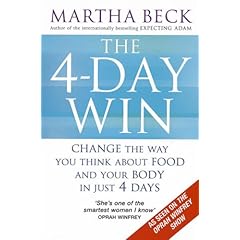
We see proof of this all the time: we know that folks who diet can get stuck in a cycle of deprivation/retaliation. Martha Beck describes this practically split personality response to the diet (a code word for denial) in here fabulous book about approaches to getting one's head right for food change in The Four Day Win.
In Beck's approach, one's way to "thinner peace" as she puts it, is by helping one's self prep for the kind of changes to habits a shift in food consumption really triggers, and offers strategies to help get ready for the change.
I've written about the cost of change before: we are rewiring ourselves, literally, both hedonically (our habits for pleasure/satisfaction/sufficiency) and homeostatically (what hormones for instance get triggered when to say "you're hungry; go get carbs). I really like Susan Roberts' approach to this shifting of "instincts" as getting one with what's going on inside and having some mercy towards oneself that there are reasons we're so driven to consume, and that changing these takes time.
It's just not only about the food (as i've said before).
And folks here know that my favorite approaches to getting knowledgable about nutrition is precision nutrition (why), and that i'm also intrigued with eat stop eat as a complementary strategy.
All good.
So where does balsamic vinegar come into it?
Well, whether you're getting set to make weight as an athlete or getting ready for a special event, or just want to kick start the sanity of a diet with some self-inspiration, there are times when one may wish to crash diet. Pray these are rare. Here's my own example: i'm getting ready for an event; i was away for more than a week on the road and ate terribly. And i know how to manage road food, so won't go into why this week was a bust, but i've been paying for it since, and i want to get back to the right weight for the event. Shallow, but there it is.
 So, what's the best way to do this? Well i don't know, but the way i do it is to turn to Lyle McDonald's Rapid Fat Loss Diet. McDonald offers the same caveats: a crash diet is a short-ish term thing; it is not a way of life, but there are times (not one's life) when drastic measures may be appropriate.
By drastic, we're talking what's usually known as a Protein Sparing Diet, with a few mods. The best part of the book is really the discussions around how to figure out how long to be on this, how to come off it, and how to gage what you need, why, and strategies to optimize your *short term* practice of this.
The diet part is largely getting your daily protein requirements from very lean sources (including protein powder), doing a multivitamin and calcium, doing your algae or fish oils to get the right fats, and eating all the greens you want. Leafy greens don't really add up calorically to a hill of beans. Well, literally they don't.
We're getting closer to the balsamic
Just eating a piece of protein is not so filling. However, what i've been finding is that raw leafy greens from salad greens to baby spinach, and throwing in some sprouts, is not only overwhelming to the eye (as in, 'that's a lot of food'), it's also slow going to chew. And that's great!
Normally, i'd put olive oil and balsamic on a set of veg like this, but that oil is too dear right now since it's fat i'm trying to burn, so for the first time i've been exploring well, what about just the balsamic? Oh wow.
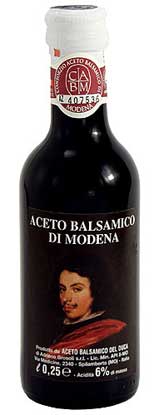
Now, when i say balsamic here, i mean some really nice balsamic (what is balsamic?).
Getting Intrigued
Yes, like everything else made in the world, we can Get Intrigued about a particular food product. There are various types of balsamics just as there are wines and olive oils. Having had the pleasure to travel to spain at one point i got to try a bunch and learned about this incredible condoment. This is aged, pressed grapes. It's sweet and clean and oh so nice with just a hint of tartness. And also as with all things, the most expensive doesn't always mean the best either. There's a supermarket brand in the UK - selfridges - which is very very nice. And surprisingly another supermarket, waitrose, makes one too, that rivals more name brands. To my taste anyway.
AND the best thing is, it works on its own without the olive oil's fruity complement. Drizzle some of the really nice stuff on this stack of leafy greenery and it goes from a mouth full of fodder to something really quite delicious.
There are probably tons of chemical reasons for why the vinegar part of the balsamic is reacting with the lettuce to begin to cook it, and react with it, but oy, let me tell you, it's a way to make that plate of greens desireable.
Slow Down, Chew: create taste sensation and lasting delight
WHich brings us to two other great food tips we hear all the time: chew the food a lot, and eat slowly. Why? well, the mastication process brings out the flavours of the foods, and if you have a variety of greens and sprouts and balsamic notes on a plate, squishing, crushing, chewing those leaves cracks open their flavours. And heck, if you're on such thin gruel as this calorically, making a meal last as long as possible is also a good thing.
Indeed, concentrating on the food, tastes and flavours is another rewiring step that has been shown apparently to help people eat less. On this diet, no problem, one is eating less BUT in doing so, we're learning habits to carry back to Sane Eating to continue to get more from less.
Tucking Into Tastes.
Perhaps when one is so calorically restricted, creating savoriness and sweetness and just flavourfulness is truly a great practice to develop - chewing goes a long way; seasoning takes that a bit further - and while perhaps motivated by a keen focus on fat burning for the moment, for whatever short term necessary evil goal requires this (or possibly it's an aesetic rather than aesthetic one), these are useful habits to take back towards as said that sane eating (i mentioned precision nutrition if you're not sure what that looks like - here's a free ebook of most of it).
So if you find yourself in a place where you need to get a fat drop happening fast, by all means, consider the Rapid Fat Loss Diet, and bring the good quality Balsamic to the table.
And when you get a head start on where you need to go - really the time limits discussed in the book are IMPORTANT - to look at refeeds, duration, etc, and just stopping it - there are some great approaches, as said: pn, eat stop eat. All good, all sane, all healthy habits based.
Personally, i can hardly wait to get back to real eating, but balsamic and loads of leaves has been a revelation.
Related Links
Note:
A reminder, too, that Brad Pilon's free teleseminar is Feb 24 - the free slides that just got mailed around about calorie cutting for weight loss related to height and only height is worth the sign up alone. That's a head spinner. Tweet Follow @begin2dig
We see proof of this all the time: we know that folks who diet can get stuck in a cycle of deprivation/retaliation. Martha Beck describes this practically split personality response to the diet (a code word for denial) in here fabulous book about approaches to getting one's head right for food change in The Four Day Win.
In Beck's approach, one's way to "thinner peace" as she puts it, is by helping one's self prep for the kind of changes to habits a shift in food consumption really triggers, and offers strategies to help get ready for the change.
I've written about the cost of change before: we are rewiring ourselves, literally, both hedonically
(our habits for pleasure/satisfaction/sufficiency) and homeostatically (what hormones for instance get triggered when to say "you're hungry; go get carbs). I really like Susan Roberts' approach to this shifting of "instincts" as getting one with what's going on inside and having some mercy towards oneself that there are reasons we're so driven to consume, and that changing these takes time.It's just not only about the food (as i've said before).
And folks here know that my favorite approaches to getting knowledgable about nutrition is precision nutrition (why), and that i'm also intrigued with eat stop eat as a complementary strategy.
All good.
So where does balsamic vinegar come into it?
Well, whether you're getting set to make weight as an athlete or getting ready for a special event, or just want to kick start the sanity of a diet with some self-inspiration, there are times when one may wish to crash diet. Pray these are rare. Here's my own example: i'm getting ready for an event; i was away for more than a week on the road and ate terribly. And i know how to manage road food, so won't go into why this week was a bust, but i've been paying for it since, and i want to get back to the right weight for the event. Shallow, but there it is.
So, what's the best way to do this? Well i don't know, but the way i do it is to turn to Lyle McDonald's Rapid Fat Loss Diet. McDonald offers the same caveats: a crash diet is a short-ish term thing; it is not a way of life, but there are times (not one's life) when drastic measures may be appropriate.By drastic, we're talking what's usually known as a Protein Sparing Diet, with a few mods. The best part of the book is really the discussions around how to figure out how long to be on this, how to come off it, and how to gage what you need, why, and strategies to optimize your *short term* practice of this.
The diet part is largely getting your daily protein requirements from very lean sources (including protein powder), doing a multivitamin and calcium, doing your algae or fish oils to get the right fats, and eating all the greens you want. Leafy greens don't really add up calorically to a hill of beans. Well, literally they don't.
We're getting closer to the balsamic
Just eating a piece of protein is not so filling. However, what i've been finding is that raw leafy greens from salad greens to baby spinach, and throwing in some sprouts, is not only overwhelming to the eye (as in, 'that's a lot of food'), it's also slow going to chew. And that's great!
Normally, i'd put olive oil and balsamic on a set of veg like this, but that oil is too dear right now since it's fat i'm trying to burn, so for the first time i've been exploring well, what about just the balsamic? Oh wow.
Now, when i say balsamic here, i mean some really nice balsamic (what is balsamic?).
Getting Intrigued
Yes, like everything else made in the world, we can Get Intrigued about a particular food product. There are various types of balsamics just as there are wines and olive oils. Having had the pleasure to travel to spain at one point i got to try a bunch and learned about this incredible condoment. This is aged, pressed grapes. It's sweet and clean and oh so nice with just a hint of tartness. And also as with all things, the most expensive doesn't always mean the best either. There's a supermarket brand in the UK - selfridges - which is very very nice. And surprisingly another supermarket, waitrose, makes one too, that rivals more name brands. To my taste anyway.
AND the best thing is, it works on its own without the olive oil's fruity complement. Drizzle some of the really nice stuff on this stack of leafy greenery and it goes from a mouth full of fodder to something really quite delicious.
There are probably tons of chemical reasons for why the vinegar part of the balsamic is reacting with the lettuce to begin to cook it, and react with it, but oy, let me tell you, it's a way to make that plate of greens desireable.
Slow Down, Chew: create taste sensation and lasting delight
WHich brings us to two other great food tips we hear all the time: chew the food a lot, and eat slowly. Why? well, the mastication process brings out the flavours of the foods, and if you have a variety of greens and sprouts and balsamic notes on a plate, squishing, crushing, chewing those leaves cracks open their flavours. And heck, if you're on such thin gruel as this calorically, making a meal last as long as possible is also a good thing.
Indeed, concentrating on the food, tastes and flavours is another rewiring step that has been shown apparently to help people eat less. On this diet, no problem, one is eating less BUT in doing so, we're learning habits to carry back to Sane Eating to continue to get more from less.
Tucking Into Tastes.
Perhaps when one is so calorically restricted, creating savoriness and sweetness and just flavourfulness is truly a great practice to develop - chewing goes a long way; seasoning takes that a bit further - and while perhaps motivated by a keen focus on fat burning for the moment, for whatever short term necessary evil goal requires this (or possibly it's an aesetic rather than aesthetic one), these are useful habits to take back towards as said that sane eating (i mentioned precision nutrition if you're not sure what that looks like - here's a free ebook of most of it).
So if you find yourself in a place where you need to get a fat drop happening fast, by all means, consider the Rapid Fat Loss Diet, and bring the good quality Balsamic to the table.
And when you get a head start on where you need to go - really the time limits discussed in the book are IMPORTANT - to look at refeeds, duration, etc, and just stopping it - there are some great approaches, as said: pn, eat stop eat. All good, all sane, all healthy habits based.
Personally, i can hardly wait to get back to real eating, but balsamic and loads of leaves has been a revelation.
Related Links
- Edeli: a great place to get beautiful olive oils if you're in the UK (no relationship to this company; just like their stuff)
- respect the fat
- whole proteins/whole grains
- glucomannan for satiety, fiber and no cals
- optimizing HIIT for fat burning
- When you can't HIIT, do what?
- what the heck is sustenance??
- MOTIVATION - what it might be and how to get more of it.
Note:
A reminder, too, that Brad Pilon's free teleseminar is Feb 24 - the free slides that just got mailed around about calorie cutting for weight loss related to height and only height is worth the sign up alone. That's a head spinner. Tweet Follow @begin2dig
Sunday, February 21, 2010
begin2dig joins the 21st century: facebook and twitter
Follow @mcphoo
Tweet
Having struggled with how to do facebook, and having wrestled with frustrating my non-fitness geek colleagues on twitter with all this wellbeing info stuff, i have, in reading a wee ebook called "crush it" learned that i can clear the field for better communication(thanks miketnelson for the pointer).
So to connect better, learn more, share our good STUFF:
duh? duh.
 i hope (really, i do) that you'll consider adding these links to your rich social networking space.
A goodly number of folks come through b2d daily, and thank you! but i hear from few of y'all in the comments.
Comments i know take time - so i hope you'll consider that FB and Twitter may facilitate faster contact.
And of course you can still connect with b2d via RSS feed and via Email for instant updated as soon as a new blog post is published.
AND to those who put their faces right out there on this site to say they Grok B2D, wow, thank you. Glad you're here.
Thanks again for stopping by & taking time to have b2d info as part of your infosphere
best
mc
Related Posts
So to connect better, learn more, share our good STUFF:
- begin2dig now has its own facebook page:
(url: http://www.facebook.com/pages/begin2dig-b2d/321154145333)
the goal is to have ongoing discussions about topics raised here where comments may seem too formal (though i'd love to engage with folks with more comments) - begin2dig now has its own twitter feed:
(url: http://twitter.com/begin2dig)
even faster exchanges on topics - please @begin2dig me! (is that a verb?)
duh? duh.
 i hope (really, i do) that you'll consider adding these links to your rich social networking space.
A goodly number of folks come through b2d daily, and thank you! but i hear from few of y'all in the comments.
Comments i know take time - so i hope you'll consider that FB and Twitter may facilitate faster contact.
And of course you can still connect with b2d via RSS feed and via Email for instant updated as soon as a new blog post is published.
AND to those who put their faces right out there on this site to say they Grok B2D, wow, thank you. Glad you're here.
Thanks again for stopping by & taking time to have b2d info as part of your infosphere
best
mc
Related Posts
- About Nutrition Articles
- About General Fitness Articles
- About Mobility, Z-Health, CK-FMS
- About Kettlebells Articles.
Saturday, February 20, 2010
Improving Longevity with Calorie Reduction in Humans?
Follow @mcphoo
Tweet
 Lots of studies on rats and a few other mamals have seemed to
  show the benefit of caloric reduction and longevity - mainly it seems in the way that CR impacts core temperature (a bit lower is better), fasting insulin levels, and oxidative stress - that free radical stuff. Testing CR and humans is going to be trickier. So researchers a few years ago looked at simply the effects of CR on these very markers that have been hypothesised to have an effect on longevity. What their work shows is that yup, CR has these effects.
The resson i mention this piece here is that neither Alan Aaragon's 2007 critique of IF (which i've cited before as a good ref and which Chris over at conditioning resaerch has also detailed); nor have i seen the work referenced in the more recent Eat Stop Eat by Brad Pilon.
So here's the abstract; the full article is also available for free, which is nice.
Now, i haven't seen a comparison of these same markers considered in a study where folks are JUST exercising and eating right (say a la precision nutrition's principles), but that is what folks like Aragon suggest - that exercise and diet have the same effects. A head to head study or gathering of results would be nice.
 There is a nice 2009 follow up study by this group that looks at metabolic adaptation of folks on CR and CR + exercise. Bottom line: the folks who keep exercising while on the CR do not experience a metabolic adaptation like the *just * CR's (in other words the CR's metabolism really drops, and so does their activity). IS that maintenance good for longevity markers? not clear. But in terms of weight loss maintenance, surprise surprise:
SO diet, combined with exercise is still a good thing for maintaining ongoing body comp goals. Great.
Oh and to put icing on the cake of why exercise with diet (spliting the total CR between diet and exercise) is a good thing, the gang just published a study showing that while fat loss is the same no matter how you get you mojo on and calories off, with exercise is better:
 normal healthy eating (like PN) and exercise, there seems to be at least a few of us who are using say precision nutrition approaches to eating/health on most days (and getting questions on nutrition addressed) and ESE fasting once or twice a week - for me this protocol is an exploration; nothing definitive, but intriguing. Just FYI
Related Posts
Citations:
Heilbronn, L. (2006). Effect of 6-Month Calorie Restriction on Biomarkers of Longevity, Metabolic Adaptation, and Oxidative Stress in Overweight Individuals: A Randomized Controlled Trial JAMA: The Journal of the American Medical Association, 295 (13), 1539-1548 DOI: 10.1001/jama.295.13.1539
Redman, L., Heilbronn, L., Martin, C., de Jonge, L., Williamson, D., Delany, J., Ravussin, E., & , . (2009). Metabolic and Behavioral Compensations in Response to Caloric Restriction: Implications for the Maintenance of Weight Loss PLoS ONE, 4 (2) DOI: 10.1371/journal.pone.0004377
LARSON-MEYER, D., REDMAN, L., HEILBRONN, L., MARTIN, C., & RAVUSSIN, E. (2010). Caloric Restriction with or without Exercise Medicine & Science in Sports & Exercise, 42 (1), 152-159 DOI: 10.1249/MSS.0b013e3181ad7f17 Tweet Follow @begin2dig
Lots of studies on rats and a few other mamals have seemed to show the benefit of caloric reduction and longevity - mainly it seems in the way that CR impacts core temperature (a bit lower is better), fasting insulin levels, and oxidative stress - that free radical stuff. Testing CR and humans is going to be trickier. So researchers a few years ago looked at simply the effects of CR on these very markers that have been hypothesised to have an effect on longevity. What their work shows is that yup, CR has these effects.The resson i mention this piece here is that neither Alan Aaragon's 2007 critique of IF (which i've cited before as a good ref and which Chris over at conditioning resaerch has also detailed); nor have i seen the work referenced in the more recent Eat Stop Eat by Brad Pilon.
So here's the abstract; the full article is also available for free, which is nice.
JAMA. 2006 Apr 5;295(13):1539-48.
Effect of 6-month calorie restriction on biomarkers of longevity, metabolic adaptation, and oxidative stress in overweight individuals: a randomized controlled trial.
Heilbronn LK, de Jonge L, Frisard MI, DeLany JP, Larson-Meyer DE, Rood J, Nguyen T, Martin CK, Volaufova J, Most MM, Greenway FL, Smith SR, Deutsch WA, Williamson DA, Ravussin E; Pennington CALERIE Team.
Pennington Biomedical Research Center, Louisiana State University, Baton Rouge 70808, USA.
Erratum in:* JAMA. 2006 Jun 7;295(21):2482.
Comment in: * JAMA. 2006 Apr 5;295(13):1577-8.
CONTEXT: Prolonged calorie restriction increases life span in rodents. Whether prolonged calorie restriction affects biomarkers of longevity or markers of oxidative stress, or reduces metabolic rate beyond that expected from reduced metabolic mass, has not been investigated in humans. OBJECTIVE: To examine the effects of 6 months of calorie restriction, with or without exercise, in overweight, nonobese (body mass index, 25 to <30) men and women. DESIGN, SETTING, AND PARTICIPANTS: Randomized controlled trial of healthy, sedentary men and women (N = 48) conducted between March 2002 and August 2004 at a research center in Baton Rouge, La. INTERVENTION: Participants were randomized to 1 of 4 groups for 6 months: control (weight maintenance diet); calorie restriction (25% calorie restriction of baseline energy requirements); calorie restriction with exercise (12.5% calorie restriction plus 12.5% increase in energy expenditure by structured exercise); very low-calorie diet (890 kcal/d until 15% weight reduction, followed by a weight maintenance diet). MAIN OUTCOME MEASURES: Body composition; dehydroepiandrosterone sulfate (DHEAS), glucose, and insulin levels; protein carbonyls; DNA damage; 24-hour energy expenditure; and core body temperature. RESULTS: Mean (SEM) weight change at 6 months in the 4 groups was as follows: controls, -1.0% (1.1%); calorie restriction, -10.4% (0.9%); calorie restriction with exercise, -10.0% (0.8%); and very low-calorie diet, -13.9% (0.7%). At 6 months, fasting insulin levels were significantly reduced from baseline in the intervention groups (all P<.01), whereas DHEAS and glucose levels were unchanged. Core body temperature was reduced in the calorie restriction and calorie restriction with exercise groups (both P<.05). After adjustment for changes in body composition, sedentary 24-hour energy expenditure was unchanged in controls, but decreased in the calorie restriction (-135 kcal/d [42 kcal/d]), calorie restriction with exercise (-117 kcal/d [52 kcal/d]), and very low-calorie diet (-125 kcal/d [35 kcal/d]) groups (all P<.008). These "metabolic adaptations" (~ 6% more than expected based on loss of metabolic mass) were statistically different from controls (P<.05). Protein carbonyl concentrations were not changed from baseline to month 6 in any group, whereas DNA damage was also reduced from baseline in all intervention groups (P <.005). CONCLUSIONS: Our findings suggest that 2 biomarkers of longevity (fasting insulin level and body temperature) are decreased by prolonged calorie restriction in humans and support the theory that metabolic rate is reduced beyond the level expected from reduced metabolic body mass. Studies of longer duration are required to determine if calorie restriction attenuates the aging process in humans.
Now, i haven't seen a comparison of these same markers considered in a study where folks are JUST exercising and eating right (say a la precision nutrition's principles), but that is what folks like Aragon suggest - that exercise and diet have the same effects. A head to head study or gathering of results would be nice.
There is a nice 2009 follow up study by this group that looks at metabolic adaptation of folks on CR and CR + exercise. Bottom line: the folks who keep exercising while on the CR do not experience a metabolic adaptation like the *just * CR's (in other words the CR's metabolism really drops, and so does their activity). IS that maintenance good for longevity markers? not clear. But in terms of weight loss maintenance, surprise surprise:Interestingly, despite similar body mass and composition changes, CR in conjunction with exercise (CR+EX) did not result in a metabolic adaptation. If weight relapse does occur in part as a result of a reduced metabolic rate in the weight reduced state, then perhaps the combination of CR and exercise may be the best choice of intervention to prevent weight regain in overweight and obese individuals. Certainly, more than 20 years ago, Pavlou observed that exercise during a CR-induced weight loss program was essential for success of weight loss maintenance [34]. Since then others have shown with doubly labeled water studies that weight stability following weight loss is sustained by higher levels of activity related energy expenditure and free-living physical activity [35], [36]. To our knowledge no studies have prospectively studied the energetic adjustments of CR only versus CR in conjunction with exercise during weight loss and weight loss maintenance.
SO diet, combined with exercise is still a good thing for maintaining ongoing body comp goals. Great.
Oh and to put icing on the cake of why exercise with diet (spliting the total CR between diet and exercise) is a good thing, the gang just published a study showing that while fat loss is the same no matter how you get you mojo on and calories off, with exercise is better:
In the meantime of waiting for the longevity marker comparison where the condition would be
Med Sci Sports Exerc. 2010 Jan;42(1):152-9.
Caloric restriction with or without exercise: the fitness versus fatness debate.
Larson-Meyer DE, Redman L, Heilbronn LK, Martin CK, Ravussin E.
Pennington Biomedical Research Center, Louisiana State University, Baton Rouge, LA, USA. enette@uwyo.edu
There is a debate over the independent effects of aerobic fitness and body fatness on mortality and disease risks. PURPOSE: To determine whether a 25% energy deficit that produces equal change in body fatness leads to greater cardiometabolic benefits when aerobic exercise is included. METHODS: Thirty-six overweight participants (16 males/20 females) (39 +/- 1 yr; 82 +/- 2 kg; body mass index = 27.8 +/- 0.3 kg x m2, mean +/- SEM) were randomized to one of three groups (n = 12 for each) for a 6-month intervention: control (CO, weight-maintenance diet), caloric restriction (CR, 25% reduction in energy intake), or caloric restriction plus aerobic exercise (CR + EX, 12.5% reduction in energy intake plus 12.5% increase in exercise energy expenditure). Food was provided during weeks 1-12 and 22-24. Changes in fat mass, visceral fat, VO2peak (graded treadmill test), muscular strength (isokinetic knee extension/flexion), blood lipids, blood pressure, and insulin sensitivity/secretion were compared. RESULTS: As expected, VO2peak was significantly improved after 6 months of intervention in CR + EX only (22 +/- 5% vs 7 +/- 5% in CR and -5 +/- 3% in CO), whereas isokinetic muscular strength did not change. There was no difference in the losses of weight, fat mass, or visceral fat and changes in systolic blood pressure (BP) between the intervention groups. However, only CR + EX had a significant decrease in diastolic BP (-5 +/- 3% vs -2 +/- 2% in CR and -1 +/- 2% in CO), in low-density lipoprotein (LDL) cholesterol (-13 +/- 4% vs -6 +/- 3% in CR and 2 +/- 4% in CO), and a significant increase in insulin sensitivity (66 +/- 22% vs 40 +/- 20% in CR and 1 +/- 11% in CO). CONCLUSIONS: Despite similar effect on fat losses, combining CR with exercise increased aerobic fitness in parallel with improved insulin sensitivity, LDL cholesterol, and diastolic BP. The results lend support for inclusion of an exercise component in weight loss programs to improve metabolic fitness.
normal healthy eating (like PN) and exercise, there seems to be at least a few of us who are using say precision nutrition approaches to eating/health on most days (and getting questions on nutrition addressed) and ESE fasting once or twice a week - for me this protocol is an exploration; nothing definitive, but intriguing. Just FYIRelated Posts
- General b2d nutrition index
- Fasting and Working out - it's alright
- respect the fat
- "you can't handle.." - the protein
Citations:
Heilbronn, L. (2006). Effect of 6-Month Calorie Restriction on Biomarkers of Longevity, Metabolic Adaptation, and Oxidative Stress in Overweight Individuals: A Randomized Controlled Trial JAMA: The Journal of the American Medical Association, 295 (13), 1539-1548 DOI: 10.1001/jama.295.13.1539
Redman, L., Heilbronn, L., Martin, C., de Jonge, L., Williamson, D., Delany, J., Ravussin, E., & , . (2009). Metabolic and Behavioral Compensations in Response to Caloric Restriction: Implications for the Maintenance of Weight Loss PLoS ONE, 4 (2) DOI: 10.1371/journal.pone.0004377
LARSON-MEYER, D., REDMAN, L., HEILBRONN, L., MARTIN, C., & RAVUSSIN, E. (2010). Caloric Restriction with or without Exercise Medicine & Science in Sports & Exercise, 42 (1), 152-159 DOI: 10.1249/MSS.0b013e3181ad7f17 Tweet Follow @begin2dig
Friday, February 19, 2010
8lbs of Lean Mass in One Workout - and other surprises Feb 24 - from brad pilon
Follow @mcphoo
Tweet
Apropos of all this discourse on protein synthesis vs absorption vs muscle mass gain, this just in from brad pilon (yes of eat stop eat fame). How to add 8lbs of lean mass in one workout. i love it


The main idea? Check out the video and register for a teleseminar (it's free) to find out more insider knowledge about how supplement companies make some of the outrageous claims they do - with seeming results.
But get some good tips too. Taken from the teleseminar page:
Aside: as i've said before, colleagues i trust (and now me, too) are blending precision nutrition with eat stop eat for
great nutrition knowledge (overview), and exploration of the benefits/vibes of fasting.
Anyway, the seminar sounds like it's going to be fun. Let me know what you think.
Oh and as one more place to get psyched for what promises to be a fun evening, here's an interview Mike T Neslon did with Mr. Pilon.
mc Tweet Follow @begin2dig


The main idea? Check out the video and register for a teleseminar (it's free) to find out more insider knowledge about how supplement companies make some of the outrageous claims they do - with seeming results.
But get some good tips too. Taken from the teleseminar page:
* How many calories it REALLY takes to build muscleNote: the above link to the seminar links back to me, but the seminar is free, so it seems that it's for counting purposes - but heck if you'd like to buy a copy of eat stop eat from my site (it's a good researched read whether you practice fasting or not) that's lovely, too (more about affiliate links at b2d)
* Why HEIGHT has more to do with the amount of calories you need on a daily basis and how to use the "Rule of 7's and 3's" to determine how BIG you'll actually end up
* A sneaky trick that all marketers use to get you to THINK that you're gaining more muscle than you really are... and how this same sneaky trick is SAPPING you out of your hard earned money in the process
* How adding just 5 lbs of muscle in JUST THE RIGHT PLACES gives the illusion of a 25 lb increase in size... DRUG FREE...
* The TRUTH on testimonials and "before and after" pics and how EVEN YOU can make yourself look super huge in 24 hours... without ever touching the inside of a gym or taking a "magic powder". This is the one secret the supplement companies DON'T WANT YOU TO KNOW
(here's a preview on the above one from brad's blog, 2007:how to gain 10 pounds of muscle and lose 5 pounds of fat in only 2 days.


Aside: as i've said before, colleagues i trust (and now me, too) are blending precision nutrition with eat stop eat for
great nutrition knowledge (overview), and exploration of the benefits/vibes of fasting.
Anyway, the seminar sounds like it's going to be fun. Let me know what you think.
Oh and as one more place to get psyched for what promises to be a fun evening, here's an interview Mike T Neslon did with Mr. Pilon.
mc Tweet Follow @begin2dig
Curb my protein enthusiasm: single factor thinking fails again
Follow @mcphoo
Tweet
Yesterday i wrote a piece reviewing an article that showed that 30g of whole protein was all that could be synthesized by resting muscle, so we can all just chill about how much protein we take in at a feeding. And indeed, there's one more reason to spread out one's protein intake over the course of a day. One more reason (not the only reason) Mutliple feedings rock!
I have just finished revising that article to be far more restrained in its celebration. I think it's a much better/fairer piece now, anyway. Dam it. Because now while more accurate, it's far less conclusive.
This revision fervour first started with some interesting conflations i was hearing between absorption and synthesis - how are these related, and conflations between some folks saying one MUST take on 30g of protein every few hours vs what the article suggested - that's the MAX one could utilize - if one is 80kg or thereabouts, not what one *should* take on. Minimums aren't established; only maxs. And only for acute uptake. With the interesting finding that this result seems age and gender independent.

Then i went back to my minute with Mike about the Protein Window and how that doesn't really close in a day - so why would protein only be usable to that max amount in that 3hr window of the study?
Then i checked a few references looking at lean mass over time with one meal vs three meals (no grazing just 1 or 3), and lean muscle maintenance (see revised post for the details)
And then to cap it all off Chris Highcock of conditioning research kindly pointed me at Eat STop Eat Brad Pilons How Much Protein, and well, what's the take away if you don't feel like going back to look at the study (where all the refs to the following points are):
What *is* reinforced in the related work with the study presented is that more likely than not LESS is more - whether at rest or working out. That the 70-120 g range may be just as productive at mass building as any higher amounts, and that if one goes for higher protein amounts (like 160 grams if 80kg), while one's system can safely absorb that, it mayn't be using it for muscle building.
Once again, single factor thinking dun't work - well. Creatine in the mix does. Precision Nutrition (very multi-factor) does; Chris Highcock does. Mike T. Nelson does. Georgie Fear does and so it seems does Brad Pilon. and i'd like to, too, though it may take me a few tries. Tweet Follow @begin2dig
I have just finished revising that article to be far more restrained in its celebration. I think it's a much better/fairer piece now, anyway. Dam it. Because now while more accurate, it's far less conclusive.
This revision fervour first started with some interesting conflations i was hearing between absorption and synthesis - how are these related, and conflations between some folks saying one MUST take on 30g of protein every few hours vs what the article suggested - that's the MAX one could utilize - if one is 80kg or thereabouts, not what one *should* take on. Minimums aren't established; only maxs. And only for acute uptake. With the interesting finding that this result seems age and gender independent.
Then i went back to my minute with Mike about the Protein Window and how that doesn't really close in a day - so why would protein only be usable to that max amount in that 3hr window of the study?
Then i checked a few references looking at lean mass over time with one meal vs three meals (no grazing just 1 or 3), and lean muscle maintenance (see revised post for the details)
And then to cap it all off Chris Highcock of conditioning research kindly pointed me at Eat STop Eat Brad Pilons How Much Protein, and well, what's the take away if you don't feel like going back to look at the study (where all the refs to the following points are):
- Acute responses to muscle protein synthesis are not necessarily the same as lean mass maintenance or growth over time
- If one's thinking mass building thoughts the exercise and creatine may be more critical than protein
- Protein timing may not be an issue for muscle mass. The pluses of nutrient timing may be elsewhere found - like glucose and other hormone regulation/performance.
What *is* reinforced in the related work with the study presented is that more likely than not LESS is more - whether at rest or working out. That the 70-120 g range may be just as productive at mass building as any higher amounts, and that if one goes for higher protein amounts (like 160 grams if 80kg), while one's system can safely absorb that, it mayn't be using it for muscle building.
Once again, single factor thinking dun't work - well. Creatine in the mix does. Precision Nutrition (very multi-factor) does; Chris Highcock does. Mike T. Nelson does. Georgie Fear does and so it seems does Brad Pilon. and i'd like to, too, though it may take me a few tries. Tweet Follow @begin2dig
Thursday, February 18, 2010
30g of protein per meal for optimal muscle building? That Depends - a lot
Follow @mcphoo
Tweet
Less and More? Yes, when talking protein. Have you encountered any of these questions? How much protein can i eat at a sitting? What's the right amount of protein to eat? How much protein can i absorb? These are questions in the fitness world that get asked all the time - especially by folks who want to optimize their muscle growth. The answer seems to be "less than you think, but more often"

We know there's a usual formula (even that's been debated at a Protein Roundtable - but not by much) about how much protein to take in in a day - let's just say for now it's 2-2.5 g per kg (based on work in 2006), or about a g/pound (nice mix of metric and imperial there) which has been pretty much the standard recommendation for some time, newly validated. As the authors note, that's about 176 g of protein a day for an 80kg person " This is well below the theoretical maximum safe intake range for an 80 kg person (285 to 365 g/d)."
Intriguingly, there's a newish study out to show that 30g of protein derived from real food is about all the protein one can reasonably ingest in a sitting that will support muscle or protein synthesis is 30g. There are certain conditions attached to this statement that we'll discuss below.
Also Note, muscle protein synthesis here is being looked at in a particular context. We're talking about what resting muscle can use to handle the ongoing breakdown and build up of muscle proteins. This is potentially different than a body builder working out to build lots of mass. In other words, we're looking at a kind of baseline max.
SO 30g of whole protein or, in the case of this study, a 113g serving of lean beef (about 4oz). That's pretty close to the traditional portion size of a piece of meat the size of a deck of cards.

We can eat more protein at one meal, but the authors would argue, it ain't doing anything for muscle building/protein synthesis of resting muscles. Here's the overview of the research:
Indeed, in the discussion of their results at 30g the authors also speculate
One Feeding. The authors offer even more caveats: the researchers only looked at the ingestion of the whole protein - not at it mixed up with more food, as we usually get it, or after exercise. They say:
Where's the Beef for Application? What is intriguing to me in this study is how one would balance optimal absorption of protein with the amount of protein we're supposed to ingest - especially if remotely active. so our 80kg guy is going for 180ish grams of protein, at max 30g whole protein a meal.
So, let's say our person has three meals a day. 30g per meal, that's only 90g protein, total. That's half the protein our fella needs, according to the usual saw of .8-1g protein/pound of person.
Or what about folks who eat only one meal a day? That's one more potential problem with the evening feast beyond say glucose effects, then, perhaps? They may pig out on protein, but it's still 30g a shot for muscle synthesis this study would suggest. Read on.
Frequent Feedings for Optimal Muscle Building? Er...
Could this max 30g of whole protein be one more argument for the value of frequent meals during the day(s one eats -one may fast)? Consider one of the core heuristics of Precision Nutrition (discussed here): at each feeding make sure to have
Though there is a 2007 8 week trial that shows that lean mass didn't change to any statistically significant degree, whether people got all their daily protein in one meal or three a day. Whether folks were training or not was not considered. So the question comes up: are acute responses (measures taken at time of ingestion) related to longitudinal responses?
And what if Less is More? May be time to highlight again that we're talking about protein synthesis here, not protein absorption. Absorption amounts (2-2.5g/kg body weight) may be greater than required amounts for protein synthesis. An interesting question still kinda out there is if 30g is the max for resting muscle for a more or less 80kg person, what's the least amount to still get this max effect?
What about Work Outs? Things get really interesting if we consider pre and post training nutrition with carb/protein periworkout nutrition, as in this study where participants were fed slightly more than 30g protein pre AND post workouts (along with creatine and carbs). These researchers didn't test the amounts of protein they used (related work in this 2009 study suggests it's 20g post workout - thanks Kevin Greer for the ref); they just looked at whether there was a better effect with pre and post supplementation than not. They did sorta hit the maximal usable amount, which is cool, but it might be too much too soon to be fully absorbable for muscle synthesis.
Or maybe - maybe - the effect was from the Creatine and Carbs + Protein and not just the protein (another few views on protein+ creatine vs carbs + creatine [one] or pro+cho vs pro+cho+cr[another]). Dang.
Questions? What happens if we OD on protein? Can we? We know that if we're in caloric deficit, protein is getting oxidized for fuel before going to protein synthesis, right? And likewise if we eat too much of it, it gets deaminiated and the amonia gets peed out, which has been a concern/question regarding toxicity of overdoing protein:
Summing Up?
What do we know from this study: that measured over three ours post ingestion, it doesn't matter whether an 80kg person eats 30g or three times that, that 30g of whole protein was the most that could be utilized for muscle protein synthesis in their resting muscle at a feeding.
What the authors are NOT saying: 30g of protein is needed every 2-3 hours for muscle growth. It seems kinda the opposite: less protein may be needed for acute muscle protein synthesis.
Where we mayn't be able to Generalize: While the authors suggest therefore that a strategy is to spread protein intake over the day, the 1 meal a day vs 3 meals a day study suggests that lean mass holds over time whether following this strategy or not. SO why spread out protein uptake??
If we move from protein synthesis at rest to muscle building, other work seems to suggest that even when working out that (a) just working out and (b) creatine may be more important for packing on muscle than protein. This latter point is one that Eat STop Eat author Brad Pilon makes in his ebook How Much Protein (thanks to Chris Highcock for pointing this book out to me).
So what can we say? well, what the authors also say is of note is that there's been concern that elderly eating low protein diets, mixed with other nutrients may have a blunted protein synthesis. This study suggests that there's no age related effect of upping protein to a certain point, regardless of age. Ok. So both elderly and younger types respond the same to acute protein intake when just eating protein. Good to know.
But once again a lovely finding of an acute response and a seeming logical conclusion (spread protein out over the day) doesn't seem to hold on its own in the larger context as a prescription for action. We may find though that benefits of protein supplementation have other functions than just mass related - like recovery and immune function. More food for future thought.
dang.
Related Posts
select citations
Bilsborough S, & Mann N (2006). A review of issues of dietary protein intake in humans. International journal of sport nutrition and exercise metabolism, 16 (2), 129-52 PMID: 16779921
Symons, T., Sheffield-Moore, M., Wolfe, R., & Paddon-Jones, D. (2009). A Moderate Serving of High-Quality Protein Maximally Stimulates Skeletal Muscle Protein Synthesis in Young and Elderly Subjects Journal of the American Dietetic Association, 109 (9), 1582-1586 DOI: 10.1016/j.jada.2009.06.369
CARLSON, O., MARTIN, B., STOTE, K., GOLDEN, E., MAUDSLEY, S., NAJJAR, S., FERRUCCI, L., INGRAM, D., LONGO, D., & RUMPLER, W. (2007). Impact of reduced meal frequency without caloric restriction on glucose regulation in healthy, normal-weight middle-aged men and women Metabolism, 56 (12), 1729-1734 DOI: 10.1016/j.metabol.2007.07.018
Cuthbertson, D. (2004). Anabolic signaling deficits underlie amino acid resistance of wasting, aging muscle The FASEB Journal DOI: 10.1096/fj.04-2640fje
KERKSICK, C., RASMUSSEN, C., LANCASTER, S., STARKS, M., SMITH, P., MELTON, C., GREENWOOD, M., ALMADA, A., & KREIDER, R. (2007). Impact of differing protein sources and a creatine containing nutritional formula after 12 weeks of resistance training Nutrition, 23 (9), 647-656 DOI: 10.1016/j.nut.2007.06.015 Tweet Follow @begin2dig
Less and More? Yes, when talking protein. Have you encountered any of these questions? How much protein can i eat at a sitting? What's the right amount of protein to eat? How much protein can i absorb? These are questions in the fitness world that get asked all the time - especially by folks who want to optimize their muscle growth. The answer seems to be "less than you think, but more often"We know there's a usual formula (even that's been debated at a Protein Roundtable - but not by much) about how much protein to take in in a day - let's just say for now it's 2-2.5 g per kg (based on work in 2006), or about a g/pound (nice mix of metric and imperial there) which has been pretty much the standard recommendation for some time, newly validated. As the authors note, that's about 176 g of protein a day for an 80kg person " This is well below the theoretical maximum safe intake range for an 80 kg person (285 to 365 g/d)."
Intriguingly, there's a newish study out to show that 30g of protein derived from real food is about all the protein one can reasonably ingest in a sitting that will support muscle or protein synthesis is 30g. There are certain conditions attached to this statement that we'll discuss below.
Also Note, muscle protein synthesis here is being looked at in a particular context. We're talking about what resting muscle can use to handle the ongoing breakdown and build up of muscle proteins. This is potentially different than a body builder working out to build lots of mass. In other words, we're looking at a kind of baseline max.
SO 30g of whole protein or, in the case of this study, a 113g serving of lean beef (about 4oz). That's pretty close to the traditional portion size of a piece of meat the size of a deck of cards.
We can eat more protein at one meal, but the authors would argue, it ain't doing anything for muscle building/protein synthesis of resting muscles. Here's the overview of the research:
A Moderate Serving of High-Quality Protein Maximally Stimulates Skeletal Muscle Protein Synthesis in Young and Elderly SubjectsThe authors cite their motivation for the study in part as a balance to previous work that showed 10g of EAA's at a go was all the body could make use of - that amounts beyond that signalled no greater muscle synthesis (or synthesis of muscle protein, more formally). So what about getting those EAA's from a whole food like "113 g lean beef, 30 g protein, 10 g EAAs, 220 kcal." Turns out that it *seems* it doesn't matter from whence one gets those EAA's, that's the max the body can use for " a maximal acute protein synthetic effect."
T. Brock Symons PhD, Melinda Sheffield-Moore PhD, Robert R. Wolfe PhD and Douglas Paddon-Jones PhDCorresponding Author Contact Information, E-mail The Corresponding Author
Accepted 30 January 2009.
Available online 21 August 2009.
Abstract
Ingestion of sufficient dietary protein is a fundamental prerequisite for muscle protein synthesis and maintenance of muscle mass and function. Elderly people are often at increased risk for protein-energy malnutrition, sarcopenia, and a diminished quality of life. This study sought to compare changes in muscle protein synthesis and anabolic efficiency in response to a single moderate serving (113 g; 220 kcal; 30 g protein) or large serving (340 g; 660 kcal; 90 g protein) of 90% lean beef. Venous blood and vastus lateralis muscle biopsy samples were obtained during a primed, constant infusion (0.08 μmol/kg/min) of L-[ring-13C6] phenylalanine in healthy young (n=17; 34±3 years) and elderly (n=17; 68±2 years) individuals. Mixed muscle fractional synthesis rate was calculated during a 3-hour postabsorptive period and for 5 hours after meal ingestion. Data were analyzed using a two-way repeated measures analysis of variance with Tukey's pairwise comparisons. A 113-g serving of lean beef increased muscle protein synthesis by approximately 50% in both young and older volunteers. Despite a threefold increase in protein and energy content, there was no further increase in protein synthesis after ingestion of 340 g lean beef in either age group. Ingestion of more than 30 g protein in a single meal does not further enhance the stimulation of muscle protein synthesis in young and elderly.
Indeed, in the discussion of their results at 30g the authors also speculate
In terms of stimulating muscle growth, it therefore seems likely that under resting/nonexercising conditions, consumption of more than 30 g protein in a single meal is not justified. Indeed, it may well be the case that a slightly smaller meal would produce a similar protein synthetic responseIn terms of stimulating muscle growth, it therefore seems likely that under resting/nonexercising conditions, consumption of more than 30 g protein in a single meal is not justified. Indeed, it may well be the case that a slightly smaller meal would produce a similar protein synthetic response.Considerations: Could even less protein, in other words, have as much of a protein synthesis response as the 30g? Note the caveats given: if we're talking at rest and without exercise. The authors' participants were people who (a) didn't change their diet for the 72 hours leading up to the study (b) didn't do any activities for that period. THe study notes only that they were healthy people in a range of ages, not whether any were jocks or sedentary. Also, the average weight (plus or minus 7kg) was about 80kg in the "young" group and about 78 in the "elder" group. We also don't know what the lean mass is of any of the participants, or perhaps more fundamentally, how amount of protein might be impacted if one weights 20kg less or more than the study average?
One Feeding. The authors offer even more caveats: the researchers only looked at the ingestion of the whole protein - not at it mixed up with more food, as we usually get it, or after exercise. They say:
Perhaps the most obvious is the fact that a single menu item, such as a serving of lean beef, is seldom eaten alone. As noted, there are some data suggesting that elders may have a less robust protein synthetic response to the combined ingestion of protein and carbohydrate than their younger counterparts (25). This has yet to be explored in the context of an actual mixed-nutrient meal, but warrants further investigation. Further, there is the potential of an added protein synthetic response if protein were to be consumed in close temporal proximity to physical activity (29,30).
25 E. Volpi, B. Mittendorfer, B.B. Rasmussen and R.R. Wolfe, The response of muscle protein anabolism to combined hyperaminoacidemia and glucose-induced hyperinsulinemia is impaired in the elderly, J Clin Endocrinol Metab 85 (2000), pp. 4481–4490.In other words the researchers only tested protein synthesis effects when chewing meat in isolation of other food stuffs. Yes that's right, that's all they got: a 90% lean beef patty. And yes, "this project was supported by funding from the National Cattlemen’s Beef Association Checkoff Program" But it was also funded by the NIH center on aging. And considering the findings suggest that less is just as good as more, it's not doing the cattleMEN's association a great service.
29 S.M. Phillips, J.W. Hartman and S.B. Wilkinson, Dietary protein to support anabolism with resistance exercise in young men, J Am Coll Nutr 24 (2005), pp. S134–S139.
30 M. Sheffield-Moore, C.W. Yeckel, E. Volpi, S.E. Wolf, B. Morio, D.L. Chinkes, D. Paddon-Jones and R.R. Wolfe, Postexercise protein metabolism in older and younger men following moderate-intensity aerobic exercise, Am J Physiol Endocrinol Metab 287 (2004), pp. E513–E522.
Where's the Beef for Application? What is intriguing to me in this study is how one would balance optimal absorption of protein with the amount of protein we're supposed to ingest - especially if remotely active. so our 80kg guy is going for 180ish grams of protein, at max 30g whole protein a meal.
So, let's say our person has three meals a day. 30g per meal, that's only 90g protein, total. That's half the protein our fella needs, according to the usual saw of .8-1g protein/pound of person.
Or what about folks who eat only one meal a day? That's one more potential problem with the evening feast beyond say glucose effects, then, perhaps? They may pig out on protein, but it's still 30g a shot for muscle synthesis this study would suggest. Read on.
Frequent Feedings for Optimal Muscle Building? Er...
Could this max 30g of whole protein be one more argument for the value of frequent meals during the day(s one eats -one may fast)? Consider one of the core heuristics of Precision Nutrition (discussed here): at each feeding make sure to have
- some greens
- some healthy fats
- some protein
- (starchy carbs only post workout).
We suggest that instead of a single, large protein-rich meal, ingestion of multiple moderate-sized servings of high-quality protein-rich foods over the course of a day may represent an effective means of optimizing the potential for muscle growth while permitting greater con- trol over total energy and nutrient intake.Full Disclosure: What the authors do not say is what the minimal times are between feedings such that one can make use of that full 30 again. They do state that the "post-ingestion period" is three hours. They did not however retest meal ingestion at that time to see what would happen with another dose. And that's fine for this study that was looking at size of dose for max possible effect, but it does mean we're speculating about repeats - grounded speculation, but still less tested.
Though there is a 2007 8 week trial that shows that lean mass didn't change to any statistically significant degree, whether people got all their daily protein in one meal or three a day. Whether folks were training or not was not considered. So the question comes up: are acute responses (measures taken at time of ingestion) related to longitudinal responses?
And what if Less is More? May be time to highlight again that we're talking about protein synthesis here, not protein absorption. Absorption amounts (2-2.5g/kg body weight) may be greater than required amounts for protein synthesis. An interesting question still kinda out there is if 30g is the max for resting muscle for a more or less 80kg person, what's the least amount to still get this max effect?
What about Work Outs? Things get really interesting if we consider pre and post training nutrition with carb/protein periworkout nutrition, as in this study where participants were fed slightly more than 30g protein pre AND post workouts (along with creatine and carbs). These researchers didn't test the amounts of protein they used (related work in this 2009 study suggests it's 20g post workout - thanks Kevin Greer for the ref); they just looked at whether there was a better effect with pre and post supplementation than not. They did sorta hit the maximal usable amount, which is cool, but it might be too much too soon to be fully absorbable for muscle synthesis.
Or maybe - maybe - the effect was from the Creatine and Carbs + Protein and not just the protein (another few views on protein+ creatine vs carbs + creatine [one] or pro+cho vs pro+cho+cr[another]). Dang.
Questions? What happens if we OD on protein? Can we? We know that if we're in caloric deficit, protein is getting oxidized for fuel before going to protein synthesis, right? And likewise if we eat too much of it, it gets deaminiated and the amonia gets peed out, which has been a concern/question regarding toxicity of overdoing protein:
High protein diets on the other hand advocate excessive levels of protein intake on the order of 200 to 400 g/d, which can equate to levels of approximately 5 g · kg-1 · d-1, which may exceed the liver’s capacity to convert excess nitrogen to urea. Dangers of excessive protein, defined as when protein constitutes > 35% of total energy intake, include hyperaminoacidemia, hyperammonemia, hyperinsulinemia nausea, diarrhea, and even death (the “rabbit starvation syndrome”[link added -mc]).Hence the 2-2.5g/kg recommendation. Other excess ingestion of protein has protein used for glucose conversion, and we know if we don't need all the available sugar, well heck, it's stored as fat.
Summing Up?
What do we know from this study: that measured over three ours post ingestion, it doesn't matter whether an 80kg person eats 30g or three times that, that 30g of whole protein was the most that could be utilized for muscle protein synthesis in their resting muscle at a feeding.
What the authors are NOT saying: 30g of protein is needed every 2-3 hours for muscle growth. It seems kinda the opposite: less protein may be needed for acute muscle protein synthesis.
Where we mayn't be able to Generalize: While the authors suggest therefore that a strategy is to spread protein intake over the day, the 1 meal a day vs 3 meals a day study suggests that lean mass holds over time whether following this strategy or not. SO why spread out protein uptake??
If we move from protein synthesis at rest to muscle building, other work seems to suggest that even when working out that (a) just working out and (b) creatine may be more important for packing on muscle than protein. This latter point is one that Eat STop Eat author Brad Pilon makes in his ebook How Much Protein (thanks to Chris Highcock for pointing this book out to me).
So what can we say? well, what the authors also say is of note is that there's been concern that elderly eating low protein diets, mixed with other nutrients may have a blunted protein synthesis. This study suggests that there's no age related effect of upping protein to a certain point, regardless of age. Ok. So both elderly and younger types respond the same to acute protein intake when just eating protein. Good to know.
But once again a lovely finding of an acute response and a seeming logical conclusion (spread protein out over the day) doesn't seem to hold on its own in the larger context as a prescription for action. We may find though that benefits of protein supplementation have other functions than just mass related - like recovery and immune function. More food for future thought.
dang.
Related Posts
- Optimal Protein Blends for Omnivores and Plant Based Eaters Alike
- A minute with Mike: the Myth of the Post Workout Nutrition Window.
- Set Point Theory is Crap
- General Nutrition Post Index
- Nutrient Timing May be a Good Idea
- Whole Wheat, Whole Protein, Whole Holes?
- supplement curmudgeon: does that DO anything for you?
select citations
Bilsborough S, & Mann N (2006). A review of issues of dietary protein intake in humans. International journal of sport nutrition and exercise metabolism, 16 (2), 129-52 PMID: 16779921
Symons, T., Sheffield-Moore, M., Wolfe, R., & Paddon-Jones, D. (2009). A Moderate Serving of High-Quality Protein Maximally Stimulates Skeletal Muscle Protein Synthesis in Young and Elderly Subjects Journal of the American Dietetic Association, 109 (9), 1582-1586 DOI: 10.1016/j.jada.2009.06.369
CARLSON, O., MARTIN, B., STOTE, K., GOLDEN, E., MAUDSLEY, S., NAJJAR, S., FERRUCCI, L., INGRAM, D., LONGO, D., & RUMPLER, W. (2007). Impact of reduced meal frequency without caloric restriction on glucose regulation in healthy, normal-weight middle-aged men and women Metabolism, 56 (12), 1729-1734 DOI: 10.1016/j.metabol.2007.07.018
Cuthbertson, D. (2004). Anabolic signaling deficits underlie amino acid resistance of wasting, aging muscle The FASEB Journal DOI: 10.1096/fj.04-2640fje
KERKSICK, C., RASMUSSEN, C., LANCASTER, S., STARKS, M., SMITH, P., MELTON, C., GREENWOOD, M., ALMADA, A., & KREIDER, R. (2007). Impact of differing protein sources and a creatine containing nutritional formula after 12 weeks of resistance training Nutrition, 23 (9), 647-656 DOI: 10.1016/j.nut.2007.06.015 Tweet Follow @begin2dig
Tuesday, February 16, 2010
Barefoot Running - even more vid analysis sources
Follow @mcphoo
Tweet
In case you were curious, here's some nice fine comparison work of barefoot and not foot striking. B2D readers know there have been many of us here for awhile, celebrating foot freedom with minimal footwear, or goodness, naked feet, (see the entire index of articles on same).
Some of us have been just waiting for the moment when barefooting or vff'ing would make it through to the mainstream. THis seems to have happened recently on the cover of nature, with DE Lieberman's research in praise of the unshod. The formal article title is "Foot strike patterns and collision forces in habitually barefoot versus shod runners" The abstract reads:
Related Posts
CITATION
Lieberman, D., Venkadesan, M., Werbel, W., Daoud, A., D’Andrea, S., Davis, I., Mang’Eni, R., & Pitsiladis, Y. (2010). Foot strike patterns and collision forces in habitually barefoot versus shod runners Nature, 463 (7280), 531-535 DOI: 10.1038/nature08723 Tweet Follow @begin2dig
In case you were curious, here's some nice fine comparison work of barefoot and not foot striking. B2D readers know there have been many of us here for awhile, celebrating foot freedom with minimal footwear, or goodness, naked feet, (see the entire index of articles on same).Some of us have been just waiting for the moment when barefooting or vff'ing would make it through to the mainstream. THis seems to have happened recently on the cover of nature, with DE Lieberman's research in praise of the unshod. The formal article title is "Foot strike patterns and collision forces in habitually barefoot versus shod runners" The abstract reads:
Humans have engaged in endurance running for millions of years1, but the modern running shoe was not invented until the 1970s. For most of human evolutionary history, runners were either barefoot or wore minimal footwear such as sandals or moccasins with smaller heels and little cushioning relative to modern running shoes. We wondered how runners coped with the impact caused by the foot colliding with the ground before the invention of the modern shoe. Here we show that habitually barefoot endurance runners often land on the fore-foot (fore-foot strike) before bringing down the heel, but they sometimes land with a flat foot (mid-foot strike) or, less often, on the heel (rear-foot strike). In contrast, habitually shod runners mostly rear-foot strike, facilitated by the elevated and cushioned heel of the modern running shoe. Kinematic and kinetic analyses show that even on hard surfaces, barefoot runners who fore-foot strike generate smaller collision forces than shod rear-foot strikers. This difference results primarily from a more plantarflexed foot at landing and more ankle compliance during impact, decreasing the effective mass of the body that collides with the ground. Fore-foot- and mid-foot-strike gaits were probably more common when humans ran barefoot or in minimal shoes, and may protect the feet and lower limbs from some of the impact-related injuries now experienced by a high percentage of runners.As this work was covered broadly by the media, i haven't jumped in (just quietly celebrating ahead of the curveness), but wanted to foreground an associated resource that b2d reader Robert Cowham forwarded today, followed by one that's on the main vibram fivefingers page now. Enjoy.
Related Posts
- Running Shoes as Single Factor Thinking
- The neurological benefit of the thinly shod
- Review of wearing vff's five months on (it's been 15 months now)
- do YOUR shoes pass the twist test?
CITATION
Lieberman, D., Venkadesan, M., Werbel, W., Daoud, A., D’Andrea, S., Davis, I., Mang’Eni, R., & Pitsiladis, Y. (2010). Foot strike patterns and collision forces in habitually barefoot versus shod runners Nature, 463 (7280), 531-535 DOI: 10.1038/nature08723 Tweet Follow @begin2dig
Subscribe to:
Posts (Atom)

 COACHING with dr. m.c.