Wednesday, April 7, 2010
Seeing Sleep: towards the perfect sleep rep.
Follow @mcphoo
Tweet
It's not new to say EVERYONE needs a coach - whether for fitness, business, academics - anything where skills are involved, a coach is a plus. The coach is there to give us cues on our technique and provide feedback on our progress. We spend a THIRD of our lives asleep It's critical for our health and wellbeing. People are at greater risk of death from poor sleep; we go funny without REM sleep; kids/teens have been shown to be more depressed and tend towards obesity from lack of REM.
More of us than not, however, know that either (a) our sleeps are crap or (b) we're not getting enough or (c) even though we're getting the hours in we still do not feel refreshed. That's unreservedly unhealthy. And if there are skills involved in getting better sleep, where's the coach for sleep? Where's the tips, the progress logs and the feedback? A small company outside Boston, MA has been developing an answer to that question. It's called Zeo, and it may help change the quality of our lives.
The following is the first part of an interview with Zeo sleep researcher, Stephan Fabregas, about sleep, what it is, why it's important and how zeo might fit in.
Background: Sleep Quality and Quantity. Ask bodybuilders about sleep and they'll tell you - perhaps more than any other athlete - how important sleep is for their prime directive: build muscle. Sleep is where that process happens. So they know the value of good sleep.
Most of us, when we think about sleep at all think about the importance of getting 7-8hrs of sleep. But it turns out, for great sleep, we need to think about not just hours of eyes shut, head down, but about quality of sleep. For nations where people chronically walk around sleep deprived, asking folks to think about quantity AND quality may be going too far. But as in strength practice itself, it's not how many reps we do, but how many quality reps we do that really count.
When i first met Stephan he asked me draw what i thought the perfect sleep is supposed to look like. What i drew looked like a single half of a single sign wave: a curve dipping down into deep sleep, than gently coming back up out towards wake. EEEEHHH. Wrong. Typical idea, but way wrong.
Quality of sleep means sleep cycles. Plural. Time in a cycle is spent in four pretty discrete sleep phases - deep, REM, light and wake. Wake is part of a sleep cylce? In fact it is. It's actually natural to wake up for short spurts at night - and not even remember that we did. A good night's sleep has at least four of these cylces where they get progressively more shallow - that means less deep sleep cycles as the night turns to morning.

Why are these sleep phases important to know about? because if we get them wrong - and get hauled awake out of a deep sleep for instance, it can wrech the rest we need and make it hard to go back for more. It's also very unpleasant to our systems.
It's this respect the cycle knowledge that also means that naps should either be only 15 mins - a light sleep phase - or 90 - time to go through a complete cycle. Trying to sleep for shorter or longer can again disrupt sleep patterns making it harder for us to recover those precious zzz's at night, or get the refreshing benefit a nap's supposed to give for the day.
So how do we know how well or not we're sleeping? WHile our loved ones might be able to tell us we're behaving like bears, we're getting up on the wrong side of the bed or we're walking around like zombies, there's a more precise way to do this, which is to measure the brainwave patterns of the frontol lobe while a person's asleep. Oh sure - i'll just check into a sleep lab you say. Well, there's actually a new device on the market called a Zeo which does this measuring for the home user. Less expensive than a high end heart rate monitor, the zeo gives its user direct, measured, quantitative data about qualitative sleep. And it provided an online coaching program to help make sense of that data for enhancing sleep quality.
 Part of my research happens to be about how awareness of personal state may enable enhanced quality of life, and foster innovation and creativity, so i was very happy recently to be able to sit down with two of Zeo's main geeks Ben and Stephan about the Zeo to get them set up in our lab. Stephan and i have also been chatting about sleep, its role in evolution, and how the zeo came to be.
Stephan, let's start with something basic. What is a good night's sleep?
Ok we'll come back to that one.
You do something rather rare: you put time into sleep - and figuring out how to make it better. How did you become a sleep guy?
I've shared with you my fave curiousity about getting deeper sleeps: eat high GI carbs 4 hours before going to bed. What else is coming out of research that may have practical value for sleepfulness?
Ok that's definitely intriguing. Especially with other suggestions like having a warm bath to help relax before sleep. Agreed totally on the windows and on reducing the audibility of noises in the night.
So where in this scene does seeing sleep with a zeo make sense? how or why does zeo make sense?
Cool, we shall talk more about the Zeo, the long-lasting effect of caffeine on sleep and how or whether to try to manipulate sleep states in our next instalment. Folks who'd like to get a better sense of sleep - there's a garden of information on the Zeo site in the Sleep Information center.
In the meantime, Stephan, when you're not thinking about sleep, what are you up to? What does a Sleep Guy eat?
Thanks Stephan. More soon.
More of us than not, however, know that either (a) our sleeps are crap or (b) we're not getting enough or (c) even though we're getting the hours in we still do not feel refreshed. That's unreservedly unhealthy. And if there are skills involved in getting better sleep, where's the coach for sleep? Where's the tips, the progress logs and the feedback? A small company outside Boston, MA has been developing an answer to that question. It's called Zeo, and it may help change the quality of our lives.
The following is the first part of an interview with Zeo sleep researcher, Stephan Fabregas, about sleep, what it is, why it's important and how zeo might fit in.
Background: Sleep Quality and Quantity. Ask bodybuilders about sleep and they'll tell you - perhaps more than any other athlete - how important sleep is for their prime directive: build muscle. Sleep is where that process happens. So they know the value of good sleep.
Most of us, when we think about sleep at all think about the importance of getting 7-8hrs of sleep. But it turns out, for great sleep, we need to think about not just hours of eyes shut, head down, but about quality of sleep. For nations where people chronically walk around sleep deprived, asking folks to think about quantity AND quality may be going too far. But as in strength practice itself, it's not how many reps we do, but how many quality reps we do that really count.
When i first met Stephan he asked me draw what i thought the perfect sleep is supposed to look like. What i drew looked like a single half of a single sign wave: a curve dipping down into deep sleep, than gently coming back up out towards wake. EEEEHHH. Wrong. Typical idea, but way wrong.
Quality of sleep means sleep cycles. Plural. Time in a cycle is spent in four pretty discrete sleep phases - deep, REM, light and wake. Wake is part of a sleep cylce? In fact it is. It's actually natural to wake up for short spurts at night - and not even remember that we did. A good night's sleep has at least four of these cylces where they get progressively more shallow - that means less deep sleep cycles as the night turns to morning.

Why are these sleep phases important to know about? because if we get them wrong - and get hauled awake out of a deep sleep for instance, it can wrech the rest we need and make it hard to go back for more. It's also very unpleasant to our systems.
It's this respect the cycle knowledge that also means that naps should either be only 15 mins - a light sleep phase - or 90 - time to go through a complete cycle. Trying to sleep for shorter or longer can again disrupt sleep patterns making it harder for us to recover those precious zzz's at night, or get the refreshing benefit a nap's supposed to give for the day.
So how do we know how well or not we're sleeping? WHile our loved ones might be able to tell us we're behaving like bears, we're getting up on the wrong side of the bed or we're walking around like zombies, there's a more precise way to do this, which is to measure the brainwave patterns of the frontol lobe while a person's asleep. Oh sure - i'll just check into a sleep lab you say. Well, there's actually a new device on the market called a Zeo which does this measuring for the home user. Less expensive than a high end heart rate monitor, the zeo gives its user direct, measured, quantitative data about qualitative sleep. And it provided an online coaching program to help make sense of that data for enhancing sleep quality.

Stephan, let's start with something basic. What is a good night's sleep?
A good night's sleep is the one that leaves you feeling and performing your best when you're awake. That's it. An eminent sleep scientist once told me, "It's all about the wake, dummy". And I believe that. Now getting the sleep that gets you feeling and performing that way is another story...
Ok we'll come back to that one.
You do something rather rare: you put time into sleep - and figuring out how to make it better. How did you become a sleep guy?
Crap sleep isn't unique to student life, is it? It's one of a triad of things that seems to let go when we belive it seems the Life of the Head as i call it is under pressure: food goes, moving goes, sleep goes. But sleep still seems to have the worst end of the stick - we know about eating right and exercise. what's with sleep?
My entry into the world of sleep: As a college kid, sleep was a complete mystery. It was just a time when I conked out. But I did enjoy a good night of solid sleep, so thought it would be fun to take a class where I could really study in my sleep, as it were. It was just curiosity.
SO i became a "Sleepy Guy" serendipitously. I took an intro to sleep class during my freshman year at Brown, taught by eminent sleep scientist Mary A Carskadon. I then ended up a biology major, then worked in a sleep lab (Monique LeBourgeois, also at Brown) after graduating. We did work with healthy young kids (2-3 years old). I learned a lot and had a blast. Then this opportunity at Zeo came up and I've been here since (3 years +).
At the time though - [being an undergrad] - , I could sleep like a champ, but I remember just being exhausted. 5 hours of sleep at night was clearly not enough, but it just wasn't on the radar... Freshman year that was the last thing on anyone's mind, so nobody got enough sleep. I can say that since then, and I'm not alone regarding this at Zeo, I've definitely made sleep much more of a priority. If I get less than 7 hours now, I just know it's going to be a miserable day.
Sleep in culture: Getting by on as little sleep as possible seems to have become a badge of courage (or efficiency, rather) in our culture. I think that's only recently changing. Bill Clinton was notorious for only getting 4 hours of sleep at night and everyone was so impressed at how efficient he must have been. Then you realize that he was falling asleep at very inconvenient times, and then all his heart problems. Just recently he's decided to change his ways and get much more sleep. This is the kind of recognition I mean. Very similar to my experience since college. You can survive on little sleep, but once you start getting enough, it's like night and day, so to speak. Other examples: think of how many people don't get the sleep they want... then think about how much sleep impacts so many vital health issues... then consider that when people bring up some of the most important health issues of our age (heart disease, diabetes, cancer, obesity...) sleep is generally not on the list, even though it's becoming more and more clear how important good sleep really is. Diet and exercise are things that people take for granted as having an effect on these issues... sleep just usually isn't considered in that way by most people.You've suggested that sleep research is still grasping with the role of sleep in evolution. It is kind of weird: we spend a third of our lives in an incredibly vulneralbe state....
When we first spoke, you said that you didn't like the term "sleep hygene" - a really popular way that many sites describe setting up an environment to improve one's sleepWe have some ideas about why sleep is good for us... but nothing that suggests that it's just supremely essential (which you might expect if you're going to be unconscious to a dangerous world for a third of your life). There are some good arguments for why theories that are out there aren't sufficient to explain the cost/benefit ratio of the evolution of sleep. And most of the ideas that we do have are incredibly new. Like last decade or two new. I think we have some ideas now, but when I took that class my freshman year in college... sleep science didn't have any good idea, or at least that was the way it was taught to me. For we don't know why or how sleep is important... we have some clues, but nothing terribly solid. It's complex, but I think that's my point. There's no single, magic answer to the question of why we sleep. Why we breath: easy answer. Why we eat: easy answer. Why we should exercise: easy answer. Why we sleep: um, it may be a time of rest and recuperation... But why couldn't you just rest and recuperate while conscious? Wouldn't that be much better from an evolutionary standpoint? Like I said, it's complex. Would be easier to talk about this one than write it all out here.
I'm not a big fan of the term "hygiene", in general. It's very sterile. And I think it tends to make people roll their eyes. "Sleep hygiene" sounds intimidating, and rigid. When really, it means using common sense about sleep. Keep control of light, noise, comfort, and temperature, and that puts most people in a better position for a good night's sleep. Then there are things like relaxation and exercise and nutrition that go beyond "sleep hygiene" that are also important.So what's exciting right now in sleep research?
Anything coming out of sleep research right now is very exciting... the field is still "young" when you compare it to other major health areas like heart health or nutrition. That is, it's only now receiving proper recognition for its role in overall health. However, to be more specific, any research that explores solutions to people's sleep issues or builds the case for the importance of sleep is of interest right now - it's just fun and games unless it provides utility to people. Then, on a personal level, I'm interested in the evolutionary role of sleep. It's so counter-intuitive from an evolutionary standpoint, that it must be incredibly vital for survival... And we're still not sure how or why. That's quite a challenge.
I've shared with you my fave curiousity about getting deeper sleeps: eat high GI carbs 4 hours before going to bed. What else is coming out of research that may have practical value for sleepfulness?
Sleep tips from research: Your finding of carbs as a snack before bed can be pretty functional. I know that little things for me have worked. Dark shades over my windows have worked wonders. I don't work in my bedroom, and that's certainly created a great stress separator that works. These are all examples of strategies that come from the literature. One of my favorites, because it's just not intuitive, is that drinking a small glass of ice cold water may help induce sleep (cool the core, heat the extremities).
Ok that's definitely intriguing. Especially with other suggestions like having a warm bath to help relax before sleep. Agreed totally on the windows and on reducing the audibility of noises in the night.
So where in this scene does seeing sleep with a zeo make sense? how or why does zeo make sense?
Zeo makes sense because it's the first tool people have available to look into a third of their lives that has been a mystery. Think of that sleep graph I had you draw (u-shaped), and then the one I drew (like waves)... Knowledge is the first step to gaining control. And then Zeo provides information and tools to help you take that control and understand that sleep is an active process that is quite malleable.
Cool, we shall talk more about the Zeo, the long-lasting effect of caffeine on sleep and how or whether to try to manipulate sleep states in our next instalment. Folks who'd like to get a better sense of sleep - there's a garden of information on the Zeo site in the Sleep Information center.
In the meantime, Stephan, when you're not thinking about sleep, what are you up to? What does a Sleep Guy eat?
A history of god
by Karen Armstrong,and I think my next book will be The Man Who Loved Only Numbers
about Paul Erdos.


Cooking/eating - I make a mean Mac & Cheese and love lasagna like nobody's business. And I try to make it to the cheese shop about once a week. It's the best part of the week. (But don't worry, I try to balance out this vice with plenty of regular, vigorous, exercise.) Music-ing - live music is unbeatable. I subscribe to the Boston Symphony Orchestra every year, and love seeing the best in blues - BB King, Buddy Guy, etc. Although, it seems to be a hip-hop morning with the Pharcyde playing in my iTunes right now.
Thanks Stephan. More soon.
Part II of the begin2dig interview with Zeo Sleep Guy Stephan Fabregas follows soon.
This will be followed with a review of my own experience with the Zeo
once i've gone through a full coaching cylce with it.
Tweet
Follow @begin2dig
This will be followed with a review of my own experience with the Zeo
once i've gone through a full coaching cylce with it.

 PDF
PDF

Monday, April 5, 2010
The One Arm Push Up Quest - Longitudinal Trial (aka if we can do it, anyone can)
Follow @mcphoo
Tweet
We often see evidence of success - the end of a journey - either celebrated in books that recount the experience, or increasingly on youtube videos that show that brief "ta da" That's certainly safe. But what if more of us were to lay out a mission and put our progress out there? We see this model with weight loss a lot: or at least we often think we do. I've posted before images of what real weight loss by real people looks like. As opposed to potentially questionable progress (modelled here too).
But what if we had this kind of progress - the real kind - modelled in strength work?
Recently the Monk of the North and i were talking about our various efforts at various things that we practice, and have only come to be able to do by practicing one step at a time. We were talking about how it might be an interesting experiment to chart the progress of a move from start to finish over real time. The expression "watch me fall flat on my ass -again" was repeated more than once.
And why would either of us be interesting? Well neither of us may be, ain't that the truth? But we might be because we're not (we own this to each other) what anyone might look at and say "s/he's buff" - and yet we practice strength daily, and seem to achieve some of the ends by which we care to measure our progress. In other words, if we can do it, anyone can. Really.
 Recent Surprise from Practice Practice Practice and Volume. My other motivation is to put recent lessons about the role of volume for strength to work. This past week for me for instance, i achieved a weighted pistol and i can only put that down to the amount of volume work with tons of assisted pistols i'd been doing.
Candidates for Practice. So i'm going to continue with this pistoling work to get to my 24kg pistol, but i'm already into that. As well, my current waterloo is the the 24kg kettlebell press, and again, i'm well into what is supposed to lead to crossing that particular divide (ha! i hear an inner voice saying. right. Pay no attention to the man behind the curtain)
So there's a couple other things out there that would be pretty durn remarkable to me and would be just delightful to achieve, and would allow me to start from scratch, in a state that is not jaded as i am with that dam press.
One is a good one arm push up. The other is climbing a rope. Since i do not have a rope to climb at the present moment (and isn't that just a sad sad statement on our environments. If i tried to hang a rope between our floors in our lovely open area at work...well the words "health and safety aanalysts" (emphasis on first syllable) come to mind) and since i also do not know how to do assisted rope climbing work to develop a progression, i shall choose the one arm push up. Free of the travails of equipment rigging.
My plan: to test the Volume as Path to develop technique for strength approach.
To begin i shall start as Pavel Tsatsouline suggests in the Naked Warrior treatise by one arm pushing what one can. For me right now, my form is good leaning against a wall and pushing away from it for volume. To check this out i did ten sets of five both sides the other day as recovery between assisted rock bottom pistol volume. I shall endeavor to get video of my boring-to-look-at but instructive-to-do volume work, and capture the non-state of my current one-arm push up attempt.

Let's see how long it takes a Gal with a Russian Man's Plan, Stan to get to a full one arm push up.
This is not a race; this is just a GTG thing i'm going to keep in my daily GTG world and see where it gets me, over what period of time. If no camera is to hand, i'll keep a record of attempts, too, and post "progress" such as it may be, from time to time.
What are We Testing:
The weighted pistol came on me rather by surprise: i did not expect so soon after doing a week or so of mixed high volume to get a weighted pistol. This time, my main curiousity is to more deliberately test if working high volume with emphasis on technique will lead to load. So i'm not going to be doing much "heavy" day work beyond once a week to try a few lower box or surface reps. Focus is on form. Perfecting the tension/strength skill points to see if i can translate that to load later.
If any of you wish to join me in this particular challenge, let me know. We'll progress together.
The outline would be something like:
mc Tweet Follow @begin2dig
But what if we had this kind of progress - the real kind - modelled in strength work?
Recently the Monk of the North and i were talking about our various efforts at various things that we practice, and have only come to be able to do by practicing one step at a time. We were talking about how it might be an interesting experiment to chart the progress of a move from start to finish over real time. The expression "watch me fall flat on my ass -again" was repeated more than once.
And why would either of us be interesting? Well neither of us may be, ain't that the truth? But we might be because we're not (we own this to each other) what anyone might look at and say "s/he's buff" - and yet we practice strength daily, and seem to achieve some of the ends by which we care to measure our progress. In other words, if we can do it, anyone can. Really.
Recent Surprise from Practice Practice Practice and Volume. My other motivation is to put recent lessons about the role of volume for strength to work. This past week for me for instance, i achieved a weighted pistol and i can only put that down to the amount of volume work with tons of assisted pistols i'd been doing. Candidates for Practice. So i'm going to continue with this pistoling work to get to my 24kg pistol, but i'm already into that. As well, my current waterloo is the the 24kg kettlebell press, and again, i'm well into what is supposed to lead to crossing that particular divide (ha! i hear an inner voice saying. right. Pay no attention to the man behind the curtain)
So there's a couple other things out there that would be pretty durn remarkable to me and would be just delightful to achieve, and would allow me to start from scratch, in a state that is not jaded as i am with that dam press.
One is a good one arm push up. The other is climbing a rope. Since i do not have a rope to climb at the present moment (and isn't that just a sad sad statement on our environments. If i tried to hang a rope between our floors in our lovely open area at work...well the words "health and safety aanalysts" (emphasis on first syllable) come to mind) and since i also do not know how to do assisted rope climbing work to develop a progression, i shall choose the one arm push up. Free of the travails of equipment rigging.
My plan: to test the Volume as Path to develop technique for strength approach.
To begin i shall start as Pavel Tsatsouline suggests in the Naked Warrior treatise by one arm pushing what one can. For me right now, my form is good leaning against a wall and pushing away from it for volume. To check this out i did ten sets of five both sides the other day as recovery between assisted rock bottom pistol volume. I shall endeavor to get video of my boring-to-look-at but instructive-to-do volume work, and capture the non-state of my current one-arm push up attempt.

Let's see how long it takes a Gal with a Russian Man's Plan, Stan to get to a full one arm push up.
This is not a race; this is just a GTG thing i'm going to keep in my daily GTG world and see where it gets me, over what period of time. If no camera is to hand, i'll keep a record of attempts, too, and post "progress" such as it may be, from time to time.
What are We Testing:
The weighted pistol came on me rather by surprise: i did not expect so soon after doing a week or so of mixed high volume to get a weighted pistol. This time, my main curiousity is to more deliberately test if working high volume with emphasis on technique will lead to load. So i'm not going to be doing much "heavy" day work beyond once a week to try a few lower box or surface reps. Focus is on form. Perfecting the tension/strength skill points to see if i can translate that to load later.
If any of you wish to join me in this particular challenge, let me know. We'll progress together.
The outline would be something like:
- find a new(ish) move
- agree to do daily types of different kinds of volume work with
- one session a week of what would be near current max loads where the move can still be done for singles
- the reps in high volume are to be carried out mindFULly - attention to the form/technique in each in order to build up skill sets - this takes thousands of reps to become reflexive; at least hundreds just to get to self-corrective using a motor learning approach.
- track no. of reps per day/week
- see where progress occurs
- only test the goal load once every couple weeks - promise.
mc Tweet Follow @begin2dig
Thursday, April 1, 2010
Going Light - a lot - to get Heavy - a few thoughts on why focused higher volume works
Follow @mcphoo
Tweet
Why does doing lots of volume at lighter loads translate into big strength gains? What's going on? This post explores a possible model for why based on motor learning, the nervous system and threat reduction. The bottom line? Load of reps getting technique means how to lift heavy is the only thing the nervous system has to worry about when actually going heavy. I'll be keen to hear what you think.
One of the constantly surprising ways to lift heavier is to lift lighter - a lot. And of course with perfect form. This is not new knowledge. Pavel Tsatsouline is famous for espousing this technique as "greasing the groove" in his book Naked Warrior. Kenneth Jay's program for succeeding in the beast challenge (pistol, pull up, press with 48kg bell) is to mix high volume days with heavy load days. Dan John in talking with me about pressing has been preaching volume and regular pressing.
And yet, it's still kind of hard to believe, isn't it? Pick a load where one can do 100 or more reps of whatever, and do it. However one paces that over a period, keep getting in those reps. But today, i got my first weighted pistol ever (something previously that felt impossible), and all i've been doing is PARTIAL body weight pistols, but lots of 'em. That got me thinking, how can lifting frequently for many reps at a load light enough to support that volume translate into big lift gains?
Practice does make Perfect(er) Part of the answer is about motor learning and the nervous system; part of the answer is about technique, and practicing technique. They're both rather related concepts.
Motor Learning. Back in the late 60's Fitts and Posner first posed the concept of motor learning and thinking about learning a physical skill. They proposed going through three stages of learning, and that rep ranges have become associated with those ranges. For instance, the first few hundred reps of something is conscious effort. We need to think about what we're doing. The next phase into thousands of reps can be about still focusing on the move, but having the knowledge to self-correct the move. The last phase, thousands of reps is when the action can be carried out reflexively.We are no longer havng to bring attention to it; we can rely on those neurological patterns to carry out the action.
Muscle Firing Pattern Refinement. It seems that when we learn something new with our bodies, our brains and nervous systems don't have the maps to carry out those moves with any kind of grace. They send lots of muscle action to the load as with each rep, a process of elimination and refinement goes on to figure out just how much muscle fiber is needed, when and where. This is where reeasrch shows for instance that a newbie doing a marial arts kick is firing muscles throughout the whole kick, whereas an experienced practitioner has some firing at initiation, relaxation through the kick and then more firing at the end. Extremely economical, refined and focused.
Technique as threat reduction. Combining skill development with muscle firing refinement, it seems that we have sufficient experience with a movement such that when we add load, that is the only new parameter our bodies need to address. That's way easier than trying to figure out everything from scratch.
In a model that considers our nervous system as fundamentally determining whether we are under threat or not, and making adjustments to the whole system based on that assessment, this "only one new thing" idea makes sense, too. If the nervous system is coping with putting the body into a new position for a less familiar move that doesn't feel that stable and then load is added on top of it, all that may add up to some kind of threat perception. As i've written about many times before in this sensory-motor model, perceived threat has the immediate effect of shutting down performance.
So perhaps what we can see from the value of repping loads of volume and doable (not sissy) loads for that volume is that we are teaching our nervous systems to see these moves as well under our control. From that the system is willing to let us turn on those additional parameters like balance, extra muscle fiber etc, because everything else is well known to be well in hand.
SAID and the importance of the Perfect Rep. The SAID principle (specific adaptation to imposed demand) is another reason for attention for form for everyone of those higher volume reps. Each rep teaches the nervous system how to map performance to handle this movement. Each rep teaches us how to prepare well for greater load.
This practicing volume with lighter loads but treating the performance like their heavy loads is another process for the nervous system's sense of security. If we practice appropriate bracing and breathing every rep if our mind is on going for bigger loads then again, once we hit the heavy load, we will have that breathing pattern primed, the hips ready, because we will have mapped it, practiced it, adapted to it.
A story of Practice to Strength: Getting my first weighted pistol.
 For some time i have struggled with weighted pistols. It seemed impossible to me. That's not an ideal place to be for someone who wants to do the gal's version of the Beast Challenge: pistol, press and pull up a 24kg KB. So for the past couple weeks i've thought, well, let's go back to scratch and start ramping up volume. Dan John's been telling me to press heavy gals have to get volume up on the press; maybe that applies to the pistol. Ok. Let's amp it up.
So i've been practicing the perfect rep in my pistol a bunch of ways: one day i'll do 10 sets of 5 a side going to a hassock and back up - just touch not sit. Another day it's to a lower thing. Another day it's using bands in front of me to get to rock bottom and back up. Another day it's with the 12 to the hassock, then more bodyweight ones. And really, every rep is focused: how's my form?
So today, after my 5*5*10's a side to the hassock, i thought. "hmm" (yes i did really think "hmm") and i went to grab a 12. Why? because this is the size that gal's Beast Tamer Asha Wagner said she used for her grease the groove work to get to do the 24 on the day of the challenge, never having done a 24 ever - the heaviest weight she'd pistoled was a 16. So that's why i grabbed a 12.
And i did it. Rock bottom. It looked ugly. But i did it. First time ever. But there it was. And boy was i pouring on everything i'd learned about tension and squeezing the handles to get up, et voila. And it was not with a 12 held out as a counter weight. it was up close and personal, the way i want to do this. It worked. It actually worked. Once. But it's a start.
Give the nervous system a break. Practice more with less weight?
So, for me, this is once again the lesson of volume. I thought because i could do a couple bodyweight pistols that since folks said i was strong enough, i should be able to do a weighted pistol. What today demonstrated - just on how i felt stuff turn on in my body to make the attempt work - is that my body really did not know how to pistol - confidently, comfortably, reflexively. It still doesn't. I'm only just getting to that partially with the touch butt to hassock pistols. Each couple times as one thing gets stronger, something else comes in for focus. First it's smooth getting down and up. Recently it's knee position.
All of this equates to practice. I guess because actually so MUCH is going on in a move. That practice is important to build up a reflexive response around all the stuff we CAN get hundreds of reps in when we back off the load, like form and technique and related muscle patterns. What my own experience is drilling into me is that it seems we need this kind of practice to make it possible to do load.
Getting strong through technique focused volume sounds pretty cool, eh? almost like it's cheating: why will doing all this light stuff let me do the big heavy stuff?
Probably it won't if the volume is sloppy - but that's just a guess - but i guess that because the technique for load isn't being practiced so that prep would be missing and so when load is added one more thing has to be balanced at a higher level by the nervous system. But in just walking through all that's involved in picking up something heavy on demand, all the awareness and skill, this volume practice doesn't seem like getting away with something. It seems essential.
I guess i've been thinking about heavy stuff lifting as too much about the muscles. And yes that's pretty important. Duh. But i didn't get stronger overnight that i can suddenly lift 12kg more with one leg today that i couldn't lift yesterday. I'm going with what's changed is that my nervous system is feeling better about managing the load challenge cuz the pattern challenge feels better.
That's cool. That's two new technique wins this week: ugly hanging leg raises and now an ugly weighted pistol. Two things that have felt entirely beyond me have gone bang bang down down. All with focus on technique and practicing that focus a lot. Not enough, but it's a start. That ugliness in form will also get worked out with practice as my bod learns more about handling these loads, and gets to rep in a few more new patterns.
I hope that maybe if you've been shying away from volume practice focusing on perfect reps this may give you a bit of a boost to give focused volume a try. You'll be glad you did.
Next challenge - seeing how long focused volume takes to get from pressing the 20 to the 24. That's where my oh ye of little faith boundry is right now.
Your mileage may vary, so please let me know what you find.
mc
ps that's RKC II Instructor KC Reiter at the beast challenge, pistoling a 48.
Related Posts
One of the constantly surprising ways to lift heavier is to lift lighter - a lot. And of course with perfect form. This is not new knowledge. Pavel Tsatsouline is famous for espousing this technique as "greasing the groove" in his book Naked Warrior. Kenneth Jay's program for succeeding in the beast challenge (pistol, pull up, press with 48kg bell) is to mix high volume days with heavy load days. Dan John in talking with me about pressing has been preaching volume and regular pressing. And yet, it's still kind of hard to believe, isn't it? Pick a load where one can do 100 or more reps of whatever, and do it. However one paces that over a period, keep getting in those reps. But today, i got my first weighted pistol ever (something previously that felt impossible), and all i've been doing is PARTIAL body weight pistols, but lots of 'em. That got me thinking, how can lifting frequently for many reps at a load light enough to support that volume translate into big lift gains?
Fawn Friday, a keen practitioner of sheiko high vol/lower load and Matt Gary's
training with Prilipen high volume, demo'ing a smooth 24kg press
training with Prilipen high volume, demo'ing a smooth 24kg press
Practice does make Perfect(er) Part of the answer is about motor learning and the nervous system; part of the answer is about technique, and practicing technique. They're both rather related concepts.
Motor Learning. Back in the late 60's Fitts and Posner first posed the concept of motor learning and thinking about learning a physical skill. They proposed going through three stages of learning, and that rep ranges have become associated with those ranges. For instance, the first few hundred reps of something is conscious effort. We need to think about what we're doing. The next phase into thousands of reps can be about still focusing on the move, but having the knowledge to self-correct the move. The last phase, thousands of reps is when the action can be carried out reflexively.We are no longer havng to bring attention to it; we can rely on those neurological patterns to carry out the action.
Muscle Firing Pattern Refinement. It seems that when we learn something new with our bodies, our brains and nervous systems don't have the maps to carry out those moves with any kind of grace. They send lots of muscle action to the load as with each rep, a process of elimination and refinement goes on to figure out just how much muscle fiber is needed, when and where. This is where reeasrch shows for instance that a newbie doing a marial arts kick is firing muscles throughout the whole kick, whereas an experienced practitioner has some firing at initiation, relaxation through the kick and then more firing at the end. Extremely economical, refined and focused.
Technique as threat reduction. Combining skill development with muscle firing refinement, it seems that we have sufficient experience with a movement such that when we add load, that is the only new parameter our bodies need to address. That's way easier than trying to figure out everything from scratch.
In a model that considers our nervous system as fundamentally determining whether we are under threat or not, and making adjustments to the whole system based on that assessment, this "only one new thing" idea makes sense, too. If the nervous system is coping with putting the body into a new position for a less familiar move that doesn't feel that stable and then load is added on top of it, all that may add up to some kind of threat perception. As i've written about many times before in this sensory-motor model, perceived threat has the immediate effect of shutting down performance.
So perhaps what we can see from the value of repping loads of volume and doable (not sissy) loads for that volume is that we are teaching our nervous systems to see these moves as well under our control. From that the system is willing to let us turn on those additional parameters like balance, extra muscle fiber etc, because everything else is well known to be well in hand.
SAID and the importance of the Perfect Rep. The SAID principle (specific adaptation to imposed demand) is another reason for attention for form for everyone of those higher volume reps. Each rep teaches the nervous system how to map performance to handle this movement. Each rep teaches us how to prepare well for greater load.
This practicing volume with lighter loads but treating the performance like their heavy loads is another process for the nervous system's sense of security. If we practice appropriate bracing and breathing every rep if our mind is on going for bigger loads then again, once we hit the heavy load, we will have that breathing pattern primed, the hips ready, because we will have mapped it, practiced it, adapted to it.
A story of Practice to Strength: Getting my first weighted pistol.
So i've been practicing the perfect rep in my pistol a bunch of ways: one day i'll do 10 sets of 5 a side going to a hassock and back up - just touch not sit. Another day it's to a lower thing. Another day it's using bands in front of me to get to rock bottom and back up. Another day it's with the 12 to the hassock, then more bodyweight ones. And really, every rep is focused: how's my form?
So today, after my 5*5*10's a side to the hassock, i thought. "hmm" (yes i did really think "hmm") and i went to grab a 12. Why? because this is the size that gal's Beast Tamer Asha Wagner said she used for her grease the groove work to get to do the 24 on the day of the challenge, never having done a 24 ever - the heaviest weight she'd pistoled was a 16. So that's why i grabbed a 12.
And i did it. Rock bottom. It looked ugly. But i did it. First time ever. But there it was. And boy was i pouring on everything i'd learned about tension and squeezing the handles to get up, et voila. And it was not with a 12 held out as a counter weight. it was up close and personal, the way i want to do this. It worked. It actually worked. Once. But it's a start.
Give the nervous system a break. Practice more with less weight?
So, for me, this is once again the lesson of volume. I thought because i could do a couple bodyweight pistols that since folks said i was strong enough, i should be able to do a weighted pistol. What today demonstrated - just on how i felt stuff turn on in my body to make the attempt work - is that my body really did not know how to pistol - confidently, comfortably, reflexively. It still doesn't. I'm only just getting to that partially with the touch butt to hassock pistols. Each couple times as one thing gets stronger, something else comes in for focus. First it's smooth getting down and up. Recently it's knee position.
All of this equates to practice. I guess because actually so MUCH is going on in a move. That practice is important to build up a reflexive response around all the stuff we CAN get hundreds of reps in when we back off the load, like form and technique and related muscle patterns. What my own experience is drilling into me is that it seems we need this kind of practice to make it possible to do load.
Getting strong through technique focused volume sounds pretty cool, eh? almost like it's cheating: why will doing all this light stuff let me do the big heavy stuff?
Probably it won't if the volume is sloppy - but that's just a guess - but i guess that because the technique for load isn't being practiced so that prep would be missing and so when load is added one more thing has to be balanced at a higher level by the nervous system. But in just walking through all that's involved in picking up something heavy on demand, all the awareness and skill, this volume practice doesn't seem like getting away with something. It seems essential.
I guess i've been thinking about heavy stuff lifting as too much about the muscles. And yes that's pretty important. Duh. But i didn't get stronger overnight that i can suddenly lift 12kg more with one leg today that i couldn't lift yesterday. I'm going with what's changed is that my nervous system is feeling better about managing the load challenge cuz the pattern challenge feels better.
That's cool. That's two new technique wins this week: ugly hanging leg raises and now an ugly weighted pistol. Two things that have felt entirely beyond me have gone bang bang down down. All with focus on technique and practicing that focus a lot. Not enough, but it's a start. That ugliness in form will also get worked out with practice as my bod learns more about handling these loads, and gets to rep in a few more new patterns.
I hope that maybe if you've been shying away from volume practice focusing on perfect reps this may give you a bit of a boost to give focused volume a try. You'll be glad you did.
Next challenge - seeing how long focused volume takes to get from pressing the 20 to the 24. That's where my oh ye of little faith boundry is right now.
Your mileage may vary, so please let me know what you find.
mc
ps that's RKC II Instructor KC Reiter at the beast challenge, pistoling a 48.
Related Posts
- Perfect Rep Quest Index
- How many reps of that drill?
- Hanging Leg Raise: Strength is a skill
- Asha Wagner, women's beast tamer and awesome athlete
- Sensory Motor Training: the other side of strength
Monday, March 29, 2010
Hanging Leg Raise: With Technique Anything is Possible?
Follow @mcphoo
Tweet
 Have you ever suddenly done something that seemed impossible, even just moments before, and then, seemingly, it just happened? You wonder if you really actually did it? This morning i did something that yesterday felt a million miles away and fettle or another incarnation. I speak of the Hanging Leg Raise.
In this move, one hangs (tho that's deceptive) from a pull up bar (or door jam in my case), and then raises one's outstretched legs all the way straight out and arc'ing up until they touch the bar with their toes.
The Hanging Leg Raise Proper: One hangs in an inverted U - the image of Will Williams (of the Master Class on Breathing in the Front Squat) on the right is going above and beyond that toes-to-bar edge as he pushes his legs further up past his hands. Pavel Tsatsouline has a number of innovations on this theme as well, modelled in his freebie Hanging Leg Raise book (comes with a subscription to the power to the people mailing list - nice bonus (you can sign up here)). But while these gents get on with the business of Going Beyond, let's just chat for a moment about the humble to Boldly Go in the First Place.
Here's the deal: for me, i was introduced to this move/challenge about a month ago at the RKC II - we spent time going over drills to prep for doing an HLR and that focused on what one might only term "getting short" by compressing in the middle, sucking in the gut, sucking in the shoulders.
Let me say right now, that these instructions while percolating in my head did not connect the bits with me on the day. I am not generally a fast learner. On the other hand, when i get it, i get it. This was not going to be a Get It day.
Here's what i felt: struggle struggle struggle struggle - just to get my outstretched legs to parallel - barely. Struggle struggle struggle struggle. Puff puff puff puff.
I would try to do the HLR each day since my return that i've had access to a place from which i can hang. Struggle struggle struggle.
 Rannoch of Simple Strength suggested that i try doing the knee tuck (shown left, modelled by Pavel- knees to chest first, and then straighten legs. I have to say that that one just about made me cry: knees to chest, ok, but straighten the legs from there? oh ya. not happening. Thank you though, Rannoch, for trying to help.
And then a funny thing happened yesterday.
Floor Work. One of the challenges i'd been trying has been with lying on the floor pulling against jump stretch bands while doing the leg raise part (we learned this at the cert). Yesterday, this went from my previous experience of "i am ripping my arms out of my sockets and getting nowhere" to "my legs are going over awfully easily; i must be doing something wrong." I did try the HLR after that and got to a cleaner parallel, but not up all the way. So again i thought, hmm. must have done something wrong.
THis morning, without really thinking about it, i thought i'll give it a go, and kinda started doing a pull up, and found my legs going up. I did this a few times. Singles. I posted to the RKC forum to check with colleagues if this was indeed an HLR or if the starting pull up was not right. I didn't think it was; it's not: arms must be straight.
The gang there - Al (who's been featured on b2d), Jordan Vezina, Jon Engum and Max Shank, all gave me some terrific tips, to try. but the main point was arms have to be straight. So i tried everything again i'd done this morning except the elbows bent (arms straight did not work this morning), and it worked. repeatedly. Now why arms straight worked this afternoon and not this morning, i don't know. But it did. And here's the thing: it was pretty easy. The hard part is hanging on.
Technique Rules. We talk about technique all the time being so important. And i've definitely had technique tweaks improve something i've done, but i've never before had it help me go from barley there to prepped, cooked and served. But if anything is an example of a proof of the "strength is a skill" concept that Pavel Tsatsouline has engendered in the RKC, i can't think of a better personal demonstration.
Much and all as i would like to believe i am suddenly that much stronger today than i was yesterday, the evidence is everywhere before me that i am not (though i did just go try to press the 24 just in case). So the only difference is technique - getting the compression of the gut, the shoulder inhalation, the lat activation, et voila.
How to *get* the technique? Right now i don't know how to translate what i've learned about HLR technique into how to accelerate teaching "getting" the technique for someone in a similar position, but here are a few thoughts.
The above is still rather fuzzy. Perhaps folks who coach (including myself) are just saying "duh" because of course one teaches technique and focuses on that before adding load or at least concurrent to loaded work (as per the volume of the perfect rep quest). So why was this move different? I'm not entirely sure. But there are lessons to be learned from this about connecting with technique, patience with the technique, finding methods that make the technique accessible and achievable in another context if the actual context (like hanging from a bar) is a step too far. Whoever developed the floor work drills for teaching the feel of the leg raise - genius.
Related Story. All this must sound so basic as opposed to any new insight, so before i dig a further hole in trying to convey this, let me close with a related "ah ha".
A bit ago Asha Wagner, in an interview here about pistoling the 24 for the women's beast challenge, said that she had only used the 12 regularly, never a 24 before that on-the-day test. She'd done lots of volume, greasing the groove with the 12, but the most she'd ever pistoled prior to that test was the 16.
I own i was pretty amazed that technique/form work with a 12 would deliver such a result with the 24, but after today's experience, i'm more a believer in technique-as-strength, strength-as-a-skill than yesterday.
So, best takeaway perhaps? find whatever assisted variant will enable an athlete to experience the complete movement - and focus on the use of TECHNIQUE rather than strength to achieve that movement first and foremost - where there's just enough strength challenge to feel the technque - and then strength will come.
Again, that's plainly not a unique insight - but the clarity of just how critical that focus is has really come shining through - one might say finally. Tweet Follow @begin2dig

In this move, one hangs (tho that's deceptive) from a pull up bar (or door jam in my case), and then raises one's outstretched legs all the way straight out and arc'ing up until they touch the bar with their toes.
The Hanging Leg Raise Proper: One hangs in an inverted U - the image of Will Williams (of the Master Class on Breathing in the Front Squat) on the right is going above and beyond that toes-to-bar edge as he pushes his legs further up past his hands. Pavel Tsatsouline has a number of innovations on this theme as well, modelled in his freebie Hanging Leg Raise book (comes with a subscription to the power to the people mailing list - nice bonus (you can sign up here)). But while these gents get on with the business of Going Beyond, let's just chat for a moment about the humble to Boldly Go in the First Place.
Here's the deal: for me, i was introduced to this move/challenge about a month ago at the RKC II - we spent time going over drills to prep for doing an HLR and that focused on what one might only term "getting short" by compressing in the middle, sucking in the gut, sucking in the shoulders.
Let me say right now, that these instructions while percolating in my head did not connect the bits with me on the day. I am not generally a fast learner. On the other hand, when i get it, i get it. This was not going to be a Get It day.
Here's what i felt: struggle struggle struggle struggle - just to get my outstretched legs to parallel - barely. Struggle struggle struggle struggle. Puff puff puff puff.
I would try to do the HLR each day since my return that i've had access to a place from which i can hang. Struggle struggle struggle.
Rannoch of Simple Strength suggested that i try doing the knee tuck (shown left, modelled by Pavel- knees to chest first, and then straighten legs. I have to say that that one just about made me cry: knees to chest, ok, but straighten the legs from there? oh ya. not happening. Thank you though, Rannoch, for trying to help.And then a funny thing happened yesterday.
Floor Work. One of the challenges i'd been trying has been with lying on the floor pulling against jump stretch bands while doing the leg raise part (we learned this at the cert). Yesterday, this went from my previous experience of "i am ripping my arms out of my sockets and getting nowhere" to "my legs are going over awfully easily; i must be doing something wrong." I did try the HLR after that and got to a cleaner parallel, but not up all the way. So again i thought, hmm. must have done something wrong.
THis morning, without really thinking about it, i thought i'll give it a go, and kinda started doing a pull up, and found my legs going up. I did this a few times. Singles. I posted to the RKC forum to check with colleagues if this was indeed an HLR or if the starting pull up was not right. I didn't think it was; it's not: arms must be straight.
The gang there - Al (who's been featured on b2d), Jordan Vezina, Jon Engum and Max Shank, all gave me some terrific tips, to try. but the main point was arms have to be straight. So i tried everything again i'd done this morning except the elbows bent (arms straight did not work this morning), and it worked. repeatedly. Now why arms straight worked this afternoon and not this morning, i don't know. But it did. And here's the thing: it was pretty easy. The hard part is hanging on.
Technique Rules. We talk about technique all the time being so important. And i've definitely had technique tweaks improve something i've done, but i've never before had it help me go from barley there to prepped, cooked and served. But if anything is an example of a proof of the "strength is a skill" concept that Pavel Tsatsouline has engendered in the RKC, i can't think of a better personal demonstration.
Much and all as i would like to believe i am suddenly that much stronger today than i was yesterday, the evidence is everywhere before me that i am not (though i did just go try to press the 24 just in case). So the only difference is technique - getting the compression of the gut, the shoulder inhalation, the lat activation, et voila.
How to *get* the technique? Right now i don't know how to translate what i've learned about HLR technique into how to accelerate teaching "getting" the technique for someone in a similar position, but here are a few thoughts.
- i thought i needed to work on ab strength to do this move - develop more strength rather than skill. How can i spot the difference in someone else to see that it's not about more muscle fiber firing but about technique?
- I have been consciously thinking about applying the technique lessons - and trying to practice these - rather than thinking so much about brute strength - so maybe that's what sifted through and finally connected?
- and maybe that's the best way to coach someone: help them focus on the technique, chew on the technique, and feel the technique applied - this was for me why the floor work with the bands was such a biggie - i think - it's where at the cert i could feel like different parts were connecting.
The above is still rather fuzzy. Perhaps folks who coach (including myself) are just saying "duh" because of course one teaches technique and focuses on that before adding load or at least concurrent to loaded work (as per the volume of the perfect rep quest). So why was this move different? I'm not entirely sure. But there are lessons to be learned from this about connecting with technique, patience with the technique, finding methods that make the technique accessible and achievable in another context if the actual context (like hanging from a bar) is a step too far. Whoever developed the floor work drills for teaching the feel of the leg raise - genius.
Related Story. All this must sound so basic as opposed to any new insight, so before i dig a further hole in trying to convey this, let me close with a related "ah ha".
A bit ago Asha Wagner, in an interview here about pistoling the 24 for the women's beast challenge, said that she had only used the 12 regularly, never a 24 before that on-the-day test. She'd done lots of volume, greasing the groove with the 12, but the most she'd ever pistoled prior to that test was the 16.
I own i was pretty amazed that technique/form work with a 12 would deliver such a result with the 24, but after today's experience, i'm more a believer in technique-as-strength, strength-as-a-skill than yesterday.
So, best takeaway perhaps? find whatever assisted variant will enable an athlete to experience the complete movement - and focus on the use of TECHNIQUE rather than strength to achieve that movement first and foremost - where there's just enough strength challenge to feel the technque - and then strength will come.
Again, that's plainly not a unique insight - but the clarity of just how critical that focus is has really come shining through - one might say finally. Tweet Follow @begin2dig
Friday, March 26, 2010
Windmill/Press 100's - volume that works ya.
Follow @mcphoo
Tweet
Ever have what you think will be a wee workout take you by surprise? That's what happened to me with a humble combo of see saw presses and windmills. 10 walking see saw presses with my light kb's, followed by 10 windmills each side, without letting go of the bells, or pausing but to swap sides on the windmills. To be clear:
Windmill Fever. I have not done this many consecutive windmills before, and i don't think i've done this many sea-saws before (i'm not sure there were this many in the 2008 grad workout). And i felt this - a sense of having really worked my shoulders, moved my hips and adductors, and, why is this a surprise but it is, my obliques.
And i feel a wee bit cooked. Neural motor adaptations is a wonderful thing.
You may wonder why this particular combination?
One of the cool things about going to various events in one's space is meeting folks. At the RKC II i was surprised to see Dan John whom i'd not met before. We got talking about my quest to press the beast , and his advice was to press. A lot. Indeed, his view is that gals need to press more to press big. One of his suggestions was mixing up windmills with sea-saws for one of the press days. I'm not sure if the above is what he had in mind, but it feels pretty good.
Light Bells Rejuvenated. So if anyone thinks their light bells have run out of gas, i'd suggest giving a highish volume workout like this a go. Especially the windmills in volume - who'd have thought?
And as part of that beast challenge quest, i've been mixing in pistols and pull ups - lots of each, even if high volume means box pistols (barely touch down) and band assisted pull ups to get my 50-100 in.

Reminder, too, RKC Master Trainer Andrea du Cane (shown left with model form) of the Kettlebell Goddess workout & ruler of the Windmill, will be in Southampton, UK June 6 to lead the first UK HKC kettlebell certification (more info here)
Hope to see ya there. Tweet Follow @begin2dig
- 1 set of ten, walking see-saw presses
- 1 set of ten, windmills with both bells one side
- 1 set of ten, windmills, with both bells, other side
- put the bells down
- shake it off
- breath
- repeat 10 times
- from the see-saw, both bells, back to the rack
- one arm avec one bell is extended down
- the other presses up
- align feet for windmill in opposite direction of up arm as per usual
- kick out hip in the up arm direction
- descend until bottom of bell of lowered arm makes contact with
 ground
 - c'mon back up to standing
- go on back down.
- for me ten times was my happy place.
- after ten, bring bells to the rack,
- swap sides for windmilling to the opposite side
- do the ten for that side
- after ten come back to the rack
- from rack, park the bells
- shake it out, recovery, rinse, repeat
the photo on the right is for illustration purposes only:
get that hip back, mike, lock out that pressing elbow
get that hip back, mike, lock out that pressing elbow
Windmill Fever. I have not done this many consecutive windmills before, and i don't think i've done this many sea-saws before (i'm not sure there were this many in the 2008 grad workout). And i felt this - a sense of having really worked my shoulders, moved my hips and adductors, and, why is this a surprise but it is, my obliques.
And i feel a wee bit cooked. Neural motor adaptations is a wonderful thing.
You may wonder why this particular combination?
One of the cool things about going to various events in one's space is meeting folks. At the RKC II i was surprised to see Dan John whom i'd not met before. We got talking about my quest to press the beast
, and his advice was to press. A lot. Indeed, his view is that gals need to press more to press big. One of his suggestions was mixing up windmills with sea-saws for one of the press days. I'm not sure if the above is what he had in mind, but it feels pretty good.Light Bells Rejuvenated. So if anyone thinks their light bells have run out of gas, i'd suggest giving a highish volume workout like this a go. Especially the windmills in volume - who'd have thought?
And as part of that beast challenge quest, i've been mixing in pistols and pull ups - lots of each, even if high volume means box pistols (barely touch down) and band assisted pull ups to get my 50-100 in.
Reminder, too, RKC Master Trainer Andrea du Cane (shown left with model form) of the Kettlebell Goddess workout & ruler of the Windmill, will be in Southampton, UK June 6 to lead the first UK HKC kettlebell certification (more info here)
Hope to see ya there. Tweet Follow @begin2dig
Wednesday, March 24, 2010
Sleep: (should be) the new fitness craze
Follow @mcphoo
Tweet
Sleep - the final frontier
If we have our workout program dialed in, and our eating dialed in, what's left? Sleep? We log our workouts; we watch our eating. Do we think much about our sleep?
For athletes we know how important sleep is for recovery. Body builders know how critical it is for muscle building. But most of us barely have sleep in our field of view, other than to say we're too busy to get enough. And way way too many world leaders and health professionals work sleep deprived
How did you sleep, a partner might ask? Ya, ok. Or not. And that's it. If the question comes up.
Sleep Work Outs? So, just like we might say we need to get in shape and develop a program to achieve that goal, or likewise get a plan to eat better, how many of us get a strategy to sleep better?
Later this week i'll be chatting with Stephan Fabregas of myZeo about sleep and what sleep is, and some wild thoughts around how sleeping is an evolutionary strategy.
In the meantime, what's your experience with sleep? Do you sleep well? If not have you thought about formally getting a better sleeping strategy?
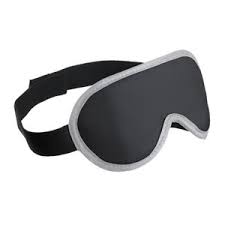 Keep it Dark: Here's one thing i've been finding- my room is not dark all night: there's light leak through the windows. As an experiment i've been using an eye mask that folks use to sleep in the daylight. And guess what? sleeping more through the night.
Tweet
Follow @begin2dig
Keep it Dark: Here's one thing i've been finding- my room is not dark all night: there's light leak through the windows. As an experiment i've been using an eye mask that folks use to sleep in the daylight. And guess what? sleeping more through the night.
Tweet
Follow @begin2dig
If we have our workout program dialed in, and our eating dialed in, what's left? Sleep? We log our workouts; we watch our eating. Do we think much about our sleep?
For athletes we know how important sleep is for recovery. Body builders know how critical it is for muscle building. But most of us barely have sleep in our field of view, other than to say we're too busy to get enough. And way way too many world leaders and health professionals work sleep deprived
How did you sleep, a partner might ask? Ya, ok. Or not. And that's it. If the question comes up.
Sleep Work Outs? So, just like we might say we need to get in shape and develop a program to achieve that goal, or likewise get a plan to eat better, how many of us get a strategy to sleep better?
Later this week i'll be chatting with Stephan Fabregas of myZeo about sleep and what sleep is, and some wild thoughts around how sleeping is an evolutionary strategy.
In the meantime, what's your experience with sleep? Do you sleep well? If not have you thought about formally getting a better sleeping strategy?
Keep it Dark: Here's one thing i've been finding- my room is not dark all night: there's light leak through the windows. As an experiment i've been using an eye mask that folks use to sleep in the daylight. And guess what? sleeping more through the night.
Tweet
Follow @begin2dig
Monday, March 22, 2010
Spring Wellbeing Haikus at b2d on fb - please share yours
Follow @mcphoo
Tweet
Spring Wellbeing Haiku Quest: Is spring putting a bit more zing in your step? Are new thoughts and plans and actions budding forth?
If so, please drop by the begin2dig Spring Revitalization Discussion page on facebook and share a Haiku of yours.
The form of a Haiku is 3 lines, 5/7/5 syllables a line. A few examples are already there.

Why a haiku? well in some psych literature, we see that apparently self-reflection is a great thing, and i'm thinking too that having some kind of structure to reflect around with a topic might just be spring like and unearth new thoughts.
Why not give it a go.
See ya over there?
mc Tweet Follow @begin2dig
If so, please drop by the begin2dig Spring Revitalization Discussion page on facebook and share a Haiku of yours.
The form of a Haiku is 3 lines, 5/7/5 syllables a line. A few examples are already there.
Why a haiku? well in some psych literature, we see that apparently self-reflection is a great thing, and i'm thinking too that having some kind of structure to reflect around with a topic might just be spring like and unearth new thoughts.
Why not give it a go.
See ya over there?
mc Tweet Follow @begin2dig
Sunday, March 21, 2010
Sleep and the Carrot Cake Correlation: have you experienced this?
Follow @mcphoo
Tweet
Can carrot cake help sleep? Or is it just the icing? A couple weeks ago, i was coming to the end of a several month low cal low starchy carb lifestyle as part of the  final training push for an event. One night, about a week after said event, but still having been quite diet-rigerous (by then it was habit) a group of us were out for dinner, and the waiter brought out the desert tray. On this cart was the largest slice of carrot cake i had ever seen. "It's usually bigger on the plate when they serve it"
I asked if anyone wanted to share a piece. Of those interested in the carrot cake, two other studly guys were quite happy to have their own. Ok then. I was still hungry. I was ready to go for it. Not only that i was quite sure i'd be done first. Not rushing; just i was still hungry.
The deserts arrive. The coffee arrives. The deserts are indeed huge. They are also lavished with some kind of white icing and perhaps some cream cheese kind of middle. The cake part was very good. The icing's sugar hit was intense. Wow what a rush. And yes, i did finish the cake first, but only the lads were able to polish off all the icing and middle substance.
Interestingly there were predictions of an immanent and horrible sugar crash, but perhaps i got to sleep soon enough after this (within about 90mins), but no such crash occurred. What did happen is that for the first time since i could remember, i slept through the night. I woke up feeling terrific. I have not had quite such a deep sleep since.
Is there a carrot cake correlation?
A while ago, i wrote about work that showed that mega hi GI carbs taken four hours before planned sleep resulted in getting to sleep and staying there. In looking at the GI of carrot cake (in the 50's) and the Jasmin rice used in the study (100+) that doesn't seem quite to fit. Maybe the icing put it over the top - even though i think, seem to recall, leaving quite a bit?
Dunno. I just dunno.
But if you've had any kind of similar carrot cake experience related to high quatlity sleep and high wellb eing the next day, please let me know.
Keen to learn.
Oh, and coming up on B2D: discussions with Stephan Fabregas, Sleep reearcher at myzeo.com.
We'll get at this thing that knits up the ravelled sleeve of care yet. Tweet Follow @begin2dig
 final training push for an event. One night, about a week after said event, but still having been quite diet-rigerous (by then it was habit) a group of us were out for dinner, and the waiter brought out the desert tray. On this cart was the largest slice of carrot cake i had ever seen. "It's usually bigger on the plate when they serve it"
I asked if anyone wanted to share a piece. Of those interested in the carrot cake, two other studly guys were quite happy to have their own. Ok then. I was still hungry. I was ready to go for it. Not only that i was quite sure i'd be done first. Not rushing; just i was still hungry.
The deserts arrive. The coffee arrives. The deserts are indeed huge. They are also lavished with some kind of white icing and perhaps some cream cheese kind of middle. The cake part was very good. The icing's sugar hit was intense. Wow what a rush. And yes, i did finish the cake first, but only the lads were able to polish off all the icing and middle substance.
Interestingly there were predictions of an immanent and horrible sugar crash, but perhaps i got to sleep soon enough after this (within about 90mins), but no such crash occurred. What did happen is that for the first time since i could remember, i slept through the night. I woke up feeling terrific. I have not had quite such a deep sleep since.
Is there a carrot cake correlation?
A while ago, i wrote about work that showed that mega hi GI carbs taken four hours before planned sleep resulted in getting to sleep and staying there. In looking at the GI of carrot cake (in the 50's) and the Jasmin rice used in the study (100+) that doesn't seem quite to fit. Maybe the icing put it over the top - even though i think, seem to recall, leaving quite a bit?
Dunno. I just dunno.
But if you've had any kind of similar carrot cake experience related to high quatlity sleep and high wellb
eing the next day, please let me know.Keen to learn.
Oh, and coming up on B2D: discussions with Stephan Fabregas, Sleep reearcher at myzeo.com.
We'll get at this thing that knits up the ravelled sleeve of care yet. Tweet Follow @begin2dig
Friday, March 19, 2010
Michael Castrogiovanni Interview: The Innovative Fine Art & Sport of Kettlebell Partner Tossing
Follow @mcphoo
Tweet
For many folks, playing catch is a fun activity - get a little exercise, exercise a little skill to catch a ball while moving or to adapt to a crappy pitch or to pitch well for a great catch. Usually the implements of such game play are at most a few ounces (a few hundred grams). Now imagine taking this game up a notch and playing catch tossing 12kg (26lb) to 32kg (70lbs) or more via an iron ball that has a handle on it.
This particular form of catch is an evolution in Micahel Castrogiovanni's kettlebell practice, developed with his colleages RKC TL Jeremy Layport and RKC Blair Ferguson. It's called Kettlebell Partner Tossing, previewed half a dozen posts ago here at begin2dig. The video above is from Michael's forthcoming DVD on progressions to develop the skills for these out-of-the-sagital-plane movements few of us working out with kb's have ever tried.
I got to see this tossing live (way more incredible and very "beautiful strength"y than even the video conveys) and found it so compelling, i asked Michael if he'd do an interview about his own background in athletics, how he came to kettlebells, how the heck KB Partner Tossing came about and fits into his practice. Michael kindly agreed, and beyond those points, we also discuss some thoughts on who else might consider adding Tossing kb's to their athletic regimen.
Background: In what's known as the hard style kettlebell community Michael is a quiet but potent presence. For context, he is the co-author with Brett Jones of the well regarded Kettlebbell Basics for Strength Coaches and Personal Trainers. We'll come back to this one.

Michael also has a Bachelors degree in Kinesiology with an emphasis in Fitness Nutrition and Health, his certifications include NSCA Certified Strength and Conditioning Specialist; he is an RKC team leader. Michael's training has seen him working with business executives, the Orange County fire authority, high school football teams, and Hermits at a monastery to name just a few. More bio details are available at Michael's Facebook page.
Interview Proper
Have you always been an athletic guy? If yes, what's the path been? if not, what's the path been?
the guy with the beard is you! you taught me how to push press a kettlebell, dude! that's a great video. Would you care to discuss a bit more about how that dvd came about since it's become such a reference set?
to participate with you?
Wow that will be great for your sales.
So a few questions here: what kind of prep would you say is crucial - how does someone know they're and advanced kettlebeller - you mention time - what else?
What would you say if it hasn't been covered is important for folks to be sure to incorporate into their own strength practice that you think may be missing or underplayed?
Will post an update as soon as Michael's video is out. In the meantime if you'd like to hook up with Michael for training, he can be reached via sportfitproformance.com
In the meantime, let's see that again...
Related Posts
This particular form of catch is an evolution in Micahel Castrogiovanni's kettlebell practice, developed with his colleages RKC TL Jeremy Layport and RKC Blair Ferguson. It's called Kettlebell Partner Tossing, previewed half a dozen posts ago here at begin2dig. The video above is from Michael's forthcoming DVD on progressions to develop the skills for these out-of-the-sagital-plane movements few of us working out with kb's have ever tried.
I got to see this tossing live (way more incredible and very "beautiful strength"y than even the video conveys) and found it so compelling, i asked Michael if he'd do an interview about his own background in athletics, how he came to kettlebells, how the heck KB Partner Tossing came about and fits into his practice. Michael kindly agreed, and beyond those points, we also discuss some thoughts on who else might consider adding Tossing kb's to their athletic regimen.
Historical Note - it may well be that strongmen (and maybe stronggals) of yore partner kb tossed. You know, it's bound to happen: have a kettlebell; a couple strongpeople. Eventually, it has to come up "heh let's throw that at each other " (thanks ltd for that '30's link).
The ever vigilant Randy Hauer sent me a link to a demo of Ukraniane KB partner tossing hence me calling Michael an Innovator, rather than an Inventor. What i saw with Michael and Jeremy was not as formalized as the ukranine precision tossing, used heavy kb's, and seems to have the potential to evolve into a sport (my assessment; Michael makes no such claims). It seems to me that by doing a How To DVD on this practice, Michael is making an effort to enable others to gain access to this practice. All good. Here's to you experiencing delight and joy in this practice, too.
Background: In what's known as the hard style kettlebell community Michael is a quiet but potent presence. For context, he is the co-author with Brett Jones of the well regarded Kettlebbell Basics for Strength Coaches and Personal Trainers. We'll come back to this one.
Michael also has a Bachelors degree in Kinesiology with an emphasis in Fitness Nutrition and Health, his certifications include NSCA Certified Strength and Conditioning Specialist; he is an RKC team leader. Michael's training has seen him working with business executives, the Orange County fire authority, high school football teams, and Hermits at a monastery to name just a few. More bio details are available at Michael's Facebook page.
Interview Proper
Have you always been an athletic guy? If yes, what's the path been? if not, what's the path been?
I have always been involved in athletics and it has taken me many years of practice and dedicated training to develop my athletic abilities. I view athleticism as a lifelong pursuit and it is something I am continually working towards improving. I played soccer, basketball and football as a youngster. When I turned 14 I asked Mark Reifkind (the owner of the World Gym at the time and current Master RKC) if I could work out at his facilities. Unfortunately the age requirement was 16. After begging and pleading he told me I needed a note from my mom and dad with their permission to work out. My parents felt it was a good idea so I started at the World Gym shortly thereafter. In high school I played football, tennis and wrestled. I continued wrestling on club teams in college and I furthered my pursuit of athleticism in the weight room and in the class room. After college I spent as much time as possible with leaders in the industry honing my skills, learning as much as I could from as many people as possible.it sounds like you may have moved progressively away from sports to more strength based training. Is that the case or is something else happening here?
I have been doing strength based training with weights since I was 14 to supplement my sports performance. As I am getting older I am participating less in competitive sports and have moved more towards the strength training, yes. I also do quite a bit of work for my hand eye coordination, overall coordination and agility as well in order to keep things well rounded and balanced. My intention is to increase athleticism and my ability to move optimally and restriction free in all ways, anything that will improve these abilities gets incorporated into my training.Your early DVD on KB coaching with Brett Jones- it took me ages to connect
the guy with the beard is you! you taught me how to push press a kettlebell, dude! that's a great video. Would you care to discuss a bit more about how that dvd came about since it's become such a reference set?
Sure. The KB basics DVD came from my 2004 pat the point of doing this video, what was your main training? how did it come about?resentation on kettlebells at the NSCA national conference. I had made contact with the NSCA and they invited me to do a presentation on kettlebells in Minnesota of all places. I contacted John Du Cane of Dragondoor publications and told him of the business opportunity and he got on board.
Shortly after I spoke with John, Brett Jones senior RKC and a fellow CSCS sent me an e-mail asking to be a part of the presentation, and that he would help in any capacity that he could. So I decided that it would be a good idea for him to demonstrate the Kettlebell movements. The presentation was a huge success and we received positive feedback for our performance and our chemistry. Pavel, who was also at the conference, remarked at how well we worked together and told us that we should do a DVD. We agreed and worked for the next several months building the outline. We shot the DVD in early 2005 had it edited and on the market by late June of 2005 and the rest is history.
At the point of filming I had just left the monastery where I had been living for the previous six months. While I was there my training consisted of all things kettlebells, squats, deadlifts, pull-ups and yoga. When I wasn’t working out I was splitting wood, climbing trees, lifting rocks, mountain biking and hiking.SO before we get to that one, how did you come to KB's?
The way that it came about is actually quite cool. I brought my bells up to the monastery and they had some very basic weights in their gym. I worked ninety percent with kettlebells and ten percent or sometimes less with more conventional types of training. My style of training was dictated by what I had available to me and how creative I could be. It is one of the fondest memories I have of training even thought the equipment was minimal.
Interestingly enough the same man who opened his gym doors to me when I was 14 would introduce Kettlebells to me 9 years later. Mark Reifkind had been telling me about this strength and conditioning tool called a "kettlebell" for several months. Finally one afternoon in his garage he showed me the swing, clean and snatch. After the initial lesson, he ran me through a quick circuit with the kettlebells that left me mindboggled and out of breath! From that moment I knew my training would be changing for the better.That's cool. What was your practice at this time? still sports focused? strength focused? or did you just trying to get a sense of what you mean your training would get better?

There was still sport focus but it was beginning to taper quite a bit. I had sustained a wrestling injury so my competitive days had come to a standstill. I was predominately focused on rehabilitating myself and getting as strong and healthy as I could. When the kettlebell was introduced to me I realized that my training was going to get better in the sense of more interesting, more creative and in a way a totally different paradigm of training. I moved away from many of the lifts I was doing with the intention of immersing myself in the kettlebell.How did strength become important to you?
Sounds like you've had at least one experience - perhaps that was not in the strength space - that led you to this discovery about the vulnerability/strength tao. if you care to share a bit more about that, that could be cool.
The first response that comes to mind is that I wanted to be as strong as possible so that when I wrestled I could man handle my opponents. If I look deeper, a more honest answer is that strength became important to me because of my desire to not feel weakness or vulnerability and the insecurity that accompanies the two. I guess you could say fear of being week or vulnerable was where it all started-compensation based if you will. I used my apparent strength to feel better about the areas where I was not strong. Later in my strength training career I learned that the very thing I was aiming to avoid, vulnerability, was the key to finding real strength. To be willing to be vulnerable and face weakness is where authentic strength is spawned. The willingness to make mistakes, to fail and to not be perfect is true strength training. This is my ongoing practice and by no means I am a master yet. However, now I know that vulnerability is not something to fear. Rather, it is an ally to be embraced, accepted and learned from.
It will sound trivial to say that is a compelling and powerful story, Michael. It's the sort of thing one wants to ponder. How then now do you measure your satisfaction with your own pursuit of strength?
The experience that comes to mind is a wrestling injury. I was in tip top shape wrestling five to six days a week going to school full time, teaching grade school P.E. part time and studying some martial arts. My plate was full, my speed was full throttle, and my definition of who I was came from all the physical demands that I placed on myself. I felt invincible, powerful, fully alive and completely identified with my body. At wrestling practice the week before league finals I made a poor choice to wrestle with a novice. I took a sloppy shot, he dove at me, my face met the crown of his head and he knocked me out. I awoke on my back with blood in my throat and no feeling in my legs. I freaked out and began to pray.
Fortunately nothing was broken. Since I was feeling numbness and tingling in my left arm the doctor sent me to a neurologist who ordered an MRI. We discovered a herniated disc and was ordered to stop physical activity. Everything that I identified with had been taken away from me in a moment and I was left questioning who I was. I didn’t realize how much self worth I put in my identities, as a wrestler, as a coach, as a teacher, as a strong man, etc until I was unable to be those things. I felt that there was more to me than my physicality and I also saw that many of the superficial aspects of my life were what I believed myself to be. The journey back to physical, mental and emotional health was where my true strength journey began. Vulnerability and weakness became the norm and my lessons became more about acceptance and letting go than making personal records and building my body. I began to experience a different type of strength from a whole, new perspective .
Slowly I felt sensation come back to my body. Dazed, I sat up; stabilizing my neck with my hands I went to the bathroom and packed my nose with toilet paper. I had a friend drive me to the gas station to buy a big bag of ice for my neck. She wanted me to go to the emergency room and I insisted I would be fine. I had a test the next morning and couldn’t afford to wait in the ER. She took me back to my house and I passed out for the night. The next morning I knew that I was in bad shape, I bombed my test and headed over to Student health services with a swollen neck and pounding headache. The doctor immediately put me in a neck brace, diagnosed me with a concussion and sent me off for a CT scan.
I feel most satisfied in my strength pursuit when what I am doing to build strength carries over into other aspects of my life. The measurement for that is quite intrinsic but I know when there is carry over and that is what is most important to me.Moving then from this intrinsic aspect to the extrinsic and the particulars of your new practice, at the RKC II 2010 cert in San Jose you spoke of a kind of dissatisfaction with kb's always in the same movement plane - effectively, going between one's legs and over one's head. What inspired you to move outside that plane/box?
Ideas came to me and I wanted to try and see if they could actually work. By allowing myself permission to explore the possibilities, the conceptual moves soon became reality that in turn lead to more possibilities. The kettlebell is a creative outlet for me.Was that a surprise to you?
I see myself as a very creative person so it was not a surprise to me.Good for you. That's cool. Dare i ask what are the properties of the kettlebell that appeal to you such that it made sense for this kind of exploration?
This is a deep conversation that I think we ought to have over a cup of tea after we have tossed some bells together. I can show you better than I can tell you.Delighted. How long have you been developing/playing with less static movement in kb's.
The more dynamic movements started in 2004 when I was living in Big Sur at a monastery. Yes, at a monastery.Well i can think of few better places for one than on the Big Sur road. Pray continue.
I felt confined in the traditional ranges and I wanted to incorporate more movement to promote greater growth in general and in athleticism. So I started to explore as many possibilities as I could imagine.Can we do something very basic here and ask about movement? Folks used to pressing weights in the gym might already see kettlebell swinging as dynamic and a wee bit dangerous. So to say you wanted more movement may be intriguing for folks watching regular kb vids, or those who are already practicing with them.
Even though the kettlebell moves are much more dynamic than most people are used to, the movements are all done with stationary feet. As an athlete and strength and conditioning coach, I recognize the importance of footwork and agile feet. So when I talk about wanting more dynamic movements, I am referring to moving the body through time and space as well as the kettlebells.What motivated the partner kb tossing? how did you encourage others
to participate with you?
The motivation for partner passing came from my desire to progress further outside the box. Once I tried passing I immediately knew that it was something that I wanted to pursue. Unfortunately it is not that easy to convince other people to let you throw cannonballs at them. Luckily, I met Blair Ferguson of Sportfitproformance.com and he was totally into the idea!The difference between the video clip and the demonstration/performance with you and Jeremy in San Jose seemed to be the closeness of the space. There was something even more compelling i found both in the tighter space of the performance and also, sitting on the ground to watch it low. Have you seen video from that seated position of you guys passing the kb? if not, i hope you'll take a look.
The other person that I was able to convince to throw bells at me, AND who has been instrumental in the development process is Jeremy Layport. Thanks to Blair and Jeremy I have been able to develop KB passing beyond what I ever imagined.
I have not and I will take a look at that as it presents itself thank you for the insight.Also, do you see your movement in partner passing as demonstration or performance or something else?
It is demonstration, performance and training all in one. All aspects are going on when an audience is present. The degree of perceived danger is increased with an audience in front of you-especially the first time demonstrating.From an athletic wellbeing perspective, what do you see as the benefits from kb tossing?
i wonder how we could set up a functional mri of kb tossing - just to see how the brain lights up as the risk/attention and coordination go up. fascinating.The benefits are many. I find that the most important thing that it has facilitated in me is greater trust: trust in my body's ability to handle whatever is "Thrown at me", trust in my partner to do his or her best and trust in the process as it unfolds. Another benefit that comes from partner passing, is learning to read situations and make split second adjustments accordingly without compromising structural or personal integrity.Some additional training effects of KB passing are increased awareness and sharpened focus. As the perceived degree of difficulty and/or danger of a given activity increases, we tend to invest more of our focused attention on the activity at hand. Some side benefits that I have seen are increased eye hand coordination, grip strength and endurance, the ability to manage load and force from many different angles and improvement in one's ability to improvise to name just a few.
That is a great idea and I would love to be a part of that and see what the results would be.Two quick questions: i'm betting that y'all would call kb partner tossing safe because you train with weights against which you know you can get position when they're thrown. Is that fair?
That is fair and there is still danger involved.That said, what are your usual partner tossing weights? do you train with these or heavier/lighter weights?
I use as many different weights as possible. The amount of weight is one important variable of this type of training that allows for so many possibilities. As the weight changes, even though the patterns stay the same, the exercises become radically different. I do most of my experimentation with the 12kg, 16kg, or 20kg, with the goal of being able to eventually do the patterns with the 24kg, 32kg, and up. There was a session a few months back where Jeremy and I were tossing a pair of 48kgs for reps back and forth. I also toss the 8kg’s with some of my female clients, it really depends on who I am tossing with and what my intention is for our session.How much time would you say you and your colleagues put into training tossing daily/weekly to get to the proficiency you have - and let's just get it out there now that you are all veteran kettlebell trainers and practitioners in the standard arts of swing, snatch,get up.
You also say you trust your partner to give "his or her best" - have you worked with women in the tossing? if so, are any parts of the experience different from working with men/women in this practice?For the year prior to filming the video I was practicing with Blair Ferguson three times a week for one to two hours depending on what we were working on. I only had a few weekends to work with Jeremy several months before we filmed. Fortunately, Jeremy is such a stud and incredible athlete he was able to pick it up quickly and he also had [RKC Team Leader -mc] Chris Holder to practice with and that made a big difference.Tossing is also a single person endeavor. On the days I was not practicing with Blair or Jeremy I would practice my single man juggling routine to get better at handling the bell and understanding its nature to prepare for partner passing.
Yes I have worked with a few women and there is very little difference other than the amount of weight used. Women tend to pick it up fast and enjoy the challenge just as much as the men I have worked with. I want to work with more women because one of the major benefits is the balancing, grounding and rooting aspects this type of training has to offer. I feel tossing has quite a lot of potential for women of all ages.In your experience how is tossing different than kb juggling?
There is far less control in tossing vs. jugglingNice. good point.
You never know what kind of a rep is going to be thrown at you and adaptation is paramount. There is also a component of communication that exists with the passing that is not there when you are juggling. Tossing kettlebells is an interaction between two humans and a way of relating with each other through the kettlebell, whereas juggling you are relating to the kettlbell. Kettlebell passing is in its essence a complete model for communication and I still have much to learn about communication from this type of training.You sound pretty passionate about the importance of communication. could you speak a bit more about why this is critical for you?
The reason I am so passionate about Communication is because it is the platform for all interaction. To be effective and successful at life is to be an excellent communicator. Communication is both listening and speaking and to be a master of communication allows one the ability to exist in any environment with ease and grace. Listening is one of the most powerful aspects of kettlebell passing, it becomes more than an act of the ears, rather, an act of one’s entire body. Listening takes on a whole new meaning as all the senses are employed to read a given situation as it is unfolding in the present moment.
What would you advice folks to do who are new to kettlebells, see your video and say "wow that looks so cool; i want to do that?"
Don't.
This type of training was developed for advanced athletes and kettlebellers. Spend a few years learning the basics before you get any crazy ideas. Strength health and longevity are the goals of training and making poor choices will only keep you from the goals.You know as soon as you put out your dvd though, that folks who haven't worked much with KB's are going to get excited about this as "extreme kettlebelling"
So a few questions here: what kind of prep would you say is crucial - how does someone know they're and advanced kettlebeller - you mention time - what else?
You might be an intermediate kettlebeller if you have been practicing for a year or more and teaching for about as long, and you have an RKC, AKC, or IKFF cert under your belt.Also, i mention "extreme kettlebelling" - it doesn't sound however like it has that "extreme" mantra to you - that you're not driven by how far you can toss or how heavy. What is the key focus for you?
You might be an advanced kettlebeller if you have three to five years under your belt and you are a Team Leader, a Senior RKC, a Master RKC, or if you are a competitive kettlebell lifter with several meets under your belt and you are a higher level instructor for one of the other reputable kettlebell certifying bodies out there..
Seven or more years of continuous practice and you are more than likely to be in the advanced category provided you have had a credible instructor teach you the techniques of the trade. Learning from magazines books and DVD’s does not count!
If you can easily complete the single man [sic] kettlebell juggling routine from my KB partner passing DVD with good form and in a safe manner, it is most likely o.k. to proceed. Provided you have had instruction from credible instructors.
I do enjoy tossing bells as far as possible and passing heavy bells back and forth and you are right the drive is not the extreme aspect of the training. The key of the kettlebell partner passing for me is the highly focused state of Zen like meditation that is achieved from practicing. It is a movement meditation and a form of self cultivation like no other that I have experienced. It is a cross between Tai Chi, wrestling, and weightlifting.Have to say that my recollection of watching the tossing at the RKC the youtub clip just doesn't do it justice. WHen you kept saying to the group to move back and give you a bit more room, i don't think most of us had any idea what was coming - for what would you need that much room with a kettlebell?
I think it is far more impressive to see KB passing in person then in video format. It was an amazing experience to have the space I did and the audience to demo for. I was so into what we were doing that time and spaces were of little concern.Kettlebell tossing is an act to be seen by others as well as practiced for dynamic strength, is it not? Where does performance in front of others come into your practice? What's its role?
I hope others see this style of training and realize that it takes good sound judgment to determine if it is appropriate for their personal practice. To see is one thing and to do is a whole different ball of wax. I recommend extreme caution when others consider this kind of training. It is Dangerous! The element of danger adds to the benefit of the training and the reward must be weighed against the risk.Does it feel much different when there's folks watching?
The performance aspect creates more pressure, when I start tossing the only thing I have on my mind is what's being tossed at me and what I am tossing back.When you're not tossing kettlebells with the willing, what do you do, Michael?
One of my favorite things to do is train at sportfitproformance.com in Ventura, California with Blair Ferguson. Our collaboration is one of the main reasons that the KB passing has advanced and evolved to this level. I love being active, hiking, biking, yoga, surfing, grappling, kayaking and just about anything else that involves nature. I also enjoy learning, communicating, reading and I am learning to enjoy writing more. Spending time with friends and family is very important to me and I always enjoy developing and growing my relationships.Yoga? any particular form? and how long has that been in the Michael mix?
I began yoga in 2000 just before I was introduced to kettlebells. The tyle of yoga was predominately vinyasa flow, I have also practiced restorative yoga, tantra, and power yoga. Four years ago, I transitioned to a more aggressive and challenging form of power yoga called Blanchard yoga and have been practicing it since.Is that activity what sets your hair on fire or is there something else that also moves you?
I tell ya, watching you do pull-ups at the RKC 2 moved me!! The natural world and the mysteries' of life along with the depth and beauty of the human body sets my hair on fire.Goodness.
What would you say if it hasn't been covered is important for folks to be sure to incorporate into their own strength practice that you think may be missing or underplayed?
Squats, Deadlifts, overhead press and pull-ups.OK, let's go: why each one, and with which implements?
All implements are good to use and should be used in moderation.As we've been discussing, you do have a video on kb parner tossing coming out. What will it be called, when can we expect it, and where will we be able to order it?
They are all full body exercises and require significant amounts of tension to perform and they all systemically fortify the body.
Pull-ups because it is important to be able to pull your weight.
Squats because they teach you to stand up
Overhead press because this is one of our weakest positions and it is always good to have the strength to put your own luggage in the overhead bin.
Deadlifts because it is important to be able to pick up heavy stuff you never know when you will need this.
"Michael Castrogiovanni's Kettlebell Partner Passing" (as of right now) is in the final stages of production and is expected to be released this quarter. It will be available through multiple outlets including my website transformativefitness.com.Fabulous; looking forward to it. I'm sure the three of you could get onto tv shows demonstrating this - that strength can be fluid and beautiful in different ways.
Yes I want to juggle for OprahThat would be fantastic. How do we make that happen? In the meantime, is there anything else you'd care to share that i haven't touched on here related to wellbeing, fitness, what's important to you in this space?
Thank you for taking the time, Michael, to talk about your practice and your new sport. Much obliged.Yes. I feel that there is one key ingredient to wellness and fitness that is overlooked and often thrown by the wayside in favor of increasing numbers, winning and achieving new personal records.
That crucial ingredient is fun.
We have been conditioned at such an early age to win that the idea of fun gets glossed over. The win at any cost attitude is a fast track to burning out. If a lifelong pursuit of health, fitness and wellness are the goals, I highly recommend doing more of things that you enjoy, that make you laugh and smile, with people you love.
Thank you for the opportunity to share my experience with you and your readers. Peace and blessings to all.Michael is one more incredible athlete whom i've spoken with from the RKC II who's independently said the premium should be on fun, being in the moment, rather than numbers. There's a theme from the best practitioners developing here.
Will post an update as soon as Michael's video is out. In the meantime if you'd like to hook up with Michael for training, he can be reached via sportfitproformance.com
In the meantime, let's see that again...
Related Posts
- Asha Wagner: taming the beast with Greasing the Groove (interview)
- What if we were no longer how we define ourselves - like strong?
- RKC Cert Experience
- Prepping for the RKC Cert
- GS first impressions
- Enter the Kettlebell Review
- Deadlift Resources: Deadlift Digest
- Sensory-Motor Contribution to Strength/Performance
- Green Tea, why it rocks for health || how to prepare it
- Sedona Method Review: getting rid of crap around goals
- KB Basics for Strength Coaches and Personal Trainers double DVD set
- ETK (Enter the Kettlebell)
- Kalos Sthenos (beautiful strength)
- Power to the People Pavel Tsatsouline (deadlift guide)
- Starting strength Mark Rippetoe (squat/deadlift guide)
Subscribe to:
Comments (Atom)

 COACHING with dr. m.c.