Sunday, May 31, 2009
Renegade Row: dynamic strength and balance
Follow @mcphoo
Tweet
An exercise complex that has recently become a favorite of mine is the renegade row (with push up).
Why? Rows in general are great upper body workouts. Stuart McGill has recently done an article on rows comparing inverted, standing bent over and one arm cable rows for back activation patterns. They are powerful core workouts.
The renegade row is likely closest to the standing bent over row with a few differences - a biggie being balance/control of the weight.
The renegade row, is shown above with Power Blocks. For added strength/stability challenge, put your feet only shoulder width apart, and get out a couple of kettlebells. Why kb's? It takes a bit of extra coordination (ie muscles firing) to keep them steady. That means you're adding a wee bit of balance to the workload.
mc's Renegade Row Sequence
Just to review, here's how i do a renegade row sequence - it may vary from yours.
Pull Part
Push Part:
Now, other variants of this row are, pull left, push up, pull right. Personally, i find it more effective to focus on the pulls, L/R and then the pushes. Your mileage may vary.
Sequencing:
I like to EDT the renegade rows into a set with some lower body work. Somedays its goblet squats, or double KB front squats, or romanian single leg dl's or yesterday it was double kb single leg deadlifts for the lower body work. EDT means going for max sets of each pattern within 15 mins, using a 10RM weight going for only five reps.
Muscles Worked: why i love this excersise.
I love how this sequence makes me feel for the next few days:
A bit of Stability; A bit of Form; a bit of kalos sthenos (beautiful movement)
I also like the momentary loaded, dynamic balance / strength aspect of
 Mr. mahler, pictured above, has his feet nice and close - shoulder width at most. He seems, however, to be torquing to the side here. I'd suggest stay more in the level plank and get the hand right up to the waist. You'll note the guy in the vid at the top of this story above doesn't torque but his feet are quite spread.
Get both these parts together and you'll be very pleased with yourself. For instance, take a look at this version: nice level trunk; feet only shoulder width apart; neutral neck position; no torquing on the up.
 Now some folks what don't know better may say these are "sissy weights" pirctured, but they may want to reserve that appellation if they can't hold this form with their KB of choice themselves.
As you can see if you have given this sequence a go, it's not easy to get in this kind of dynamic upper body/trunk work, and the RR is way cool.
Practice staying tight (as pavel might say) in the core. You may want to practice doing planks first, or getting used to balancing in form on the bells and just bringing your hand up to your side while maintaining your plank form while one side is off the bell.
Challenging form: balance
I mention that we're working to hold balance when using the KB's rather than the very stable powerblocks. And for me that little bit of stabilization required is just right: not too much instability. What do i mean by "too much"?
Some times you'll see folks using medballs for their pushups - i'm not crazy for that much of a stability challenge - i personally don't test stronger after that; with kb's i do.
By "test stronger" - i mean something zhealth teaches: if you're wondering if a particular form of an exercise is working for you, do a muscle test (you may need a partner for this) before the test; do the excercise; retest. If you're weaker, there may have been something saying to your nervous system that's not a happy thing.
Ok. what's a muscle test, since there are different ways this term is used. Here, it's pretty straight ahead: it's simply a test to see if your muscles are functioning properly. If you hold your arm up, and your wrist out in extension, i shouldn't readily be able to pull your hand down if everything is firing properly.
Another good example - testing hamstring strength: all's well, you standing with your hands on the wall, looking straight ahead, bent knee, i should have some good resistance pushing down on your calf. Indeed i shouldn't really be able to press a big guy's leg to the ground (as per me here, pushing on Kenneth Jay's calf as Mike Cheatham kindly plays "the wall" for this muscle test at the Denmark09 RKC). I've written before about this kind of thing with the arthrokinetic reflex.
 So once you do this test, you may find that you test a little more weakly (muscle is overcome) in a test than before doing pushups on wobbly surface. This is going to get onto a whole jag about instability training, but why jump on a wobbly surface if, say, we have trouble keeping balance with one foot off the ground and we then turn our head sharply? give it a go - how'd you do? Try a few other sports positions and then turn your head (as you might in real life or in a sport); try them with your eyes closed and a good head turn.
Here's a great one: one foot in front of the other, toe touching heel. Stable, or surfer dude? Now close your eyes. More stable or more surfer?
That's our proprioceptive system working really hard since our balance comes from vision, vestibular (inner ear) and proprioception (the nerves in our joints ligaments and muscles saying where in space we are). Apparently 80% of that VVP load comes from the eyes. Take those away, you can give yourself a whole LOT of balance training very quickly.
So why not get good at that, in motion (we move in real life) before going for that wobble board or med ball or swiss ball?
So if you want to work balance, fabulous. get on one leg, turn your head. One leg, close your eyes, turn your head. When you're awesome at moving and balancing, go a bit squishier. Remember, the idea is not to be stable on a wobble board, but stable in motion.
A lot of studies about wobble board adaptations don't demonstrate translation OFF the board into real activities (note, we are NOT talking about swiss ball work in the context of rehab, but regularly fit folk doing their workouts on unstable surfaces.) Here's a great example: this is a super article at the sports injury bulletin on the relationship of the proprioceptive system's mix with the visual and vestibular for balance work. Once you finish the intro though, here comes the wobble stuff. Does it translate off the board?
McGill was one of the first to show that sitting on swiss balls doesn't actually help strengthen the low back. Likeiwise, this is eric cressey's beef with unstable surface training and athetics. All this bosu ball stuff - so what you can balance on one of these - what happens when you get off them? From the actual research Cressey's done, the answer is not alot to less than nothing. A fast muscle test pre and post will tell you the same thing.
At least the recommendations at the end of that sports injury bulletin article is to start balance training on stable surfaces; master that before adding any kind of load - and load can be doing sums while balancing - it doesn't have to be a wobble board (aside: these concepts are all very much part of the z health i phase certification, so if you're looking for a trainer sensitive to improving your atheltic performance in the real world, look for a zhealth trainer with I in the list of their certs).
Summary: Renegade Rows Rock.
Hmm. well. didn't expect a description of the renegade row to become a treatise on the evils of the bosu. The intent was to say, if you're looking for something new to challenge your workouts, the renegade row with its pull and push, done with kettlebells, and especially as part of an EDT upper/lower body set workout, can be simply awesome.
You'll love all the places you're aware of your muscles over the next few days. Tweet Follow @begin2dig
Why? Rows in general are great upper body workouts. Stuart McGill has recently done an article on rows comparing inverted, standing bent over and one arm cable rows for back activation patterns. They are powerful core workouts.
The renegade row is likely closest to the standing bent over row with a few differences - a biggie being balance/control of the weight.
The renegade row, is shown above with Power Blocks. For added strength/stability challenge, put your feet only shoulder width apart, and get out a couple of kettlebells. Why kb's? It takes a bit of extra coordination (ie muscles firing) to keep them steady. That means you're adding a wee bit of balance to the workload.
mc's Renegade Row Sequence
Just to review, here's how i do a renegade row sequence - it may vary from yours.
Pull Part
- pull up one bell to belt line and belt height
- put it down
- pull up opposite side put it down
- repeat 5 times.
Push Part:
- follow the pull sets with 5 perfectly level push ups on the bell handles.
Now, other variants of this row are, pull left, push up, pull right. Personally, i find it more effective to focus on the pulls, L/R and then the pushes. Your mileage may vary.
Sequencing:
I like to EDT the renegade rows into a set with some lower body work. Somedays its goblet squats, or double KB front squats, or romanian single leg dl's or yesterday it was double kb single leg deadlifts for the lower body work. EDT means going for max sets of each pattern within 15 mins, using a 10RM weight going for only five reps.
Muscles Worked: why i love this excersise.
I love how this sequence makes me feel for the next few days:
- it hits the abs, but the obliques it seems in particular
- Lats are loved
- pecs can be quite buzzed
- traps and rhomboids of course get some attention.
- well it's the whole core, holding that plank, isn't it? (word doc about up/low core) - tall, neutral spine throughout.
A bit of Stability; A bit of Form; a bit of kalos sthenos (beautiful movement)
I also like the momentary loaded, dynamic balance / strength aspect of
- just staying stable with both hands on the bells - i think Mike Mahler who's Aggressive Strength hybrid EDT routines introduced me to this fab move once said don't do this with anything smaller than a 16k bell cuz the base of support is too small. Ha! i say. i use 12s.
- staying level in the trunk while pulling up on the bell - muscle control to stay planked and again keep stable on the balance hand/bell combo.
Mr. mahler, pictured above, has his feet nice and close - shoulder width at most. He seems, however, to be torquing to the side here. I'd suggest stay more in the level plank and get the hand right up to the waist. You'll note the guy in the vid at the top of this story above doesn't torque but his feet are quite spread.Get both these parts together and you'll be very pleased with yourself. For instance, take a look at this version: nice level trunk; feet only shoulder width apart; neutral neck position; no torquing on the up.
Now some folks what don't know better may say these are "sissy weights" pirctured, but they may want to reserve that appellation if they can't hold this form with their KB of choice themselves.As you can see if you have given this sequence a go, it's not easy to get in this kind of dynamic upper body/trunk work, and the RR is way cool.
Practice staying tight (as pavel might say) in the core. You may want to practice doing planks first, or getting used to balancing in form on the bells and just bringing your hand up to your side while maintaining your plank form while one side is off the bell.
Challenging form: balance
I mention that we're working to hold balance when using the KB's rather than the very stable powerblocks. And for me that little bit of stabilization required is just right: not too much instability. What do i mean by "too much"?
Some times you'll see folks using medballs for their pushups - i'm not crazy for that much of a stability challenge - i personally don't test stronger after that; with kb's i do.
By "test stronger" - i mean something zhealth teaches: if you're wondering if a particular
 form of an exercise is working for you, do a muscle test (you may need a partner for this) before the test; do the excercise; retest. If you're weaker, there may have been something saying to your nervous system that's not a happy thing.
Ok. what's a muscle test, since there are different ways this term is used. Here, it's pretty straight ahead: it's simply a test to see if your muscles are functioning properly. If you hold your arm up, and your wrist out in extension, i shouldn't readily be able to pull your hand down if everything is firing properly.
Another good example - testing hamstring strength: all's well, you standing with your hands on the wall, looking straight ahead, bent knee, i should have some good resistance pushing down on your calf. Indeed i shouldn't really be able to press a big guy's leg to the ground (as per me here, pushing on Kenneth Jay's calf as Mike Cheatham kindly plays "the wall" for this muscle test at the Denmark09 RKC). I've written before about this kind of thing with the arthrokinetic reflex.
So once you do this test, you may find that you test a little more weakly (muscle is overcome) in a test than before doing pushups on wobbly surface. This is going to get onto a whole jag about instability training, but why jump on a wobbly surface if, say, we have trouble keeping balance with one foot off the ground and we then turn our head sharply? give it a go - how'd you do? Try a few other sports positions and then turn your head (as you might in real life or in a sport); try them with your eyes closed and a good head turn.Here's a great one: one foot in front of the other, toe touching heel. Stable, or surfer dude? Now close your eyes. More stable or more surfer?
That's our proprioceptive system working really hard since our balance comes from vision, vestibular (inner ear) and proprioception (the nerves in our joints ligaments and muscles saying where in space we are). Apparently 80% of that VVP load comes from the eyes. Take those away, you can give yourself a whole LOT of balance training very quickly.
So why not get good at that, in motion (we move in real life) before going for that wobble board or med ball or swiss ball?
So if you want to work balance, fabulous. get on one leg, turn your head. One leg, close your eyes, turn your head. When you're awesome at moving and balancing, go a bit squishier. Remember, the idea is not to be stable on a wobble board, but stable in motion.
A lot of studies about wobble board adaptations don't demonstrate translation OFF the board into real activities (note, we are NOT talking about swiss ball work in the context of rehab, but regularly fit folk doing their workouts on unstable surfaces.) Here's a great example: this is a super article at the sports injury bulletin on the relationship of the proprioceptive system's mix with the visual and vestibular for balance work. Once you finish the intro though, here comes the wobble stuff. Does it translate off the board?
McGill was one of the first to show that sitting on swiss balls doesn't actually help strengthen the low back. Likeiwise, this is eric cressey's beef with unstable surface training and athetics. All this bosu ball stuff - so what you can balance on one of these - what happens when you get off them? From the actual research Cressey's done, the answer is not alot to less than nothing. A fast muscle test pre and post will tell you the same thing.
At least the recommendations at the end of that sports injury bulletin article is to start balance training on stable surfaces; master that before adding any kind of load - and load can be doing sums while balancing - it doesn't have to be a wobble board (aside: these concepts are all very much part of the z health i phase certification, so if you're looking for a trainer sensitive to improving your atheltic performance in the real world, look for a zhealth trainer with I in the list of their certs).
Summary: Renegade Rows Rock.
Hmm. well. didn't expect a description of the renegade row to become a treatise on the evils of the bosu. The intent was to say, if you're looking for something new to challenge your workouts, the renegade row with its pull and push, done with kettlebells, and especially as part of an EDT upper/lower body set workout, can be simply awesome.
You'll love all the places you're aware of your muscles over the next few days. Tweet Follow @begin2dig

 PDF
PDF

Tuesday, May 26, 2009
Vibram Five Fingers Free Foot Massage
Follow @mcphoo
Tweet
This weekend, found another asset to wearing Vibram Five Fingers. I've written about how in my experience, they, along with z health, improve gait and are great for getting through airport security without shoe removal. This weekend i also discovered another bonus: foot massage when walking on gravel.

That's right: VFF's afford a great foot massage when walking on stones.
There was a pile of stones/gravel around where i was working this weekend, and just standing, walking around IN the stones felt FABULOUS. It was like a free foot massage. I've started looking out for gravel pathways for the experience, and figuring out optimal stone types for the best foot work.
I felt pretty lucky, actually: all these folks where i was walking around the same stuff and likely missing the benefits of connecting foot to path.
It reminded me again how much fun it is to explore with one's feet, and how close, when doing so, off the beaten path can be.
Added Bonus:
For some great inspiring photos and tales of VFF, please check out Justin Owings beuatifully designed birthdayshoes.com site. Tweet Follow @begin2dig
That's right: VFF's afford a great foot massage when walking on stones.
There was a pile of stones/gravel around where i was working this weekend, and just standing, walking around IN the stones felt FABULOUS. It was like a free foot massage. I've started looking out for gravel pathways for the experience, and figuring out optimal stone types for the best foot work.
I felt pretty lucky, actually: all these folks where i was walking around the same stuff and likely missing the benefits of connecting foot to path.
It reminded me again how much fun it is to explore with one's feet, and how close, when doing so, off the beaten path can be.
Added Bonus:
For some great inspiring photos and tales of VFF, please check out Justin Owings beuatifully designed birthdayshoes.com site. Tweet Follow @begin2dig
Monday, May 18, 2009
10K Lean Eating Challenge with Precision Nutrition.
Follow @mcphoo
Tweet
Folks who read b2d may know i'm a fan/adherent of Precision Nutrition (see reviews listed to the right of this post) - along with folks here i respect a lot: RD Georgie Fea and Z Master Trainer Mike T Nelson.
Just FYI: 10k Prize for sensible eating transformation?
Well, ok, i'm not much of a contest person, but goals can be powerful motivation. So John Berardi of PN is running his body transformation challenge again via a special coaching program called Lean Eating. The new lean eating program will open May 26.
if you're interested in leaning up, possibly winning 10k from a *sensible* body transformation, and getting some one on one time with Berardi's lean eating team, signing up for the new Lean Eating Challenge, *may* be the most cost effective way to get that Work with a Trainer's edge to move towards your goal.
For more info, here's a video explaining the challenge
Worst case, 6 months of super nutrition training and support - customized for you.
I mention this because last year, the program actually sold out pretty much the moment it was announced, so this time, they're taking names for the program on i think a first come first served basis.
So if you're interested in this kind of hands on help, by all means put in your name while you consider further, but especially if you know someone you think may benefit from some support and training, well thar ya go.
again, just fyi...
all the best,
mc
in yet another airport lounge... Tweet Follow @begin2dig
Just FYI: 10k Prize for sensible eating transformation?
Well, ok, i'm not much of a contest person, but goals can be powerful motivation. So John Berardi of PN is running his body transformation challenge again via a special coaching program called Lean Eating. The new lean eating program will open May 26.
if you're interested in leaning up, possibly winning 10k from a *sensible* body transformation, and getting some one on one time with Berardi's lean eating team, signing up for the new Lean Eating Challenge, *may* be the most cost effective way to get that Work with a Trainer's edge to move towards your goal.
For more info, here's a video explaining the challenge
Worst case, 6 months of super nutrition training and support - customized for you.
I mention this because last year, the program actually sold out pretty much the moment it was announced, so this time, they're taking names for the program on i think a first come first served basis.
So if you're interested in this kind of hands on help, by all means put in your name while you consider further, but especially if you know someone you think may benefit from some support and training, well thar ya go.
again, just fyi...
all the best,
mc
in yet another airport lounge... Tweet Follow @begin2dig
Sunday, May 10, 2009
Myth Busting: Women are afraid of "bulking up" in working out - not!
Follow @mcphoo
Tweet
After reading a variety of posts on forums asserting that women are afraid of bulking up, i've been running a survey this past week of gals who do workout in whatever form they define "workout" to see if actual women hold these views - or if this assertion is just one more urban legend.
(update 1, below)

so far there have been 28 respondents to the following 3 positions:
1. i adjust my workouts deliberately to avoid muscular "bulk"
2. i adjust my workouts at least some of the time deliberately to achieve some "bulk"
3. i don't think about "bulk" at all when i do my workouts
Responses
1. only 1 person
2. 11 gals
3. 16 gals
 So, 40% picked that they DO go for bulk deliberately at least some of the time, while a whopping 57% (who also commented that they lift heavy) don't think about bulk one way or the other when they design their programs they "just want to get strong," or fast, and only 3% said they are concerned to make sure they won't induce bulk from their workouts.
That's a pretty significant inversion of the assumptions that have been expressed like some kind of truth about women's attitudes towards working out.
I'll update after another week if the numbers start to change, but i hope from this tiny sample at least some assumptions about "women" and their views of working out might get updated in folks' heads.
UPDATE 1:
response so far from a few of the gentlemen of good will who have seen this:
Update 2: (may 31, 09)
Since the results haven't changed for a week, here's the latest numbers on the the straw poll survey: of 52 respondents, 88% either don't care or from time to time deliberately do try to "bulk"

Fascinating again.
Tweet Follow @begin2dig
(update 1, below)
so far there have been 28 respondents to the following 3 positions:
1. i adjust my workouts deliberately to avoid muscular "bulk"
2. i adjust my workouts at least some of the time deliberately to achieve some "bulk"
3. i don't think about "bulk" at all when i do my workouts
Responses
1. only 1 person
2. 11 gals
3. 16 gals
So, 40% picked that they DO go for bulk deliberately at least some of the time, while a whopping 57% (who also commented that they lift heavy) don't think about bulk one way or the other when they design their programs they "just want to get strong," or fast, and only 3% said they are concerned to make sure they won't induce bulk from their workouts.That's a pretty significant inversion of the assumptions that have been expressed like some kind of truth about women's attitudes towards working out.
I'll update after another week if the numbers start to change, but i hope from this tiny sample at least some assumptions about "women" and their views of working out might get updated in folks' heads.
UPDATE 1:
response so far from a few of the gentlemen of good will who have seen this:
- must be a special group of women i surveyed, like just uni athletes or "women who know better" or "non advanced women athletes" or not the women a fellow sees in the gym who aren't "working out to their potential."
- These fellers make general statements about "women" of some class/group/category despite citing resources - but a sort of implicit reference to "common knowledge" which seems to be more persuasive than the actual data presented here (and by their own female peers).
- They resonate with the other 97% of women who participated in the survey - they either don't care themselves about adding visible muscle or not, or are into getting some muscle mass.
- These women have not generalized to knowledge of other women or "women" as a general class beyond knowledge of themselves or peers with whom they've deliberately discussed the matter.
Update 2: (may 31, 09)
Since the results haven't changed for a week, here's the latest numbers on the the straw poll survey: of 52 respondents, 88% either don't care or from time to time deliberately do try to "bulk"

Fascinating again.
Tweet Follow @begin2dig
Monday, May 4, 2009
A Movement Assessment: what is it and why should i have one?
Follow @mcphoo
Tweet
Getting rid of the Parts Model of Human Pain and Performance.
Folks on various health forums will often post "i have a weak knee; what exersises can i do to strengthen it?" or "my hamstrings are tight and it's affecting my deadlift; what can i do to loosen them up?" or "my shoulder keeps bugging me; what's good for shoulder rehab?"
All of these questions, it seems, tend to consider the site of the problem to be the source of the problem.
Folks who reply often share that perspective with proposals like "sore shoulder - here's a great book/dvd/blog on shoulder rehab." or "tight hamstrings? foam roll 'em out. it's great. do that anytime before you deadlift that'll loosen 'em right up."
But what if the site of the problem isn't the source of the problem?
Then all we are providing are classic band aid solutions where the problem will just keep coming back. We know about this in any kind of mechanical situation: the car engine is leaking oil.
If all we do is keep pouring in oil to top it up, we're not dealing with the problem. The problem may require a simple tweak on a part we're not familiar with, or it may need some more serious work. We don't know; we don't have the expertise. So we get an assessment of what the problem is, and what it will take to fix it.
We know enough to do this for a mechanical machine, and yet when it comes to our far more complex organism - our bio-electrical-mechano-organic selves, we seem to take a far cheaper attitude. Perhaps because we're so resliant; perhaps because the trad. medical establishment has let us down. And how successful - in the long term - is our tire patch/band aid approach?
Avoid Frankensteining Body Work
Here's another analogy: Pavel Tsatsouline famously decries the "frankenstien monster" approach to strength/body building that treats muscles in isolation. Frankensteining the body referring to assembling parts that are shown off as parts rather than integrated elements. Many of us have experienced the benefits of compound movement work to create powerful integrated, athletic strength and power.
Ok, so why then why then when we have a tweak, a pain, a weakness, do we suddenly move exactly to that body part, isolationist, frankensteining approach for how to make ourselves better?
Alternatives to the Parts Model approach to
Perceived Human Performance Problems
A movement assessment sees pain as a symptom only and respects the complexity of the body. As a result it may indeed be less interested in causes for a particular expression of the Whole Body saying HELP, and more interested in looking at and addressing movement patterns. A finding that's shocked and delighted me is how much improved movement/addressing movement reduces pain - many many varieties of pain.
Isn't that what Doctors Do?
Now, you might say well heck isn't that what a physio or a chiro does or even a doctor does?
The answer is yes and no: yes, if that physio or manual therapist of whatever stripe is hip to the notion of movement and how everything is connected in the body, possibly; if that physio person hears you say "i have sore shoulder" and goes right to assessing your shoulder - like site = source, then more likely no. The last time i went to see a doctor about a sore back i was prescribed muscle relaxants. Perhaps you have similar experiences?
The Movement Approach Difference:
Seeing a Whole Body in Motion; not bunches of parts.
While we tend to think of ourselves as a sore back, weak knee, tight hamstring. Or as strong biceps, weak shoulders, great back, our bodies are not so isolationist. The connections througout are rich and legion. Joints and muscles are connected with all sorts of tissue in all sorts of ways throughout the body such that "anything can affect anything." Really. Take a look at a book like Anatomy Trains for an incredible illustration of this point. A headache may be more tied to a tightness in the foot than a pain in the neck, as it were.
One of the best ways to see this interconnection manifest itself, it seems, is when we do what our bodies are designed to do: move.
When the body is in movement, it calls into play so many inter-related parts that when watched via a skilled assessor or via a good screen, show off just how well our highly integrated systems are working together - or not - and provide clues of what may need to be addressed to get us moving optimally. Consider walking: we are not only moving limbs and counterbalancing tensions; we're balancing and orienting ourselves in space. Our central nervous system is, as Z practitioners (overview of zhealth)and others learn, "always on" too, always connecting all systems. I've written before about the power of the arthrokinetic reflex and how a crinked neck cuts strength in a deadlift.
The emphasis is on movement. Address the movement and other good things follow.
UPDATE: what are examples of what happens in a screen (motivated by question on DD)
Movement assessments say "let me see you move" - and based on watching you move, a certified screener/assessor can see where there are weaknesses/problems in that pattern. They then have a set of corrective strategies that map to tackling that issue. They work through these with you and retest that sore point (where the symptom is tweaking) to check for improvement, and iterate to narrow down on the best set for you.
So you may come in with a sore shoulder, and be asked for a history of your health, and then, in Z someone may say "let me see you walk" - to check for those patterns.
The issue doesn't have to be pain; it may be a plateau in a lift, or problem with part of a move. same thing. Let's look at how you move, assess, drill, retest that move that's your concern.
Here's another example for an assessment that you can step through:
on the Functional Movement Screen site, there's an overview that describes/shows the 7 screens of that assessment.
You go through each screen, each side of your body and get scored. Based on those scores, the person screening you suggests drills to address any asymmetry (differences in left/right side performance) or weakness. The foundational principle of the FMS is first address asymmetries, then improve performance.
In ZHealth (and here's an overview), there's a variety of assessments, but the fundamental one is to watch you walk. Given that, you may be given mobility drills (like those in the Rphase DVD) to address what's found.
Can i Just Screen Myself?
yes and no.
It's tricky because it's hard to see yourself from vary many angles. i can watch myself walk forward, but need a video to watch me from behind, which is really important. so ya maybe with video, if you know what you're looking for.
That said, Gray Cook's Atheletic Body in Balance had a shorter version of what was to become the FMS for this kind of self-assessment - better perhaps than a kick in the head.
More recently, Gray and Brett and Mark's work on the TGU in the Kalos Sthenos DVD has been proposed as "a screen" - in fact we've been talking about how the TGU compares with the FMS. SO if you rigorously checked yourself against the spec of the TGU on the DVD, at each of the 7 parts of that move, you could get a very good idea of where your weak link may be - Brett would be quick to say though that that may only show you where your weak link is in the TGU - we're not clear yet how well it generalizes as a diagnostic.
What one could do is say
One more point for consideration on the self-check - this is exactly what a lot of us do when checking out our own form in a mirror for the swing or the snatch, right? but if you've had the pleasure of being observed by someone trained to teach these moves, they'll see one little thing we might miss, tweak that and in two minutes it's as if we've gone to movement heaven.
So yes, it's very good to get body awareness, and in particular movement awareness. This is what something like the ZHealth Rphase/Neural WarmUp vids help build and what the KS DVD helps build from slightly different perspectives.
The benefit of then going to a certified trainer to have the assessment is like going to an RKC to watch your hard style swing or snatch to tweak it, or to an ikff ckt for your GS. Another pair of eyes; another depth of experience.
Isn't this an expensive luxury? I just have a tight hamstring...
That's a good question.
Let's qualify a tight hamstring first and then expensive.
In keeping with the view of our body as an integrated system - and not just a machine with replaceable parts, a tight hamstring could be caused by just about anything. Indeed, to quote Eric Cobb of ZHealth, anything can cause anything. What if it's just a signifier of something in your shoulder or foot that if it isn't addressed, that hamstring issue will keep coming back, and perhaps bring some of its friends and pump up the volume. The arthrokinetic reflex is just one example of how something happening in one part of our system has profound consequences *through out* the system.
So, if you take away one thing from this post i hope it's that a pain signal or perception of weakness may be a signal of a systems issue, and checking the system (in this case with a movement screen) is a good way to address that signal.
Note i'm not saying that we have to check the system to find the CAUSE of the problem - who knows what the cause is, and is that important? What we can do is check for what's happening in the movement, address that, and see the positive effects.
Now as to expense, it's unfortunate that movement assessment isn't part of medical insurance. But until it is, yes it's a choice as to how you spend your hard earned cash.
A qualified/certified trainer may well cost you as much as going to see a chiro or related therapist for an assessment. As with other disciplines/services, you get what you pay for, so a question may be:
Likewise, seeing a pro movement specialist and trainer for 30-60mins can give your performance a huge boost that well pays for itself in terms of time taken to make these strides (and ability to make them without pain).
And there's other options:
with the CK-FMS (overview of cert), folks need to do a case study: they need someone they can see usually at least twice to assess and follow up. Search for a ck-fms in training and offer to be their case study. Some folks will also trade services for services, or have student rates. So ask. Packages are a great way to get even more value from your session. More on this next.
Optimizing the Benefit of a Screen: buyer's market.
There are a ton of personal trainers available - all dying to train YOU.
A growing number of smart trainers are adding movement assessment certifications to their tool box. You can look around for trainers that have such qualifications to go with your training - and you can check out what you think of those screens.
The RKC has hooked up with Gray Cook and Brett Jones to extend the Functional Movement Screen Certification to the CK-FMS. This cert material goes well beyond what's offered at an FMS cert, and is only available to RKC's - so with a CK-FMS, you have a top hard style kettlebell trainer and someone who knows how to run the FMS and who has done at least one deep case study on how to apply this approach from diagnostic to corrective strategies for that client.
Likewise, you'll find an increasing number of RKC's (and others) who (also) have Z-Health training. That trainer has a range of movement assessment tools and strategies available to them, too.
Both the FMS and ZHealth sites list certified trainers at least by location if not by name as well. It's relatively straight forward to check for someone who looks good via google and see what all their qualifications are, along with that particular cert, and see if that person looks like a match for your intersts.
What i like about the ZHealth listing for instance, is that you'll find physio's, rolfers, chiropracters, at least one MD, who care about fitness training, and have done advanced level Z certification, too. So what's your comfort level? if you want someone with a medical background also trained in movement assessment, you have choices.
So whether you're looking for kettlebell trainers or certified strength and conditioning coaches, or physical therapists, or chiropractors to help you with your fitness performance and health and well being, really the choice is yours. One of my most popular requests is for a movement assessment combined with a kettlebell movement check/tune up. I love that. It's a great package and a great way to optimize your training dollar/pound/euro/etc.
What does a movement assessment get someone, really?
In the FMS, Gray Cook talks about identifying your weakest link in order to address this link so as not to build function or strength on top of dysfunction.
In Z-Health, Eric Cobb talks about efficient, pain free movement.
The motivation in each case is similar:
- when you take away "the site is the source of the problem" perspective, you start to see a body in motion - not a collection of parts that can be assessed in isolation, but complex connected interrelated components.
From this perspective, the bod's really complicated: anything can cause anything. So an optimal way to look at the body is not at one part that may be saying something (on behalf of everything else), but at a whole organism in motion. The pragmatic consequence is a movement assessment that:
So if you have a tweak or a perceived weakness in a limb or have hit a plateau, consider these as signals not just to poke at a part, but as a call from your body to look at your whole self, and a great way to look at your whole physiological self is when it's in movement.
Guaranteed if you do this for yourself you'll be happier and healthier for it. And you'll find most trainers do offer guarantees of satisfaction, too. Tweet Follow @begin2dig
Folks on various health forums will often post "i have a weak knee; what exersises can i do to strengthen it?" or "my hamstrings are tight and it's affecting my deadlift; what can i do to loosen them up?" or "my shoulder keeps bugging me; what's good for shoulder rehab?"
All of these questions, it seems, tend to consider the site of the problem to be the source of the problem.
Folks who reply often share that perspective with proposals like "sore shoulder - here's a great book/dvd/blog on shoulder rehab." or "tight hamstrings? foam roll 'em out. it's great. do that anytime before you deadlift that'll loosen 'em right up."
But what if the site of the problem isn't the source of the problem?
Then all we are providing are classic band aid solutions where the problem will just keep coming back. We know about this in any kind of mechanical situation: the car engine is leaking oil.
If all we do is keep pouring in oil to top it up, we're not dealing with the problem. The problem may require a simple tweak on a part we're not familiar with, or it may need some more serious work. We don't know; we don't have the expertise. So we get an assessment of what the problem is, and what it will take to fix it.
We know enough to do this for a mechanical machine, and yet when it comes to our far more complex organism - our bio-electrical-mechano-organic selves, we seem to take a far cheaper attitude. Perhaps because we're so resliant; perhaps because the trad. medical establishment has let us down. And how successful - in the long term - is our tire patch/band aid approach?
Avoid Frankensteining Body Work
Here's another analogy: Pavel Tsatsouline famously decries the "frankenstien monster" approach to strength/body building that treats muscles in isolation. Frankensteining the body referring to assembling parts that are shown off as parts rather than integrated elements. Many of us have experienced the benefits of compound movement work to create powerful integrated, athletic strength and power.
Ok, so why then why then when we have a tweak, a pain, a weakness, do we suddenly move exactly to that body part, isolationist, frankensteining approach for how to make ourselves better?
Alternatives to the Parts Model approach to
Perceived Human Performance Problems
A movement assessment sees pain as a symptom only and respects the complexity of the body. As a result it may indeed be less interested in causes for a particular expression of the Whole Body saying HELP, and more interested in looking at and addressing movement patterns. A finding that's shocked and delighted me is how much improved movement/addressing movement reduces pain - many many varieties of pain.
Isn't that what Doctors Do?
Now, you might say well heck isn't that what a physio or a chiro does or even a doctor does?
The answer is yes and no: yes, if that physio or manual therapist of whatever stripe is hip to the notion of movement and how everything is connected in the body, possibly; if that physio person hears you say "i have sore shoulder" and goes right to assessing your shoulder - like site = source, then more likely no. The last time i went to see a doctor about a sore back i was prescribed muscle relaxants. Perhaps you have similar experiences?
The Movement Approach Difference:
Seeing a Whole Body in Motion; not bunches of parts.
While we tend to think of ourselves as a sore back, weak knee, tight hamstring. Or as strong biceps, weak shoulders, great back, our bodies are not so isolationist. The connections througout are rich and legion. Joints and muscles are connected with all sorts of tissue in all sorts of ways throughout the body such that "anything can affect anything." Really. Take a look at a book like Anatomy Trains for an incredible illustration of this point. A headache may be more tied to a tightness in the foot than a pain in the neck, as it were.
One of the best ways to see this interconnection manifest itself, it seems, is when we do what our bodies are designed to do: move.
When the body is in movement, it calls into play so many inter-related parts that when watched
via a skilled assessor or via a good screen, show off just how well our highly integrated systems are working together - or not - and provide clues of what may need to be addressed to get us moving optimally. Consider walking: we are not only moving limbs and counterbalancing tensions; we're balancing and orienting ourselves in space. Our central nervous system is, as Z practitioners (overview of zhealth)and others learn, "always on" too, always connecting all systems. I've written before about the power of the arthrokinetic reflex and how a crinked neck cuts strength in a deadlift.The emphasis is on movement. Address the movement and other good things follow.
UPDATE: what are examples of what happens in a screen (motivated by question on DD)
Movement assessments say "let me see you move" - and based on watching you move, a certified screener/assessor can see where there are weaknesses/problems in that pattern. They then have a set of corrective strategies that map to tackling that issue. They work through these with you and retest that sore point (where the symptom is tweaking) to check for improvement, and iterate to narrow down on the best set for you.
So you may come in with a sore shoulder, and be asked for a history of your health, and then, in Z someone may say "let me see you walk" - to check for those patterns.
The issue doesn't have to be pain; it may be a plateau in a lift, or problem with part of a move. same thing. Let's look at how you move, assess, drill, retest that move that's your concern.
Here's another example for an assessment that you can step through:
on the Functional Movement Screen site, there's an overview that describes/shows the 7 screens of that assessment.
You go through each screen, each side of your body and get scored. Based on those scores, the person screening you suggests drills to address any asymmetry (differences in left/right side performance) or weakness. The foundational principle of the FMS is first address asymmetries, then improve performance.
In ZHealth (and here's an overview), there's a variety of assessments, but the fundamental one is to watch you walk. Given that, you may be given mobility drills (like those in the Rphase DVD) to address what's found.
Can i Just Screen Myself?
yes and no.
It's tricky because it's hard to see yourself from vary many angles. i can watch myself walk forward, but need a video to watch me from behind, which is really important. so ya maybe with video, if you know what you're looking for.
That said, Gray Cook's Atheletic Body in Balance had a shorter version of what was to become the FMS for this kind of self-assessment - better perhaps than a kick in the head.
More recently, Gray and Brett and Mark's work on the TGU in the Kalos Sthenos DVD has been proposed as "a screen" - in fact we've been talking about how the TGU compares with the FMS. SO if you rigorously checked yourself against the spec of the TGU on the DVD, at each of the 7 parts of that move, you could get a very good idea of where your weak link may be - Brett would be quick to say though that that may only show you where your weak link is in the TGU - we're not clear yet how well it generalizes as a diagnostic.
What one could do is say
- hmm my shoulder's bugging me,
- i'm going to do the ahtletic body in balance screen on myself and see what comes back,
- and even if it doesn't show a shoulder issue, i'm going to run the pattern for whatever comes back in my test
- do the corrective drills for the weak bits,
- and retest my shoulder, see if it feels better.
One more point for consideration on the self-check - this is exactly what a lot of us do when checking out our own form in a mirror for the swing or the snatch, right? but if you've had the pleasure of being observed by someone trained to teach these moves, they'll see one little thing we might miss, tweak that and in two minutes it's as if we've gone to movement heaven.
So yes, it's very good to get body awareness, and in particular movement awareness. This is what something like the ZHealth Rphase/Neural WarmUp vids help build and what the KS DVD helps build from slightly different perspectives.
The benefit of then going to a certified trainer to have the assessment is like going to an RKC to watch your hard style swing or snatch to tweak it, or to an ikff ckt for your GS. Another pair of eyes; another depth of experience.
Isn't this an expensive luxury? I just have a tight hamstring...
That's a good question.
Let's qualify a tight hamstring first and then expensive.
In keeping with the view of our body as an integrated system - and not just a machine with replaceable parts, a tight hamstring could be caused by just about anything. Indeed, to quote Eric Cobb of ZHealth, anything can cause anything. What if it's just a signifier of something in your shoulder or foot that if it isn't addressed, that hamstring issue will keep coming back, and perhaps bring some of its friends and pump up the volume. The arthrokinetic reflex is just one example of how something happening in one part of our system has profound consequences *through out* the system.
So, if you take away one thing from this post i hope it's that a pain signal or perception of weakness may be a signal of a systems issue, and checking the system (in this case with a movement screen) is a good way to address that signal.
Note i'm not saying that we have to check the system to find the CAUSE of the problem - who knows what the cause is, and is that important? What we can do is check for what's happening in the movement, address that, and see the positive effects.
Now as to expense, it's unfortunate that movement assessment isn't part of medical insurance. But until it is, yes it's a choice as to how you spend your hard earned cash.
A qualified/certified trainer may well cost you as much as going to see a chiro or related therapist for an assessment. As with other disciplines/services, you get what you pay for, so a question may be:
- What is your pain free movement worth?
- What is a strategy that will help reduce the likelihood of the next injury worth?
- What's your ability to train optimally worth?
- or simply to get through the day without sore shoulders and/or a headache worth?
Likewise, seeing a pro movement specialist and trainer for 30-60mins can give your performance a huge boost that well pays for itself in terms of time taken to make these strides (and ability to make them without pain).
And there's other options:
with the CK-FMS (overview of cert), folks need to do a case study: they need someone they can see usually at least twice to assess and follow up. Search for a ck-fms in training and offer to be their case study. Some folks will also trade services for services, or have student rates. So ask. Packages are a great way to get even more value from your session. More on this next.
Optimizing the Benefit of a Screen: buyer's market.
There are a ton of personal trainers available - all dying to train YOU.
A growing number of smart trainers are adding movement assessment certifications to their tool box. You can look around for trainers that have such qualifications to go with your training - and you can check out what you think of those screens.
The RKC has hooked up with Gray Cook and Brett Jones to extend the Functional Movement Screen Certification to the CK-FMS. This cert material goes well beyond what's offered at an FMS cert, and is only available to RKC's - so with a CK-FMS, you have a top hard style kettlebell trainer and someone who knows how to run the FMS and who has done at least one deep case study on how to apply this approach from diagnostic to corrective strategies for that client.
Likewise, you'll find an increasing number of RKC's (and others) who (also) have Z-Health training. That trainer has a range of movement assessment tools and strategies available to them, too.
Both the FMS and ZHealth sites list certified trainers at least by location if not by name as well. It's relatively straight forward to check for someone who looks good via google and see what all their qualifications are, along with that particular cert, and see if that person looks like a match for your intersts.
What i like about the ZHealth listing for instance, is that you'll find physio's, rolfers, chiropracters, at least one MD, who care about fitness training, and have done advanced level Z certification, too. So what's your comfort level? if you want someone with a medical background also trained in movement assessment, you have choices.
So whether you're looking for kettlebell trainers or certified strength and conditioning coaches, or physical therapists, or chiropractors to help you with your fitness performance and health and well being, really the choice is yours. One of my most popular requests is for a movement assessment combined with a kettlebell movement check/tune up. I love that. It's a great package and a great way to optimize your training dollar/pound/euro/etc.
What does a movement assessment get someone, really?
In the FMS, Gray Cook talks about identifying your weakest link in order to address this link so as not to build function or strength on top of dysfunction.
In Z-Health, Eric Cobb talks about efficient, pain free movement.
The motivation in each case is similar:
- when you take away "the site is the source of the problem" perspective, you start to see a body in motion - not a collection of parts that can be assessed in isolation, but complex connected interrelated components.
From this perspective, the bod's really complicated: anything can cause anything. So an optimal way to look at the body is not at one part that may be saying something (on behalf of everything else), but at a whole organism in motion. The pragmatic consequence is a movement assessment that:
- looks at you as a whole person who moves, and seeing that whole person move, help assess and improve that movement so that it's at its best. The usual consequence of this is improved overall performance and reduced pain.
- provides you with strategies to address any movement issues to help improve your movement performance, and again the results of this are better overall movement; less pain; reduced risk of injury.
So if you have a tweak or a perceived weakness in a limb or have hit a plateau, consider these as signals not just to poke at a part, but as a call from your body to look at your whole self, and a great way to look at your whole physiological self is when it's in movement.
Guaranteed if you do this for yourself you'll be happier and healthier for it. And you'll find most trainers do offer guarantees of satisfaction, too. Tweet Follow @begin2dig
Thursday, April 30, 2009
b2d: in transition - sorry for any weirdness
Follow @mcphoo
Tweet
Just a quick note that begin2dig.blogspot.com is about to become begin2dig.com
Apparently at the moment this is in "transition" - and i've noticed a few weirdnesses -
eg some links seem to direct just to the main page and not the specific URL
and the Folks Who Grok B2D
list of wonderful subscribers doesn't show up UNLESS you now go to "begin2dig.com" or "www.begin2dig.com"
apparently this is all temporary.
So thanks to folks who have just visited or folks who subscribe - if you're not exactly where you think you should be in the b2d blog, please hang in there. apparently all will be well in 48-72 hours.
best
mc Tweet Follow @begin2dig
Apparently at the moment this is in "transition" - and i've noticed a few weirdnesses -
eg some links seem to direct just to the main page and not the specific URL
and the Folks Who Grok B2D
list of wonderful subscribers doesn't show up UNLESS you now go to "begin2dig.com" or "www.begin2dig.com"
apparently this is all temporary.
So thanks to folks who have just visited or folks who subscribe - if you're not exactly where you think you should be in the b2d blog, please hang in there. apparently all will be well in 48-72 hours.
best
mc Tweet Follow @begin2dig
Tuesday, April 28, 2009
Turkish Get Up a Good Cheap Movement Screen? Then whither the FMS?
Follow @mcphoo
Tweet
Last week i wrote about questions that have come up around the RKC/gray cook way of teaching the turkish get up, in particular the high hip bridge. In Gray Cook's thoughts on this, motivated by Anthony Diluglio's challenge as to its efficacy and safety, Cook claims that the "speed bumped" TGU is a great diagnostic tool. This week, i'd like to come back to the Turkish Get Up (the TGU) as a diagnostic move, and at least set some terms to open up the question diagnostic of what, beyond itself? And if what, why need any other movement screen, like say the FMS? In a sense, this post is an experiment in testing "logical conclusions" of an idea.
My rationale for this query is that folks, including athletic groups, with whom i'm working, are asking about comparisons among screens, and wanting to get the most bang for their buck. If the TGU is a great diagnostic, what more is needed?
see UPDATE I below; Update II below
 Indeed, i've suggested to Brett Jones myself, based on the case study i did for my ck-fms certification, that the TGU could replace the FMS as a screen - what if anything does it miss from the screen? Haven't quite had a final answer on that one, and didn't push it - more of a witty observation - but we're gonna come back to that question here.
One of the things the kalos-sthenos DVD on the TGU by Cook, Jones and manual by Cheng gives to practitioners/coaches is to say if you see problems with any of these positions in the TGU, here's the corrective strategies to fix these issues and enable better mobility and stability not just in the TGU, but beyond. From the manual:
Doesn't that sound excellent (aside from the split infinitive)? Even cheaper than the FMS, the turkish getup DVD set lets a coach see where performance asymmetries may be in their athlete, and then fixing these addresses those issues. The assertion is, address these issues in this move, and you have great carry over to other moves. Again, from the manual:
Quince to Granny Smith or Apples to Oranges: FMS and TGU
But if we set the mixed research results aside for a moment, and just agree with the assertion that a movement screen is a good thing, then let's take this back to the KS TGU as screen. Is the TGU unique its ability to act as a screen compared with any other isolateral moves? Perhaps not (consider the 7 moves of the FMS including the squat, push up and lunge variant), but it's hard to think off the top of my head what other movement focuses on one side of the body at a time and moves from supine to standing, upper body focus to lower body focus.
And it seems it's that particularity that's being claimed for the TGU: while the FMS isolates in its moves particular issues, one at a time, the TGU seems to get most of 'em in each part of one excercise, hence my query as to what's in the FMS that isn't caught in the TGU - or is there a vice versa?
Seven tests in the FMS; seven moves in the TGU. Do they map at all? Anything left out? How is the FMS sufficient or insufficient in comparison to the TGU, or vice versa?
Here's a quick check list from the FMS sheet on the FMS site paralleled with the TGU bits.
Test one: squat
Test two: hurdle step
Test Three: inline lunge
 Of any of the tests, perhaps the closest match is in the inline lunge with the genuflecting part of the TGU. It's not inline, but you do have to get up and down gracefully with a weight overhead while laterally moving the trunk up from flexion back to neutral with the arm overhead. Lots of stability stuff. dorsiflexion, too.
Test Four - Shoulder Mobility
Test Five: active straight leg raise
Test six: Trunk Stability Push Up

Well i dunno what to say about this one. It seems the closest thing to the push up/ trunk stability is again the high hip bridge - that's the only part of the move as far as i can tell where the upper and lower parts of the body are working together - similar to a yoga table - with one arm and one leg for balance. Likewise getting up on the elbow with a bell overhead and keepint that post leg out straight and not coming up from the ground - that's pretty core activated, too.
Test Seven: Rotary Stability (elbow knee touch over a board, same side elbow to same side knee)
Now this is just a first pass comparison, and the mappings mayn't be as good as they could be, so i'd be pleased to hear about refining/correcting what's proposed.
FMS /TGU close but no cigar? How close? How Far?
After the above excercise comes the obvious question: what are we missing in the TGU: Gray Cook to say whether the comparisons between TGU and FMS are sufficiently strong to be powerful? Consider what's missing with the TGU as given in the DVD: a scoring system on both sides of the move. That one might argue is a critical part to the bullet proofness of the FMS. THere are strict criteria for scoring how well a move is performed on both right and left. it's 0,1,2 or 3 and each of these have meanings. Each of the FMS neatly unpacks each set of issues. But so what? the TGU gets just about all of them and possibly some that the FMS doesn't get.
Eg, where is the psoas/glutes connection of the high hip bridge caught in the FMS? is that better amplified in the TGU than the push up since the push up is all about trunk stabilizers?
TGU cheap FMS?
So we come back to the assertion of the TGU as a cheap screen: we've seen - by my very rough calculations - that the TGU does seem to map pretty well to what's exposed in the FMS. So the next part of the screen equation would be: if you can apply the checks at each phase of the TGU, and correct them, your athlete will be in a better place for other activities, as asserted in the TGU manual - not just for doing a better TGU.
How do we test that?
What's the test for the benefit of being able to do a hard style TGU? where's the check to see if there's been good transference as claimed? It makes sense that there should be, but how do i evaluate this, and attribute it back to the TGU work rather than anything else?
While the KS dvd focuses on improving the TGU, i'd be curious to see in a DVD someone with crap shoulder range of motion who throws a football or poor hip mobility who likes to golf, see how they test on the TGU (if those issues show up there), do TGU work and see how their swing mobility improves in the golf stroke for instance.
Why is that testing of transference important? well, we're spending a lot of energy talking about the benefit of this new "speed bumped" TGU *as* a diagnostic, and it looks like there's a pretty good case to be made for it against the FMS when *used* as a diagnostic rather than as an execercise - and that should mean it works as a diagnostic for other issues that if fixed in this TGU context will benefit other contexts. How do we prove the correlation?
So, while working on fixing the TGU looks great, and why not? there seem to be two questions:
Coda: Teaching the TGU - correct move or corrective movement?
An intriguing consequence of developing the TGU-as-diagnostic is that the TGU is still a core move of the RKC Level 1 certification. It will be interesting to see how movement assessment moves into the RKC rather than simply teaching correct posture in a move. Which makes me come back to diluglio's critique of what he was seeing in his classes of people perhaps *attempting* to get the high hip bridge and not getting it - what diluglio models of what he's seeing is not a high hip bridge. The glutes and psoas do not seem all planked up and engaged.

So what's going on? Were there a bunch of similarly weak hip bridges in front of Anthony? or something else?
And if there are weaknesses in client performance - assuming folks doing this form went to an RKC (as the book/dvd wasn't yet out) where will RKC's get the training they need to deliver the corrective strategies to support rehabbing this move? Right now, i understand that the ck-fms will be going through the corrective strategies this year from the KS TGU manual. It will also be interesting to see how this work influences the teaching of TGU teaching, as it were, in the RKC.
And finally: the non-jock
If everyone who moves is an "athlete" does the TGU help all "athletes"? It seems we're talking about totally able bodied folks here who are interested enough to do a TGU and who can perform a TGU.
I work with clients who have mobility/stability issues, and who cannot complete a successful bodyweight TGU. Does this mean that their mobility cannot be assessed until their strength improves? Isn't that rather self-defeating? how address that building up of potential dysfunction ontop of strength if movement isn't assessed from the outset? It seems the TGU or the FMS become more niche instruments than initially anticipated. I think we forget sometimes how fortunate we are in our strength skills.
Summary
In this article i've attempted to ask the question what really is the TGU as diagnostic diagnosing?
But as with any curriculum, its practitioners advance the field by asking (hopefully good) questions - before their clients/students do - and if the answers are wanting, well that's something to address. Likewise knowledge of multiple techniques helps enhance the view.
SO as you can see i don't entirely have complete answers to the questions i've raised, but hope there'll be some good informed discussion. This is less a complete statement than a working paper.
mc
Update 1,
i asked Brett Jones in particular if he would cogitate on this comparison and look at a reply. He posted today as well on his blog with a pretty detailed comparison. Instead of going from the FMS to the TGU, he's gone from the TGU to the FMS
I'm looking forward to stepping through the response. Thanks Brett. In particular his summary comparison between the TGU and the FMS:
Update II - Cpt Brett.
Have to thank Brett for taking the time to go over the FMS/TGU variants the way he has. Indeed, he's said in fact that he will also check out my question about what gets missed that the FMS would catch *that is meaningful* that the TGU misses.
Right now, we can certainly agree that the FMS has more going on in it. See Brett's careful analysis above, and i'd check out his blog post too.
But it seems that we're still *hypothesizing* that of course because the FMS tests more stuff more, it's better, more precise. More precise right now yes, but maybe less is also more, or maybe it's not? I'm still wondering what that "precision" from the FMS gets most of us. Is it an 80/20 thing?
When i did Z health R phase certification (review), i remember Mike T Nelson saying that the learning in the R phase cert would help *solve* the issues of 80% of the people i'd see. That's pretty durn good for a foundational cert. Is the TGU a kind of similar screen? An 80% (or more) of the FMS?
Brett talks passionately about being able to draw on the right tool for the client. His own background in Z, FMS, his uni education, all testify to how he's built a robust and rich tool box.
I guess i'm thinking - as someone whose invested in the FMS too - that i'd like to be able to say with some certainty, when is the FMS a *better* tool than the TGU? For which client?
Looking forward to more FMS/TGU comparison reports.
My rationale for this query is that folks, including athletic groups, with whom i'm working, are asking about comparisons among screens, and wanting to get the most bang for their buck. If the TGU is a great diagnostic, what more is needed?
see UPDATE I below; Update II below
One of the things the kalos-sthenos DVD on the TGU by Cook, Jones and manual by Cheng gives to practitioners/coaches is to say if you see problems with any of these positions in the TGU, here's the corrective strategies to fix these issues and enable better mobility and stability not just in the TGU, but beyond. From the manual:
For the fitness and medical professional, the TGU serves as a fundamental movement primer, a corrective exercise, a conditioning system, and a movement screen. It is a useful tool to both detect and address movement pattern asymmetries and weaknesses.
Doesn't that sound excellent (aside from the split infinitive)? Even cheaper than the FMS, the turkish getup DVD set lets a coach see where performance asymmetries may be in their athlete, and then fixing these addresses those issues. The assertion is, address these issues in this move, and you have great carry over to other moves. Again, from the manual:
Clinically, there's no shortage of patients who've made major breakthroughs with challenging rotator cuff problems thanks to the Turkish Get Up)...Any athlete who serves a tennis ball, spikes a volleyball, swings a golf club, or pitches a barseball will certainly appreciate the kind of coordinated strength that the TGU develops.I would love to see some work that showed those claims can be directly attributed to work with the TGU, but it sounds reasonable, so let's go with it for a moment, and look at at least Cook's rationale for the functional movement screen: that just by reducing asymmetries in the screen (left side in something better than the right or just different than the right) reduces injury. At least in the NFL and for firefighters. Other sports, some researchers have suggested, not so much - so far - at least with the data that's been collected, showing no statistical improvement.
Quince to Granny Smith or Apples to Oranges: FMS and TGU
But if we set the mixed research results aside for a moment, and just agree with the assertion that a movement screen is a good thing, then let's take this back to the KS TGU as screen. Is the TGU unique its ability to act as a screen compared with any other isolateral moves? Perhaps not (consider the 7 moves of the FMS including the squat, push up and lunge variant), but it's hard to think off the top of my head what other movement focuses on one side of the body at a time and moves from supine to standing, upper body focus to lower body focus.
And it seems it's that particularity that's being claimed for the TGU: while the FMS isolates in its moves particular issues, one at a time, the TGU seems to get most of 'em in each part of one excercise, hence my query as to what's in the FMS that isn't caught in the TGU - or is there a vice versa?
Seven tests in the FMS; seven moves in the TGU. Do they map at all? Anything left out? How is the FMS sufficient or insufficient in comparison to the TGU, or vice versa?
Here's a quick check list from the FMS sheet on the FMS site paralleled with the TGU bits.
Test one: squat
The ability to perform the deep squat requires appropriate pelvic rhythm, closed-kinetic chain dorsifl exion of the ankles, flexion of the knees and hips and extension of the thoracic spine, as well as fl exion and abduction of the shoulders.Ok, what part of the TGU maps to flexion of the knees and hips and extension of the thoracic spine and flexion and abduction of the shoulders? Well one side at a time, in the upper body part of the TGU, thoracic spine mobility and shoulder flexion and abduction are present. Indeed a corrective drill in the TGU is to do "thoracic glides" when up on the elbow and the weight is overhead. The ankles may well be tested when going to stand up or come back down.
Test two: hurdle step
Where in the TGU is any part of the above checked? Well the high hip bridge certainly tests a kind of stance leg hip extension; the ability to keep the knee up and in good position could come back to dorsiflexion of the ankle and flexion of the knee and hip. ok. and balance, well that's throughout the movement, tho not as taxed as in the hurdle step.Performing the hurdle step test requires stanceleg stability of the ankle, knee and hip as well as maximal closed-kinetic chain extension of the hip. The hurdle step also requires step-leg open-kinetic chain dorsiflexion of the ankle and flexion of the knee and hip. In addition, the subject must also display adequate balance because the test imposes a need for dynamic stability.
Test Three: inline lunge
This test assesses torso, shoulder, hip and ankle mobility and stability, quadriceps flexibility and knee stability. The ability to perform the in-line lunge test requires stance-leg stability of the ankle, knee and hip as well as apparent closed kineticchain hip abduction. The in-line lunge also requires step-leg mobility of the hip, ankle dorsifl exion and rectus femoris flexibility. The subject must also display adequate stability due to the rotational stress imposed.
Of any of the tests, perhaps the closest match is in the inline lunge with the genuflecting part of the TGU. It's not inline, but you do have to get up and down gracefully with a weight overhead while laterally moving the trunk up from flexion back to neutral with the arm overhead. Lots of stability stuff. dorsiflexion, too.Test Four - Shoulder Mobility
The ability to perform the shoulder mobility test requires shoulder mobility in a combination of motions including abduction/external rotation, flexion/extension and adduction/internal rotation. It also requires scapular and thoracic spine mobility.It seems that the entire TGU is a test of shoulder mobility. How one might assess asymmetries is interesting to watch the position of the bell relative to the shoulder throughout the move.
Test Five: active straight leg raise
Hip mobility is shown again in keeping the knee from valgus collapse on the way up, and in the high hip bridge, as well as in the uprightness of posture while moving from high hip bridge up to upright kneeling, ready to step up. It's also shown in the ability to keep the leg out stiff without it having to leverage up (leave the ground) when getting up.The ability to perform the active straight-leg raise test requires functional hamstring flexibility, which is the flexibility that is available during training and competition. This is different from passive flexibility, which is more commonly assessed. The subject is also required to demonstrate adequate hip mobility of the opposite leg as well as lower abdominal stability.
Test six: Trunk Stability Push Up
The ability to perform the trunk stability push-up requires symmetric trunk stability in the sagittal plane during a symmetric upper extremity movement.
Well i dunno what to say about this one. It seems the closest thing to the push up/ trunk stability is again the high hip bridge - that's the only part of the move as far as i can tell where the upper and lower parts of the body are working together - similar to a yoga table - with one arm and one leg for balance. Likewise getting up on the elbow with a bell overhead and keepint that post leg out straight and not coming up from the ground - that's pretty core activated, too.
Test Seven: Rotary Stability (elbow knee touch over a board, same side elbow to same side knee)
The ability to perform the rotary stability test requires asymmetric trunk stability in both sagittal and transverse planes during asymmetric upper and lower extremity movement.This test too is a bit of a question mark since the tgu is isolateral but diagonal throughout. But again, if that high hip bridge is working its magic, shouldn't folks with a strong high hip bridge on both sides test well here?
Now this is just a first pass comparison, and the mappings mayn't be as good as they could be, so i'd be pleased to hear about refining/correcting what's proposed.
FMS /TGU close but no cigar? How close? How Far?
After the above excercise comes the obvious question: what are we missing in the TGU: Gray Cook to say whether the comparisons between TGU and FMS are sufficiently strong to be powerful? Consider what's missing with the TGU as given in the DVD: a scoring system on both sides of the move. That one might argue is a critical part to the bullet proofness of the FMS. THere are strict criteria for scoring how well a move is performed on both right and left. it's 0,1,2 or 3 and each of these have meanings. Each of the FMS neatly unpacks each set of issues. But so what? the TGU gets just about all of them and possibly some that the FMS doesn't get.
Eg, where is the psoas/glutes connection of the high hip bridge caught in the FMS? is that better amplified in the TGU than the push up since the push up is all about trunk stabilizers?
TGU cheap FMS?
So we come back to the assertion of the TGU as a cheap screen: we've seen - by my very rough calculations - that the TGU does seem to map pretty well to what's exposed in the FMS. So the next part of the screen equation would be: if you can apply the checks at each phase of the TGU, and correct them, your athlete will be in a better place for other activities, as asserted in the TGU manual - not just for doing a better TGU.
How do we test that?
What's the test for the benefit of being able to do a hard style TGU? where's the check to see if there's been good transference as claimed? It makes sense that there should be, but how do i evaluate this, and attribute it back to the TGU work rather than anything else?
While the KS dvd focuses on improving the TGU, i'd be curious to see in a DVD someone with crap shoulder range of motion who throws a football or poor hip mobility who likes to golf, see how they test on the TGU (if those issues show up there), do TGU work and see how their swing mobility improves in the golf stroke for instance.
Why is that testing of transference important? well, we're spending a lot of energy talking about the benefit of this new "speed bumped" TGU *as* a diagnostic, and it looks like there's a pretty good case to be made for it against the FMS when *used* as a diagnostic rather than as an execercise - and that should mean it works as a diagnostic for other issues that if fixed in this TGU context will benefit other contexts. How do we prove the correlation?
So, while working on fixing the TGU looks great, and why not? there seem to be two questions:
- If the TGU is a super diagnostic, why bother with the FMS? What's missing in the TGU-as-screen that is not in the FMS? Beyond the scoring system (couldn't that be adapted), what are we missing?
- Do the TGU fixes have transference?
Coda: Teaching the TGU - correct move or corrective movement?
An intriguing consequence of developing the TGU-as-diagnostic is that the TGU is still a core move of the RKC Level 1 certification. It will be interesting to see how movement assessment moves into the RKC rather than simply teaching correct posture in a move. Which makes me come back to diluglio's critique of what he was seeing in his classes of people perhaps *attempting* to get the high hip bridge and not getting it - what diluglio models of what he's seeing is not a high hip bridge. The glutes and psoas do not seem all planked up and engaged.
So what's going on? Were there a bunch of similarly weak hip bridges in front of Anthony? or something else?
And if there are weaknesses in client performance - assuming folks doing this form went to an RKC (as the book/dvd wasn't yet out) where will RKC's get the training they need to deliver the corrective strategies to support rehabbing this move? Right now, i understand that the ck-fms will be going through the corrective strategies this year from the KS TGU manual. It will also be interesting to see how this work influences the teaching of TGU teaching, as it were, in the RKC.
And finally: the non-jock
If everyone who moves is an "athlete" does the TGU help all "athletes"? It seems we're talking about totally able bodied folks here who are interested enough to do a TGU and who can perform a TGU.
I work with clients who have mobility/stability issues, and who cannot complete a successful bodyweight TGU. Does this mean that their mobility cannot be assessed until their strength improves? Isn't that rather self-defeating? how address that building up of potential dysfunction ontop of strength if movement isn't assessed from the outset? It seems the TGU or the FMS become more niche instruments than initially anticipated. I think we forget sometimes how fortunate we are in our strength skills.
Summary
In this article i've attempted to ask the question what really is the TGU as diagnostic diagnosing?
- If it's a "movement screen" and "corrective exercise" and "diagnostic" - what's it actually showing?
- If it's hitting all the same bells and whistles as the FMS - or 90% of them - whither the FMS beyond a score card?
- And if the FMS is far more clear than the TGU of what then can be read from the TGU that is transferable to other activities?
- And what about clients for whom a deep squat or tgu is still the impossible dream?
But as with any curriculum, its practitioners advance the field by asking (hopefully good) questions - before their clients/students do - and if the answers are wanting, well that's something to address. Likewise knowledge of multiple techniques helps enhance the view.
SO as you can see i don't entirely have complete answers to the questions i've raised, but hope there'll be some good informed discussion. This is less a complete statement than a working paper.
mc
Update 1,
i asked Brett Jones in particular if he would cogitate on this comparison and look at a reply. He posted today as well on his blog with a pretty detailed comparison. Instead of going from the FMS to the TGU, he's gone from the TGU to the FMS
I'm looking forward to stepping through the response. Thanks Brett. In particular his summary comparison between the TGU and the FMS:
- FMS tests stability (called coordination by some) in symmetrical stance, asymmetrical stance and single leg stance. Get-up only gets asymmetrical (and that doesn't ask for the same crossing of midline).
- FMS tests mobility of the hip, knee, ankle and shoulder - in multiple positions - the Get-up does this to an extent but not the same and not in the symmetrical and single leg stances.
- FMS tests reflexive core stabilization in the Trunk Stability Push-up - the Get-up doen't really get this. the Punch to Elbow is more rotary in nature but does have some reflexive stabilization in it but as I said it is more rotary in nature.
- FMS tests Shoulder Mobility with a specific reach incorporating Thoracic extension, Shoulder abduction/external rotation and flexion and Shoulder addcution/internal rotation and extension. While the Get-up assesses shoulder mobility and thoracic mobility it misses some of the specific positions of the SM test but does incorporate moving the body around a stabile shoulder - unique to the Get-up.
- FMS tests split you in to Right and Left halves in 5 of the tests looking for asymmetry - The Get-up does this to an extent and within the moves of the Get-up and the tie-ins as mentioned.
- Any exercise that is performed on the right and then left side can be a chance for evaluation of symmetry.
- FMS tests (once all 7 are performed) allow you to quickly identify the Weak Link and provides corrections for those weak link (s). The Get-up can find a weak link but it may just be specific to the Get-up and not as targeted as the FMS identified weak link.
Update II - Cpt Brett.
Have to thank Brett for taking the time to go over the FMS/TGU variants the way he has. Indeed, he's said in fact that he will also check out my question about what gets missed that the FMS would catch *that is meaningful* that the TGU misses.
Right now, we can certainly agree that the FMS has more going on in it. See Brett's careful analysis above, and i'd check out his blog post too.
But it seems that we're still *hypothesizing* that of course because the FMS tests more stuff more, it's better, more precise. More precise right now yes, but maybe less is also more, or maybe it's not? I'm still wondering what that "precision" from the FMS gets most of us. Is it an 80/20 thing?
When i did Z health R phase certification (review), i remember Mike T Nelson saying that the learning in the R phase cert would help *solve* the issues of 80% of the people i'd see. That's pretty durn good for a foundational cert. Is the TGU a kind of similar screen? An 80% (or more) of the FMS?
Brett talks passionately about being able to draw on the right tool for the client. His own background in Z, FMS, his uni education, all testify to how he's built a robust and rich tool box.
I guess i'm thinking - as someone whose invested in the FMS too - that i'd like to be able to say with some certainty, when is the FMS a *better* tool than the TGU? For which client?
Looking forward to more FMS/TGU comparison reports.
----------------------------------------------------
Tweet
Follow @begin2dig
Monday, April 20, 2009
Turkish Get Up (TGU) High Pelvis or High Hip Bridge: Anthony Diluglio's Critique and Gray Cook's Comments - analysis
Follow @mcphoo
Tweet
The Turkish Get Up (TGU) is a great full body move that develops strength, stamina, core and coordination. It's well worth adding to anyone's practice, whether that is mainly yoga, strength or endurance. Of late there's been an argument or debate about a particular variant that's become known as the "hard style TGU." The critique is lead by Anthony Diluglio of Art of Strength, and it's of the RKC's and Gray Cook's teaching of the high hip bridge as a move in the TGU. This piece is an effort to bring Dilugio's Critique of and Cook's Comments on the Bridge together for your informed consideration for how you'd like to practice.
(Update 1, on TGU as possible cheap movement screen)
The HardStyle/Maxwell TGU
Maybe because i did an overview post of the "hardstyle" turkish getup now being taught at RKC certs, folks know i'm interested in this move. Recently, a great colleague, Rannoch Donald, and i were talking about this move in terms of what Anthony Diluglio has said about one part of this move in particular: the high hip bridge, or the "three point bridge" as Gray Cook calls it (shown below, demo'd by the man who brought the bridge to the RKC, Mark Cheng).

Dilugio's critique was posted at his site's "Minute of Strength" bulletin #105 titled (alas) "the right way"
The Right Way from art of strength on Vimeo.
IF you don't have time to watch the vid, Diluglio prefers leaving the hip down before sweeping the leg under to get to the the half kneeling position.
Now ironically, Diluglio titles this piece "corrective strategies" which seems a rif on Cook's Functional Movement Screen Corrective Strategies - an approach that Anthony has himself celebrated and "has adopted" (see bottom of page), so it's provocative to refer to his presentation as the move "done properly." What does that mean (that's what i wanted to know)?
Diluglio says of this bridge, as he models it here (Fig 2) "there's no tension in your core right now"
Figure 2: Anthony Diluglio's Vid of Hip Bridge
But in his version, where the hip is dropped and the post leg lifted (shown below), he asserts, there is.
 Figure 3: Diluglio showing the hover position with hip dropped
Maybe it's where the video cuts in on Diluglio, but i didn't see the high hip bridge that Cheng demo's above (fig 1), and so the psoas/glutes would not be as fired as in a properly executed bridge. But despite that, Diluglio's argument goes on that in his version with the dropped hip, he's "stabilized like hell." Stabilized what, for what? Let's assume it's "the core" - we'll come back to that too. But for what? possibly heavy loads?
Diluglio's main critique, besides historical accuracy of the move, is that, he asserts, the high hip bridge "disconnects the core" and that to pull the leg through you have to drop the hip anyway, so why bother? Why indeed! the point of this article. We'll come back to that.
And so, Diluglio concludes, that what he's demoing is a deliberate, connected "movement pattern." Since Gray Cook is rather the champion of movement patterns, saying that his version is doing the TGU properly as a movement pattern is rather throwing down a red flag. Especially when on his newsletter he says of this version that it represents a movement that "if left unaddressed would have led to injury for both them and whomever they taught afterwards. "
So since i repect Anthony Diluglio's work (and have reviewed his awesome newport workout elsewhere), i wanted to get a better understanding of the rationale for the hip bridge.
It turns out i'm in the middle of reviewing Gray Cook and Brett Jones Kalos Sthenos DVD set all about the TGU, so went there first for an answer. Unfortunately, while the DVD does present the hip bridge, and it does provide a great set of corrective strategies to achieve it, it does not go into detail as to WHY this part of the move has been introduced.
In the manual by Mark Cheng that is available for the DVD, mark writes that this "Post to High Pelvis" is to "develop hip extension and to serve tactical purposes." Mark goes on:
So, neither the DVD nor the manual provide a reply to the main critique of Anthony's: that the core is disonnected, and there is a consequent loss of stability.
After raising this with colleagues over at the RKC instructor forum, David Whitley pointed to a podcast by Gray Cook addressing these issues head on. Thanks to RKC Eric Moss for the link from the dragondoor site. I'm sorry i don't have a date for the podcast - will update as soon as i have one.
Here's an overview of what Cook says:
Rationale for the approach: it's a great (self) screen for any athlete:
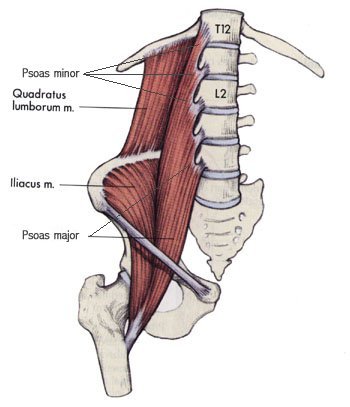 Does the above address the concerns raised by Anthony Diluglio?
About the core disconnected: well, the high hip bridge, properly executed, is pulling the psoas with the glute to work hip extension rather than back extension. The psoas and glutes both are considered two of the big five of the core muscle sets in "the core" (pdf)
As part of the "upper core" - the lats are also well engaged with the shoulder, thoracic spine, scapula (word doc about upper/lower core)
As Cook points out, and as a survey will quickly show, hip bridge work is pretty common core training. So, don't quite see a disconnected core in a hip bridge.
The next assertion is safety: that people will hurt themselves. It's not clearly explained in the accompanying vid why a high hip bridge may lead to injury, and it's only asserted in the text on the page. There is a quick mention in the video about how this move is a strength move with weight and some speed ("boom boom boom") - perhaps the implication is that the high hip bridge can't be maintained with weight?
If that's the assertion, to go back to Cook, this movement isn't seen as a strength move; it's seen about "honouring each part of the move." In the RKC, and indeed in the CK-FMS and in Kalos Sthenos, a form of learning the move is "naked" (without weight) - in order to get each part of the move dialed in. After that, a shoe is balanced on a closed fist, to get arm position dialed in. In other words, when learning and checking movement issues, there's no point adding weight to dysfunction.
One might say, well ah ha, then you can't use this move for real heavy loads.
I dunno about that, but more particularly, i dunno if that's the point. Cook's point seems to be, the high hip bridge in the TGU is a great point to find your weakest link.
If it's showing up in lack of ability to get hip extension, maybe that should be a sign unto you. If you can get this version dialed in, as Cook states, go ahead and do whatever version you'd like. As Cook also says, he could make arguments in support of the high hip bridge, Diluglio's "hover" (as cook calls it) and the squat version (which he says he's often seen with a lot of valgus knee collapse and other issues because only 20% of the present population can do a deep squat properly). THe rationale for this version is to reveal the weakness and provide the opportunities to correct it.
This is actually how i've been using the TGU in my own practice - as a great way to look at an athlete's movement issues. It's great if i don't have the FMS kit, or want to illustrate something to an athlete graphically about left/right side differences in performance. I've also seen it as a great corrective strategy for the same reasons.
So, i can't quite follow the argument that it's not safe.
I could imagine that if folks have learned this high hip bridge method, but have not yet done the work to correct their performance to get that high hip bridge, doing it sort of the way we see Anthony in the photo above, then, well, as Cook says, that mobility/stability issue may show up as a performance limiter later on, that could lead to injury. But that's different than the move itself being unsafe.
It *is* a strength move, Dam it.
Cook talks about the move being about mobility/stability rather than strength - the way they're using it, as prepatory to other KB/strength work.
Now again some folks may say well i don't care about this corrective stuff; i just want to use it as a strength move (as demonstrated by John Wild Buckley TGU'ing a live lithe human being).
And that's fine. In fact it's kinda fun.
So, no advocacy of superiority of one form over the other here. Do what you do. It seems, however, the question Cook and Co. are asking is simply:
how's your mobility/stability getting there? And if you can back off the speed and the weight to really look, what do you see? and seeing it, what do you do?
(Anthony, if i've missed something, please shout, and i'll get it in.)
Hope this helps anyone else who may have been having the same questions about this approach.
update post: tgu's relation to the fms: cheap screen or not?
(Update 1, on TGU as possible cheap movement screen)
The HardStyle/Maxwell TGU
Maybe because i did an overview post of the "hardstyle" turkish getup now being taught at RKC certs, folks know i'm interested in this move. Recently, a great colleague, Rannoch Donald, and i were talking about this move in terms of what Anthony Diluglio has said about one part of this move in particular: the high hip bridge, or the "three point bridge" as Gray Cook calls it (shown below, demo'd by the man who brought the bridge to the RKC, Mark Cheng).
Figure 1: Mark Cheng demoing Hip Bridge in TGU
Dilugio's critique was posted at his site's "Minute of Strength" bulletin #105 titled (alas) "the right way"
The Right Way from art of strength on Vimeo.
IF you don't have time to watch the vid, Diluglio prefers leaving the hip down before sweeping the leg under to get to the the half kneeling position.
Now ironically, Diluglio titles this piece "corrective strategies" which seems a rif on Cook's Functional Movement Screen Corrective Strategies - an approach that Anthony has himself celebrated and "has adopted" (see bottom of page), so it's provocative to refer to his presentation as the move "done properly." What does that mean (that's what i wanted to know)?
Diluglio says of this bridge, as he models it here (Fig 2) "there's no tension in your core right now"
 Figure 2: Anthony Diluglio's Vid of Hip Bridge
 Figure 3: Diluglio showing the hover position with hip dropped
Maybe it's where the video cuts in on Diluglio, but i didn't see the high hip bridge that Cheng demo's above (fig 1), and so the psoas/glutes would not be as fired as in a properly executed bridge. But despite that, Diluglio's argument goes on that in his version with the dropped hip, he's "stabilized like hell." Stabilized what, for what? Let's assume it's "the core" - we'll come back to that too. But for what? possibly heavy loads?
Diluglio's main critique, besides historical accuracy of the move, is that, he asserts, the high hip bridge "disconnects the core" and that to pull the leg through you have to drop the hip anyway, so why bother? Why indeed! the point of this article. We'll come back to that.
And so, Diluglio concludes, that what he's demoing is a deliberate, connected "movement pattern." Since Gray Cook is rather the champion of movement patterns, saying that his version is doing the TGU properly as a movement pattern is rather throwing down a red flag. Especially when on his newsletter he says of this version that it represents a movement that "if left unaddressed would have led to injury for both them and whomever they taught afterwards. "
So since i repect Anthony Diluglio's work (and have reviewed his awesome newport workout elsewhere), i wanted to get a better understanding of the rationale for the hip bridge.
In the manual by Mark Cheng that is available for the DVD, mark writes that this "Post to High Pelvis" is to "develop hip extension and to serve tactical purposes." Mark goes on:
Well hmm. I guess i'm not sure what a "tactical purpose" is in the TGU - that's not likely Mark's fault; i don't have a martial background, but as for movement for leg clearing, Diluglio makes a pretty compelling demo that the hip down offers no difficulty in getting the leg into position in that "more favorable base." Indeed his point is that he can achieve this "tactic" quicker and better with the hip down.
For tactical purposes, the high pelvic bridge develops the ability to drive the hips upward and forward to create space for moving the leg backward into a more favorable base.
So, neither the DVD nor the manual provide a reply to the main critique of Anthony's: that the core is disonnected, and there is a consequent loss of stability.
After raising this with colleagues over at the RKC instructor forum, David Whitley pointed to a podcast by Gray Cook addressing these issues head on. Thanks to RKC Eric Moss for the link from the dragondoor site. I'm sorry i don't have a date for the podcast - will update as soon as i have one.
Here's an overview of what Cook says:
Rationale for the approach: it's a great (self) screen for any athlete:
- the motivation for focusing on the TGU in Kalos Sthenos has been, in part, as a type of screen - it shows up alot of the same issues that come up in the poor movement screening
- single leg bridges as Mark demo'd in the TGU are welcome because they put the hip flexor against the glute and "the hip extends as opposed to the low back; " a quad dominant athlete will give back rather than hip extension.
- that move is likely controversial because it's hard
- it's "an intensional speed bump" - to slow down and pay attention
- It's a great corrective strategy to help with a weak thomas test that shows a hard time opening the hips
- As a screen it shows the problem before you know what to correct
- They didn't invent the three point hip extension - they've seen it and many other variants in their review of the TGU
- People in the 19th Century doing calisthenics in the gym with indian clubs and rope climbing and deep squatting in unison had much better mobility than most folks do today.
- Have encouraged Anthony Diluglio to look at WHY they're doing the move this way.
- "Are we letting people through the get up, or are we catching them at a place that could hurt them later on in say more "extravagant" kettlebell moves?
- The TGU is one of the few fullbody moves with the KB - it honors mobility and stability; hits the left and right side. It's not about strength; it's about moving and all three planes.
- Once you've got this TGU variant totally down - all the corrections are there - DO WHATEVER GET UP YOU WANT
- Don't skip it because you don't like it - it's challenging:
- the Lat on the left = glute on the right (via anatomy trains), and that will be challenging for some folks
- it also reveals janda's crossed syndrome: tight psoas with a glute that could be better.
- puts athletes up against a problem
- Use this as a Corrective strategy to see if you can clear your hips as well as you thought.
- The get up is not about how quick or how much you can get up; it's about honoring each stage of the exercise.
- No one's is more historically accurate or not; this one cleans up your movement.
The purpose and nature of coaching is to hold you up against your weakest links, to expose you to a weakness to allow you to rise to a challenge so your opponent or life does not find your weakness.Putting it Together:
Does the above address the concerns raised by Anthony Diluglio?About the core disconnected: well, the high hip bridge, properly executed, is pulling the psoas with the glute to work hip extension rather than back extension. The psoas and glutes both are considered two of the big five of the core muscle sets in "the core" (pdf)
As part of the "upper core" - the lats are also well engaged with the shoulder, thoracic spine, scapula (word doc about upper/lower core)
As Cook points out, and as a survey will quickly show, hip bridge work is pretty common core training. So, don't quite see a disconnected core in a hip bridge.
The next assertion is safety: that people will hurt themselves. It's not clearly explained in the accompanying vid why a high hip bridge may lead to injury, and it's only asserted in the text on the page. There is a quick mention in the video about how this move is a strength move with weight and some speed ("boom boom boom") - perhaps the implication is that the high hip bridge can't be maintained with weight?
If that's the assertion, to go back to Cook, this movement isn't seen as a strength move; it's seen about "honouring each part of the move." In the RKC, and indeed in the CK-FMS and in Kalos Sthenos, a form of learning the move is "naked" (without weight) - in order to get each part of the move dialed in. After that, a shoe is balanced on a closed fist, to get arm position dialed in. In other words, when learning and checking movement issues, there's no point adding weight to dysfunction.
One might say, well ah ha, then you can't use this move for real heavy loads.
I dunno about that, but more particularly, i dunno if that's the point. Cook's point seems to be, the high hip bridge in the TGU is a great point to find your weakest link.
If it's showing up in lack of ability to get hip extension, maybe that should be a sign unto you. If you can get this version dialed in, as Cook states, go ahead and do whatever version you'd like. As Cook also says, he could make arguments in support of the high hip bridge, Diluglio's "hover" (as cook calls it) and the squat version (which he says he's often seen with a lot of valgus knee collapse and other issues because only 20% of the present population can do a deep squat properly). THe rationale for this version is to reveal the weakness and provide the opportunities to correct it.
This is actually how i've been using the TGU in my own practice - as a great way to look at an athlete's movement issues. It's great if i don't have the FMS kit, or want to illustrate something to an athlete graphically about left/right side differences in performance. I've also seen it as a great corrective strategy for the same reasons.
So, i can't quite follow the argument that it's not safe.
I could imagine that if folks have learned this high hip bridge method, but have not yet done the work to correct their performance to get that high hip bridge, doing it sort of the way we see Anthony in the photo above, then, well, as Cook says, that mobility/stability issue may show up as a performance limiter later on, that could lead to injury. But that's different than the move itself being unsafe.
It *is* a strength move, Dam it.
Cook talks about the move being about mobility/stability rather than strength - the way they're using it, as prepatory to other KB/strength work.
Now again some folks may say well i don't care about this corrective stuff; i just want to use it as a strength move (as demonstrated by John Wild Buckley TGU'ing a live lithe human being).
And that's fine. In fact it's kinda fun.
So, no advocacy of superiority of one form over the other here. Do what you do. It seems, however, the question Cook and Co. are asking is simply:
how's your mobility/stability getting there? And if you can back off the speed and the weight to really look, what do you see? and seeing it, what do you do?
(Anthony, if i've missed something, please shout, and i'll get it in.)
Hope this helps anyone else who may have been having the same questions about this approach.
update post: tgu's relation to the fms: cheap screen or not?
--------------------------------------
related posts: zhealth - about || zhealth assessment
Tweet
Follow @begin2dig
Saturday, April 18, 2009
How to Prep for the RKC Certification Weekend - the other stuff
Follow @mcphoo
Tweet
 Folks interested in doing the RKC Certification Weekend regularly ask folks at the Dragon Door Forum how to prep for what is a pretty intense 21 hours/3day certification session (overview of the weekend experience here). The expression "bring your game" applies. Last year, Brett Jones did a fabulous article in Hard Style Magazine Winter 08 on how to prepare for the physical part of that game. Note: be SURE to focus on double kettlebell work as Brett presents the drills in that article. (And heh, if you're in the states, and you need extra KB's for doubles practice, DD has new 30% lower prices.) Also, be sure to consider your training plan to include a back-off week the week BEFORE the cert itself.
This post is meant as a quick overview of the attitude and practicailities side of that preparation, and is the bullet point version of a more in-depth article for Hard Style.

Basic Stuff:
Zinc Oxide Sports tape for your hands. Whether you've ever ripped calluses on your hands before or not, by the end of the cert, 99.9% of participants have tape on their hands. Bring your own. Also, learn how to tape. The best taping method is shown by Rif in this blog post on hand taping. PRACTICE taping AND snatching with the tape in advance of the cert - make sure you know how to use it, and that you have no reaction to the tape you use. There is a LOT of swinging in the course.
Hat. Not a baseball hat where the brim will get in your eyes and force you to change your head position learning the moves, but something to shade your nose and your neck. Alternatively, buffs are very good for head or neck cover for when you may be asked to doff your hat during testing.
Chalk. Again, you may want to bring your own and practice with it before hand so you know how you'll be with it. We watched a number of follks lose the bell on the snatch test who seemed not used to the chalk experience while trying to save their hands.
Bandaids/antibacterial ointment. You're your own best medic. If you get a cut or the skin pulls off your hands, putting sticky coaches' tape directly on the skin may not be fun. Some of the best new bandaids around are Bandaids AktiveFlex. They're waterproof and they really DO stay with the bendy twistiness of the skin. You can put coaches/zinc tape right over this.
Hydration System. Have a water bottle and refill it often. The ASCM has great recommendations about how to stay hydrated outdoors during sporting activities. Gulp rather than sip, too.
Snacks. You may want to think about making some homemade protein bars to nibble during the breaks - just don't be late coming back from break. If not that, nuts and raisins are a good protein/fat/carb (ratios in that order) way to stay energied up without getting full. The reason i like homemade protein bars from protein powder, egg whites and crushed nuts is that it's bioavailability is fast.
Sunscreen. Any red necks showing up get "punished" on site, per team. Sunburn is taken really seriously. Don't let it happen. Stay slathered. YOu may want to practice with the brand of choice.
Cotton Handkerchief. When a sweat gets going, and the persperation mixes with sunscreen and heads to your eyes, it can be grim. If you're wearing non-cotton shirts, there's nothing there to wipe up the sweat, so having a cotton hanky or bandana can be a good thing.
Camera. Whether disposable or on your phone or a small digital, bring one. You'll be glad you did.

Cultural Practice
There's really nothing like it. And there's not a lot of explanation about what to expect or what is expected in advance, so i hope this helps:
Orientation. From the start, folks are assigned to teams. if something unexpected happens, or if you're unsure about something, ask your team lead right away. Assume that the cert management wants to find a solution for you for whatever the issue may be.
ATTEN-TION/Hustle. Yes it does run in what one imagine might be a militaresque way. PRactice happens in teams, but there are sessions with the group lead for particular parts of the course. THis means dropping what you're doing in your team and RUNNING (not walking) to the teaching circle area and paying attention. This also means when someone leading says "is that clear?" the expected reply is a very harty, loud "yes" (ok, there's a lot of "yes sir'ing" too). Part of this call and response is (a) to optimize the time - no time wasted shuffling feet and (b) the other part is to make sure people are on the same page - there's a lot to cover. So to avoid additional drills assigned for tardy responses, hustle and reply loudly.
Technique Clinique: be prepared to participate fully. A huge part of the course is looking at how to address common issues in performing moves. Pavel leads most of these corrective sessions. They are big q&a sessions where the teams all look on, and are asked either to comment on what the problem is, what a fix is, or to ask any other questions they may have. Lack of comment or question is not taken as a good thing. Drills will be assigned. This is your opportunity to ask field leading experts about how to solve problems instructing with KB's. It's a gold mine opportunity. Be sure to be ready with questions and demonstrations that you have learned the corrective procedures.
Be Proactive. Assessment takes place throughout the course. Not just during the snatch test, not just during the teaching demo, not just during the test of the moves, but throughout. If someone's volunteering during a demo and they or the instructor need a kettlebell, hustle to go get it for them. If there's crap in the way, jump in and move it to safe place. In other words, look out for opportunities to offer service. You will see all the team leads supporting each other this way during the weekend. They're modeling the behaviour they want to see within the teams. Reflecting back that behaviour will ensure you have a great weekend.
 Tweet
Follow @begin2dig
Tweet
Follow @begin2dig
 Folks interested in doing the RKC Certification Weekend regularly ask folks at the Dragon Door Forum how to prep for what is a pretty intense 21 hours/3day certification session (overview of the weekend experience here). The expression "bring your game" applies. Last year, Brett Jones did a fabulous article in Hard Style Magazine Winter 08 on how to prepare for the physical part of that game. Note: be SURE to focus on double kettlebell work as Brett presents the drills in that article. (And heh, if you're in the states, and you need extra KB's for doubles practice, DD has new 30% lower prices.) Also, be sure to consider your training plan to include a back-off week the week BEFORE the cert itself.
This post is meant as a quick overview of the attitude and practicailities side of that preparation, and is the bullet point version of a more in-depth article for Hard Style.
Basic Stuff:
Zinc Oxide Sports tape for your hands. Whether you've ever ripped calluses on your hands before or not, by the end of the cert, 99.9% of participants have tape on their hands. Bring your own. Also, learn how to tape. The best taping method is shown by Rif in this blog post on hand taping. PRACTICE taping AND snatching with the tape in advance of the cert - make sure you know how to use it, and that you have no reaction to the tape you use. There is a LOT of swinging in the course.
Hat. Not a baseball hat where the brim will get in your eyes and force you to change your head position learning the moves, but something to shade your nose and your neck. Alternatively, buffs are very good for head or neck cover for when you may be asked to doff your hat during testing.
Chalk. Again, you may want to bring your own and practice with it before hand so you know how you'll be with it. We watched a number of follks lose the bell on the snatch test who seemed not used to the chalk experience while trying to save their hands.
Bandaids/antibacterial ointment. You're your own best medic. If you get a cut or the skin pulls off your hands, putting sticky coaches' tape directly on the skin may not be fun. Some of the best new bandaids around are Bandaids AktiveFlex. They're waterproof and they really DO stay with the bendy twistiness of the skin. You can put coaches/zinc tape right over this.
Hydration System. Have a water bottle and refill it often. The ASCM has great recommendations about how to stay hydrated outdoors during sporting activities. Gulp rather than sip, too.
Snacks. You may want to think about making some homemade protein bars to nibble during the breaks - just don't be late coming back from break. If not that, nuts and raisins are a good protein/fat/carb (ratios in that order) way to stay energied up without getting full. The reason i like homemade protein bars from protein powder, egg whites and crushed nuts is that it's bioavailability is fast.
Sunscreen. Any red necks showing up get "punished" on site, per team. Sunburn is taken really seriously. Don't let it happen. Stay slathered. YOu may want to practice with the brand of choice.
Cotton Handkerchief. When a sweat gets going, and the persperation mixes with sunscreen and heads to your eyes, it can be grim. If you're wearing non-cotton shirts, there's nothing there to wipe up the sweat, so having a cotton hanky or bandana can be a good thing.
Camera. Whether disposable or on your phone or a small digital, bring one. You'll be glad you did.
Cultural Practice
There's really nothing like it. And there's not a lot of explanation about what to expect or what is expected in advance, so i hope this helps:
Orientation. From the start, folks are assigned to teams. if something unexpected happens, or if you're unsure about something, ask your team lead right away. Assume that the cert management wants to find a solution for you for whatever the issue may be.
ATTEN-TION/Hustle. Yes it does run in what one imagine might be a militaresque way. PRactice happens in teams, but there are sessions with the group lead for particular parts of the course. THis means dropping what you're doing in your team and RUNNING (not walking) to the teaching circle area and paying attention. This also means when someone leading says "is that clear?" the expected reply is a very harty, loud "yes" (ok, there's a lot of "yes sir'ing" too). Part of this call and response is (a) to optimize the time - no time wasted shuffling feet and (b) the other part is to make sure people are on the same page - there's a lot to cover. So to avoid additional drills assigned for tardy responses, hustle and reply loudly.
Technique Clinique: be prepared to participate fully. A huge part of the course is looking at how to address common issues in performing moves. Pavel leads most of these corrective sessions. They are big q&a sessions where the teams all look on, and are asked either to comment on what the problem is, what a fix is, or to ask any other questions they may have. Lack of comment or question is not taken as a good thing. Drills will be assigned. This is your opportunity to ask field leading experts about how to solve problems instructing with KB's. It's a gold mine opportunity. Be sure to be ready with questions and demonstrations that you have learned the corrective procedures.
Be Proactive. Assessment takes place throughout the course. Not just during the snatch test, not just during the teaching demo, not just during the test of the moves, but throughout. If someone's volunteering during a demo and they or the instructor need a kettlebell, hustle to go get it for them. If there's crap in the way, jump in and move it to safe place. In other words, look out for opportunities to offer service. You will see all the team leads supporting each other this way during the weekend. They're modeling the behaviour they want to see within the teams. Reflecting back that behaviour will ensure you have a great weekend.
Dragon Door Kettlebells on Sale? No, new prices from new production
Follow @mcphoo
Tweet
Dragon Door kb's were one of the only KB's to have been made in the USA. While they have a rep of being the 'best' of all KB's in the US, they also have a rep as the priciest, putting them out of reach of many would be KB'ers.
 Well, much to my complete surprise - it's a fluke i saw this - they're now about 30% less than they were before. Other percentages on various models.
So if you're looking to give these a try (that's you, Steve D), DD's have just become more reachable. How'd they do this? selling off old stock? nope. Moving to China, like everyone else. Well, moving production to China.
In the UK, colleagues at the awesome London Kettlebells and i were looking at getting locally produced KB's in the UK - cost was prohibitive, so Dragon Door was a unique producer. If you have a US made bell, treasure it. IT's just become rare.
John Du Cane of DD, however says that the quality is "even better" than the previous US ones. He's also said that if they could have afforded to stay in the US they would have done so.
One of the things i've liked about the DD's is that they have very good customer support. Of one of the DD bells i got, one had a flaw in the handle paint: a replacement bell was shipped out immediately with a label for ups to pick up the faulty one. No fuss no muss. They're pretty fast to reply to emails to "support" too.
 So now all you (wouldbe) swingers have a chance to check out what DD's calling a "limited time offer"but is really apparently their new pricing - for good.
And if you already have one (or a few; they multiply), now may be the time to get that Beast you've been holding out for. Tweet Follow @begin2dig
So if you're looking to give these a try (that's you, Steve D), DD's have just become more reachable. How'd they do this? selling off old stock? nope. Moving to China, like everyone else. Well, moving production to China.
In the UK, colleagues at the awesome London Kettlebells and i were looking at getting locally produced KB's in the UK - cost was prohibitive, so Dragon Door was a unique producer. If you have a US made bell, treasure it. IT's just become rare.
John Du Cane of DD, however says that the quality is "even better" than the previous US ones. He's also said that if they could have afforded to stay in the US they would have done so.
One of the things i've liked about the DD's is that they have very good customer support. Of one of the DD bells i got, one had a flaw in the handle paint: a replacement bell was shipped out immediately with a label for ups to pick up the faulty one. No fuss no muss. They're pretty fast to reply to emails to "support" too.
And if you already have one (or a few; they multiply), now may be the time to get that Beast you've been holding out for. Tweet Follow @begin2dig
Tuesday, April 14, 2009
Preliminary Review: the Sedona Method, getting rid of crap around goals
Follow @mcphoo
Tweet
 We all set goals; we don't always achieve them. What's with that? It may not be because we don't have a great plan; it may be because we have a whole lot of beliefs and related crap around those goals that keep us from achieving them. Likewise sometimes we feel flat, stuck, and can't imagine getting to a new place of success.
Recently, i've been experimenting with an approach called the Sedona Method to check out issues around goals, and i've been surprised both by what i've been finding, and what's been coming back. The following is a very preliminary review/overview.
[UPDATE: overview detailing more specifically what's in the tin and experiences five months on now posted - Aug 09] [UPDATE AUG 2014 - there are NO affiliate links in this post unless indicated - and yup, five years i can't believe it - i'm still finding this approach incredibly valuable]
Overview:
The Sedona Method kinda kicks the can of Positive Thinking and/or Visualization (or something called "The Secret" (!) which is aka "the law of attraction" - if you just think about it and "draw it in" you can have it).
The reason this challenge to "positive thinking" is intriguing from a health/athletic perspective is that sport psychology is infused with visualizing the goal; wanting the goal; tasting the goal. Wanting it badly enough. Perhaps these are folks who also think no pain, no gain?
To be fair, we've heard the great stories of lance armstrong and other cancer patients visualizing their cancer getting smaller; going into remission; going away. So there's likely much to be said for visualizing a goal. But the Sedona method suggests that we "bank in the bank, not in the head" - that we can get so into a visualization that we avoid what it frames as Right Actions. So how do we get to Right Actions?
Here's the surprise: we actually need to let go of the goal first and foremost. And that seems totally at odds with positive thinking's "draw it in."
Let go of the goal? Isn't the whole point of having a goal to achieve a goal?
The intriguing thing here, at least to me, is that letting go of the goal is a process of checking out what comes up around the expression of a goal.
Indeed, the whole way of expressing the goal is critical. For instance, the sedona approach is particular about avoiding framing a goal as "i want" rather than "i allow myself to." Why? "want" actually means "to lack" and to express a goal in terms of a lack apparently just assures that lack. Would you rather have the goal or want the goal, asks Hale Dwoskin who leads this process. Gotta give props on that one.

SO letting go...
Once you have a goal either as general as "i allow myself to have incredible health all the time" or as specific as "i allow myself to press the 24kg this term" the next step in the process is to check out FEELINGS around this goal - maybe it's disbelief; maybe it's fear; maybe it's a desire to fit in. A big (albeit simple) part of the process is just to get those sometimes uncomfortable feelings (lusts, fears, whatevers) sufficiently in view to be able to do something about them so they stop clogging the pipes.
So once those feelings are honestly identified, they can be addressed. And in the sedona method, being addressed doesn't mean figuring out WHY they're there. It means letting go of them, and letting them in and looking at them until they can be let go of, dropped.
That makes it sound so simple: dropping feelings as easily as one drops a KB after kenneth's vo2max workout. Right. Imagine someone saying "i'm really afraid of failing to make this lift by this date" or "i'm really afraid of not getting this contract" and someone says "can you allow yourself to have those feelings? and just for now, can you let go of that feeling as best you can?"
That's it?
Dwoskin's approach is that feelings are just that: feelings. Beliefs likewise are things that we choose to have. And they can get in the way of us being in the world and achieving our potential. Our success. Even *good* feelings, if we try to hang onto them, can be problematic, and reflect a kind of desperation that comes of a "scarcity rather than an abundance mentality."
To get back to the positive visualization thing for a sec: suppose we want to achieve that lift and we see ourselves making that lift, but in the background of our mind are feelings of fear, failure and all sorts of crap that gets in the way of our Right Action (in this case, rest, recovery, sensible practice). Imagine how much better our efforts would be if we got out of our own way.
Part of getting out of our own way in a goal process may also be to find too that the particular goal we had was not *our* goal, but came from somewhere else. That for us there may well be some other health goal we feel better about, but haven't let ourselves go for it, because it's not what we thought we should be doing.
Preliminary Review
Over the past month, i've been going through the Sedona Method 4 part course that promises to help with effortless wealth, health and relationships. This is not an overnight thing: there are 20CDs in the course and that's a lot of listening, pausing to work further on stuff, coming back to parts and so on. So a month is barely time to get through it all when i can only come back to it in the evenings. That's why this is such a preliminary review.
Intriguingly, the place that so far has had the biggest impact from this practice is relationships - at home and especially at work. This has been an unlooked-for bonus (despite being part of the package). When there's crap up at work, there are bound to be LOTS of feelings - lots of wants especially and wishing things were different, wanting people to be different. blah blah blah. How useful is that? where's the right action in that? SO being able to work through some of this (that is, "let go" of a lot of stuff) has been grand.
As for the wealth, well i really like the abundance instead of scarcity mentality. For one thing, that perspective takes the stress level way down - and what good has stressing out about a deadline ever done to get the thing done? And lots of good stuff has been coming in from surprising and unlooked for places.
As for health, well, i'm just getting over the worst cold of my life, but after not being able to move for days, and about 2 weeks away from serious kettlebelling, i came home to press the 20k twice yesterday. That's a record. And heck i wasn't even trying :)
I haven't had the knowledge/time to apply the approach to a specific goal, but i'll come back to this topic as stuff emerges. So far, the benefits in the little time i've spent with the program are really positive.
I'm keen to look at this approach with respect to staying with healthy living, and how it may help my clients who have an on and off the wagon approach to health and fitness.
Flake Alert
I'm really glad that this approach is not just "draw it in and the universe will provide." Maybe it will; maybe it won't, but in my experience there's a ton of combinations of the right place and the right time, and that fate favours the prepared mind, and so on and so on. So what i like about this approach is especially the notion that we have stuff, and that that stuff can be insidious in getting in the way of our achieving our success. Here's a simple simple process that can help surface and chuck that stuff; that helps us operate on the stuff where we have absolute choice about what we do. And that helps us take Right Action - another concept i like. It's not about pushing or forcing or begging. It's about getting with the Right Actions to achieve the goal once the stuff is out of the way. How simple, clear and sensible is that? Why would it need to be harder than that? We love our drama?
Getting Started on the Cheap with Letting Go
If any of what i'm saying is resonating with you, and you'd like to check out this approach, there are a bunch of ways to do it. You can dive right in and get the 4 course package, or you can get a sampler.
There are some free downloads, and examples on the website. There's also the book version (amazon us affiliate link || uk amazon affiliate link)- for me i found listening to the course more effective, but different learning styles
REQUEST: If you got to the end of this post, i'd really appreciate hearing from you about what you think - too - if you're interested in giving this approach a go. That would be a boon to thinking about incorporating this into training with others.
If you do get the CD or the course, let me know what you find. Or if you're already using this approach, please post a comment on how it's going. And all the best with your success.
-------------
Follow up Review: Sedona Method 5 Months on - more detailed review of what's in the package, including overviews of the Sedona Method Course, Effortless Wealth and SUccess, Effortless Relationships, Effortless HEalth and Well Being, , how it's laid out, and experiences/progress with the courses. Tweet Follow @begin2dig
We all set goals; we don't always achieve them. What's with that? It may not be because we don't have a great plan; it may be because we have a whole lot of beliefs and related crap around those goals that keep us from achieving them. Likewise sometimes we feel flat, stuck, and can't imagine getting to a new place of success.Recently, i've been experimenting with an approach called the Sedona Method to check out issues around goals, and i've been surprised both by what i've been finding, and what's been coming back. The following is a very preliminary review/overview.
[UPDATE: overview detailing more specifically what's in the tin and experiences five months on now posted - Aug 09] [UPDATE AUG 2014 - there are NO affiliate links in this post unless indicated - and yup, five years i can't believe it - i'm still finding this approach incredibly valuable]
Overview:
The Sedona Method kinda kicks the can of Positive Thinking and/or Visualization (or something called "The Secret" (!) which is aka "the law of attraction" - if you just think about it and "draw it in" you can have it).
The reason this challenge to "positive thinking" is intriguing from a health/athletic perspective is that sport psychology is infused with visualizing the goal; wanting the goal; tasting the goal. Wanting it badly enough. Perhaps these are folks who also think no pain, no gain?
To be fair, we've heard the great stories of lance armstrong and other cancer patients visualizing their cancer getting smaller; going into remission; going away. So there's likely much to be said for visualizing a goal. But the Sedona method suggests that we "bank in the bank, not in the head" - that we can get so into a visualization that we avoid what it frames as Right Actions. So how do we get to Right Actions?
Here's the surprise: we actually need to let go of the goal first and foremost. And that seems totally at odds with positive thinking's "draw it in."
Let go of the goal? Isn't the whole point of having a goal to achieve a goal?
The intriguing thing here, at least to me, is that letting go of the goal is a process of checking out what comes up around the expression of a goal.
Indeed, the whole way of expressing the goal is critical. For instance, the sedona approach is particular about avoiding framing a goal as "i want" rather than "i allow myself to." Why? "want" actually means "to lack" and to express a goal in terms of a lack apparently just assures that lack. Would you rather have the goal or want the goal, asks Hale Dwoskin who leads this process. Gotta give props on that one.
SO letting go...
Once you have a goal either as general as "i allow myself to have incredible health all the time" or as specific as "i allow myself to press the 24kg this term" the next step in the process is to check out FEELINGS around this goal - maybe it's disbelief; maybe it's fear; maybe it's a desire to fit in. A big (albeit simple) part of the process is just to get those sometimes uncomfortable feelings (lusts, fears, whatevers) sufficiently in view to be able to do something about them so they stop clogging the pipes.
So once those feelings are honestly identified, they can be addressed. And in the sedona method, being addressed doesn't mean figuring out WHY they're there. It means letting go of them, and letting them in and looking at them until they can be let go of, dropped.
That makes it sound so simple: dropping feelings as easily as one drops a KB after kenneth's vo2max workout. Right. Imagine someone saying "i'm really afraid of failing to make this lift by this date" or "i'm really afraid of not getting this contract" and someone says "can you allow yourself to have those feelings? and just for now, can you let go of that feeling as best you can?"
That's it?
Dwoskin's approach is that feelings are just that: feelings. Beliefs likewise are things that we choose to have. And they can get in the way of us being in the world and achieving our potential. Our success. Even *good* feelings, if we try to hang onto them, can be problematic, and reflect a kind of desperation that comes of a "scarcity rather than an abundance mentality."
To get back to the positive visualization thing for a sec: suppose we want to achieve that lift and we see ourselves making that lift, but in the background of our mind are feelings of fear, failure and all sorts of crap that gets in the way of our Right Action (in this case, rest, recovery, sensible practice). Imagine how much better our efforts would be if we got out of our own way.
Part of getting out of our own way in a goal process may also be to find too that the particular goal we had was not *our* goal, but came from somewhere else. That for us there may well be some other health goal we feel better about, but haven't let ourselves go for it, because it's not what we thought we should be doing.
Preliminary Review
Over the past month, i've been going through the Sedona Method 4 part course that promises to help with effortless wealth, health and relationships. This is not an overnight thing: there are 20CDs in the course and that's a lot of listening, pausing to work further on stuff, coming back to parts and so on. So a month is barely time to get through it all when i can only come back to it in the evenings. That's why this is such a preliminary review.
Intriguingly, the place that so far has had the biggest impact from this practice is relationships - at home and especially at work. This has been an unlooked-for bonus (despite being part of the package). When there's crap up at work, there are bound to be LOTS of feelings - lots of wants especially and wishing things were different, wanting people to be different. blah blah blah. How useful is that? where's the right action in that? SO being able to work through some of this (that is, "let go" of a lot of stuff) has been grand.
As for the wealth, well i really like the abundance instead of scarcity mentality. For one thing, that perspective takes the stress level way down - and what good has stressing out about a deadline ever done to get the thing done? And lots of good stuff has been coming in from surprising and unlooked for places.
As for health, well, i'm just getting over the worst cold of my life, but after not being able to move for days, and about 2 weeks away from serious kettlebelling, i came home to press the 20k twice yesterday. That's a record. And heck i wasn't even trying :)
I haven't had the knowledge/time to apply the approach to a specific goal, but i'll come back to this topic as stuff emerges. So far, the benefits in the little time i've spent with the program are really positive.
I'm keen to look at this approach with respect to staying with healthy living, and how it may help my clients who have an on and off the wagon approach to health and fitness.
Flake Alert
I'm really glad that this approach is not just "draw it in and the universe will provide." Maybe it will; maybe it won't, but in my experience there's a ton of combinations of the right place and the right time, and that fate favours the prepared mind, and so on and so on. So what i like about this approach is especially the notion that we have stuff, and that that stuff can be insidious in getting in the way of our achieving our success. Here's a simple simple process that can help surface and chuck that stuff; that helps us operate on the stuff where we have absolute choice about what we do. And that helps us take Right Action - another concept i like. It's not about pushing or forcing or begging. It's about getting with the Right Actions to achieve the goal once the stuff is out of the way. How simple, clear and sensible is that? Why would it need to be harder than that? We love our drama?
Getting Started on the Cheap with Letting Go
If any of what i'm saying is resonating with you, and you'd like to check out this approach, there are a bunch of ways to do it. You can dive right in and get the 4 course package, or you can get a sampler.
There are some free downloads, and examples on the website. There's also the book version (amazon us affiliate link || uk amazon affiliate link)- for me i found listening to the course more effective, but different learning styles
REQUEST: If you got to the end of this post, i'd really appreciate hearing from you about what you think - too - if you're interested in giving this approach a go. That would be a boon to thinking about incorporating this into training with others.
If you do get the CD or the course, let me know what you find. Or if you're already using this approach, please post a comment on how it's going. And all the best with your success.
-------------
Follow up Review: Sedona Method 5 Months on - more detailed review of what's in the package, including overviews of the Sedona Method Course, Effortless Wealth and SUccess, Effortless Relationships, Effortless HEalth and Well Being, , how it's laid out, and experiences/progress with the courses. Tweet Follow @begin2dig
Subscribe to:
Comments (Atom)

 COACHING with dr. m.c.