Thursday, November 18, 2010
Indian Clubs & Brett Jones Pt 2: The Rationale of Club Swinging Essentials
Follow @mcphoo
Tweet
Yesterday, b2d presented the first part of a this two part interview with Strong Guy Educator Brett Jones. Today, we focus more explicitly on the making of his latest co-production with Gray Cook, Club Swinging Essentials featuring Ed Thomas, one of America's leading figures in Indian Club swinging.
I own i was particularly interested to talk with Brett about the project as i'd had the chance to comment on a penultimate draft of the manual that goes with DVD before it went to press. It was looking at the movements described in the book and the historical descriptions of indian clubs that peeked my interest.
I also owe a debt to Joel Proskewitz of the Strength Company who hooked me up with some polyclubs to try out these moves in the UK. Thank you Joel.
In this interview, you'll see that Brett advocates these light clubs for warm up and prehab, and that he and Cook use a novel strategy to teach 5 core moves from the Thomas approach to Indian Clubs.
Brett Interview Part II
Yesterday we looked a little bit at Brett the Person. Let's talk a little shop about Brett as Business. Your web site /company is Applied Strength. What’s going on in the world of Applied Strength?
The Club Swinging Essentials Project
Moving onto the Club Swinging Essentials project itself, let's get the obvious questions out of the way first: Ed Thomas has a lovely video on indian clubs that has been associated with indian clubs, polyclubs, etc for a few years now (nice overview on oldtimestrongman.com). Dragon Door also sells this with the polyclubs. How did he come to be involved with DragonDoor, and in particular yourself, Gray Cook and Functional Movement Inc?
You guys on the vid make it pretty clear you’re just learning while doing this video. How much time did you actually have to test whether your variants of teaching Indian Clubs get better or do better things than just swinging clubs as per Dr. Thomas’ instruction prior to you guys getting on your knees?
Where do Indian Clubs (IC’s) fit into your own practice?
Where do you put IC’s into your training with clients?
The Thomas approach is certainly the most established perhaps in the US system – since playing with Indian Clubs have you investigated other styles? Are there any that are particularly appealing to you?
We've seen Soviet KB training introduced to North America over the past ten years. Now we're seeing this re-appearance of Indian Clubs - something that was part of the scene into the early 20thC. What do you see as the next likely tool to make a comeback? Rope Climbing perhaps?
Ok, sounds vaguely parkour-ish. Cool. In wrapping up, Brett, what would you like to see happen in people's physical education?
 Thanks for your time Brett. Best with your travels.
Brett will be teaching the second Certified Indian Club Specialist workshop March 12-13 in Minnesota.
Related Posts
 |
| L-R: Gray Cook, Ed Thomas, Brett Jones, from Club Swinging Essential DVD |
I own i was particularly interested to talk with Brett about the project as i'd had the chance to comment on a penultimate draft of the manual that goes with DVD before it went to press. It was looking at the movements described in the book and the historical descriptions of indian clubs that peeked my interest.
I also owe a debt to Joel Proskewitz of the Strength Company who hooked me up with some polyclubs to try out these moves in the UK. Thank you Joel.
In this interview, you'll see that Brett advocates these light clubs for warm up and prehab, and that he and Cook use a novel strategy to teach 5 core moves from the Thomas approach to Indian Clubs.
Brett Interview Part II
Yesterday we looked a little bit at Brett the Person. Let's talk a little shop about Brett as Business. Your web site /company is Applied Strength. What’s going on in the world of Applied Strength?
Travel, Travel, Travel and some travel… Between teaching for the RKC, FMS and presenting at the Perform Better events I keep a very healthy travel schedule. Gray and I have a new product being released soon – Kettlebells from the Center – Dynami which is all about the power training with Kettlebells using the Swing and the Push-press. Other than that I am reading, practicing and getting my own training back in line after a surgery and recovery time.You have become the voice of the FMS in the RKC – How did you and Gray Cook hook up? What is important to you in this collaboration?
I first met Gray Cook back in 1995 when I was an Athletic Trainer at a small military academy in Virginia (just happened to be in Gray’s home town). He walked into my training room one day and we started working together. I was also fortunate to be at the first FMS workshop in 1998. Gray and I lost touch for a few years and then reconnected in 2005 after the release of my first DVD with Michael Castrogiovanni [see b2d's interview with Michael] (Kettlebell Basics for Strength Coaches and Personal Trainers). After a session to prepare Danielle and Gray for the RKC I started teaching for FMS and working on the Advisory Board to progress the FMS.
Having the chance to combine the FMS and RKC is a blending of the two of the best schools of thought available today. Both focus on movement quality. RKC is the premier School of Strength in the training industry and the FMS is brining movement quality and symmetry to the forefront. Together they represent a powerful combination.If you could convey one thing to folks about strength practice and making it meaningful/accessible to folks – What would you or do you say?
What is the biggest challenge you see for folks coming to a physical practice? How do you suggest most of these folks address that challenge?“Beautiful Strength” Probably two words most people don’t associate with one another but strength in the end should be and can be beautiful. In Kettlebells from the Ground Up – Kalos Sthenos Gray Cook and I lay out what we think is a great way to begin working toward Kalos Sthenos (beautiful strength). The way I see it we could be talking about a Dancer, a Gymnast, a Runner (sprinting), a “Kettlebeller”, a Deadlifter, a Grappler, a Martial Artist etc…. the various forms of strength displayed can and should be beautiful. Also people should understand that strength is specific to the individual and we are all on our own paths to beautiful strength. But we should all be on the path.

The biggest challenge I see for people getting started in a physical practice is the movement restriction, asymmetry and previous injury/history they bring to their new routine. A “locked” up ankle, a history of back pain (not current), or any number of physical issues can result in pain or injury as someone begins to “push” on these restricted areas. Clearing your movement foundation prior to asking for increased performance from the body is important.Great Point. For more info, the CK-FMS and other movement assessment approaches like Z-health, Qi Gong, T'ai Chi, and the benefits of such active approaches to movement are indexed down this b2d page.
I recommend a Functional Movement Screen. A series of 7-movement pattern screens designed to find restriction, asymmetry and motor control issues. Then addressing any issues found with the appropriate corrective strategies.
Taking time for screening and corrections and creating the right foundation for movement and exercise can be the difference between success and failure.
The Club Swinging Essentials Project
Moving onto the Club Swinging Essentials project itself, let's get the obvious questions out of the way first: Ed Thomas has a lovely video on indian clubs that has been associated with indian clubs, polyclubs, etc for a few years now (nice overview on oldtimestrongman.com). Dragon Door also sells this with the polyclubs. How did he come to be involved with DragonDoor, and in particular yourself, Gray Cook and Functional Movement Inc?
The three of you do about 5 moves on the DVD: are there more than these taught at the cert or is this project effectively the Certified Indian Club Specialist (CISC) Cert manual?I first met Dr. Thomas [Ed.D., Curriculum & Supervision, Northern Illinois University, DeKalb, 1992, Emphasis in Health Promotion] in 2004 at the NSCA convention where he gave me my first pair of Indian Clubs and his DVD [a package that DragonDoor also sells]. Fast forward to 2009 when Gray arranged for an FMS staff training session with Dr. Thomas covering Breathing, Inversion, and Club Swinging among other things. Since that time I have been in contact with Dr. Thomas regarding Club Swinging and other aspects of training. We then filmed the Club Swinging Essentials DVD later in 2009 with it finally being released (after much editing with Dr. Thomas) in early 2010.Gray and I recognize that Dr. Thomas is essentially a National Treasure. His extensive study of physical education and physical culture, including yoga, martial arts, club swinging and Military fitness is unique to say the least. We wanted to tap into that body of knowledge.
The 5 essential movements from the Club Swinging Essentials DVD/Manual do form the “guts” of the CICS program but we add quite a bit after that. Detailed instructional break down and cueing of the movements, positions and postures. Group fitness structure and safety, along with additional preparatory moves, the elusive movement #6 and of course the experience of being there and receiving the instruction.Again Thomas’ video does more than the 5 on the DVD. How did you come to settle on these 5 movements and only these?
The 5 movements in Club Swinging Essentials lay the foundation for all other movements with the Indian Clubs. Similar to mastering a front kick in martial arts or basic stances and poses of Yoga or Tai Chi these 5 movements allow for someone to grasp the essentials that will lead to years of practice and skill development. They are integral to gaining familiarity with the Indian Club as well as regaining lost range of motion, efficiency and integrity of the arms and upper body.One of the questions that has come up around the cert/vid: Indian Clubs are what kindergarten kids used to do in school. Why do we need a certification or such an “intrigued” video (well beyond what Thomas does himself) to teach Indian Club basics?
Well, what you don’t see on the video is the teacher in the background. The kids were not just “cut loose” with Indian Clubs (also known as War Clubs) and allowed to “swing away”. A teacher spent time to instruct and teach the children how to use the clubs. We “need” a certification for the experience, breakdowns, progressions and precision of Indian Club swinging to be transferred and continued. Just as the kids needed a teacher so do we.
You guys on the vid make it pretty clear you’re just learning while doing this video. How much time did you actually have to test whether your variants of teaching Indian Clubs get better or do better things than just swinging clubs as per Dr. Thomas’ instruction prior to you guys getting on your knees?
Gray and I have used Tall Kneeling and ½ Kneeling for years within the FMS corrective strategies so applying them to Indian Club swinging was a quick process for us. These positions allow us to not only create a new or novel learning environment where new information can be processed quicker but also allows us to target the hip and core motor control issues that can impact an individual’s Indian Club swinging. In fact one of Dr. Thomas’ students remarked at the first CICS that although he had his doubts about tall kneeling etc… he was very impressed with the results and would be implementing those positions in his own teaching.Again, y’all seem to be learning while doing on the DVD – so isn’t it a bit premature to be putting out a manual, or a “how to” before you’ve put the reps in yourselves on the material? And if it is “that easy” to get the hang of, that you can teach it without that expertise, doesn’t that beg the question of the product itself?
Journey. Check. Now that those ones are out of the way, what was the mission with this DVD/manual?We had and have the benefit of having Dr. Thomas as our teacher and expert supervisor for the DVD/Manual and our continued Club Swinging practice. It was essentially a year of dedicated practice prior to the CICS workshop (several months of practice prior to filming the DVD). So unless you have Dr. Thomas as your technical supervisor I wouldn’t recommend flying out to film. I also think it is important to see us learning and making mistakes since we are all on our different paths of progression. Club Swinging is a journey.
The mission or purpose of the DVD was primarily two fold:
- Protect the integrity of Dr. Thomas’ teaching and information.
- Expose the world to the benefits of Club Swinging as a restorative art.
- Provide structure and progression for Indian Club Swinging.
Dr. Thomas’ DVD as you have noted provides a great number of movements but not a structure or progression to make Club Swinging more accessible. Gray and I feel we have done that.What do you really like about your DVD/manual?
I love the fact that we got to capture a bit of Dr. Thomas’ knowledge and expertise. He has decades of practice and knowledge to share. I also like the fact that we were able to assist Dr. Thomas by providing some structure and progression to expose people once again to Indian Club swinging.What would you like to redo about it?
Maybe my outfit or hair… Kidding, kidding… Funny thing is I look at all of my DVDs and products and see mistakes that I or Gray or whomever is making and wish I could go back and reshoot sections. For this product I would have liked for both Gray and I to perform the movements on camera so people could get another look at the movements.Is there a Vol. 2 coming?
There more than likely will be a volume 2 but not for some time.Training with Indian Clubs
Where do Indian Clubs (IC’s) fit into your own practice?
What have they let you do that’s different from what you were doing for whatever that was prior to using them?Indian Clubs are either “movement prep”, a combination with my Kettlebell practice or a stand-alone practice for the day. As movement prep I feel the ICs “rev up” my neurological system and open my shoulders (and hips if performed from tall and open ½ kneeling). One of my favorite workouts is to perform some Club Swinging and then a few KB Get-ups and keep alternating. As a stand-alone practice it is a chance to try to bring my body and mind back to center. While that may sound odd the concept of Indian Club swinging as a restorative art is an important one. We all push to accomplish certain goals. Pushing to achieve means putting stress on the body. Indian Clubs can be part of dealing with that stress and bringing the body back to a better place.
For one thing my Left arm is way more useful than it used to be. Again that may sound odd but we all have a dominant arm and a “not so dominant” arm that isn’t all that skilled. Indian Clubs forced me to narrow the gap between my right and left arm. My shoulder mobility is also better than it has ever been.Training Others
Where do you put IC’s into your training with clients?
I use the Indian Clubs with clients much the same way I use them for myself. It is also a great way to introduce a lifelong learning project, work on movement skill and have fun.Perhaps another obvious question, but where do IC’s fit in with the KBs and barbell work?
As stated, the Indian Club can provide movement prep, combinations and stand-alone practice (great for recovery days). Anyone needing more shoulder integrity, efficiency and mobility will benefit from adding in the Indian Clubs.Would you recommend incorporating them into team sport practice (say football, rugby, golf) why/why not? When and where?
Yes. Indian Clubs lend themselves to coordinated, rhythmical and timed swinging in a group so they can be great for team cohesion and practice in working together as a team. As a warm up they can quickly bring the team together and get everyone working as unit. Interspersed during a practice they can stress working as a team while tired and staying mentally alert. As a cool down they again provide a great way for the team to come together and finish as a team.Lots of folks want to do the Big Clubs – what is your approach to sizing up or down with Indian clubs? Have you spent time with the big clubs yourself?
Colleague Ken Froese of Kettlebell Evolution demo'ing some "meat tenderiser"
battle clubs: a little heftier than the 1lb'ers

A very popular question. I am sure especially when people find out that the Clubs only weigh one or two pounds. As Dr. Thomas explains in the video, everyone started with light clubs to learn the movements and regain full function of the arms etc… Boxers and people wanting hand speed would stay with lighter clubs and grapplers and strength athletes would go heavier.
I have used Scott Sonnon’s Clubbells (I had a 15 pound) but found that since I lift “heavy” with Kettlebells and Barbells I needed the restorative benefits of lighter Indian Club swinging.Style
The Thomas approach is certainly the most established perhaps in the US system – since playing with Indian Clubs have you investigated other styles? Are there any that are particularly appealing to you?
I really have not gone outside of Dr. Thomas’ system as of yet since I am still practicing and trying to master his system (which comes from many different sources) at a deeper level. This is an important point for people to grasp. If you try to master two systems within the same skill set a beginner will end up with motor learning confusion and fail to truly master either one. You need to dedicate time to learn and go deep within a system before going out for another. I will reach a point where I will want to go out to do other systems but am diving deep into this one for my current journey.Coming Attractions?
We've seen Soviet KB training introduced to North America over the past ten years. Now we're seeing this re-appearance of Indian Clubs - something that was part of the scene into the early 20thC. What do you see as the next likely tool to make a comeback? Rope Climbing perhaps?
Off the Ground training will likely be the next “big thing” and I think Inversion training will experience a come back. In the old Turnverein method [german version] [us version], training off the ground was seen as an essential component of getting “fit”. Inversion, brachiation, and other forms of off the ground training help us to experience gravity in a different way and help us fight the negative effects of constantly being pulled down by it.
Ok, sounds vaguely parkour-ish. Cool. In wrapping up, Brett, what would you like to see happen in people's physical education?
First I would like to see Physical Education brought back to the schools and implemented fully as a mandatory part of our children’s education. There are too many links between movement, emotion, cognition and physical health for it to be ignored and not taught. [Brett recommends checking out the book Spark
, by John Ratey, which we've discussed at b2d before: find MORE time to work out; it's smart]
One of the great things about Indian Clubs is that they are an opportunity to learn not just “workout”. The workout should come from going to the gym to learn. When was the last time you went to the gym to learn?
That is one of the things that I would like to see happen in folks physical education – bring the “education” back.

Brett will be teaching the second Certified Indian Club Specialist workshop March 12-13 in Minnesota.
Related Posts
- The Amazing Shoulder part 1: the shoulder girdle
- The Amazing Shoulder part 2: the g/h joint
- How get strong if our muscles aren't firing?
- The Refined Turkish Get Up
- The Role of the High Hip Bridge
- Turkish Get up as Movement Screen?
- Prepping for the RKC cert (riffing on Brett's physical prep ideas)
- Examples of Beautiful Kettlebell Swings (featuring Brett)
- BRETT INTERVIEW, PART I
- Indian Clubs and Kali Sticks meet - for one minute

 PDF
PDF

Wednesday, November 17, 2010
Indian Clubs & Brett Jones Pt 1 - Club Swinging Essentials Preview
Follow @mcphoo
Tweet
When you think of strong guys, what image do you have in mind? Perhaps the larger folks from the World's Strongest Man type competitions? Perhaps muscular chaps who bodybuild while picking up heavy things? Maybe it's an endurance athlete or pentathalon competitor. None of these images map easily to Brett Jones. Brett is a soft spoken guy. One might almost say unasumming in demeanor.
And yet, Brett has a reputation and demonstrated performance of a Strong Guy as the popular Brett Jones show reel on YouTube demonstrates.
Jones is also generally regarded as a Smart Strong Guy. So it's with interest that i've seen Brett connect with Indian Clubs over the past year or so, and put out a DVD on learning Indian Club technique called Club Swinging Essentials.
 The following post is the first of a two part interview with Brett (part 2 is here) about understanding this new interest in working with light indian clubs. It will also explore why Brett's taking the particular approach he has in the DVD/Manual collaboration with Gray Cook and US Indian Club guru, Ed Thomas.
Through the following, you'll get a sense of Brett's background and path to where he is now: Master RKC for the DragonDoor.com kettlebell certifications, and trainer/instructor for the Functional Movement Screen, along with being the author of numerous other DVD's like the Secrets Of collection and Kalos Sthenos, on the Turkish Get Up (full list here).
Interview with Brett Jones Pt 1 - about Brett
You're running your own business as well as working for dd and fms - how does that work for you?

 In the next segment, we'll be talking in more detail about the Club Swinging Essentials project. As a bit of a preview for that, here's a couple quick keys. One: indian club work is based around making circles. Two: your focus in the DVD and in what you've told me of your own personal practice is to use the clubs not for strength work but for pre-hab/re-hab. Care to rif on that for a moment?
Next time, Part II: the Indian Club project
Thanks Brett.
Next episode will feature Brett talking about his goals for the Club Swinging Essentials dvd/manual project.
Related Posts
And yet, Brett has a reputation and demonstrated performance of a Strong Guy as the popular Brett Jones show reel on YouTube demonstrates.
Jones is also generally regarded as a Smart Strong Guy. So it's with interest that i've seen Brett connect with Indian Clubs over the past year or so, and put out a DVD on learning Indian Club technique called Club Swinging Essentials.
Through the following, you'll get a sense of Brett's background and path to where he is now: Master RKC for the DragonDoor.com kettlebell certifications, and trainer/instructor for the Functional Movement Screen, along with being the author of numerous other DVD's like the Secrets Of collection and Kalos Sthenos, on the Turkish Get Up (full list here).
Interview with Brett Jones Pt 1 - about Brett
You're running your own business as well as working for dd and fms - how does that work for you?
It’s working great.When did these parts start and when did they become your path - enough to feed you? Were you a trainer when you came to that first RKC (about the RKC)?
Yes I was a trainer when I went to the RKC in 2002.
A bit clearer background:
I started into High Point University working on a degree in Sports Medicine (Athletic Training) in 1989 – graduating in 1993. (this was an Internship program where I started training as and working as a student Athletic Trainer right away). I worked as a Graduate Assistant Athletic Trainer while pursuing a Master’s degree at Clarion University of Pennsylvania (Master’s in Rehabilitation Sciences – Drug and Alcohol Rehab).
But it turns out that after my first full time job as an Athletic Trainer was my last job as an Athletic Trainer – the long hours and low pay had my eyes open for other options.
In 1997 I transitioned to running a Hospital Wellness Center in Clarion, Pa where I managed a community based fitness and wellness program for 5 years. During this time I designed programs for just about every situation possible (stroke, Parkinson’s, wheel chair bound, joint replacements, a wide variety of orthopedic issues to name a few).
Then I worked in Pittsburgh at a private club for 2 ½ years before moving to San Diego to be a part of Iron Core (one of the first Kettlebell studios in the nation) for two years.
Brett Jones, foreground
with Gray Cook
In 2006 I returned to Pittsburgh to once again personal train in the area.

During this time I received my RKC in February 2002 and was promoted to Senior instructor in 2003. So I have been teaching with the RKC for almost 8 years. In 2007 I began teaching for Gray Cook and Functional Movement Systems.
So basically I now keep a very small personal training clientele as I travel the country and internationally teaching RKC, FMS and my own workshops.What do you love about your business? what do you wish you didn't have to do?
What I a love about my business is working with people and teaching trainers techniques that help their clients and their business.You're known as a strong guy. when did this vibe begin? where did that start?
Paper work has never been high on my list of “favorite” things.
I was moderately strong in high school as a wrestler and was good at pull-ups but I didn’t begin to really develop my strength until around 2000.What else do you do with your body besides picking up or squeezing heavy things?
Besides training and teaching I have a pretty simple life and I don’t have any competitive sports of activities at the moment.Were the folks you grew up with into strength?
My father has been into fitness for a very long time and set a great example.What would you say is the least physcially-related passion you have?
ReadingWow, are you a music guy, too?
I listen to some Sirius radio stations in the car while driving and might occasionally put some music on at home but I’m not a huge music guy.Ok, cool. So there's a bit of a background connection then to what you've continued to do through your life, and you enjoy reading. It seems these interests met in a uni degree around being physical - did you enjoy that process? anything you'd rather have changed in that process?
My degree in Athletic Training set a great foundation for my current career. The immediate application of practical experience and knowledge would be what I enjoyed most. 8:00 am classes were never a favorite in college.Could we talk a little bit about the physical travails of such a physically oriented guy? This may be quite interesting for folks standing outside this culture in particular. For instance, you're allergic to cats yet like 50% of the population, you have a cat - in fact two. how did that happen?
My wife and stepdaughter love cats and I didn’t want to be the only reason they didn’t have any.That's love. Now perhaps, more profoundly, you've had a LOT of surgeries. Would you talk about that a bit, and in particular if you feel any of those operations may have had a particular effect on your sense of self?
I have had several surgeries: Left knee arthroscopy, left inguinal hernia repair, Appendectomy, L5 – S1 laminectomy and most recently a Ventral Hernia repair with mesh. None of these were kettlebell related and the only one that was related to weight training at all was the back injury (a bad squat attempt). The ventral hernia repair was a result of the appendectomy. Interesting from the ventral hernia repair was a pulmonary embolism. The rehab from the ventral hernia repair was interesting and took much longer than I expected but as usual it has been a great learning experience.Given this refined perspective on time, what do you think you'd like to be doing 50 years from now?
As far as what has changed since surgery – I am a bit more patient with my training and with myself. There is a lot of time to accomplish my goals.
50 years from now I want to be able to relax with my family and read and just enjoy life.Very sweet, Brett. So what do you hope folks think about you when you're not being humble?
I think I would like to be known as a teacher/educator and someone that has made a positive impact on people’s lives.What's one thing about you you think folks don't know or wouldn't believe about you, that you would enjoy folks knowing
I am a bit of a Sci-Fi nerd and I have bit of sweet tooth.Moving into Indian Clubs
In the next segment, we'll be talking in more detail about the Club Swinging Essentials project. As a bit of a preview for that, here's a couple quick keys. One: indian club work is based around making circles. Two: your focus in the DVD and in what you've told me of your own personal practice is to use the clubs not for strength work but for pre-hab/re-hab. Care to rif on that for a moment?Initially when you are focusing on the precise movements in the various postures at slower speeds there is great work on regaining the Mobility, Integrity and Efficiency of the shoulders and upper limbs.
As you begin to pick up speed in the movements there is a unique strengthening benefit.In your view, where would shifting to using these for strength come in?
As Pre-hab/warm up the basics of blood flow to the shoulders is true but there is also a great neurological “boost” from the integrated patterns.
The decision to work with heavier clubs should be based on the individual’s goals. I personally do enough heavier strength based work with Kettlebells. Someone looking to train for grappling (BJJ etc…) could easily bring heavier clubs into their practice.
Next time, Part II: the Indian Club projectThanks Brett.
Next episode will feature Brett talking about his goals for the Club Swinging Essentials dvd/manual project.
Related Posts
- The Refined Turkish Get Up
- The Role of the High Hip Bridge
- Turkish Get up as Movement Screen?
- Active vs Manual rehab
- Return of the Kettlebell - summary of progress
- Prepping for the RKC cert
- Examples of Beautiful Kettlebell Swings (featuring Brett)
- BRETT INTERVIEW - PART II
Wednesday, November 3, 2010
Cola Drinking Frequency Associated with Risk of Metabolic Syndrome
Follow @mcphoo
Tweet
 Metabolic Syndrome (MetS) is a condition we hear about increasingly that relates usually to pre-diabetes (type II), obesity and other factors that create a perfect storm of mainly lifestyle-oriented disease.
A recent report that looked at a survey of near 18000 people in Norway shows a pretty strong correlation between something as simple as cola consumption and MetS.
The simple take away is: drinking more than one glass of cola a day, coupled with ANY of the risk factors associated with MetS means the likelihood of getting MetS goes up significantly. The post discusses the study and concludes with a few possible strategies & resources.
The abstract of the study follows:
What does this result mean? The authors looked at two measures of Metabolic Syndrome. First, they used the MetSRisk requirements whicn = obesity + any 2 of the following: increased triglycerides (fatty acids ), low HDL cholesterol (usually refered to as the good stuff cholesterol - but really it's ratios of high and low that are important), increased blood pressure, high fasting blood glucose (this latter as i understand it can happen when insulin (a hormone) is out of whack trying to its job to get the glucose from consumed carbs shoved into the cells for use as energy, and it's not working very well).
The authors note that they could not measure fasting glucose rates in the study, so they suggest that the strength of the association they see may well be UNDERestimated, based on reality.
What does Frequency Mean?
Here's how the study measured frequency of intake by creating three main groups:
The authors show that "the frequency of cola intake in model 1 was significantly (p < 0.001 for most) associated with all of the single MetS-related risk factors, with the compound risk estimate of MetSRisk, and with the complete MetS." Right - but how much does that risk go up?
The authors find that the differences bewteen group 1 (rarely/never) and group three (more than 1 glass of cola a day) go up a lot, across all ages and genders:

Waist Circumference and Cola. The authors also actually saw that waist circumference is more strongly associated with cola than BMI. This finding is a rather nice one since so many of us rather question the whole BMI measure. Waist circumference seems a much clearer one to assess.
Take Away
The authors make clear that what they have seen is evidence of an association between cola frequency and MetSRisk. That doesn't show (yet) that there is a causal relationship. That is, they're not saying that someone who kicks back a can of coke daily will be at risk of MetS. What it does suggest however is that the presence of a daily cola intake greater than a glass, along with any of the other MetSRisk factors is a pretty good indicator of trouble ahead. As the authors put it in their discussion of results:
 Practice: Awhile ago i proposed mc's change one thing sure fire diet based on the z-health sustenance course work.
In the diet, the approach is to change one thing, one step at a time and an example is to start with one less cola a week, to get to one less a day and so on, building on success. This approach is also inspired by Martha Beck's 4 day win : create strategies that someone feels are so easy they can't fail.

It seems that for folks struggling with weight loss and feeling like they're doing good things for themselves, thinking about reducing that cola intake may be a great path towards health success.
Readers of b2d know that for those a little more interested in nutrition knowledge and practice, i've found precision nutrition another great place to learn and to build one better habit at a time. Here's a free 45 page overview.
Best with your practice. If you're looking for a coach to help with this process, please shout. Qualifications are over in the about box.
Citation
Survey: please also fill in the begin2dig reader survey if you have a moment. Tweet Follow @begin2dig
Metabolic Syndrome (MetS) is a condition we hear about increasingly that relates usually to pre-diabetes (type II), obesity and other factors that create a perfect storm of mainly lifestyle-oriented disease.A recent report that looked at a survey of near 18000 people in Norway shows a pretty strong correlation between something as simple as cola consumption and MetS.
The simple take away is: drinking more than one glass of cola a day, coupled with ANY of the risk factors associated with MetS means the likelihood of getting MetS goes up significantly. The post discusses the study and concludes with a few possible strategies & resources.
The abstract of the study follows:
Appl Physiol Nutr Metab. 2010 Oct;35(5):635-42.
The Oslo Health Study: Soft drink intake is associated with the metabolic syndrome.
Høstmark AT.
Section of Preventive Medicine and Epidemiology, University of Oslo, Box 1130, Blindern, 0318 Oslo, Norway (e-mail: a.t.hostmark@medisin.uio.no).

Abstract
It has been reported that the frequency of cola intake (COLA) is positively associated with serum triglycerides and negatively associated with high-density-lioprotein (HDL) cholesterol, both components of the metabolic syndrome (MetS). The question now is whether noncola soft drink intake (NCOLA) is associated with MetS. Among the 18 770 participants in the Oslo Health Study, 5373 men and 6181 women had data on COLA and NCOLA and risk factors for MetS (except fasting glucose). Main MetS requirements are central obesity and 2 of the following: increased triglycerides, low HDL cholesterol, increased systolic or diastolic blood pressure, and elevated fasting blood glucose. The MetSRisk index was calculated to estimate many MetS components. Using regression analyses, the association between COLA (NCOLA) and MetS (MetSRisk) was studied. In young (aged 30 years), middle-aged (aged 40 and 45 years), and senior (aged 59 and 60 years) men and women, there was, in general, a positive correlation between COLA and MetSRisk, and between COLA and single MetS risk factors, except HDL cholesterol, which was negatively correlated. A less consistent picture was found for NCOLA. By regression analyses, after adjustment for sex, age, time since last meal, and use of sugar-sweetened soft drinks, a positive association between COLA (NCOLA) and MetSRisk (MetS) was still found. However, when also controlling for cheese, fatty fish, coffee, alcohol, smoking, physical activity, education, and birthplace, only the association with COLA remained significant, irrespective of the presence or absence of sugar. In conclusion, the self-reported intake frequency of soft drinks can be positively associated with MetS.
What does this result mean? The authors looked at two measures of Metabolic Syndrome. First, they used the MetSRisk requirements whicn = obesity + any 2 of the following: increased triglycerides (fatty acids ), low HDL cholesterol (usually refered to as the good stuff cholesterol - but really it's ratios of high and low that are important), increased blood pressure, high fasting blood glucose (this latter as i understand it can happen when insulin (a hormone) is out of whack trying to its job to get the glucose from consumed carbs shoved into the cells for use as energy, and it's not working very well).
The authors note that they could not measure fasting glucose rates in the study, so they suggest that the strength of the association they see may well be UNDERestimated, based on reality.
What does Frequency Mean?
Here's how the study measured frequency of intake by creating three main groups:
For beverages, there were 5 levels: 1, rarely–never; 2, 1 to 6 glasses per week; 3, 1 glass per day; 4, 2 to 3 glasses per day; and 5, 4 or more glasses per day. For the intake frequency of colas and noncolas, the midpoint in each frequency interval was used to calculate a rough approximation of intake per week. To obtain a reasonable number of subjects, the population was divided into 3 intake groups: never–rarely (1999 men; 3302 women); 1 to 6 glasses per week (2302 men; 2086 women); and ≥1 glass per day (1072 men; 793 women).Results on Risk Matching
The authors show that "the frequency of cola intake in model 1 was significantly (p < 0.001 for most) associated with all of the single MetS-related risk factors, with the compound risk estimate of MetSRisk, and with the complete MetS." Right - but how much does that risk go up?
The authors find that the differences bewteen group 1 (rarely/never) and group three (more than 1 glass of cola a day) go up a lot, across all ages and genders:
going from group 1 (intake never–rarely) to group 3 (intake ≥1 glass per day), there was a mean increase in SumRisk points of 16.5% in young men (p < 0.001, 1-way ANOVA, with Bonferroni correction), 11.9% in middle-aged men (p < 0.001), and 11.1% in senior men (p = 0.006). Corresponding percentage increases in the 3 age groups of women were 11.1% (p < 0.001), 12.2% (p < 0.001), and 10.8% (p < 0.001).
Also, intriguingly, the study makes clear that whether or not the cola had real sugar or not didn't make a difference. Diet cola in other words doesn't change the association.

Fig. 1. Relationship between the frequency of cola intake and MetSRisk. Group 1, intake never–rarely; group 2, intake of 1 to 6 glasses per week; group 3, intake of ≥1 glass per day. Number of subjects in cola intake groups 1, 2, and 3, respectively, was, for young (30 y) men, 368, 836, and 433; for middle-aged (40 + 45 y) men, 884, 1009, and 465; and for senior men (59–60 y), 747, 457, and 174. Corresponding numbers in women were 770, 814, and 314 (30 y); 1511, 959, and 370 (40 + 45 y); and 1021, 313, and 109 (59–60 y); mean values, with SE, are indicated. Note the broken axes and the variation in range for the MetSRisk score between age groups.
Waist Circumference and Cola. The authors also actually saw that waist circumference is more strongly associated with cola than BMI. This finding is a rather nice one since so many of us rather question the whole BMI measure. Waist circumference seems a much clearer one to assess.
Take Away
The authors make clear that what they have seen is evidence of an association between cola frequency and MetSRisk. That doesn't show (yet) that there is a causal relationship. That is, they're not saying that someone who kicks back a can of coke daily will be at risk of MetS. What it does suggest however is that the presence of a daily cola intake greater than a glass, along with any of the other MetSRisk factors is a pretty good indicator of trouble ahead. As the authors put it in their discussion of results:
It seems reasonable to assume that the complete MetS takes a long time to develop, presumably several years. Accordingly, preceding the appearance of the complete MetS, metabolic disturbances, reflected in the level of 1 or more MetS-related factors, such as waist circumference, body mass index, serum lipids, and blood pressure, are likely. In keeping with this assumption, the results of this study show a direct relationship between cola intake and many single MetS-related risk factors, as well as the compound variable MetSRisk.What may also be deducible is that, if at risk of MetS, to un-cola oneself may be a great start at backing away from MetS. How do this? how about one really tiny super guaranteed not to fail one step at a time?
Practice: Awhile ago i proposed mc's change one thing sure fire diet based on the z-health sustenance course work.In the diet, the approach is to change one thing, one step at a time and an example is to start with one less cola a week, to get to one less a day and so on, building on success. This approach is also inspired by Martha Beck's 4 day win
: create strategies that someone feels are so easy they can't fail. It seems that for folks struggling with weight loss and feeling like they're doing good things for themselves, thinking about reducing that cola intake may be a great path towards health success.
Readers of b2d know that for those a little more interested in nutrition knowledge and practice, i've found precision nutrition another great place to learn and to build one better habit at a time. Here's a free 45 page overview.
Best with your practice. If you're looking for a coach to help with this process, please shout. Qualifications are over in the about box.
Citation
Høstmark, A. (2010). The Oslo Health Study: Soft drink intake is associated with the metabolic syndrome Applied Physiology, Nutrition, and Metabolism, 35 (5), 635-642 DOI: 10.1139/H10-059
Survey: please also fill in the begin2dig reader survey if you have a moment. Tweet Follow @begin2dig
Tuesday, November 2, 2010
b2d survey now online: please share your views - it's fast and easy
Follow @mcphoo
Tweet
Hi all,
just put up a wee survey about your b2d experience (here) to help make b2d a better place. It's pretty quick to fill out, but any time one spends is a precious gift. Thanks for your time.
Thanks for your participation.
mc
ps - based on feedback from early survey results i've dug and dug to figure out how to turn on full posts in the RSS feed - these are now on. Hope you enjoy. Tweet Follow @begin2dig
just put up a wee survey about your b2d experience (here) to help make b2d a better place. It's pretty quick to fill out, but any time one spends is a precious gift. Thanks for your time.
Thanks for your participation.
mc
ps - based on feedback from early survey results i've dug and dug to figure out how to turn on full posts in the RSS feed - these are now on. Hope you enjoy. Tweet Follow @begin2dig
Sunday, October 31, 2010
A coffee replacement drink: from the home of kenneth jay
Follow @mcphoo
Tweet
Today Kenneth Jay of ThreatModulation introduced some of us to a drink to which his partner had introduced him. He says one of the biggest effects of the beverage is that his high octane desire for coffee (can we say tripple shots) has gone way way down. I got to try it today, and yup, it was very satisfying as well as alleviating that urge to splurg on coffee coffee coffee.
 here's the recipe as i understood it - and as kenneth generously let me practice is with some of his fresh ingredients:
Variations in proportions suggest themselves, but with all the goodness of ginger (values, science)
that is
That recipe misses the pop of the cayenne and doesn't specify proportions. If one wanted a more intense experience - charleton heston seeing the face of god type intense - i'd contemplate simply adding in wasabi. Kenneth suggested one might also time travel with that combination. Which direction wasn't clear.
Anyway, recommended easy, fresh concoction for to have a go. Let me know what you find.
Related Posts:
Tweet Follow @begin2dig
here's the recipe as i understood it - and as kenneth generously let me practice is with some of his fresh ingredients:- fresh ginger, julienned
- fresh lemon slices - i used about a half of a small
- caynne pepper powder - i used a big pinch
- honey - i used a tablespoon
- hot water - i think it was a little better than a liter
- steep for about three minutes - maybe it was five
Variations in proportions suggest themselves, but with all the goodness of ginger (values, science)
that is
Add in the zing of the healing cayenne pepper and the fresh tartness of the powerful lemon against the sweetness of the honey, well it'll clean your pipes to be sure, and does have that satiating effect. I'm hoping to try this back home with manuka honey (the mystery of manuka - and more claims for its theraputic value). Indeed along with some other intriguing beverages, there's a manuka variant of this drink on a NZ wellness site. NZ is the home of that manuka bush that is the flower for this honey.

That recipe misses the pop of the cayenne and doesn't specify proportions. If one wanted a more intense experience - charleton heston seeing the face of god type intense - i'd contemplate simply adding in wasabi. Kenneth suggested one might also time travel with that combination. Which direction wasn't clear.
Anyway, recommended easy, fresh concoction for to have a go. Let me know what you find.
Related Posts:
Tweet Follow @begin2dig
Monday, October 25, 2010
50% Lower cal MIXED carb with Moderate Protein better than Higher Carb alone for Greater Endurance
Follow @mcphoo
Tweet
Want to stay out on your bike longer? There's a nice new study that has entered the energy drink fray, returning to the question of what's a ratio of protein to carbs that's optimal? In this case one measure of optimal is Time to Exhaustion or TTE. Also checked is optimal for what level of effort (below or near ventilatory threshold or VT). Turns out that half the calories (of the right blend of carb types with protein) can give greater, go longer, harder results.
The authors of this study manipulate a couple of variables in interesting ways. First, they decide they want to reduce the total amount of calories in the beverage - so lower the carbs in particular. But then, they want to look at a carb blend rather than just one carb type. So their target is a maltodextrin-dextrose-fructose blend. And then they want to add in some protein, since many studies have shown previously that throwing in some protein seems to have a better endurance effect than carb alone (a few recent examples cited below)
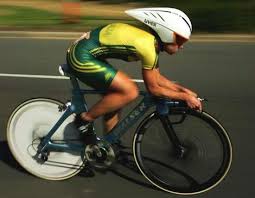 The authors say they were motivated by the desires of cyclists who actually want a lower cal beverage for restoration while on a ride. That makes the question simple: can a better blend of the basics achieve the same or better effect than a higher cal beverage for endurance?
That these authors are asking this question at two distinct ventelatory threshold percentages is also pretty unique.
Here's the abstract:
What's rather interesting to me is not only the lower calories but the carb/protein ratio. Previously, it was asserted that a 4 to 1 ratio of carbs to protein was best for endurance types doing post exercise recovery. Now, these folks aren't really assessing recovery; they're looking at being able to go longer and greater intensity on the bike. And for that a 2:1 ratio of their mixed carb blend is doing the job.
There was speculation back in a 2009 chocolate milk study (thomas09) that checking similar markers, the reason that choclate milk and just plain carb (gatorade) beverage did better than a 4:1 custom drink (endurox) is that chocolate milk has a diverse mix of carbs. Indeed, the authors site another relatively recent study by Currell and Jeukendrup (currell08) that looked at the role of blending carb types and saw an 8% boost in using blended rather than single source carbs for cycling time trials. Similarly a carb/protein blend seems to mean better muscle protection (saunders07).
So, that's good evidence to say let's just go with a blend rather than re-validating that carb blends are better.
One might ask why there were only two treatment conditions in the study: a CHO only drink at 6%, a mixed carb plus protein drink at half the calories. What about the mixed carb drink at half the calories, since we see from related research that mixed is better than straight carbs? The researchers had already done the related studies. They state:
 Another nice thing about the study is that the researchers used trained athletes, which means that we're not having to account for level of fitness as a variable. Even food logs for the three days leading up to the trial were assessed. The finding - 50% fewer calories - for extended time to exhaustion when working hard is compelling. As the authors note:
Citations
Related Posts
Want to stay out on your bike longer? There's a nice new study that has entered the energy drink fray, returning to the question of what's a ratio of protein to carbs that's optimal? In this case one measure of optimal is Time to Exhaustion or TTE. Also checked is optimal for what level of effort (below or near ventilatory threshold or VT). Turns out that half the calories (of the right blend of carb types with protein) can give greater, go longer, harder results.The authors of this study manipulate a couple of variables in interesting ways. First, they decide they want to reduce the total amount of calories in the beverage - so lower the carbs in particular. But then, they want to look at a carb blend rather than just one carb type. So their target is a maltodextrin-dextrose-fructose blend. And then they want to add in some protein, since many studies have shown previously that throwing in some protein seems to have a better endurance effect than carb alone (a few recent examples cited below)
That these authors are asking this question at two distinct ventelatory threshold percentages is also pretty unique.
Here's the abstract:
J Strength Cond Res. 2010 Oct;24(10):2577-86.So, great, a lower cal (50% lower) blend of carbs and protein (about 2:1) of their mixed carb +pro beverage does just as well as a higher cal protein drink when moseying along, BUT it kicks statistically significant butt when going near or at VT.
The effect of a low carbohydrate beverage with added protein on cycling endurance performance in trained athletes.
Ferguson-Stegall L, McCleave EL, Ding Z, Kammer LM, Wang B, Doerner PG, Liu Y, Ivy JL.
Exercise Physiology and Metabolism Laboratory, Department of Kinesiology and Health Education, The University of Texas at Austin, Austin, Texas, USA.
Abstract
Ingesting carbohydrate plus protein during prolonged variable intensity exercise has demonstrated improved aerobic endurance performance beyond that of a carbohydrate supplement alone. The purpose of the present study was to determine if a supplement containing a mixture of different carbohydrates (glucose, maltodextrin, and fructose) and a moderate amount of protein given during endurance exercise would increase time to exhaustion (TTE), despite containing 50% less total carbohydrate than a carbohydrate-only supplement. We also sought post priori to determine if there was a difference in effect based on percentage of ventilatory threshold (VT) at which the subjects cycled to exhaustion. Fifteen trained male and female cyclists exercised on 2 separate occasions at intensities alternating between 45 and 70% VO2max for 3 hours, after which the workload increased to ∼74-85% VO2max until exhaustion. Supplements (275 mL) were provided every 20 minutes during exercise, and these consisted of a 3% carbohydrate/1.2% protein supplement (MCP) and a 6% carbohydrate supplement (CHO). For the combined group (n = 15), TTE in MCP did not differ from CHO (31.06 ± 5.76 vs. 26.03 ± 4.27 minutes, respectively, p = 0.064). However, for subjects cycling at or below VT (n = 8), TTE in MCP was significantly greater than for CHO (45.64 ± 7.38 vs. 35.47 ± 5.94 minutes, respectively, p = 0.006). There were no significant differences in TTE for the above VT group (n = 7). Our results suggest that, compared to a traditional 6% CHO supplement, a mixture of carbohydrates plus a moderate amount of protein can improve aerobic endurance at exercise intensities near the VT, despite containing lower total carbohydrate and caloric content.
What's rather interesting to me is not only the lower calories but the carb/protein ratio. Previously, it was asserted that a 4 to 1 ratio of carbs to protein was best for endurance types doing post exercise recovery. Now, these folks aren't really assessing recovery; they're looking at being able to go longer and greater intensity on the bike. And for that a 2:1 ratio of their mixed carb blend is doing the job.
There was speculation back in a 2009 chocolate milk study (thomas09) that checking similar markers, the reason that choclate milk and just plain carb (gatorade) beverage did better than a 4:1 custom drink (endurox) is that chocolate milk has a diverse mix of carbs. Indeed, the authors site another relatively recent study by Currell and Jeukendrup (currell08) that looked at the role of blending carb types and saw an 8% boost in using blended rather than single source carbs for cycling time trials. Similarly a carb/protein blend seems to mean better muscle protection (saunders07).
So, that's good evidence to say let's just go with a blend rather than re-validating that carb blends are better.
One might ask why there were only two treatment conditions in the study: a CHO only drink at 6%, a mixed carb plus protein drink at half the calories. What about the mixed carb drink at half the calories, since we see from related research that mixed is better than straight carbs? The researchers had already done the related studies. They state:
Martinez-Lagunas et al. recently compared the effects of a 4.5% CHO plus 1.15% PRO, and a 3% CHO plus 0.75% PRO beverage, to a traditional 6% CHO beverage and found that there was no difference in the times to exhaustion between the treatments. This suggests that the efficacy of the supplements was maintained despite the reduction in total CHO and total energy content with the substitution of a small amount of protein (ml). Based on these findings, we sought to determine if a lower CHO, lower calorie beverage containing a moderate amount of protein could be optimized using a mixture of CHO sources (glucose [dextrose], maltodextrin, and fructose) rather than a single CHO (dextrose).
The present investigation demonstrates that consuming a beverage containing a mixture of different carbohydrates, a moderate amount of protein and fewer calories than a traditional, higher single-carbohydrate supplement during endurance exercise can extend exercise TTE, especially when exercising at or below the VT.Sometimes less really is more.
Citations
CURRELL, K., & JEUKENDRUP, A. (2008). Superior Endurance Performance with Ingestion of Multiple Transportable Carbohydrates Medicine & Science in Sports & Exercise, 40 (2), 275-281 DOI: 10.1249/mss.0b013e31815adf19
Ferguson-Stegall L, McCleave EL, Ding Z, Kammer LM, Wang B, Doerner PG, Liu Y, & Ivy JL (2010). The effect of a low carbohydrate beverage with added protein on cycling endurance performance in trained athletes. Journal of strength and conditioning research / National Strength & Conditioning Association, 24 (10), 2577-86 PMID: 20733521
Martínez-Lagunas V, Ding Z, Bernard JR, Wang B, & Ivy JL (2010). Added protein maintains efficacy of a low-carbohydrate sports drink. Journal of strength and conditioning research / National Strength & Conditioning Association, 24 (1), 48-59 PMID: 19924010
Saunders MJ, Luden ND, & Herrick JE (2007). Consumption of an oral carbohydrate-protein gel improves cycling endurance and prevents postexercise muscle damage. Journal of strength and conditioning research / National Strength & Conditioning Association, 21 (3), 678-84 PMID: 17685703
Thomas K, Morris P, & Stevenson E (2009). Improved endurance capacity following chocolate milk consumption compared with 2 commercially available sport drinks. Applied physiology, nutrition, and metabolism = Physiologie appliquee, nutrition et metabolisme, 34 (1), 78-82 PMID: 19234590
Related Posts
- Weight loss can up power - if you're a competetive cyclist
- Cardio for non-HIIT days
- Getting in Shape in 6mis a week or less
- but why not MOVE MORE
- coaching nutrition - how to
Sunday, October 24, 2010
Unpacking a mystery: when shoulder pain may be all (or largely) in the wrist (a t-phase assessment story)
Follow @mcphoo
Tweet
Pavel tells the joke about asking people in a weight room "so those of you who have had a shoulder injury, raise your hands" - half the people raise their hands; the other half can't.
Various types of shoulder issues are super common, and the usual go-to place is that the cause must be a rotator cuff tendon issue. But at least in my case, turns out it may be something very different: a muscle imbalance. That is, some muscles getting overworked with others getting underworked, resulting in other muscles not doing their jobs, and other muscles and associated tendons getting a bit worn out from having to do another muscle's job to pick up the slack. What's remarkable is how much immediate relief there can be once this issue is identified and actively addressed. So this is a bit of a story of unpacking that mystery through a lens that says always remember the site of pain mayn't be the source of pain.
Personal Case Study
A while ago i did a few posts about the latest work on tendonopathies and healing them, and a festival of posts on the amazing shoulder as a system in the body ( shoulder girdle part 1, gleno-humeral joint part 2), and then there was one about stopping reps in a set before they stopped us. These posts were largely motviated by my ongoing ache in my arm/shoulder. And i must say i was getting just a wee bit frustrated that i wasn't getting anywhere. This is the story of finally getting somewhere.
In the beginning: Seeing the MD. back in may/june the doc i first saw when my pain was at peak suggested what i had was a supraspinatus (top rotator cuff muscle) tendinitis. Ok.
 Now i'm studying anatomy, and from what i could tell, all that muscle does is assist lifting the arm up to the side (like making airplane wings with ones arms). The things that hurt however were putting my coat on, when the arm reaches back to stick the arm into the jacket, and then when going the entire other way - crossing arms over to pull off a sweater. Ok, so maybe that's from a puffy supraspinatus getting jammed into the acromium of the shoulder (shown right) when the arm extends or internally rotates when abducting (emptying a pitcher). That seems pretty classic. And a week's worth of nsaids DID let me put my coat on again. So there seems to have been something going on there. But that wasn't all. Cuz it still hurt.
The Post MD Analysis, July 2010
In July, i'd asked a very competent movement scholar and chiropractic student to take a look at me, and we were rather flumoxed. He got as far as suggesting, based on loads of assessments, that perhaps it was lower trap related as doing some lower trap work seemed to bring some relief - he suggested that i spend some time with some drills focusing on lower trap work from Secrets of the Shoulder, which i did.
Time Passes - things shift/get worse. Intriguingly, the pain changed, but did not go away; my strength progress was bottoming out. My press was not only totally buggered on the left, the pain was getting triggered when doing my right press. Not good for a gal who wants to press a 24kg kettlebell for reps.
The other thing? Where it really seemed to hurt was at the top-ish of the arm. And then the pain radiated down into the biceps. Maybe supraspinatus pain refers into the arm, i wondered.
 But here's another thing: both the insertion of the supraspinatus (the attachment point furthest away from the middle of the body) and the origin of the long head biceps tendon (the attachment point of the muscle closest to the middle of the body) are very close to each other. The supraspinatus inserts at the superior facet of greater tubercle (or tuberosity) of the humerus (at the top of the upper arm bone). The long head of the biceps brachii passes over a notch in the humerus to attach to the supraglenoid tubercle - a part of the surface of the scapula that the humerus abuts in the shoulder.
In other words the two tendons are almost right on top of each other, and both connect with with the upper arm/scapula, so if one's sore, perhaps the other is going to bloody feel it, too? Or perhaps they'll just be hard to discern from each other.
 Why is this identification of tendon proximity important? It's going to play a role shortly.
Indeed, reading about biceps tendinitis certainly seems similar to "overhead overuse" injuries for the supraspinatus rotator cuff. Reading about it also sounds pretty dam fatal: wear and tear; doom and gloom. And strengthening the the biceps doesn't seem to be the winner here.
 So what we have here is pain in shoulder extension and external rotation and pain in shoulder flexion, adduction and internal rotation. Yuck. Easier to stay naked than put clothes on or off, but not functional, and not helpful athletically. Playing frisbee all summer was a great way mainly to keep my shoulder mobile-ish without load, but i more or less had to forget about my 24kg press work.
The Analysis Redux, Oct 2010
Now we come to the latest analysis this past week with a very experienced z-health movement performance specialist whom i'd been waiting to have an opportunity to see. 1st, we went over the issue, reviewing a detailed history (any stomach upset? any elbow issues? any neck pain? etc). Second, there was a look/test of some muscles between left and right sides.
What i had noticed only recently came to view here: my posterior delt was not firing fully - lots of squishy bits in it - compared to how well the right side was firing, the left lower posterior delt was like a deflated tire. That can't be good. Indeed see this post on muscle firing through the whole of the muscle for more. From here, we started to Assume the Postion(s) - the Positions of Pain and test these.
Assessment Process, close up. After setting some global baselines, we moved through many of the muscles of the shoulder, either offering them an assist or taking them out of the equation to see what helped or did not through those movements. By this careful process of elimination, we got down to a few interesting findings:

And ta da, muscles start to re-balance, pain be much more gone; i can press again.
How could this issue come to be?
It's often just a best guess with what causes anything, but one proferred explanation for my stuff especially with the wrist/finger extensors is that kettlebelling offers a lot of opportunities for loaded wrist/finger flexion, not so much for loaded wrist/finger extension work. As in anything, balance is important. So who knows? Perhaps when doing a ton of double kb work, i pushed my less strong side to follow with my stronger side and things went sufficiently out of whack to build up an inflamation and ongoing pain. This fits more of the facts than a supraspinatus diagnosis alone.
Rehab'ing
Beyond the above mentioned mobility and nerve drills, i'm doing some specific strength work. For the extensors i'm using two props: a mini jump stretch band with very light tension focusing on only enough load that i can get full to end range of motion wrist extension and wrist circles for the extension. I'm also using ironmind finger bands to practice finger extension reps. For mobility, i'm doing a lot of finger waves.
Master Class in Test/Re-assess.
This whole suit of components listed above stemming from this assessment was very much for me a master class in what we learn in z-health t-phase (about z-health): take a great history; test and retest EACH step of an analysis (i haven't detailed all the stuff that was tested that did not get a result); apply one's understanding of muscle interaction, muscle function and nerve interaction; check function to bring it back on line; when locked in, apply dynamic joint mobility and loaded dynamic joint mobility as appropriate.
Test, re-test continuosly. Analysis is a process. And as things change/improve, retesting and refining in rehab remains important.
Analysis is also a process that follows where the path leads: despite the fact that this kind of pain is supposed to be indicative of a SITS/rotator cuff injury, it may not be. I'm also intrigued to learn about how the extensors relate to balancing the shoulder in rotation. Not something that seems obvious taking a shoulder-only focus. Likewise that working the area of the biceps tendon can be so impacted by rotation when it itself is not a rotator - makes sense looking at how rotation may stretch it, but again that's following the path and testing - and also having some faith. I *knew* i felt pain through the biceps, but just never conencted this with the biceps tendon.
A note on pain and perfromance:
One of the effects of finding these muscle imbalances and nerve issues was an immediate and pretty signficiant improved range of motion. Like way - 15-20 degrees of extension in the shoulder that i didn't even know i had.
What this experience reiterates for me is that pain is a performance signal; that having pain reduces performance, and perhaps especially that optimizing what we need for performance not only reduces that pain signal but also, as a connected process, opens up performance. The two are intimitaley and it seems inextricably related.
As i've suggested before, pain it seems is just another performance inhibitor indicator like tight muscles that restrict range of motion can be. When we take time to work with a movement performance coach to walk through the process, work the problem, both relief and performance pour in. I know this all intellectually - it makes sense in terms of what we know neurologically - but from time to time a demonstration of same is a pretty vital reminder of these issues.
In my case, the focus was on identifying performance issues: squishy muscle bits in extensors; impingement of some kind around muscles/tendons; looking at strategies to help bring performance back on line, lots of active work. Et voila: pain significantly reduced.

Coda It's only been a week since i've had this assessment but the performance improvment (and consequent pain reduction) is legion in comparison to what it's been. I'm being very gentle with working back into arm and shoulder strength work, but that i can get into these ranges of motion sans pain/ROM issues is pretty fab after months of pain/limitation.
What seems to have happened is that there is a path of unpacking/unwinding a problem going on towards addressing it. What is exciting to me is that the movement principles i've been studying for the past two and a half years keep working - even for difficult cases. The nervous system is a remarkable thing.
It's rewarding to get to a place of really starting to see how the application of these principles continually opens up new opportunities to support healing without creating more pain first and with such immeidate effect.
Self-critique. I am also somewhat kicking myself for not working these patterns myself: nothing was really done in this assessment that i haven't been trained to do myself - that's the plus side. The down side is that i didn't take the time to work through this for myself. I remember moaning over the phone to one of the z-health master trainers how frustrated i'd been that i couldn't see a z-health solution to this problem, and his calm reply was "did you do all of the assessments"? i figured out that there were literally about 14 thousand possible combinations of assessments and that i guess i really hadn't. It's a good thing we're not our own healers, and i'll say again, everyone needs a coach.
And one more time: analysis is an iterative process. Sometimes it will take more than one hour to get to the heart of a gnarly problem. In my case, it took two. Gosh. I'll also say that the confidence i have that this approach will help find a path through even gnarly performance problems elegantly has gone way up. As said, i see it in clients reguarly, but there's nothing like personal and direct experience to reenforce a value proposition, eh?
mc
Related Posts
Various types of shoulder issues are super common, and the usual go-to place is that the cause must be a rotator cuff tendon issue. But at least in my case, turns out it may be something very different: a muscle imbalance. That is, some muscles getting overworked with others getting underworked, resulting in other muscles not doing their jobs, and other muscles and associated tendons getting a bit worn out from having to do another muscle's job to pick up the slack. What's remarkable is how much immediate relief there can be once this issue is identified and actively addressed. So this is a bit of a story of unpacking that mystery through a lens that says always remember the site of pain mayn't be the source of pain.
Personal Case Study
A while ago i did a few posts about the latest work on tendonopathies and healing them, and a festival of posts on the amazing shoulder as a system in the body ( shoulder girdle part 1, gleno-humeral joint part 2), and then there was one about stopping reps in a set before they stopped us. These posts were largely motviated by my ongoing ache in my arm/shoulder. And i must say i was getting just a wee bit frustrated that i wasn't getting anywhere. This is the story of finally getting somewhere.
In the beginning: Seeing the MD. back in may/june the doc i first saw when my pain was at peak suggested what i had was a supraspinatus (top rotator cuff muscle) tendinitis. Ok.

The Post MD Analysis, July 2010
In July, i'd asked a very competent movement scholar and chiropractic student to take a look at me, and we were rather flumoxed. He got as far as suggesting, based on loads of assessments, that perhaps it was lower trap related as doing some lower trap work seemed to bring some relief - he suggested that i spend some time with some drills focusing on lower trap work from Secrets of the Shoulder, which i did.
Time Passes - things shift/get worse. Intriguingly, the pain changed, but did not go away; my strength progress was bottoming out. My press was not only totally buggered on the left, the pain was getting triggered when doing my right press. Not good for a gal who wants to press a 24kg kettlebell for reps.
The other thing? Where it really seemed to hurt was at the top-ish of the arm. And then the pain radiated down into the biceps. Maybe supraspinatus pain refers into the arm, i wondered.
In other words the two tendons are almost right on top of each other, and both connect with with the upper arm/scapula, so if one's sore, perhaps the other is going to bloody feel it, too? Or perhaps they'll just be hard to discern from each other.
Why is this identification of tendon proximity important? It's going to play a role shortly.Indeed, reading about biceps tendinitis certainly seems similar to "overhead overuse" injuries for the supraspinatus rotator cuff. Reading about it also sounds pretty dam fatal: wear and tear; doom and gloom. And strengthening the the biceps doesn't seem to be the winner here.
The Analysis Redux, Oct 2010
Now we come to the latest analysis this past week with a very experienced z-health movement performance specialist whom i'd been waiting to have an opportunity to see. 1st, we went over the issue, reviewing a detailed history (any stomach upset? any elbow issues? any neck pain? etc). Second, there was a look/test of some muscles between left and right sides.
What i had noticed only recently came to view here: my posterior delt was not firing fully - lots of squishy bits in it - compared to how well the right side was firing, the left lower posterior delt was like a deflated tire. That can't be good. Indeed see this post on muscle firing through the whole of the muscle for more. From here, we started to Assume the Postion(s) - the Positions of Pain and test these.
Assessment Process, close up. After setting some global baselines, we moved through many of the muscles of the shoulder, either offering them an assist or taking them out of the equation to see what helped or did not through those movements. By this careful process of elimination, we got down to a few interesting findings:
1) pain in the biceps: there's that biceps tendon going into the shoulder - address that, and guess what - pain HUGELY reduced.
2) help out the brachioradialis/extensors (esp carpi radialis perhaps) overlapping tendon/musle area, there's more relief (nerve work for the radial nerve included).
3) muscle test some of those extensors and there's squishy bits - get that fixed so the whole extensor is firing, more relief.
4) pay attention to the axilary nerve that fires the deltoids, and the posterior delt starts to come back on line (have some more work to do there but heck it's work i know how to do).
5) do a wee bit of hybrid minimal t-phase style kinesio taping around the long head bicpes tendon area, matched up with active dynamic joint mobility drills for the shoulder, elbow and extensors, and things start to simmer down
6) work out some of the fascial stickiness around the extenors with v.light hybrid t-phase fascial work
7) get some exercises for working the extensors in particular,
And ta da, muscles start to re-balance, pain be much more gone; i can press again.
How could this issue come to be?
It's often just a best guess with what causes anything, but one proferred explanation for my stuff especially with the wrist/finger extensors is that kettlebelling offers a lot of opportunities for loaded wrist/finger flexion, not so much for loaded wrist/finger extension work. As in anything, balance is important. So who knows? Perhaps when doing a ton of double kb work, i pushed my less strong side to follow with my stronger side and things went sufficiently out of whack to build up an inflamation and ongoing pain. This fits more of the facts than a supraspinatus diagnosis alone.
Rehab'ing
Beyond the above mentioned mobility and nerve drills, i'm doing some specific strength work. For the extensors i'm using two props: a mini jump stretch band with very light tension focusing on only enough load that i can get full to end range of motion wrist extension and wrist circles for the extension. I'm also using ironmind finger bands to practice finger extension reps. For mobility, i'm doing a lot of finger waves.
Master Class in Test/Re-assess.
This whole suit of components listed above stemming from this assessment was very much for me a master class in what we learn in z-health t-phase (about z-health): take a great history; test and retest EACH step of an analysis (i haven't detailed all the stuff that was tested that did not get a result); apply one's understanding of muscle interaction, muscle function and nerve interaction; check function to bring it back on line; when locked in, apply dynamic joint mobility and loaded dynamic joint mobility as appropriate.
Test, re-test continuosly. Analysis is a process. And as things change/improve, retesting and refining in rehab remains important.
Analysis is also a process that follows where the path leads: despite the fact that this kind of pain is supposed to be indicative of a SITS/rotator cuff injury, it may not be. I'm also intrigued to learn about how the extensors relate to balancing the shoulder in rotation. Not something that seems obvious taking a shoulder-only focus. Likewise that working the area of the biceps tendon can be so impacted by rotation when it itself is not a rotator - makes sense looking at how rotation may stretch it, but again that's following the path and testing - and also having some faith. I *knew* i felt pain through the biceps, but just never conencted this with the biceps tendon.
A note on pain and perfromance:
One of the effects of finding these muscle imbalances and nerve issues was an immediate and pretty signficiant improved range of motion. Like way - 15-20 degrees of extension in the shoulder that i didn't even know i had.
What this experience reiterates for me is that pain is a performance signal; that having pain reduces performance, and perhaps especially that optimizing what we need for performance not only reduces that pain signal but also, as a connected process, opens up performance. The two are intimitaley and it seems inextricably related.
As i've suggested before, pain it seems is just another performance inhibitor indicator like tight muscles that restrict range of motion can be. When we take time to work with a movement performance coach to walk through the process, work the problem, both relief and performance pour in. I know this all intellectually - it makes sense in terms of what we know neurologically - but from time to time a demonstration of same is a pretty vital reminder of these issues.
In my case, the focus was on identifying performance issues: squishy muscle bits in extensors; impingement of some kind around muscles/tendons; looking at strategies to help bring performance back on line, lots of active work. Et voila: pain significantly reduced.
Coda It's only been a week since i've had this assessment but the performance improvment (and consequent pain reduction) is legion in comparison to what it's been. I'm being very gentle with working back into arm and shoulder strength work, but that i can get into these ranges of motion sans pain/ROM issues is pretty fab after months of pain/limitation.
What seems to have happened is that there is a path of unpacking/unwinding a problem going on towards addressing it. What is exciting to me is that the movement principles i've been studying for the past two and a half years keep working - even for difficult cases. The nervous system is a remarkable thing.
It's rewarding to get to a place of really starting to see how the application of these principles continually opens up new opportunities to support healing without creating more pain first and with such immeidate effect.
Self-critique. I am also somewhat kicking myself for not working these patterns myself: nothing was really done in this assessment that i haven't been trained to do myself - that's the plus side. The down side is that i didn't take the time to work through this for myself. I remember moaning over the phone to one of the z-health master trainers how frustrated i'd been that i couldn't see a z-health solution to this problem, and his calm reply was "did you do all of the assessments"? i figured out that there were literally about 14 thousand possible combinations of assessments and that i guess i really hadn't. It's a good thing we're not our own healers, and i'll say again, everyone needs a coach.
And one more time: analysis is an iterative process. Sometimes it will take more than one hour to get to the heart of a gnarly problem. In my case, it took two. Gosh. I'll also say that the confidence i have that this approach will help find a path through even gnarly performance problems elegantly has gone way up. As said, i see it in clients reguarly, but there's nothing like personal and direct experience to reenforce a value proposition, eh?
Personal Practice So suggestion? If you're having hinky performance/pain issues, check in with a movement performance specialist. Here's a trainer listing. If you'd like a referal, call the office, and let them know mc suggested you ask them.Best with your practice,
mc
Related Posts
- Tendinopathy, tendinitis and Eccentric Exercise for rehab
- Ensuring that the *whole* muscle fires in a movement for real strength
- Why not move through pain
- dealing with chronic back pain
- active vs passive care/therapy
Wednesday, October 20, 2010
Making the Ordinary Precious: revisiting the cup of coffee
Follow @mcphoo
Tweet
The common practice/addictions often become common because they are accessible private or social pleasures around which we celebrate our days. What's problematic of course is when we're so wedded to such practices we can't seem to function without them. What's worse is when we find out that what we begin to call "functioning" isn't functioning - at least not optimally. Does that mean that these pleasures are evil? Can they be redeemed?
 Recently, for example, i wrote about the effect of caffeine on our sleep quality. In sum, it can really really disrupt the restorative phase of sleep, the deep sleep cycle. Does that make coffee evil?
At the time i wrote the above post, i was actually *really* tired, heading into the last leg of a long business road trip. The airline had lost my bag, didn't know where it was and i was sitting in a workshop with a colleague saying to me "i've never seen you look so tired." Super.
Normally, at times like this i would have fled to the nearest coffee pot and tried to jack up. It then occurred to me that perhaps what my body was telling me was that i needed some sleep, and wouldn't it be nice, rather than interfering with the quality of that process, i actually let myself *get* some sleep that evening. So i opted not to get the coffee. And i didn't touch any coffee for the next four days. Alas i didn't have my zeo on this trip to check the shifts in deep sleep cycle, but i know how i felt with a four day java break. What happened on day four?
The Best Cup. When i was gigging my way through grad school, our band's drummer, Burt Harris, had a simple heuristic: no beer for the band till the last set break.
 I was reminded of that on the last day of the workshop as a colleague, Jen Waak, and i went for lunch and decided to go for coffee at the neighboring starbucks where i had whatever passes for a small latte. i asked them please (a) to make it with love and (b) not to scald the milk, as this was a precious, rare coffee. It was fabulous. For which i was really grateful since not all starbucks experiences are equivalently dandy.
I know it had only been four days, but that coffee was *so* nice.
Considering how i'd felt getting my recovery back while not being on coffee, and how good that single latte tasted, well it got me thinking: maybe there are benefits to rare-ing out the common into the precious. That way perhaps even our simple pleasures can become exquisite ones - affordably, wonderfully, easily.
Fave Places for Precious Blends? Please let me know if you've given such a strategy a go and how it's working. Also, if you have a fave non-chain coffee place - what is it and why is it a fave. For me, when i'm in Edinburgh around the eScience Center, i make a pilgrimage to Black Medicine. Awesome
ps:
my gratitude to Heidi Rothenburg for the zipfizz on that first day off the plane with no luggage and no sleep.
Related posts
At the time i wrote the above post, i was actually *really* tired, heading into the last leg of a long business road trip. The airline had lost my bag, didn't know where it was and i was sitting in a workshop with a colleague saying to me "i've never seen you look so tired." Super.
Normally, at times like this i would have fled to the nearest coffee pot and tried to jack up. It then occurred to me that perhaps what my body was telling me was that i needed some sleep, and wouldn't it be nice, rather than interfering with the quality of that process, i actually let myself *get* some sleep that evening. So i opted not to get the coffee. And i didn't touch any coffee for the next four days. Alas i didn't have my zeo on this trip to check the shifts in deep sleep cycle, but i know how i felt with a four day java break. What happened on day four?
The Best Cup. When i was gigging my way through grad school, our band's drummer, Burt Harris, had a simple heuristic: no beer for the band till the last set break.
I know it had only been four days, but that coffee was *so* nice.
Considering how i'd felt getting my recovery back while not being on coffee, and how good that single latte tasted, well it got me thinking: maybe there are benefits to rare-ing out the common into the precious. That way perhaps even our simple pleasures can become exquisite ones - affordably, wonderfully, easily.
Fave Places for Precious Blends? Please let me know if you've given such a strategy a go and how it's working. Also, if you have a fave non-chain coffee place - what is it and why is it a fave. For me, when i'm in Edinburgh around the eScience Center, i make a pilgrimage to Black Medicine. Awesome
ps:
my gratitude to Heidi Rothenburg for the zipfizz on that first day off the plane with no luggage and no sleep.
Related posts
Tweet Follow @begin2dig
Subscribe to:
Posts (Atom)

 COACHING with dr. m.c.