Wednesday, October 20, 2010
We're Walking Here - and feeling much better as a result: walking to rep in performance improvements
Follow @mcphoo
Tweet

Walking is an action most of us take for granted. It's such an automatic, effortless, thoughtless practice that we tend to forget it's actually a learned, practiced, skill. But it's this natural effortlessness of this deeply rep'ed & acquired practice that makes it so valuable for locking in better movement practice - what we practice when say working with a coach to tune dynamic joint movements (like those in z-health's R-Phase (overview) and I-Phase (overview) drills) into our lives.
 Indeed, walking is a huge component of Z-Health (overview). Folks familiar with Z-Health assessments know that they usually begin and end a session with a walk – and often walk in between various drills done within a session. But folks are also encouraged to walk on their own immediately after their own practice to help dial in the work they do during their session. It’s this part of the role of the walk ithat is the focus of this article, but to get at that part, we need to understand a little bit more about why the walk is so valuable in general.
Thoughtless Action – in a good way. Walking is a powerful communicator: it tells us a lot about our movement for a two key reasons we've touched on above: it’s autonomous, and its reflexive. Autonomous, from the greek auto, means can act on its own. So we can walk while we do other things. Like chew gum and talk all at the same time.
Walking, as noted, is not innate; it is rather like riding a bicycle: a learned skill. Indeed, research shows two interesting things (at least) about this skill acquisition: (1) that when we begin to acquire the skill has been pretty steady for us for hundreds of millions of years (Garwicz09) but (2) that this motor skill acquisition is also affected by cultural practices (Karasik10).
Once we do get going, we learn and practice this skill millions of times (each step is a practice) it becomes not only autonomous but reflexive. Reflexive means that the function moves from an act where we are thinking about it to something that is pre-cognitive – happens without having to think consciously about what to do. So with these two related qualities – autonomous and reflexive – we have an action that gives us a pretty good picture of how a person actually moves when they’re not thinking about it vs how a person may perform a less familiar action that requires their cognition and concentration. Something that is, in effect, thoughtless, therefore seems to give us a more accurate picture of the quality of a person’s movement
 From this picture of the walk, Z-Health practitioners starting at an R-Phase certification level (the first cert, overviewed here) have a repertoire of drills available to help address the performance issue identified. Kinaesthetically, the person themselves also get feedback from the walk: it’s not unusual for the person walking to volunteer comments at the end of a session like “that feels more open” or “that’s looser” or “something’s easier.” In this respect, the walk forms a kind of assessment/reality check for the person to see how all those little z-drills have had not only a local but a more systemic effect on their performance.
Loading Action More than just a self-check, because of its very systemic nature, walking is a great way to begin to enpattern (to coin a phrase) the better-ness being experienced in that self-check.
In other words, our walking at the end of a session begins to practice the new way we are moving as a result of the drills we practiced to move better. By checking to see if we are moving better, rather ironically, when we are moving better (shown in the better walk), we are helping to practice the better-ness. That’s why if we’re not moving better after a drill and a re-walk, we keep working out more drills until there is a betterness. And then we practice betterness – not by doing the drills that helped open up the paths – or not them alone – but by putting the positive effect of the drill into a real and fundamental movement. Thereby improving the movement (which is what we care about really more than an isolated gesture) into a positive feedback loop.
Making Music vs Playing Scales Walking post session or for that matter after doing our own mobility practice is rather like after doing scales on an instrument, playing the real piece; the real piece benefits not because the piece is playing scales, but because the scales give us skills that are useful in playing real pieces – any piece - better. But then, the magic is likewise that by playing the tune with these enhanced skills, the tune playing is itself also practice of the specific movement – as a whole. Feedback loop. Thus drills give us skills that improve movement such as the very familiar autonomous walking, and walking itself with this practice makes walking better. That post-session walk-in is a rather Magic Walk that captures and integrates into the Real Movement the experience built from the (corrective) drills.
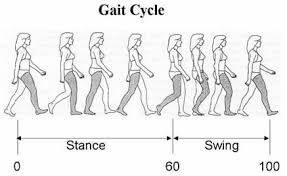 But wait! There’s more. This practice of engraining drill practice, as it were, within the real movement – translating the skills of the scales to enhancing the quality of the performance – that work itself changes the shape of the movement.
That change in the walk is a physical thing: those physical changes are effectively structural. Consider if to improve the walk, the walk shows us that ankle work may help; we do ankle drills; re-walk. Better. That improved movement in the ankle is practiced within the walk itself. Improved movement means improved function; improved function, with many reps, leads quickly to fundamentally enhanced structure. Thus function creates structure.
This cycle of improving function to create improved structure occurs because we are plastic people. Woolf’s law demonstrates this effect with bone tissue (Frost01). Davis’s law shows this with our other tissues, like skin and fascia. And the SAID principle (specific adaptation to imposed demand) (Wallis & Logan) suggests this process of adaptation begins as soon as we introduce a demand upon the system.
But wait! There’s Even More.
Keeping it Real; Keeping it Cool Another aspect of the walk to dial in the drills we do for our performance improvement is that it may well also be neurologically soothing . The dynamic joint mobility drills in R-phase for instance help open up new signalling to the nervous system to say that a joint is moving better; a muscle is firing better and so we can move better.
To walk means to move. To move helps reduce stress (overview of why in 10 tips to de-stress); to move well means that a familiar, autonomous, reflexive act – something that therefore is in itself very low threat to the nervous system - is becoming better, easier, even less threatening – especially if there’s been any pain in the walk that’s lessened from our practice.. This better-ness amplifies all the positive benefits of movement. Easier, better, too, means less stress. We learn quickly from our body's responses that better movement means inner peace, happiness and perhaps improved prospects for a better incarnation: feeling better means easier to be nice rather than grumpy. And who wants to be grumpy and go to hell? Or reincarnate in a nasty place?
So we practice our drills, and then we walk them in. Beautiful music; beautiful movement.
PS - running and practicing running gait to reduce pain in running
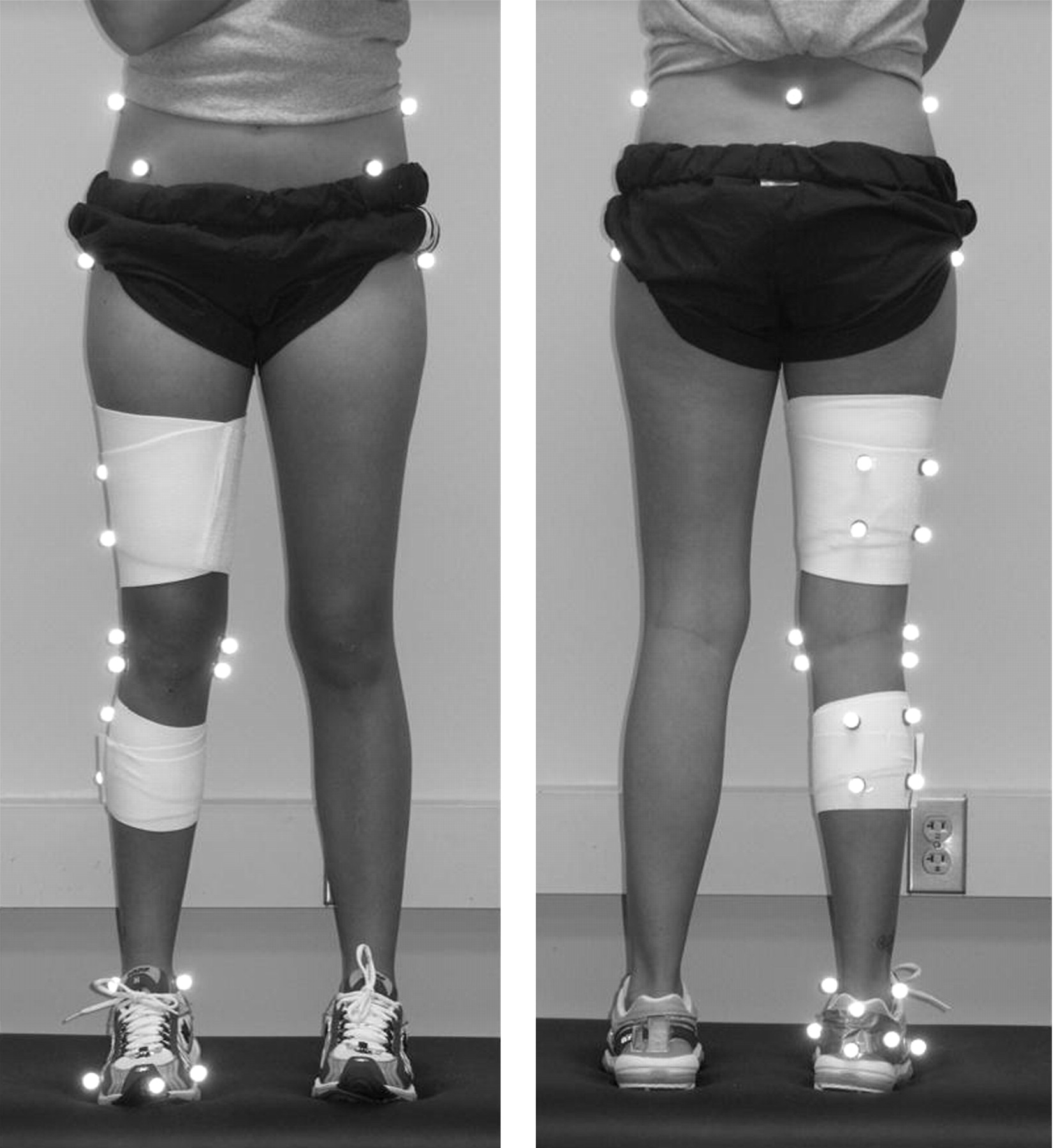 Recent research (Noehren10) considered that gosh, knee pain in runners (Patellofemoral pain syndrome) seems to be connected to hip mechanics. The approach to address this problem was to wire up study participants not unlike the way folks are wired up to map computer animation to human movement. In this case markers were placed on areas of the hip, low back, knee, shin and foot.
Runners were then asked to run on a treadmill and look at their movement performance data against a Normal Curve (shown below). Participants were asked over the course of 8 sessions of running on a treadmill to get their movement curve (the white line) to match the normal curve of treadmill running (the white line in the grey band). The amount of feedback given was tailed off over time to see how well the training was being internalized. Participants were also retested a month after the trial to see if the new patterns had stuck.

While the results were not statistically significant (but very close to being so), they showed that hip mechanics did change/improve, and that most importantly, knee pain went down. The paper is free and worth reading.
From a neurological/SAID principle lens, there are a couple of points here. First, if someone is having hip issues, is that all that's going on? sometimes hip issues are the result of low back stuff, upper back stuff and in particular foot/ankle stuff. Focusing on the hip alone may be part of why the results in improvement were not significant. One might argue, though, that in order for the person to "move their curve" as shown above, perhaps they were also working on the ankle and back position issues to achieve the hip effect.
Second, running on a treadmill is a kind of weird thing relative to normal running or walking gait. When we run we choose our pace and stride length - it varries. On a treadmill, there's not much room for those subtle variations; the vestibular/visual dissonance also seems to create a performance hit vs land running/walking (ever feel a bit dizzy coming off a treadmill?)
Third of course, these folks all seem to be running with squishy largely not bendy heal-striking shoes. How about just thinking about getting out of those shoes or perhaps learning to get up into more natural/barefoot running type gait??
So what i wonder to myself is that if some of these folks with knee pain had come to see a Z-Health person with even just an R-Phase cert under their belts, and they'd been asked by said Zed folks to go for a walk (rather than step on a treadmill) to look at how they move at their own pace, in their own way, what might have been seen? Would a few reps with a few simple but very precicise R-Phase drills, followed by the Magic Post Session Walk have helped set up this better function sooner, faster, easier, and potentially have even greater benefit since the practice is located in the every day of the walk (using the SAID principle of specific adaptation) rather than the artifice of the treadmill? Just a question, but i'm guessing based on practice the answer is "uh huh."
And the beat goes on.
A few Refs
Walking is an action most of us take for granted. It's such an automatic, effortless, thoughtless practice that we tend to forget it's actually a learned, practiced, skill. But it's this natural effortlessness of this deeply rep'ed & acquired practice that makes it so valuable for locking in better movement practice - what we practice when say working with a coach to tune dynamic joint movements (like those in z-health's R-Phase (overview) and I-Phase (overview) drills) into our lives.
Thoughtless Action – in a good way. Walking is a powerful communicator: it tells us a lot about our movement for a two key reasons we've touched on above: it’s autonomous, and its reflexive. Autonomous, from the greek auto, means can act on its own. So we can walk while we do other things. Like chew gum and talk all at the same time.
Walking, as noted, is not innate; it is rather like riding a bicycle: a learned skill. Indeed, research shows two interesting things (at least) about this skill acquisition: (1) that when we begin to acquire the skill has been pretty steady for us for hundreds of millions of years (Garwicz09) but (2) that this motor skill acquisition is also affected by cultural practices (Karasik10).
Once we do get going, we learn and practice this skill millions of times (each step is a practice) it becomes not only autonomous but reflexive. Reflexive means that the function moves from an act where we are thinking about it to something that is pre-cognitive – happens without having to think consciously about what to do. So with these two related qualities – autonomous and reflexive – we have an action that gives us a pretty good picture of how a person actually moves when they’re not thinking about it vs how a person may perform a less familiar action that requires their cognition and concentration. Something that is, in effect, thoughtless, therefore seems to give us a more accurate picture of the quality of a person’s movement
From this picture of the walk, Z-Health practitioners starting at an R-Phase certification level (the first cert, overviewed here) have a repertoire of drills available to help address the performance issue identified. Kinaesthetically, the person themselves also get feedback from the walk: it’s not unusual for the person walking to volunteer comments at the end of a session like “that feels more open” or “that’s looser” or “something’s easier.” In this respect, the walk forms a kind of assessment/reality check for the person to see how all those little z-drills have had not only a local but a more systemic effect on their performance.Loading Action More than just a self-check, because of its very systemic nature, walking is a great way to begin to enpattern (to coin a phrase) the better-ness being experienced in that self-check.
In other words, our walking at the end of a session begins to practice the new way we are moving as a result of the drills we practiced to move better. By checking to see if we are moving better, rather ironically, when we are moving better (shown in the better walk), we are helping to practice the better-ness. That’s why if we’re not moving better after a drill and a re-walk, we keep working out more drills until there is a betterness. And then we practice betterness – not by doing the drills that helped open up the paths – or not them alone – but by putting the positive effect of the drill into a real and fundamental movement. Thereby improving the movement (which is what we care about really more than an isolated gesture) into a positive feedback loop.
Making Music vs Playing Scales Walking post session or for that matter after doing our own mobility practice is rather like after doing scales on an instrument, playing the real piece; the real piece benefits not because the piece is playing scales, but because the scales give us skills that are useful in playing real pieces – any piece - better. But then, the magic is likewise that by playing the tune with these enhanced skills, the tune playing is itself also practice of the specific movement – as a whole. Feedback loop. Thus drills give us skills that improve movement such as the very familiar autonomous walking, and walking itself with this practice makes walking better. That post-session walk-in is a rather Magic Walk that captures and integrates into the Real Movement the experience built from the (corrective) drills.
That change in the walk is a physical thing: those physical changes are effectively structural. Consider if to improve the walk, the walk shows us that ankle work may help; we do ankle drills; re-walk. Better. That improved movement in the ankle is practiced within the walk itself. Improved movement means improved function; improved function, with many reps, leads quickly to fundamentally enhanced structure. Thus function creates structure.
This cycle of improving function to create improved structure occurs because we are plastic people. Woolf’s law demonstrates this effect with bone tissue (Frost01). Davis’s law shows this with our other tissues, like skin and fascia. And the SAID principle (specific adaptation to imposed demand) (Wallis & Logan) suggests this process of adaptation begins as soon as we introduce a demand upon the system.
But wait! There’s Even More.
Keeping it Real; Keeping it Cool Another aspect of the walk to dial in the drills we do for our performance improvement is that it may well also be neurologically soothing . The dynamic joint mobility drills in R-phase for instance help open up new signalling to the nervous system to say that a joint is moving better; a muscle is firing better and so we can move better.
To walk means to move. To move helps reduce stress (overview of why in 10 tips to de-stress); to move well means that a familiar, autonomous, reflexive act – something that therefore is in itself very low threat to the nervous system - is becoming better, easier, even less threatening – especially if there’s been any pain in the walk that’s lessened from our practice.. This better-ness amplifies all the positive benefits of movement. Easier, better, too, means less stress. We learn quickly from our body's responses that better movement means inner peace, happiness and perhaps improved prospects for a better incarnation: feeling better means easier to be nice rather than grumpy. And who wants to be grumpy and go to hell? Or reincarnate in a nasty place?
So we practice our drills, and then we walk them in. Beautiful music; beautiful movement.
PS - running and practicing running gait to reduce pain in running
Recent research (Noehren10) considered that gosh, knee pain in runners (Patellofemoral pain syndrome) seems to be connected to hip mechanics. The approach to address this problem was to wire up study participants not unlike the way folks are wired up to map computer animation to human movement. In this case markers were placed on areas of the hip, low back, knee, shin and foot.Runners were then asked to run on a treadmill and look at their movement performance data against a Normal Curve (shown below). Participants were asked over the course of 8 sessions of running on a treadmill to get their movement curve (the white line) to match the normal curve of treadmill running (the white line in the grey band). The amount of feedback given was tailed off over time to see how well the training was being internalized. Participants were also retested a month after the trial to see if the new patterns had stuck.
While the results were not statistically significant (but very close to being so), they showed that hip mechanics did change/improve, and that most importantly, knee pain went down. The paper is free and worth reading.
From a neurological/SAID principle lens, there are a couple of points here. First, if someone is having hip issues, is that all that's going on? sometimes hip issues are the result of low back stuff, upper back stuff and in particular foot/ankle stuff. Focusing on the hip alone may be part of why the results in improvement were not significant. One might argue, though, that in order for the person to "move their curve" as shown above, perhaps they were also working on the ankle and back position issues to achieve the hip effect.
Second, running on a treadmill is a kind of weird thing relative to normal running or walking gait. When we run we choose our pace and stride length - it varries. On a treadmill, there's not much room for those subtle variations; the vestibular/visual dissonance also seems to create a performance hit vs land running/walking (ever feel a bit dizzy coming off a treadmill?)
Third of course, these folks all seem to be running with squishy largely not bendy heal-striking shoes. How about just thinking about getting out of those shoes or perhaps learning to get up into more natural/barefoot running type gait??
So what i wonder to myself is that if some of these folks with knee pain had come to see a Z-Health person with even just an R-Phase cert under their belts, and they'd been asked by said Zed folks to go for a walk (rather than step on a treadmill) to look at how they move at their own pace, in their own way, what might have been seen? Would a few reps with a few simple but very precicise R-Phase drills, followed by the Magic Post Session Walk have helped set up this better function sooner, faster, easier, and potentially have even greater benefit since the practice is located in the every day of the walk (using the SAID principle of specific adaptation) rather than the artifice of the treadmill? Just a question, but i'm guessing based on practice the answer is "uh huh."
And the beat goes on.
pps - if you're interested in the R-Phase cert, or in checking out zed (via the essentials of elite performance dvd or course) here's more info about z-health and the approaches here; if you do decide to take a cert, please consider indicating you came in via mc (that's me). We don't get paid money for any referals, but we do get some money off our own continuing ed with zed. Which is cool. And appreciated.
A few Refs
Frost HM (2001). From Wolff's law to the Utah paradigm: insights about bone physiology and its clinical applications. The Anatomical record, 262 (4), 398-419 PMID: 11275971
Garwicz, M., Christensson, M., & Psouni, E. (2009). A unifying model for timing of walking onset in humans and other mammals Proceedings of the National Academy of Sciences, 106 (51), 21889-21893 DOI: 10.1073/pnas.0905777106
Karasik LB, Adolph KE, Tamis-Lemonda CS, & Bornstein MH (2010). WEIRD walking: cross-cultural research on motor development. The Behavioral and brain sciences, 33 (2-3), 95-6 PMID: 20546664
Noehren, B., Scholz, J., & Davis, I. (2010). The effect of real-time gait retraining on hip kinematics, pain and function in subjects with patellofemoral pain syndrome British Journal of Sports Medicine DOI: 10.1136/bjsm.2009.069112
Wallis, Earl L and Logan, Gene Adams, 1964 Figure improvement and body conditioning through exercise, Prentice Hall, NY. [presentation of SAID principle]Tweet Follow @begin2dig

 PDF
PDF

Friday, October 15, 2010
Squish your Eyes - and Relax
Follow @mcphoo
Tweet
A while ago over at iamgeekfit, i posted ten tips to destress - very much related to hormone responses and ph balance. Well, recently learned there's one more thing we can do to relax that's pretty durn neural: squish our eyes. With little circles.
How do it? As eric cobb puts it, imagine you're picking up a grape (using all your fingers). Take that position to the eye and press/massage for about 30seconds.
 Yes, closing eyes and massaging around the eye, pushing gently on the eyeball through the lid, will help calm us down based on something called the "oculocadiac reflex"
In other words, the eyes, via a big nerve group in the head/face (the trigeminal nerve) are connected to this great big vagus nerve; the vagus nerve goes through touching our heart, our lungs and importantly our guts.
 Doing a little eye squishing massage will help trigger the calming wonder that is the provinence of the valgus nerve.
If you dig these kind of tips there's way more eyeball wonderfulness covered in the Complete Athlete Vol 1 DVD. Turns out our eyes are important for more than vision.
Doing eye squishing daily - may make more of a difference than just feeling relaxed. If you give it a go for two weeks, daily, please let me know what you notice changes in your well being/performance.
Related
How do it? As eric cobb puts it, imagine you're picking up a grape (using all your fingers). Take that position to the eye and press/massage for about 30seconds.
In other words, the eyes, via a big nerve group in the head/face (the trigeminal nerve) are connected to this great big vagus nerve; the vagus nerve goes through touching our heart, our lungs and importantly our guts.
 Doing a little eye squishing massage will help trigger the calming wonder that is the provinence of the valgus nerve.
If you dig these kind of tips there's way more eyeball wonderfulness covered in the Complete Athlete Vol 1 DVD. Turns out our eyes are important for more than vision.
Doing eye squishing daily - may make more of a difference than just feeling relaxed. If you give it a go for two weeks, daily, please let me know what you notice changes in your well being/performance.
Related
- practicing on the other side of the weigth room: tuning visual vestibular and proprioceptive systems
- overview: the complete athlete, vol 1
Wednesday, October 13, 2010
Caffeine makes us Crazy - or at least messes with our sleep
Follow @mcphoo
Tweet
i *love* good coffee. You? Do you know how you react to coffee? Do you find caffeine keeps you awake/alert? Yes? or maybe you find it doesn't affect your getting to sleep? We know that the magic in coffee is caffeine. Guess what? apparently whether or not we can fall asleep with caffeine is less of an issue than what it does to our sleep quality, in particular, our deep sleep state. That is, it screws it up.
 So yes, we might be able to get to sleep (or not) with caffeine in our systems (caffeine genetics is cool), but once we are asleep - based on what's happening in our brain - we just mayn't have enough signaling in the presence of caffeine to tell us to get to DEEP sleep. Wild, eh?
So what's caffeine doing to us? There's a great detailed write up of the chemistry of caffeine and the brain (calmly titled "Is caffeine a health hazard?") by Ben Best. If i can summarise that article without wrecking it, here's the simplified version, and it's so cool, it just makes sense.
Energy. All or our systems require ATP to do work. Adenosine Triphosphate. Folks into performance are v. familiar with ATP in terms of energy system work, and how Fat for instance is our biggest but slowest generating source of ATP. ATP produces energy by being broken apart into two parts: adenosine and adenosinediphosphate. The work of energy production is a cycle of putting a and adp together again to from new ATP.
 Fatigue. Fatigue is a really interesting process. All we're going to look at here is one tiny tiny bit. When we get fatigued and need rest, the adenosine that gets generated from ATP being broken down, rather than being reassembled into new ATP actually just builds up around the cells and doesn't get used. That's a really good thing. Adenosine on it's one is a brain signaller. As adenosine builds up in this fluid around the cells a bunch of things happen, including effectively signaling the brain to shift down, and when asleep to fasciliate deep, slow wave sleep. As the presence of adenosine goes up, brain wave activity goes down, deep sleep can happen.
 Caffeine the Disruptor. An amazing property of caffiene is that it is a Master of Disguise. It connects with adenosine receptors (getting across the blood brain barrier) so that adenosine can't get to those receptors (A1 in particular), and effectively means that the brain doesn't perceive the degree of adenosine build up, and so the signaling to slow the heck down can't happen. All sorts of tests show that with caffeine folks do better in various kinds of tasks, and has been tested with soldiers and athletes rather a lot. But even more recently with soldiers, there's an effort to get away from "stimulants" and think more about scheduling.
Bottom line is that caffeine a way to fake out our system into believing its less tired than it is. There are costs. It's pretty easy to see that while coffee'ing up will give most of us a jolt, we're still actually fatigued, and we are artificially asking our bodies to work beyond what they require for optimal function.
The effects are at least in two ways:
The other thing is that caffeine can actually take awhile to flush from our systems. Yesterday in talking about the value of darkness at night for sleep quality, i mentioned zeo as a tool to see how one's sleep quality changes. We use zeo in our lab for "self-monitoring." We can see that deep sleep quality seems to stay effected for days after even with single doses of caffeine. Bummer.
As zeo sleep researcher Stephan Fabregas has said previously at b2d, using caffeine in extremis for the occaision we need it, it can be great and useful. As a regular practice, maybe not so good. Bummer again. But that turns out to be the same for athletes using caffeine to help perk performance too.
The worst part of caffeine apparently is coming off it. Get through that, and sleep gets better, and we need caffeine less. How about that?
Break the cycle (of dependence); improve sleep quality, improve recovery and quality of life.
If you are a big starbucks mega coffee drinker, and you try going from Really Big to Not Quite So Big to maybe one less a day, let me know if you notice a difference over time of being on less or none of the stuff.
Good luck on your caffeine control mission.
Quick Ref
i *love* good coffee. You? Do you know how you react to coffee? Do you find caffeine keeps you awake/alert? Yes? or maybe you find it doesn't affect your getting to sleep? We know that the magic in coffee is caffeine. Guess what? apparently whether or not we can fall asleep with caffeine is less of an issue than what it does to our sleep quality, in particular, our deep sleep state. That is, it screws it up.So what's caffeine doing to us? There's a great detailed write up of the chemistry of caffeine and the brain (calmly titled "Is caffeine a health hazard?") by Ben Best. If i can summarise that article without wrecking it, here's the simplified version, and it's so cool, it just makes sense.
Energy. All or our systems require ATP to do work. Adenosine Triphosphate. Folks into performance are v. familiar with ATP in terms of energy system work, and how Fat for instance is our biggest but slowest generating source of ATP. ATP produces energy by being broken apart into two parts: adenosine and adenosinediphosphate. The work of energy production is a cycle of putting a and adp together again to from new ATP.


Bottom line is that caffeine a way to fake out our system into believing its less tired than it is. There are costs. It's pretty easy to see that while coffee'ing up will give most of us a jolt, we're still actually fatigued, and we are artificially asking our bodies to work beyond what they require for optimal function.
The effects are at least in two ways:
- compromised deep sleep quality means our recovery is compromised, and if as athletes we're trying to build physical function, deep sleep is where that building takes place, so we've just screwed the efficacy of our build phase;
- because we're actually still fatigued, and not getting sleep, sleep deprivation effects kick in. Stress goes up, fucntion goes down, ability even to process food, have sex, do anything gets screwed up. Irony eh? we take caffeine to perk up and it ends up actually screwing up our sleep recovery.
As zeo sleep researcher Stephan Fabregas has said previously at b2d, using caffeine in extremis for the occaision we need it, it can be great and useful. As a regular practice, maybe not so good. Bummer again. But that turns out to be the same for athletes using caffeine to help perk performance too.
The worst part of caffeine apparently is coming off it. Get through that, and sleep gets better, and we need caffeine less. How about that?
Break the cycle (of dependence); improve sleep quality, improve recovery and quality of life.
If you are a big starbucks mega coffee drinker, and you try going from Really Big to Not Quite So Big to maybe one less a day, let me know if you notice a difference over time of being on less or none of the stuff.
Good luck on your caffeine control mission.
Quick Ref
Gore RK, Webb TS, & Hermes ED (2010). Fatigue and stimulant use in military fighter aircrew during combat operations. Aviation, space, and environmental medicine, 81 (8), 719-27 PMID: 20681231Tweet Follow @begin2dig
Ferré S (2010). Role of the central ascending neurotransmitter systems in the psychostimulant effects of caffeine. Journal of Alzheimer's disease : JAD, 20 Suppl 1 PMID: 20182056
Yang, A., Palmer, A., & Wit, H. (2010). Genetics of caffeine consumption and responses to caffeine Psychopharmacology, 211 (3), 245-257 DOI: 10.1007/s00213-010-1900-1
Cover your eyes - better sleep in one night
Follow @mcphoo
Tweet
Here's a very very simple thing you can do to get a better night's sleep. Really. Seriously: eye covers.
 If you do not have a totally dark, pitch black room to sleep in - and i mean any fricking electrical light - then consider giving eye covers a go. You may *think* you have a dark room, but if you can see your hand easily when the lights are off, maybe not.
Why is total darkness important? My understanding from Zeo Sleep Research Stephan Fabregas is it's hormonal: darkness triggers melatonin to come on which helps put us nighty night. Any light starts to tell melotonin to turn off the hormonal pipe to la la land and that means we start to wake up.
 In my personal experience with the eye covers - especially in the summer when i have not wanted to get up with the sun - i have found that using these covers means that i sleep longer, better, deeper with less wakeful states. How do i know this? besides how i feel, i do use a Zeo to track my sleep (discussed here and here with Stephan), so i know. Yes i'm the type of person that if someone asks "how did you sleep" - i check the zeo.
ANYWAY cheap experiment: try a few nights without; a few nights (give yourself a chance to get used to the eye patches), and see if you feel more rested avec le mask. Let me know how it goes. Expecially travelling, this thing is a life saver.
Here's to your better night's sleep, fast. Tweet Follow @begin2dig
Why is total darkness important? My understanding from Zeo Sleep Research Stephan Fabregas is it's hormonal: darkness triggers melatonin to come on which helps put us nighty night. Any light starts to tell melotonin to turn off the hormonal pipe to la la land and that means we start to wake up.

ANYWAY cheap experiment: try a few nights without; a few nights (give yourself a chance to get used to the eye patches), and see if you feel more rested avec le mask. Let me know how it goes. Expecially travelling, this thing is a life saver.
Here's to your better night's sleep, fast. Tweet Follow @begin2dig
Sunday, October 10, 2010
Vibram FiveFingers Smartwool Classic for Warmer Winter Toes (preview)
Follow @mcphoo
Tweet
My feet turn blue even on summer evenings. Doesn't bother me. Much. I like going barefoot, and socks just mean slipping on wood and tile floors in the house. But it would be nice to be less blue of foot. I think vibram may have developed a solution: make their classic slipper like version with smartwool upper and felt liner. Voila, the smartwool classic. So here's a wee preview of this new vff, with a few notes on fit.
Wool: it's lovely Now i dig smartwool as a company. It uses marino wool for everything from toques to socks. I love my smartwool toque that i got in Santa Fe nearing on 10 years ago. Durable without looking aged (ie, ratty) and very cozy. The shoes have the same sort of feel. In fact the feel very soothing just stepping into them. Performance, but with an emphasis on the kind of comfort only wool brings.
Recycled Sole Another thing about the shoe that's interesting is that the sole is 50% recycled rubber. That's nice.
Pull Tab. And i dunno why but i can actually use the pull tab elastic on this version of the classic and not feel it biting into my ankle. Many folks actually cut the cord as it were when using classics because of this. For some reason, - maybe the back rubber behind the pull is a bit thicker - it's a functional device on these ones.
Testing Fit. I'm happy to trial these out - i had hoped for a similar result with the performa, but that shoe and i just haven't been a strong and happy mix. Not that that driver's glove for one's feet that the performa/moc is, is not a lovely shoe; the fit just didn't come together perfectly for me. But my cousin now loves me even more for having passed them on to her. So i'm hoping the smartwools that i have on right now will work - the toasty feeling in this cool room is just what i've been seeking.
The Longer Toe Issue: Where's the hesitancy in my voice? Fit. The smartwool is the same sizing as the the classics. That said it's not the exact same fit. Speaking with the kind folks at City Sports in Boston about the differences, Alison said "It's the big toe, isn't it?" yes, i said, exactly. The big toe (sorta like the performas were). You may find that where you usually have some extra room on a regular classic, ya just don't in the smartwool - especially if you are sizing from a longer than big toe toe. If you order these online, be sure to check your vendor's return policy as you might want to get your usual classic and one up to make sure. These are wool uppers: they're going to stretch, that's true. But they'll stretch wide, not long.
Now when i one upped the size with the performa for the toes to fit better, the rest of the foot was just too loose. Hence the gift to cousin. For those of us with longer than big toe toes - this shoe (like the performa) *may not work* But that may depend as well on just how much longer the toe is: the one on my left is not as much longer than the one on the right, and the left feels perfect, beautiful, lovely. But the right foot is likely bigger than the left, too along with the longer toe, and it is both the big toe and the longer toe where - all i can say is i'm "aware" of those toes. Will this sensation go away? i don't know.
With no other VFF to date have i had any issues with toe sizing. The bikilas (my huge concrete running, good looking fave) are just awesome. KSO's same thing. Sprints, yes. Standard classics fine, flow, fine. What's with the revised classics (performan/smartwools) that the toes feel a little - well - something.
It was a show stopper on the performa; don't know if it will be here.
And here's the other weirdness: i have put the soles of these smartwools right up against the standard classics and matched them groove against groove. THey are - as far as i can tell - exactly the same length on everything. So how weird is that?? I just know when i put on the regular classics i have no toe awarenes on the right - indeed i can squish the big toe cap a bit - there's room at the top of the toe; put on the smartwools - no squish and toe awareness. Will it go away?? Or will these shoes just go back?
And here's the funny thing: wearing socks feels pretty good too! Dunno what's going on. These are wild and crazy shoes.
UPDATE - le recherche: well, after wearing them back and forth indoors for hours, testing with and without socks, alas that right foot shoe feels like it's just not making happy with both the big toe and the long toe, so i've had to return them. Sigh. Just like the performa. I'll try to find out why these fit differerntly than the other classics.
Recommendation: for folks with no toe issues looking for a cozier shoe for kicking back at home - or just something kinda funkier for dress wear - these are a goodie.
 Also tried on a TrekSport today. Maybe it was the black, but i just didn't go for it. Here's why: it has a KSO'ish upper (tho different material - still mesh) and the trek's sole. That may be perfect for hiking about in the summer - the mesh is really really nice on these - but coming into the fall, i'm not sure they'd be a much used shoe.
Here's the thing. The bikila's (discussed here) have become my fave running-on-concrete/frisbee playing/looking fine shoe. I really LOVE these shoes (tho they sure pick up a stink more than any of the other VFFs. Wow).
Compared with the KSO, the kso have a 2mm insole and a 3.5 mm outsole. The Bikilas have just a wee bit more sculted love with a 3mm insole and 4mm "anatomical pod" outsole. That's just about as thick as i want to go for what i do in the city and on the grass. The advantage of the slight treading on the grass is that unlike the standard vff soles, these do not slip about. Nice effect for stop and start movement.
Now the TrekSport has a 4mm eva midsole and a 4mm outsole with the nobly tread. I feel like i noticed that extra thickness. And again, for what i do, not needed. If i were living close to a trail and running in the woods in warm/hot weather, these would likely ROCK.
In the interim, i am still keen to try a woman's KSO Trek for fall/winter - just for foot warmth - to extend outdoor season. And the lovely thin SportTrek Uppers just won't do that.
Aren't all these new models wild?
Anyway there's new good stuff (and familiar stuff) at Vibram FiveFingers. Hope you'll check it out.
FIT in general
And if you're keen to learn how to fit these things, and what they fit like with sock, here's an overview, and here's a way to test any shoes for foot health. PLUS a whole lot more articules on the VFF experience over - gosh - approaching two years of living in VFF's.
If you try the smartwools, please stop by to share your experience. Tweet Follow @begin2dig
 |
| UPPER - SmartWool Cozy with 67% Merino Wool, 33% Nylon SOLE- EcoStep 2 rubber with 50% recycled content FOOTBED- SmartWool Felt 2mm with 95% Merino Wool, 5%Polyester |
Wool: it's lovely Now i dig smartwool as a company. It uses marino wool for everything from toques to socks. I love my smartwool toque that i got in Santa Fe nearing on 10 years ago. Durable without looking aged (ie, ratty) and very cozy. The shoes have the same sort of feel. In fact the feel very soothing just stepping into them. Performance, but with an emphasis on the kind of comfort only wool brings.
Recycled Sole Another thing about the shoe that's interesting is that the sole is 50% recycled rubber. That's nice.
Pull Tab. And i dunno why but i can actually use the pull tab elastic on this version of the classic and not feel it biting into my ankle. Many folks actually cut the cord as it were when using classics because of this. For some reason, - maybe the back rubber behind the pull is a bit thicker - it's a functional device on these ones.
Testing Fit. I'm happy to trial these out - i had hoped for a similar result with the performa, but that shoe and i just haven't been a strong and happy mix. Not that that driver's glove for one's feet that the performa/moc is, is not a lovely shoe; the fit just didn't come together perfectly for me. But my cousin now loves me even more for having passed them on to her. So i'm hoping the smartwools that i have on right now will work - the toasty feeling in this cool room is just what i've been seeking.
The Longer Toe Issue: Where's the hesitancy in my voice? Fit. The smartwool is the same sizing as the the classics. That said it's not the exact same fit. Speaking with the kind folks at City Sports in Boston about the differences, Alison said "It's the big toe, isn't it?" yes, i said, exactly. The big toe (sorta like the performas were). You may find that where you usually have some extra room on a regular classic, ya just don't in the smartwool - especially if you are sizing from a longer than big toe toe. If you order these online, be sure to check your vendor's return policy as you might want to get your usual classic and one up to make sure. These are wool uppers: they're going to stretch, that's true. But they'll stretch wide, not long.
Now when i one upped the size with the performa for the toes to fit better, the rest of the foot was just too loose. Hence the gift to cousin. For those of us with longer than big toe toes - this shoe (like the performa) *may not work* But that may depend as well on just how much longer the toe is: the one on my left is not as much longer than the one on the right, and the left feels perfect, beautiful, lovely. But the right foot is likely bigger than the left, too along with the longer toe, and it is both the big toe and the longer toe where - all i can say is i'm "aware" of those toes. Will this sensation go away? i don't know.
With no other VFF to date have i had any issues with toe sizing. The bikilas (my huge concrete running, good looking fave) are just awesome. KSO's same thing. Sprints, yes. Standard classics fine, flow, fine. What's with the revised classics (performan/smartwools) that the toes feel a little - well - something.
It was a show stopper on the performa; don't know if it will be here.
And here's the other weirdness: i have put the soles of these smartwools right up against the standard classics and matched them groove against groove. THey are - as far as i can tell - exactly the same length on everything. So how weird is that?? I just know when i put on the regular classics i have no toe awarenes on the right - indeed i can squish the big toe cap a bit - there's room at the top of the toe; put on the smartwools - no squish and toe awareness. Will it go away?? Or will these shoes just go back?
And here's the funny thing: wearing socks feels pretty good too! Dunno what's going on. These are wild and crazy shoes.
UPDATE - le recherche: well, after wearing them back and forth indoors for hours, testing with and without socks, alas that right foot shoe feels like it's just not making happy with both the big toe and the long toe, so i've had to return them. Sigh. Just like the performa. I'll try to find out why these fit differerntly than the other classics.
Recommendation: for folks with no toe issues looking for a cozier shoe for kicking back at home - or just something kinda funkier for dress wear - these are a goodie.
PS - the Sport Trek - quick overivew

Here's the thing. The bikila's (discussed here) have become my fave running-on-concrete/frisbee playing/looking fine shoe. I really LOVE these shoes (tho they sure pick up a stink more than any of the other VFFs. Wow).
Compared with the KSO, the kso have a 2mm insole and a 3.5 mm outsole. The Bikilas have just a wee bit more sculted love with a 3mm insole and 4mm "anatomical pod" outsole. That's just about as thick as i want to go for what i do in the city and on the grass. The advantage of the slight treading on the grass is that unlike the standard vff soles, these do not slip about. Nice effect for stop and start movement.
Now the TrekSport has a 4mm eva midsole and a 4mm outsole with the nobly tread. I feel like i noticed that extra thickness. And again, for what i do, not needed. If i were living close to a trail and running in the woods in warm/hot weather, these would likely ROCK.
In the interim, i am still keen to try a woman's KSO Trek for fall/winter - just for foot warmth - to extend outdoor season. And the lovely thin SportTrek Uppers just won't do that.
Aren't all these new models wild?
Anyway there's new good stuff (and familiar stuff) at Vibram FiveFingers. Hope you'll check it out.
FIT in general
And if you're keen to learn how to fit these things, and what they fit like with sock, here's an overview, and here's a way to test any shoes for foot health. PLUS a whole lot more articules on the VFF experience over - gosh - approaching two years of living in VFF's.
If you try the smartwools, please stop by to share your experience. Tweet Follow @begin2dig
Thursday, October 7, 2010
The fine art of the Nudge - optimizing exercise to support body comp change - the more of less
Follow @mcphoo
Tweet
Have you heard this one or perhaps felt this way "I work out and then i feel so sore the next day, i just don't feel like doing it again." I've heard this response frequently this past week when putting together some research strategies with tech experts on the subject of wellbeing.
It's interesting to explore why most of us who don't currently work out or do so infrequently feel we have to work until we need a bucket for the experience to have value. The weird thing is that when asked, we don't necessarily have a reply. Isn't that what we're supposed to do? Turn on the TV and see ads for 6 or 12 week programs where the goal is by the end of the workout to collapse in a puddle, one might think that that was indeed the case (i've written before about some issues with these approaches).
All we need is (a) Nudge Dan John talks about just needing to "nudge" our workouts to get exceptional returns in strength . I'd suggest that we see value in applying that approach across the board for well being. Why? It turns out that the way we're wired, nudging our progress may be more effective and beneficial for the long haul that anything else - body comp changes included. So let's look a little bit at this exercise myth of working out "hard" vs working out "well"
UnFit Myth #1 for Body Comp Change: Non Stop Intensity
 1) Have to work out "really hard" - to the point of collapse from fatigue to get results (but i hate how i feel the next day).
Let's assume results mean burning fat, dropping fat mass. What does all this frenetic activity mean? If we're just getting into working out, fatigue comes from a lot of places. First of all, our bodies haven't adapted to the demands of working out. We get "gassed" or "winded" No kidding. We just don't have the capacity in our bodies - yet - to work out either long or hard. We run out of available energy. Literally.
A Nudge is All that's Required
SO what's the point of exercise? It's to engage and extend a process of change; it's all the words ending in "-er." Like go fast-er, lift strong-er, run long-er, jump high-er. Exercise is literally *changing* us as our bodies adapt to the new loads. Let's consider a few of the changes that occur
Breathing For instance, when we're out for a light run and our hearts are at about 60% of whatever their 100% capacity to beat in a minute is, but we still feel initially like that's pretty taxing - we can only do it for a few minutes at a time - here's part of what our bodies are doing: they're creating MORE of a particular part of our cell - the mitochondria - that chews fat and turns it into energy. More mitochondria means that we can take more fat in and convert it into energy so we can keep going. That's great.
Muscle Likewise when we lift weights - also really great for body comp - if the load is even a bit of a challenge for us - we do even a few reps, regularly, our very muscles change. The theory (sliding filament) goes that they have components that almost like a tug of war that grab onto each other and pull to contract or the muscle. This growth is part of why, over time, we get stronger; the once heavy weight feels lighter.
Learning/Nervous system One more really critical change is in our wiring. When we do anything physically, we are learning how to do it; our muscles are likewise learning how to perform a particular technique. When we feel ourselves shaking when we hold a new posture that's usually our nervous system rapidly trying to figure out in this new move what muscles need to fire when to support this movement. Repetitions are really important for that.
Enter the Nudge
 Some of us think we exercise to lose weight. Fair enough. That's almost another myth though. Exercise isn't really about weight loss. It's actually a secondary component to diet - how much that component contributes to fat burning really depends on how much we do, and somewhat on what kind of work we do when we're doing it.
The primary effect of exercise is to help us become more robust, and, as i've pointed to before, become smarter (another "-er) as well. Seriously. This bullet proofing occurs by pushing our system to adapt, to make those changes described above, to support what we're doing while being less taxing.
That's an important point for us to get: we need to do something in such a way that our bodies need to change to support that demand physiologically and neurologically.
Just Enough.
So our bodies can only change so much physiologically at once. Figuring out that amount is part of an ongoing debate, but one of the toughest things for many people to get is that usually what we actually need to do to promote an adaptation is a lot less than we think. A. Lot. Less.
But what does less mean? Less can happen over
Some workouts focus on taking a long time to lift heavy loads (intensity) 2 or 3 times (volume), taking a long time (5 minutes or more) between doing maybe five sets (volume) .
Each of these approaches does different things to the body and each has particular costs. From the long, intense, multi-set workout, people feel fatigued and also often sore. Intriguingly the heavy workouts with few reps, few sets and long rest breaks can have very similar effects without inducing fatigue.
What's going on? Muscle Fibers and Oxidative capacity
Without going into a lot of detai, there's two things at least at play in getting body comp change without killing oneself
- aerobic adaptation - more mitochondria
- muscle fiber type - hitting the sweet spot for muscle response
Aerobic Adaptation By doing ANYTHING that will elevate our hearts above 60% of max - the classic working hard but can still carry on a conversation - we are causing a performance related adapatation to take place in our bodies - we are causing more mitochondria to get built so that more fat can be utilized to produce more energy to keep us going longer and harder without putting us in the ground.
Muscular Adaptation The main thing about adaptation is that we need to keep nudging our current state. That may mean one day if out for a run, going a few seconds longer or a wee bit harder for a little bit, a few times throughout the run. That means in lifting we might use waves of loads so that in a week we have a lighter, medium and heavy day with what we're doing - doing the same lifts each day. As long as there's a *bit* of a challenge, and adaptation occurs. There are many ways to do this kind of waving of loads, but the main thing is that by waving the loads we challenge our muscle fibers to have to respond to get stronger so that we can do more - and doing more also requires more energy, which means more fuel gets burned.
 Recovery - the Sweet Spot of Adaptation. If we are fatigued and can't rest, our efforts can go for not because our recovery sucks. So, one way to ensure great adapatation is to go just to the place of getting that adaptation demand - the nudge on our current level - and getting good rest since it's in the recovery that the adaptation occurs - while our bodies figure out what they need to do to support loads like we've given them
Food - optimizing fuel intake
Another aspect of suppoprting exercise is fuel. Just because we have fat to burn for fuel, doesn't mean that we don't need to eat. There's stuff we need every day in our bodies to be efficient. In fact it's sometimes harder to burn fuel without the presence of food. But again what we need is usually less than we think - but less of the right stuff. Precision Nutrition makes figuring out what when very easy with its habits based approaches. Here's a free overview.
Take Away: Less of the Right Work = More of the Right results
So the point of exercise is to create an adaptation in the body: to help it become progressively more robust, and a better burner of fuel (fat in particular) to become that lean mean machine.
The main thing is - and this is what's really hard to get - is that adaptation can be, to use Dan John's phrasing "nudged" - in fact it's better for us to nudge the adaptation than to try to crush ourselves. Why? our nervous system can get really stressed if every workout is super intense. Ironically, working out like that can make us sick.
This doesn't mean we can't work out hard. It means we don't have to workout THAT hard ALL the time. That means deliberately backing off in order to gain more strength, gain more adapatation.
We'll come back another time to examples of such approaches, but the point is that gains will happen consistently effectively and too easily for anyone to believe in terms of strength and aerobic capacity.
DIET: Combine this nudging approach with good nutrition practices, like Precision Nutrition, and you're away.
TIME
One thing that seems to have the best effect is daily practice: find a way to do something every day.
The people who are most happy with their body comp it seems, seem to be doing something that is causing an adaptation for at least 5 hours a week. This 5 hour approache includes anything that is getting the heart rate up for five hours a week.
 We can Play frisbee or five a side football (rated most effective for ex-coach potatoes) with our pals for a couple hours a week; lift some weights (go ligher than you think - half the load you can lift once); push some weights; pull some weights; swing some weights pretty much every day when it's something that's not going to kill us. THere are loads of great programs available. Sources i trust and have written about here are by Pavel Tsatsouline and Dan John because on the weights side, they are masters of the Nudge. Indeed take a look at the record setting results Dan got with Pavel's 40 day way less is way more approach. Look as well at how Asha Wagner got tremendous strength PR's practicing with half the loads she would use in competition.
On the cardio/endurance side, i like a mix of steady state, play, and intervals. There's nice research on how to optimize fat burning outside intervals and within intervals.But again, these can all be achieved in a huge variety of ways that enhance well being, sense of joy and more robust us-ness.
Summing Up
Adaptation. That's what exercise is about. So we really do need to be kind to ourselves. We adapt readily; it's how we're wired. We adapt to change best and for the long haul it seems by Nudging. So do something that gets the heart up more of the time; super intensity being valuable, but less of the time. This way we can always urge the nudge on. Last month the nudge meant i lifted X; this month it's X+y. THat y might be more sets; more load; more time.
Killing ourselves to feel better? Not on. In fact, it's counter productive. Sure we can do it for three months but the cost on day 91 isn't often pretty. And then what on day 92?
Good Exercise Practice is about sustained adaptation towards a better, stronger, leaner us. That better is better when it's a Nudge: progressive, allows for excellent recovery and is accompanied by good nutrition habits. Tweet Follow @begin2dig
It's interesting to explore why most of us who don't currently work out or do so infrequently feel we have to work until we need a bucket for the experience to have value. The weird thing is that when asked, we don't necessarily have a reply. Isn't that what we're supposed to do? Turn on the TV and see ads for 6 or 12 week programs where the goal is by the end of the workout to collapse in a puddle, one might think that that was indeed the case (i've written before about some issues with these approaches).
All we need is (a) Nudge Dan John talks about just needing to "nudge" our workouts to get exceptional returns in strength . I'd suggest that we see value in applying that approach across the board for well being. Why? It turns out that the way we're wired, nudging our progress may be more effective and beneficial for the long haul that anything else - body comp changes included. So let's look a little bit at this exercise myth of working out "hard" vs working out "well"
UnFit Myth #1 for Body Comp Change: Non Stop Intensity
Let's assume results mean burning fat, dropping fat mass. What does all this frenetic activity mean? If we're just getting into working out, fatigue comes from a lot of places. First of all, our bodies haven't adapted to the demands of working out. We get "gassed" or "winded" No kidding. We just don't have the capacity in our bodies - yet - to work out either long or hard. We run out of available energy. Literally.
SO what's the point of exercise? It's to engage and extend a process of change; it's all the words ending in "-er." Like go fast-er, lift strong-er, run long-er, jump high-er. Exercise is literally *changing* us as our bodies adapt to the new loads. Let's consider a few of the changes that occur
Breathing For instance, when we're out for a light run and our hearts are at about 60% of whatever their 100% capacity to beat in a minute is, but we still feel initially like that's pretty taxing - we can only do it for a few minutes at a time - here's part of what our bodies are doing: they're creating MORE of a particular part of our cell - the mitochondria - that chews fat and turns it into energy. More mitochondria means that we can take more fat in and convert it into energy so we can keep going. That's great.
Muscle Likewise when we lift weights - also really great for body comp - if the load is even a bit of a challenge for us - we do even a few reps, regularly, our very muscles change. The theory (sliding filament) goes that they have components that almost like a tug of war that grab onto each other and pull to contract or the muscle. This growth is part of why, over time, we get stronger; the once heavy weight feels lighter.
Learning/Nervous system One more really critical change is in our wiring. When we do anything physically, we are learning how to do it; our muscles are likewise learning how to perform a particular technique. When we feel ourselves shaking when we hold a new posture that's usually our nervous system rapidly trying to figure out in this new move what muscles need to fire when to support this movement. Repetitions are really important for that.
Enter the Nudge
What Do We Need For Adaptation?
The primary effect of exercise is to help us become more robust, and, as i've pointed to before, become smarter (another "-er) as well. Seriously. This bullet proofing occurs by pushing our system to adapt, to make those changes described above, to support what we're doing while being less taxing.
That's an important point for us to get: we need to do something in such a way that our bodies need to change to support that demand physiologically and neurologically.
Just Enough.
So our bodies can only change so much physiologically at once. Figuring out that amount is part of an ongoing debate, but one of the toughest things for many people to get is that usually what we actually need to do to promote an adaptation is a lot less than we think. A. Lot. Less.
But what does less mean? Less can happen over
- time: how long an action is carried out - like the length of a workout
- volume how much work is done within that time - volume of something
- intensity how much effort the work takes, or how heavy a load is relative to how much one can lift once
Some workouts focus on taking a long time to lift heavy loads (intensity) 2 or 3 times (volume), taking a long time (5 minutes or more) between doing maybe five sets (volume) .
Each of these approaches does different things to the body and each has particular costs. From the long, intense, multi-set workout, people feel fatigued and also often sore. Intriguingly the heavy workouts with few reps, few sets and long rest breaks can have very similar effects without inducing fatigue.
What's going on? Muscle Fibers and Oxidative capacity
Without going into a lot of detai, there's two things at least at play in getting body comp change without killing oneself
- aerobic adaptation - more mitochondria
- muscle fiber type - hitting the sweet spot for muscle response
Aerobic Adaptation By doing ANYTHING that will elevate our hearts above 60% of max - the classic working hard but can still carry on a conversation - we are causing a performance related adapatation to take place in our bodies - we are causing more mitochondria to get built so that more fat can be utilized to produce more energy to keep us going longer and harder without putting us in the ground.
Another aspect of suppoprting exercise is fuel. Just because we have fat to burn for fuel, doesn't mean that we don't need to eat. There's stuff we need every day in our bodies to be efficient. In fact it's sometimes harder to burn fuel without the presence of food. But again what we need is usually less than we think - but less of the right stuff. Precision Nutrition makes figuring out what when very easy with its habits based approaches. Here's a free overview.
Take Away: Less of the Right Work = More of the Right results
So the point of exercise is to create an adaptation in the body: to help it become progressively more robust, and a better burner of fuel (fat in particular) to become that lean mean machine.
The main thing is - and this is what's really hard to get - is that adaptation can be, to use Dan John's phrasing "nudged" - in fact it's better for us to nudge the adaptation than to try to crush ourselves. Why? our nervous system can get really stressed if every workout is super intense. Ironically, working out like that can make us sick.
This doesn't mean we can't work out hard. It means we don't have to workout THAT hard ALL the time. That means deliberately backing off in order to gain more strength, gain more adapatation.
We'll come back another time to examples of such approaches, but the point is that gains will happen consistently effectively and too easily for anyone to believe in terms of strength and aerobic capacity.
DIET: Combine this nudging approach with good nutrition practices, like Precision Nutrition, and you're away.
TIME
One thing that seems to have the best effect is daily practice: find a way to do something every day.
The people who are most happy with their body comp it seems, seem to be doing something that is causing an adaptation for at least 5 hours a week. This 5 hour approache includes anything that is getting the heart rate up for five hours a week.
On the cardio/endurance side, i like a mix of steady state, play, and intervals. There's nice research on how to optimize fat burning outside intervals and within intervals.But again, these can all be achieved in a huge variety of ways that enhance well being, sense of joy and more robust us-ness.
Summing Up
Adaptation. That's what exercise is about. So we really do need to be kind to ourselves. We adapt readily; it's how we're wired. We adapt to change best and for the long haul it seems by Nudging. So do something that gets the heart up more of the time; super intensity being valuable, but less of the time. This way we can always urge the nudge on. Last month the nudge meant i lifted X; this month it's X+y. THat y might be more sets; more load; more time.
Killing ourselves to feel better? Not on. In fact, it's counter productive. Sure we can do it for three months but the cost on day 91 isn't often pretty. And then what on day 92?
Good Exercise Practice is about sustained adaptation towards a better, stronger, leaner us. That better is better when it's a Nudge: progressive, allows for excellent recovery and is accompanied by good nutrition habits. Tweet Follow @begin2dig
Saturday, September 18, 2010
Pick it Up. Again. Research poses correlation of resistance training reps to motivation type.
Follow @mcphoo
Tweet
Do you think someone who is extrinsically motivated (i want to win a gold medal) vs intrinsically motivated (i want to be the best i can be) is more or less likely to do more or less resistance work?
Yes, that's a question that's been asked in a recently published study on who uses fitness centers. The authors' abstract reads:
So what does that tell us? Well, not much. Except that self-reporting is notoriously inaccurate as a measure of actual actions, so it's rather a surprise that the authors say that the participants DO this amount of training rather than "report doing" this amount of training.
Does that mean the data's useless? Not necessarily. When the authors start doing gnarly stats on amount of self-reported work, some interesting differences emerge.
Key finding? According to the authors it's that demographic information tells us nothing about who's going to work out more. I'd only say it may tell us nothing about how self-reporting of workouts is expressed. Until there's a measure to validate the accuracy of the self-reports, who knows?
But what the claim means is that age, gender, years of working out - none of that is indicative of amount of (reported) resistance training.This idea of motivation type, however, does correlate. There are likewise some interesting correlations about who is likely to show up as "intrinsically motivated"
So why limit the study to fitness center members? Putatively, the goals are to help fitnesses centers identify those less likely to move it move it by administering the same questionnaire as the study used. Also, it's a guide for writing ads: if you're gearing to a population that's correlated with extrinsic motivation cues, does a center's ads connect with those cues? Help up participants' motivation so they'll workout more.
Summary - interesting study; some nice ideas. It would be interesting to see how well the self-reporting correlates with actual fact. It may be that there's also under and not just over-reporting of activities as well, or that actual action vs self-reporting is so out of alignment that the proposed strategies are not sufficient to make a break through.
Citations
Related Posts
Do you think someone who is extrinsically motivated (i want to win a gold medal) vs intrinsically motivated (i want to be the best i can be) is more or less likely to do more or less resistance work?Yes, that's a question that's been asked in a recently published study on who uses fitness centers. The authors' abstract reads:
THe study was entirely based on self-reporting both of participation in lifting and attitudes. So using the Health Self-Determinism Index and calculating resistance activity based on input from Paffenbarger's Physical Activity Questionnaire with the following:There is a need to better understand the behavior and sense of motivation of fitness center participants. The purpose of this study was to assess whether or not demographic characteristics and health self-determinism (intrinsic or extrinsic motivation) of fitness center participants were predictive of their levels of resistance training. A cross-sectional design was used; participants were recruited via the Internet to complete an online survey. There were 185 participants (age = 39.1 ± 11.3 years) in the study. The majority of respondents reported having carried out levels of resistance training that met national health organization recommendations. Regression analysis of the data revealed that health self-determinism predicted quantity of resistance training reported (p = 0.014), whereas demographics did not. Being intrinsically motivated to health self-determinism predicted meeting national resistance training recommendations compared to participants extrinsically motivated (p = 0.007). For those who work with fitness center participants, our findings are useful by identifying participants as a predominantly intrinsically motivated group of people that performs adequate quantities of resistance training; the methodology employed in this study can be used to identify participants in need of increased levels of resistance training and heightened sense of motivation to do so.
From responses to the 4 resistance training questions, we extracted the total resistance training carried out in units of total repetition-muscle groups per week. Total repetition-muscle groups per week was calculated as a product of the following: type (number of different muscle groups exercised per week); duration (number of repetitions of each different muscle group exercised per day); frequency (number of days per week for each muscle group exercised). We based our determination of whether or not participants met national recommendations for resistance training upon a calculation of total repetition-muscle groups per week. We considered participants to have met national recommendations for resistance training if they carried out a minimum total of 128 repetition-muscle groups per week (8 muscle groups per day × 8 repetitions per muscle group × 2 d·wk−1).Here's an amazing finding: people who self-reported about using the gym for 3 months (or at least had been members for that long) and met the guidance for sufficient exercise were the MAJORITY of the respondents: "The majority of subjects met national resistance training recommendations." Amazing. 185 self-selected participants who self-reported about their participation met the benchmark.
So what does that tell us? Well, not much. Except that self-reporting is notoriously inaccurate as a measure of actual actions, so it's rather a surprise that the authors say that the participants DO this amount of training rather than "report doing" this amount of training.
Does that mean the data's useless? Not necessarily. When the authors start doing gnarly stats on amount of self-reported work, some interesting differences emerge.
Key finding? According to the authors it's that demographic information tells us nothing about who's going to work out more. I'd only say it may tell us nothing about how self-reporting of workouts is expressed. Until there's a measure to validate the accuracy of the self-reports, who knows?
But what the claim means is that age, gender, years of working out - none of that is indicative of amount of (reported) resistance training.This idea of motivation type, however, does correlate. There are likewise some interesting correlations about who is likely to show up as "intrinsically motivated"
Those participants extrinsically motivated to health self-determinism tended to be younger (age = 34.1 ± 12.5 years) than those intrinsically motivated to health self-determinism (age = 39.7 ± 11.1 years) (t(183) = −1.974, p = 0.050). Intrinsically motivated participants tended to have a higher level of education than those extrinsically motivated (Mann-Whitney U, U = 907.000, p = 0.008) and reported having lower annual income than those intrinsically motivated (Mann-Whitney U, U = 930.000, p = 0.014). Having an education level of high-school diploma or less was only slightly, but significantly, predictive of the likelihood that a study participant would be extrinsically motivated toward health self-determinism (OR = 0.286, 95% confidence interval = 0.110-0.747, p = 0.011).The authors however acknowledge, that despite being their biggie determinant - the difference in motivation type - the difference between ex and in motivators is pretty small. So what else is at play?
Because health self-determinism only accounted for a small proportion of the variance in resistance training in our study, other factors may contribute to why fitness center participants tend to be motivated or unmotivated to engage in resistance training. For example, Trost et al. (12) suggested that social influence, satisfaction with the facility, and time for exercise may all be relevant factors for predicting aerobic physical activity (31) and may also be relevant factors for resistance training.Other limitations?
There are various other possible explanations as to why fitness center participants tend to carry out varying levels of resistance training that we did not measure in our study. For example, fitness center participants who work out with a personal trainer may tend to carry out higher levels of resistance training compared to their counterparts who do not work out with a personal trainer.Right - so if someone has a trainer, maybe that's why they're showing up as working out more. Maybe. And we have no comparison with folks who work out at home, either.
So why limit the study to fitness center members? Putatively, the goals are to help fitnesses centers identify those less likely to move it move it by administering the same questionnaire as the study used. Also, it's a guide for writing ads: if you're gearing to a population that's correlated with extrinsic motivation cues, does a center's ads connect with those cues? Help up participants' motivation so they'll workout more.
Summary - interesting study; some nice ideas. It would be interesting to see how well the self-reporting correlates with actual fact. It may be that there's also under and not just over-reporting of activities as well, or that actual action vs self-reporting is so out of alignment that the proposed strategies are not sufficient to make a break through.
Citations
Kathrins BP, & Turbow DJ (2010). Motivation of fitness center participants toward resistance training. Journal of strength and conditioning research / National Strength & Conditioning Association, 24 (9), 2483-90 PMID: 20802286
&NA;, . (1997). Paffenbarger Physical Activity Questionnaire Medicine& Science in Sports & Exercise, 29 (Supplement), 83-88 DOI: 10.1097/00005768-199706001-00017
Cox CL (1985). The Health Self-Determinism Index. Nursing research, 34 (3), 177-83 PMID: 3846926
Related Posts
- Arnie on Motivation
- The multifactorial-ness that is body comp change (it's not just about the diet)
- Happy Happy Happy with our fat (or not)
- On Motivation as a Skill
- The 9S athletic model of the Athlete, including Spirit
- Set point theory is crap
Sunday, September 12, 2010
Kill the Big Pill: Body Comp Change is Complex, not Single Factor
Follow @mcphoo
Tweet
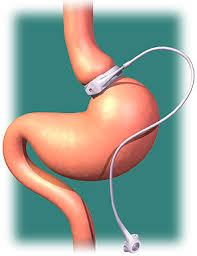
What does body comp change take to succeed? There's a UK surgeon, Nick Finer, who says it's too hard for seriously fat people to lose weight because we just keep adjusting homeostatically to the weight we're at. Now i've seriously questioned this before (see: set point theory is crap). But Finer's solution for body comp success? Gastric Bypass. One gets the impression that he'd like roaming NHS trucks to pull the overweight over into the vans and gut clamp 'em on the spot. Cheap fix. Consequences? A few. Enduring effectiveness? Maybe not so much (interesting discussion of this report on obesity discussion). No successful, enduring change it seems, is so simple. We must, it seems, be willing to get a bit more complex.
 Make it as simple as possible, but not simpler
- attributed to Einstein
Indeed, as other professionals, like Susan Roberts of Tufts, suggest from actually working with people when they're conscious rather than innert and knocked out on an operating table as so much plumbing, our engagement with food is complex - involving yes homeostatic components (the physiological us), but also hedonic components (the social/psychological us) - and the multiple factors of the one can and do affect the multiple factors of the other (discussed here in change is pain).

So if we are such complex systems (and we are) how likely is *ANY* single factor solution - whether Pill or Clamp or Diet - to succeed? As complex systems, the body comp solutions that last and endure and have positive long term effects seem to be the ones that respect this complexity. And they are the ones that take work, and a readiness to engage what it takes to change.
Consider Arnold's advice (yesterday's post) that a champion will want to do "anything it takes" to achieve their vision (or goal). Ok, one might say, great to talk about bodybuilding - the hotbed of drug use. Sure. Let's say that's so. But one still cannot *just* pop a pill and, ta da, succeed. Arnie describes spent five hours in the gym a day, one of which was posing practice, another flexibility work, the rest, working working working. Success takes reps - lots of them - to succeed. And success means also practice on a variety of levels. For arnie, he had a head game, posing, movement, weights work, training plans. All of that took reps. Multi-factor.
And success also takes a willingness to confront failure, learn from mistakes and keep going. Arnie notes it in his video, but so do all the writers on talent of late like the Talent Code and Talent is Overrated
 : the neurological role of making mistakes and figuring out what went wrong and correcting those errors is a key factor in getting better, improving performance. Enter the Coach to help figure these things out. Pat Summitt, below, is just one example of a great coach who, in her case, helps her athletes succeed as scholars and bball players.

Learning from mistakes, by the bye, in body comp is we can see very different than so-called yo-yo dieting where one keeps doing the same thing - sticking to a diet, losing weight, and then as soon as off the diet, regaining the weight, so pick another diet - and getting nowhere. That doing the same thing repeatedly and expecting different results has often been given as the definition of insanity.
So, given that enduring success (a) takes practice, (b) using errors for feedback on refining prcess and (c) in particular is Multi Factor, what are the components of success in body comp?
If someone asked me "hey mc, newly precision nutrition level 1 certified person, taking Arnie's Champion attitude, i'll do anything it takes to change my body comp. What does it take? Just tell me," i might be inclined to say:
Ok, it the key factors are time, patience, perseverance, some ongoing self-love, social support, and coaching/knowledge (food later: we have to plan for success first).
Strategies for Enduring Change
Time
Time is probably the biggie. Why? well, we can get that one pretty easily: physical change takes time to affect. But more than that, the biggie about enduring change is behavioural as well as physiological, and that means changing habits. IT takes both time and lots of reps to create new habits; we're rewiring the brain. Literally. Especially if what we're doing around food is often already habituated as a stress response, i'll say again: change is pain on the brain.
How Prep for Time: Once up for this notion of Taking Time, then having strategies to support new practice of change, and having support to persist with these changes is pretty key. Are strategies in place? Is the social support system in place?
 Strategies for Time Change: Approaches like Precision Nutrition has several strategies for change: the precision nutrition system,
 overviewed here; their lean eating program with daily support, discussed here, and their certified coaches for one on one support. Martha Beck's Four Day Win
  has step by step strategies for building up food practice habits and supporting some self-love in the process. Brad Pilon's Eat Stop Eat has very simple strategies: stop eating once a week.
Commitment
Body comp change does take a pretty constant level of commitment - that's the patience and perseverance - where, as arnie says, his happiness is that every rep was one more leading to his goal. So what are the reps in body comp? In a way we get to count the done and the note done. Here, the reps are often as much what one does do - eat right, exercise - as what one doesn't do - skip the multiple cookies for just one; skip the extra helping.
Prep & Strategies for Committment: Celebrating the Reps of the Done and the Not Done: how about keeping a log as one might for exercising to track not calories, but all the times we've said Yes to the right things, and One Less to the "wrong"?
Self-Care and Support
It will take some self-love and self-support - to care about and for oneself and be as gentle with oneself as one would with a best friend - to see the scale weight fluctuate up and down, but to trust the trend to be heading down. If it's not heading down after two weeks of New Practice, awesome to have an expert in your corner for guidance and support.
The main message here is time, patience, self-love, support and balanced guidance: when engaging in body comp change, that's a long term committment - even if one only has the proverbial five pounds to lose - and that that's ok. It's like a long term relationship - there are the ups and the not so ups. But being in for the long haul with ourselves is ok: we have the rest of our lives.
After all, if something takes months rather than weeks or a year rather than a month, presumably we have a few more years after that to enjoy the fruits of our labours? That so sounds like it kinda sucks that it's not now and today, or "in just 60 days" and it's not that one can't do extreme programs and get some results acceleration (and be exhausted), but our bodies do kind need the long view.
We're cyclical
Another thing i've been learning about is another "well that's obvious" - is that body comp is cyclical, and our own cycles are different from each others' There are times when we have more energy to give to change and maintenance than others. The winter when it's colder we may put on more fat to stay warm, or that may be the time we really peel it off - working out to stay warm. This is another reason to say it takes time to do body comp work: part of the process is learning our cycles, and by learning them we can tune them.
Food?
 Intriguingly, with all this talk of commitment, "getting on a diet" may be less important than heuristics
 about food and some basic food knowledge. Michael Pollan puts it well in Defence of Food
 : eat less; mostly plants.
Precision Nutrition has a few more heuristics: eat protein at each feeding; get veggie variety at each feeding; get good fats in during the day; skip useless calories drinks of all kinds like juice and pop; save starchy fast carbs till you deserve them - post workout. Eat Stop Eat says eat less daily, and stop eating once or twice a week for about 24 hours. There's also the "change one thing diet" - commit to one less meal in front of the tv for a week, then maybe two less - it's part of the long haul: pick *one* thing to change, commit to that and build up success from there. As Martha Beck suggests, develop strategies that you believe will be successful, and then make that one even easier. Build successes.
 Folks like Georgie Fear have created recipe books that make following these heuristics delicious and fun. Hers is called Dig In and it's great. Georgie's site also has TONS of free recipes, too.
Gourmet Nutrition vol. 2 is a lovely book of recipes (hit the free sample download) likewise tested for flavour and sitting well with good eating habits. And once we know what to look for in good food, we can start to assess food recipes for ourselves. If you find another source you like, please post it in the comments.
Take Home: We need MultiFactor Strategies for the Long View.
Arnie's view of success is that each rep takes the champs closer to their goals. Implicit in each rep is that it's part of a plan for success, and that plan is multi-factorial, complex (not complicated). Arnie got that winning is not just about lifting big, but moving well, attitude, balance, timing, etc. Why would our own body comp change goals be less complicated?
So how can we help each other to take the long view, and celebrate that anrie-esque joy that each rep is one step closer to the vision we have of ourselves?
Part of that success is getting that taking a single factor approach is likely doomed. I once read that the reason that most small businesses fail is that they don't plan for success. Martha Beck in the Four Day Win concentrates vigerously on planning each action for diet success ahead of time; Precision Nutrition likewise takes pains to emphasis progressive practice of habits before thinking about individualization. Good coaches likewise work with a us based on where we're at with stages of change. But in each case, there's respect for the fact that we're talking about change, and that's a multifactorial thing that requires DYNAMIC multifactorial approaches.
So when considering a new practice - and body comp change is just such a practice - ask: does that thing i'm looking at respect the complexity that is me? does it recognize the physiological, social and psychological parts of the process? Does it have plans to address each of those parts? If not, change that one thing?
If you need a hand, the above are some great starting points. If you'd like some one on one guidance beyond the PN forum for instance, a list of coaches certified in multifactorial nutrition coaching is here. Tweet Follow @begin2dig
- attributed to Einstein
Indeed, as other professionals, like Susan Roberts of Tufts, suggest from actually working with people when they're conscious rather than innert and knocked out on an operating table as so much plumbing, our engagement with food is complex - involving yes homeostatic components (the physiological us), but also hedonic components (the social/psychological us) - and the multiple factors of the one can and do affect the multiple factors of the other (discussed here in change is pain).
So if we are such complex systems (and we are) how likely is *ANY* single factor solution - whether Pill or Clamp or Diet - to succeed? As complex systems, the body comp solutions that last and endure and have positive long term effects seem to be the ones that respect this complexity. And they are the ones that take work, and a readiness to engage what it takes to change.
Consider Arnold's advice (yesterday's post) that a champion will want to do "anything it takes" to achieve their vision (or goal). Ok, one might say, great to talk about bodybuilding - the hotbed of drug use. Sure. Let's say that's so. But one still cannot *just* pop a pill and, ta da, succeed. Arnie describes spent five hours in the gym a day, one of which was posing practice, another flexibility work, the rest, working working working. Success takes reps - lots of them - to succeed. And success means also practice on a variety of levels. For arnie, he had a head game, posing, movement, weights work, training plans. All of that took reps. Multi-factor.
And success also takes a willingness to confront failure, learn from mistakes and keep going. Arnie notes it in his video, but so do all the writers on talent of late like the Talent Code
and Talent is Overrated: the neurological role of making mistakes and figuring out what went wrong and correcting those errors is a key factor in getting better, improving performance. Enter the Coach to help figure these things out. Pat Summitt, below, is just one example of a great coach who, in her case, helps her athletes succeed as scholars and bball players.Learning from mistakes, by the bye, in body comp is we can see very different than so-called yo-yo dieting where one keeps doing the same thing - sticking to a diet, losing weight, and then as soon as off the diet, regaining the weight, so pick another diet - and getting nowhere. That doing the same thing repeatedly and expecting different results has often been given as the definition of insanity.
So, given that enduring success (a) takes practice, (b) using errors for feedback on refining prcess and (c) in particular is Multi Factor, what are the components of success in body comp?
If someone asked me "hey mc, newly precision nutrition level 1 certified person, taking Arnie's Champion attitude, i'll do anything it takes to change my body comp. What does it take? Just tell me," i might be inclined to say:
Ok, it the key factors are time, patience, perseverance, some ongoing self-love, social support, and coaching/knowledge (food later: we have to plan for success first).
Strategies for Enduring Change
Time
Time is probably the biggie. Why? well, we can get that one pretty easily: physical change takes time to affect. But more than that, the biggie about enduring change is behavioural as well as physiological, and that means changing habits. IT takes both time and lots of reps to create new habits; we're rewiring the brain. Literally. Especially if what we're doing around food is often already habituated as a stress response, i'll say again: change is pain on the brain.
How Prep for Time: Once up for this notion of Taking Time, then having strategies to support new practice of change, and having support to persist with these changes is pretty key. Are strategies in place? Is the social support system in place?
Strategies for Time Change: Approaches like Precision Nutrition has several strategies for change: the precision nutrition system, overviewed here; their lean eating program with daily support, discussed here, and their certified coaches for one on one support. Martha Beck's Four Day Win has step by step strategies for building up food practice habits and supporting some self-love in the process. Brad Pilon's Eat Stop Eat has very simple strategies: stop eating once a week. Commitment
Body comp change does take a pretty constant level of commitment - that's the patience and perseverance - where, as arnie says, his happiness is that every rep was one more leading to his goal. So what are the reps in body comp? In a way we get to count the done and the note done. Here, the reps are often as much what one does do - eat right, exercise - as what one doesn't do - skip the multiple cookies for just one; skip the extra helping.
Self-Care and Support
It will take some self-love and self-support - to care about and for oneself and be as gentle with oneself as one would with a best friend - to see the scale weight fluctuate up and down, but to trust the trend to be heading down. If it's not heading down after two weeks of New Practice, awesome to have an expert in your corner for guidance and support.
Prep for self-love: Do we celebrate the Wins of Change, let's call them? whose your buddy who's there for you? where's your on-call expert to reality check what you're doing?
Strategies for self-love and support: Finding a friend can be hard, since one's current posee might not feel one with a person's committment to change. There are however quite a few diet forums on the web for folks in similar situations to oneself. Again, this is why i dig precision nutrition: the forum is a huge asset since not only experts but folks in exactly the same place as ourselves who have been through it, are going through it, are there.
A note on Threat Reduction and Diet: In z-health Sustenance, we also talk about change as being percieved as a threat. Being in a threat place is not an optimal place to support performance change. Threat means our nervous system, responsible for all sorts of hormonal interactions, perceives a threat to our very survival. Interest in shedding calories is the antithesis of being in a threat place. So we need strategies to help support change that lets us reduce the threat response so we can get to a place to work on performance. Without that, how likely are performance oriented strategies like diet change going to be?
Likewise, each stage of change , too, may take slightly different strategies. Finding support/expertise for those changes may be key.
All the Time in the World; With a little (self) Love in Your HeartA note on Threat Reduction and Diet: In z-health Sustenance, we also talk about change as being percieved as a threat. Being in a threat place is not an optimal place to support performance change. Threat means our nervous system, responsible for all sorts of hormonal interactions, perceives a threat to our very survival. Interest in shedding calories is the antithesis of being in a threat place. So we need strategies to help support change that lets us reduce the threat response so we can get to a place to work on performance. Without that, how likely are performance oriented strategies like diet change going to be?
Likewise, each stage of change
, too, may take slightly different strategies. Finding support/expertise for those changes may be key. The main message here is time, patience, self-love, support and balanced guidance: when engaging in body comp change, that's a long term committment - even if one only has the proverbial five pounds to lose - and that that's ok. It's like a long term relationship - there are the ups and the not so ups. But being in for the long haul with ourselves is ok: we have the rest of our lives.
After all, if something takes months rather than weeks or a year rather than a month, presumably we have a few more years after that to enjoy the fruits of our labours? That so sounds like it kinda sucks that it's not now and today, or "in just 60 days" and it's not that one can't do extreme programs and get some results acceleration (and be exhausted), but our bodies do kind need the long view.
We're cyclical
Another thing i've been learning about is another "well that's obvious" - is that body comp is cyclical, and our own cycles are different from each others' There are times when we have more energy to give to change and maintenance than others. The winter when it's colder we may put on more fat to stay warm, or that may be the time we really peel it off - working out to stay warm. This is another reason to say it takes time to do body comp work: part of the process is learning our cycles, and by learning them we can tune them.
Ever considered an energy log? When do workouts feel great? when is energy more up or more down than usual? does it correlate to anything else in our days?
I've been finding sleep is a great indicator/corelator of differences, and being lazy about logging it's why i like things like Zeo for logging those subtle differences in quality of sleep, or occasionally monitoring my heart for HRV to see if i'm more pooped than not?
Food?
So where's the food in all this?
Intriguingly, with all this talk of commitment, "getting on a diet" may be less important than heuristics about food and some basic food knowledge. Michael Pollan puts it well in Defence of Food: eat less; mostly plants.Precision Nutrition has a few more heuristics: eat protein at each feeding; get veggie variety at each feeding; get good fats in during the day; skip useless calories drinks of all kinds like juice and pop; save starchy fast carbs till you deserve them - post workout. Eat Stop Eat says eat less daily, and stop eating once or twice a week for about 24 hours. There's also the "change one thing diet" - commit to one less meal in front of the tv for a week, then maybe two less - it's part of the long haul: pick *one* thing to change, commit to that and build up success from there. As Martha Beck suggests, develop strategies that you believe will be successful, and then make that one even easier. Build successes.
Yes but what about the Food?
Gourmet Nutrition vol. 2 is a lovely book of recipes (hit the free sample download) likewise tested for flavour and sitting well with good eating habits. And once we know what to look for in good food, we can start to assess food recipes for ourselves. If you find another source you like, please post it in the comments.
Take Home: We need MultiFactor Strategies for the Long View.
Arnie's view of success is that each rep takes the champs closer to their goals. Implicit in each rep is that it's part of a plan for success, and that plan is multi-factorial, complex (not complicated). Arnie got that winning is not just about lifting big, but moving well, attitude, balance, timing, etc. Why would our own body comp change goals be less complicated?
So how can we help each other to take the long view, and celebrate that anrie-esque joy that each rep is one step closer to the vision we have of ourselves?
Part of that success is getting that taking a single factor approach is likely doomed. I once read that the reason that most small businesses fail is that they don't plan for success. Martha Beck in the Four Day Win concentrates vigerously on planning each action for diet success ahead of time; Precision Nutrition likewise takes pains to emphasis progressive practice of habits before thinking about individualization. Good coaches likewise work with a us based on where we're at with stages of change. But in each case, there's respect for the fact that we're talking about change, and that's a multifactorial thing that requires DYNAMIC multifactorial approaches.
So when considering a new practice - and body comp change is just such a practice - ask: does that thing i'm looking at respect the complexity that is me? does it recognize the physiological, social and psychological parts of the process? Does it have plans to address each of those parts? If not, change that one thing?
If you need a hand, the above are some great starting points. If you'd like some one on one guidance beyond the PN forum for instance, a list of coaches certified in multifactorial nutrition coaching is here. Tweet Follow @begin2dig
Friday, September 10, 2010
Arnold's Spirit of Success
Follow @mcphoo
Tweet
We've talked before about motivation, and how it's possible to see motivation as a skill to be practiced rather than a rather vague emotion. We've also talked about the requirement for lots of reps towards expertise. And likewise, we've talked about the 9S model of the athlete, where Spirit is one of those key skills of an athlete - that quality of mind that helps keep going - with gusto - on things that are moving us towards what we want to achieve, and that the best athletes have this skill (among the others) in spades.
In this recent Arnold clip on youtube, Schwarzenegger talks about his model of success across his three careers of bodybuilding, acting and politics: figuring out that you want to be a champ and "doing whatever it takes" to get there. While that sentiment may feel a little dubious, the thing that Arnie reiterates is that the Mind is more important than the Body in achieving these goals. And that the same template that worked for success in body building - finding out what it takes to be great and doing it - was applied to both his acting and his political careers. That's a lot of spirit.
One of the other notes i find compelling here? The notion of joy in doing what he's doing "in the gym for five hours a day" - one hour of which was dedicated to posing, another to flexibility, by the way. Lots of reps in all aspects of performance. It's cool to see that the best of the best work hard AND have fun doing it.
Thanks to Mike T Nelson of extreme human performance for pointing out this vid.
Happy Friday - and now, back to proposal writing, jazzed by Arnie. Tweet Follow @begin2dig
In this recent Arnold clip on youtube, Schwarzenegger talks about his model of success across his three careers of bodybuilding, acting and politics: figuring out that you want to be a champ and "doing whatever it takes" to get there. While that sentiment may feel a little dubious, the thing that Arnie reiterates is that the Mind is more important than the Body in achieving these goals. And that the same template that worked for success in body building - finding out what it takes to be great and doing it - was applied to both his acting and his political careers. That's a lot of spirit.
One of the other notes i find compelling here? The notion of joy in doing what he's doing "in the gym for five hours a day" - one hour of which was dedicated to posing, another to flexibility, by the way. Lots of reps in all aspects of performance. It's cool to see that the best of the best work hard AND have fun doing it.
Thanks to Mike T Nelson of extreme human performance for pointing out this vid.
Happy Friday - and now, back to proposal writing, jazzed by Arnie. Tweet Follow @begin2dig
Thursday, September 2, 2010
Protein the Magnificent: not just about muscles.
Follow @mcphoo
Tweet
Ask someone - particularly someone into working out - what protein is for - eating it; having it - and most of the time we'll hear "muscle building." And yes sure, skeletal muscle is the largest single source of protein in the body (50% of the lean mass of our bods is skeletal muscle) but that is just TOTALLY INCOMPLETE.
The Bigger Picture. Indeed, you may be as surprised as i was on first learning a more accurate answer to "what is protein for" is really "everything." - Just consider this list of what requires protein or just IS protein.
The Primacy of Protein
 Like fat and carbs, protein has carbon and hydrogen. Unlike fats and carbs, protein has Nitrogen (part of their amino group). And here we get to the interesting bits. Just a reminder, nitrogen is fundamental to life (overview of nitrogen's role). This without nitrogen no life, and protein being in everything kinda hints at the reason perhaps for protein being called PROTEIN. As per this definition:
The smallest protein is an Amino Acid. When little groups get together to make bigger groups we get Peptides, which form up as peptide chains

these in turn are bended and folded and twisted into various shapes that make it usable for whatever role these proteins have before they begin their new life as food.
What Happens to Protein in Digestion and Beyond?
What happens when we eat protein? First, most of the time we eat food that has protein in it, right as opposed to just "protein"? So, chew chew chew, masticate, get food into bits with saliva; then food into stomach.
Stomach As food hits the stomach, hydrocholoric acid gets dumped on it, which does interesting things to all food, but to protein it has the special process of denaturing the folded bendy structures of the proteins. While these structures are important for proteins to do what they do when in living cells, for use as food, these structures need to be, well, unpacked.
So, for the purposes of getting at the amino acids, denaturing starts hiving off the other bits of the protein structures that can be used for other things. (By the way, cooking and salting can also denature parts of proteins' stuctures in food).
So acid in the stomach is one part of the stomach process. But in the amazing life of proteins as doers of everything, other proteins-as-enzymes (pepsinogen into pepsin) get happening in the stomach to break the chains of amino acids that have been unpacked from the folds and bends. The remaining "polypeptides" and single amino acids head to the small intestine.
 Small Intestine I dunno about you, but the way i've imagined the small intestine is just food getting pushed through a pipe. The stomach's a tank and the intestine's a pipe. Well, no. It turns out the small intestine is more like a conveyor belt where mechanisms operate at each stage on food that keeps processing and changing (metabolizing) the stuff that's in it.
If we're taking stuff apart, we're using enzymes (more proteins), and the small intestine is, in part, doing more disassembling. The pancreas kicks proenzymes into the small intestine, these get going with other enzymes that together act as the un-superglue of peptides. Now we get smallers peptides and free amino acids heading for absorption.
Absorption and Over Crowding at the Border
Ok, i admit it, this next bit seems extremely cool to me and may even have practical implications for those of us who like to experiment with supplements. The small intestine has linings and stuff has to move through the linings to get to the blood stream. Before the proteins get into the next phase of processing (into the blood stream and most thence to the liver), they need to be transported. We won't go into it, but there are four types of transport processes, and each require energy - ATP (the stuff also used for things like muscle contraction) to do the job. So right there is an example of why just staying alive burns calories: moving amino acids out of the gut takes energy.
And by now, you guessed it, those transporters are also proteins. So here's the situation: there's proteins in the gut waiting to get moved to the blood supply. Peptides, branch chain amino acids, individual free form amino acids. They need transporters to take them there. There's a limited number of transporters at any one time and of any one type. We literally can get into a state of cuing up and overcrowding. Which peptides/amino acids go first? It ain't free form amino acids. Nope. It's the branch chain amino acids - these bigger groups take different transporters which seem to head out first. Which is better than being caught in traffic. So next time someone talks about using bcaa's to get to their muscles fast after a hard workout, you know they're not kidding: bcaas it seem can get on the bus out of the gut quite effectively. The ones that get out, that is.
The Liver A lot of the absorbed amino acids (like glutamine) get used right there for energy and intestinal cell growth. If an amino acid makes it past being used for energy or local (non skeletal muscle ) cell building (and only about a fifth of proteins ingested do), it heads into the blood stream into the amino acid pool.
Amino Acid Pool: Resources on Call for Just in Time Service.

The amino acid pool has about 100g of proteins ready and wating to be called into service at any time. That's not a lot but it's not a little. It's just getting turned over frequently as proteins are constantly being used and rebuilt.
Proteins are so important, and so versatile. Many can be constructed on the fly from available protein resources in the bloodstream, or the "amino acid pool." Part of the process of metabolism (changing stuff) is to take the proteins we ingest and convert them as needed by the demands of our bodies into the proteins we need. They can be converted into non-protein compounds (to be used in lieu of carbs in glyconeogenisis) and catabolized for ATP/energy conversion. Indeed, here's a shocker (to me): about 5% of the energy from longer duration activities comes from BCAAs.
This processing is where essential and non-essential proteins come into play. The essentials are the ones we need to ingest because we can't synthesize them.
It's a Wading Poo: No Deep End
That said, our bloodstream it seems is already pretty full with other stuff besides proteins cuing up for use. So we don't store a lot. Therefore, we need to ingest protein regularly. This need doesn't mean go nuts on protein. More doesn't always mean better, right? But it does mean that our bodies need a pretty consistent flow of them. And if it doesn't get those proteins from our diet? Our bodies will start taking proteins from other sources. Like muscle. And repurpose them. We're wired for survival not performance or prettiness.
Amino Acids: eat your veggies
This is just an aside to remind us that we can get the amino acids we need from plant based diets. And likewise if we rely on veggies, we will also be getting more than just protein. One of the advantages of a more plant based (i didn't say vegetarian) diet is that well, you get a lot of protein from eating a range of veggies, we also get lots of other nutrients not found just in meats/dairy, and they are less energy and calorically dense. So we can eat rather a lot, volume wise. If we get a good mix of veggies and legumes, we don't need to worry too much either about whether or not we're getting whole proteins and all the essential amino acids we need.

Protein turnover, though, means that likely the worst thing to compromise in one's diet IS protein
a) because we're mainly organisms made up of protein and water.
b) because we don't store a lot of protein for re-use in the amino acid pools and
c) because the proteins in all parts of us are constantly being replenished
Muscle is still Protein, right?
Muscle is just one of the tissues in our body that requires and turns over protein regularly. If all tissue cells have protein as a part of them, then presumably sufficient protein needs to be available for all the metabolic signalling (hormones and enzymes) and new tissue building (more amino acids), and sufficient energy stores need to be available to support the building process (ATP).
Protein synthesis is, as best i understand, cells' DNA signalling to say there's a need to create more protein of some kind for a particular requirement - whether that's a requirement to generate more hormones or muscle tissue or antibodies. Muscle use - when pushed to adapt to new stresses causes existing protein to breakdown in normal turn over and to be rebuilt, and rebuild more tissue as needed. The tissue is largely protein based. But so are the cells in our body.
Protein turnover (catabolism and anabolism) is happening all the time in all parts of the body, not just muscle, as cells die, get flushed and replaced. In muscle building we usually focus on protein synthesis - the generation of new protein - and crave anabolism and fear catabolism. We want MORE not less. But protein turnover, it seems from all the above, is important, and part of staying healthy, and effects more or less everything in our bodies.
How much protein to eat?
I'm not going to get into how much protein do we need. The 1g to 1lb of body weight is a pretty grounded heuristic for two reasons:
The point of this piece is less about hypertrophy - of which we know so little - and more to share or to raise awareness that muscle building for our body is just one job that protein has to support in the organisms that are us. For me, kinda puts muscle building in perspective and no wonder we know so little about it, since it's a part of such an integrated protein dance.
News note: I understand b2d buddy Mike T Nelson is doing a chapter of a book on Protein with Lonnie Lowery (of a neat theory on the Pump, discussed here) - so will look forward to that.
In the meantime, i sing the body electric may well be replaced with i sing the protein electric, from the smallest signal to cell to the building of that cell, protein is involved. How 'bout that?
Texts
Related Posts
The Bigger Picture. Indeed, you may be as surprised as i was on first learning a more accurate answer to "what is protein for" is really "everything." - Just consider this list of what requires protein or just IS protein.
- collagen, hair, skin, bone middles - all big huge protein components
- every cell in the body EVERY cell requires protein to be replenished or replaced
- muscles for sure, but organs too: protein protein protein.
- the instructions for our dna, which inhabit cells, are proteins. The genetic code in the the ribosome (beside-ish the cell nucleus) for which all the recent research about "gene expression" comes, is protein.
- hormones like insulin - the messengers of what to do in terms of chemical processes to stop and start - are proteins
- enzymes that are essential to metabolism and respond to hormone messages, yes, protein. Indeed there are 6 types of enzymatic reactions for moving, rearranging, breaking for reforming, joining, oxidizing. All proteins. Some are also faster others slower for limiting the rate of change. Amazing proteins.
- antibodies for defending our cells against infection- more proteins.
- energy - yes, sometimes we need/use proteins to produce the ATP we need (usually refered to as "energy" ) to be able to move our muscles.
The Primacy of Protein
Like fat and carbs, protein has carbon and hydrogen. Unlike fats and carbs, protein has Nitrogen (part of their amino group). And here we get to the interesting bits. Just a reminder, nitrogen is fundamental to life (overview of nitrogen's role). This without nitrogen no life, and protein being in everything kinda hints at the reason perhaps for protein being called PROTEIN. As per this definition:1844, from Fr. protéine, coined 1838 by Du. chemist Gerhard Johan Mulder (1802-1880), perhaps on suggestion of Berzelius, from Gk. proteios "the first quality," from protos "first." Originally a theoretical substance thought to be essential to life, the modern use is from Ger. Protein, borrowed in Eng. 1907.Proteins are constructed things:
The smallest protein is an Amino Acid. When little groups get together to make bigger groups we get Peptides, which form up as peptide chains
these in turn are bended and folded and twisted into various shapes that make it usable for whatever role these proteins have before they begin their new life as food.
What Happens to Protein in Digestion and Beyond?
What happens when we eat protein? First, most of the time we eat food that has protein in it, right as opposed to just "protein"? So, chew chew chew, masticate, get food into bits with saliva; then food into stomach.
Stomach As food hits the stomach, hydrocholoric acid gets dumped on it, which does interesting things to all food, but to protein it has the special process of denaturing the folded bendy structures of the proteins. While these structures are important for proteins to do what they do when in living cells, for use as food, these structures need to be, well, unpacked.
So, for the purposes of getting at the amino acids, denaturing starts hiving off the other bits of the protein structures that can be used for other things. (By the way, cooking and salting can also denature parts of proteins' stuctures in food).
So acid in the stomach is one part of the stomach process. But in the amazing life of proteins as doers of everything, other proteins-as-enzymes (pepsinogen into pepsin) get happening in the stomach to break the chains of amino acids that have been unpacked from the folds and bends. The remaining "polypeptides" and single amino acids head to the small intestine.

If we're taking stuff apart, we're using enzymes (more proteins), and the small intestine is, in part, doing more disassembling. The pancreas kicks proenzymes into the small intestine, these get going with other enzymes that together act as the un-superglue of peptides. Now we get smallers peptides and free amino acids heading for absorption.
Absorption and Over Crowding at the Border
Ok, i admit it, this next bit seems extremely cool to me and may even have practical implications for those of us who like to experiment with supplements. The small intestine has linings and stuff has to move through the linings to get to the blood stream. Before the proteins get into the next phase of processing (into the blood stream and most thence to the liver), they need to be transported. We won't go into it, but there are four types of transport processes, and each require energy - ATP (the stuff also used for things like muscle contraction) to do the job. So right there is an example of why just staying alive burns calories: moving amino acids out of the gut takes energy.
And by now, you guessed it, those transporters are also proteins. So here's the situation: there's proteins in the gut waiting to get moved to the blood supply. Peptides, branch chain amino acids, individual free form amino acids. They need transporters to take them there. There's a limited number of transporters at any one time and of any one type. We literally can get into a state of cuing up and overcrowding. Which peptides/amino acids go first? It ain't free form amino acids. Nope. It's the branch chain amino acids - these bigger groups take different transporters which seem to head out first. Which is better than being caught in traffic. So next time someone talks about using bcaa's to get to their muscles fast after a hard workout, you know they're not kidding: bcaas it seem can get on the bus out of the gut quite effectively. The ones that get out, that is.
The Liver A lot of the absorbed amino acids (like glutamine) get used right there for energy and intestinal cell growth. If an amino acid makes it past being used for energy or local (non skeletal muscle ) cell building (and only about a fifth of proteins ingested do), it heads into the blood stream into the amino acid pool.
Amino Acid Pool: Resources on Call for Just in Time Service.

The amino acid pool has about 100g of proteins ready and wating to be called into service at any time. That's not a lot but it's not a little. It's just getting turned over frequently as proteins are constantly being used and rebuilt.
Proteins are so important, and so versatile. Many can be constructed on the fly from available protein resources in the bloodstream, or the "amino acid pool." Part of the process of metabolism (changing stuff) is to take the proteins we ingest and convert them as needed by the demands of our bodies into the proteins we need. They can be converted into non-protein compounds (to be used in lieu of carbs in glyconeogenisis) and catabolized for ATP/energy conversion. Indeed, here's a shocker (to me): about 5% of the energy from longer duration activities comes from BCAAs.
This processing is where essential and non-essential proteins come into play. The essentials are the ones we need to ingest because we can't synthesize them.
It's a Wading Poo: No Deep End
That said, our bloodstream it seems is already pretty full with other stuff besides proteins cuing up for use. So we don't store a lot. Therefore, we need to ingest protein regularly. This need doesn't mean go nuts on protein. More doesn't always mean better, right? But it does mean that our bodies need a pretty consistent flow of them. And if it doesn't get those proteins from our diet? Our bodies will start taking proteins from other sources. Like muscle. And repurpose them. We're wired for survival not performance or prettiness.
Amino Acids: eat your veggies
This is just an aside to remind us that we can get the amino acids we need from plant based diets. And likewise if we rely on veggies, we will also be getting more than just protein. One of the advantages of a more plant based (i didn't say vegetarian) diet is that well, you get a lot of protein from eating a range of veggies, we also get lots of other nutrients not found just in meats/dairy, and they are less energy and calorically dense. So we can eat rather a lot, volume wise. If we get a good mix of veggies and legumes, we don't need to worry too much either about whether or not we're getting whole proteins and all the essential amino acids we need.
Protein turnover, though, means that likely the worst thing to compromise in one's diet IS protein
a) because we're mainly organisms made up of protein and water.
b) because we don't store a lot of protein for re-use in the amino acid pools and
c) because the proteins in all parts of us are constantly being replenished
Muscle is still Protein, right?
Muscle is just one of the tissues in our body that requires and turns over protein regularly. If all tissue cells have protein as a part of them, then presumably sufficient protein needs to be available for all the metabolic signalling (hormones and enzymes) and new tissue building (more amino acids), and sufficient energy stores need to be available to support the building process (ATP).
Protein synthesis is, as best i understand, cells' DNA signalling to say there's a need to create more protein of some kind for a particular requirement - whether that's a requirement to generate more hormones or muscle tissue or antibodies. Muscle use - when pushed to adapt to new stresses causes existing protein to breakdown in normal turn over and to be rebuilt, and rebuild more tissue as needed. The tissue is largely protein based. But so are the cells in our body.
Protein turnover (catabolism and anabolism) is happening all the time in all parts of the body, not just muscle, as cells die, get flushed and replaced. In muscle building we usually focus on protein synthesis - the generation of new protein - and crave anabolism and fear catabolism. We want MORE not less. But protein turnover, it seems from all the above, is important, and part of staying healthy, and effects more or less everything in our bodies.
How much protein to eat?
I'm not going to get into how much protein do we need. The 1g to 1lb of body weight is a pretty grounded heuristic for two reasons:
- it's very difficult to go toxic on protein (discussed here), so potentially overeating protein in the mix of other nutrients is likely ok if one's going to err on a given macronutrient.
- but, lets remember that overeating ANY food pushing into caloric surplus means what's not needed goes to fat.
The point of this piece is less about hypertrophy - of which we know so little - and more to share or to raise awareness that muscle building for our body is just one job that protein has to support in the organisms that are us. For me, kinda puts muscle building in perspective and no wonder we know so little about it, since it's a part of such an integrated protein dance.
News note: I understand b2d buddy Mike T Nelson is doing a chapter of a book on Protein with Lonnie Lowery (of a neat theory on the Pump, discussed here) - so will look forward to that.
In the meantime, i sing the body electric may well be replaced with i sing the protein electric, from the smallest signal to cell to the building of that cell, protein is involved. How 'bout that?
Texts
Beyond the links in this post, the Essentials of Sport and Exercise Nurtition (certification manual) by Berardi and Andrews along with Exercise Physiologyand Advanced Nutrition
helped inform this presentation. Any errors in presentation are mine.
Related Posts
- respect the fat
- carbohydrates: the new fat
- optimal protein blends
- supplements: is what's on the label what's in the tin
- post workout recovery window: real or myth? - minute with mike
Subscribe to:
Posts (Atom)

 COACHING with dr. m.c.