Tuesday, December 8, 2009
Thoughts on Low Back Pain - When in Chronic Pain Hell

Going Chronic This post is motivated by the fact that a lot of folks ask about low back pain issues after they've had them for awhile. They've gone from acute - a sudden sharp pain brought on by a specific movement pretty predictably - to something chronic that can be a constant presence, as well as flaring up from time to time, but without a specific acute area that's sharp. It's a nasty thing that can, when flaring, debilitate a person. It is the proverbial monkey on the back, and it can make ya cry. I could go on and on.
In such advice-seeking experiences, many folks recommend chiros, phyiscal therapists, massage, exercises for the low back muscles and so on. All these things can bring benefit. In my experience though, if that back pain has been going on for months/years we're talking chronic, manually therapy has a much harder time addressing this. In my own experience, muscle work like yoga and kettlebells has brought some relief - more so than manual therapies - but not eliminated the problem.
The following offers some other ideas for dealing with low back pain - both at an early and definitely at an ongoing stage. The focus is really on models of pain as opposed to particular back issues.
context
First of all some context: me: like most folks with low back stuff - compressed l4/l5, long history of chronic back stuff. Chiro, pt, acupuncture, orthotics, heel lifts. shots and surgery offered - na thanks.
On the more physical approaches, as said, Yoga therapy worked a bit better than anything else; kettlebell swinging really helped but still chronic flare ups. Both these approaches were based on the theory that the muscles in the back are potentially weak or out of balance and needed to be rebuilt. As said, helped a lot but the chronic flare ups were not addressed; ROM still limited by pain etc. So rebuilding alone is not (at least for me) a complete answer.
Like a few who've been dealing with low back pain for awhile, a lot of money has already been spent for treatments that would hold for only a short time getting off the table. likewise there are models of back pain that suggest it's related to promarily to an emotional state - like anger or job dissatisfaction. Treat the anger; get rid of the pain. I'd encourage folks who are interested in this to investigate further with work like John Sarno's Mind/Body connection, where back pain is seen as psychosomatic, and an example of "Tension myosititis syndrome"
aside. I'd note that the first key study, the Boeing Prospective Study, widely studied and critiqued, that first suggested that the only consistent correlation with back pain was job dissatisfaction was done with shop floor workers (people who spend a lot of time on their feet). When the study was re-run with people who work at desks and also have high incidence of back pain that specific correlation did not, alas hold (pdf). What did hold is that, as we know about pain now, context plays a not insignificant role in pain creation/management. Or as some put it, psychosocial AND biomechanical issues can promote causes.
Work in what pain is, and how it works in the brain, however, shows that pain is toujours deja multi-factorial, and highly context dependent. BUT work in pain also shows that as it does manifest itself in very real neural adaptations. More on this below around "central wind up."
Breakthrough with the Percpetual Systems
During the six days of the Z-health R-phase certification, i had a couple sessions with Eric Cobb. He looked at not only movement (what Z-health is perhaps best known for) but vision and balance stuff as well. The experience was huge and transformative.
Since then i and colleagues have worked with TONS of athletes with chronic low back issues and have been able to help them move through the chronic-icity. How does this approach succeed where so many have not?
getting to the nervous system
Z-health puts the nervous system first by focusing on proprioception, and visual and vestibular perceptions of the world. The approach of nervous system first (aka threat modulation) always seems to have immediate benefit. The main approach is to check a person's responses to movement, and also visual and vestibular cues. The approach is critically largely active on the part of the participant, likewise invoking motor learning in grooving pain free patterns.
To summarise some reasons for this integrated approach:
- it works with the nervous system - the body's governing system (what runs joints and muscles)
- it is active rather than passive (about the differences between the two, with video): you are moving yourself rather than being manipulated, which fires of thousands more signals in the body to learn new patterns than manipulations so benefits stick.
- it works in large part on threat reduction: the latest work on pain says pain is an action signal. it means change something. finding the right thing to change is part of the assessment process. i've yet to work with anyone who hasn't had immediate and significant pain reduction (or elimination) and that only improves as they continue to do the work FOR THEMSELVES.
low back: location of pain receptors for ANY pain event?
Here's something else about low back stuff. Lots of folks have compressed disks or degenerated discs, or scoliosis and have NO pain - so, especially when the pain becomes chronic - is the site of pain the source of the pain? maybe not.
site of pain mayn't be source of pain
Here's why: The back is a hugely important and highly stressed area of the body. An anthropologist colleague of mine swears it's an example of terrible/incomplete evolution. In some models of the body, the back like a big X - things cross from the right side on the lower body up to the left side of the upper body. So the low back again is a HUGE junction for LOTS of information.
As pain goes up, ironically sometimes with repeated poking via movement during an acute stage (that wretched "train through pain" thing), the number of nociceptors (the nerves that detect noxious stimulus) go up; mechanorecpetors that signal movement/position go down or get shut down. Normally, when mechanoreceptive stimulation more or less outnumbers nociceptive stimulation, the pain signal is effectively drownd out. That effect, in other words, can get broken.
AND what's worse is that there seems to be evidence that MORE nociceptive nerves sprout with increased immobility: the more we might reflexively try to protect our back by not moving it, the more we may be contributing to signaling that will continue to amp up any pain signal.
rewiring the back over time to be THE pain receiver
What these changes amount to with chronic pain, or as pain goes chronic is sometimes refered to as neural chunking or central wind up (more here and here). In other words, at this point, any pain/stress signals from anywhere may just start to manifest in the low back - that's become our response zone. That doesn't mean the pain is not happening; just that the brain/nervous system is now routing pain signaling through that super sensitive place. and it has been super sensitized, and so it may well be amplifying what's happening, too.
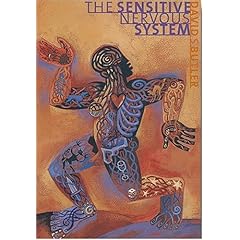 It's because of all this neuro-chemical soup (to use david butler's analogies from the Senstive Nervous System) happening that sometimes looking for issues in a back joint is not going to "unwind" the pain issue.
So to all you folks who have tried everything and are frustrated and in low back hell? may i recommend considering an active/neurologically sensitive approach? In brief, this means in part, begin to move. But also check what else may be inhibiting good movement.
As to the first part of that suggestion, if you'd like to see the research, Mike Nelson did a nice piece a year ago looking at the literature on why lumbar motion is such a good tonic for the back.
This doesn't necessarily mean huge movements, but it does mean, it seems, working towards full range of motion work in the back - and of course muscular work can be hugely beneficial for a number of reasons here to support that mobility (controlled movement) - but without that specific attention to ROM - something back muscle work alone does not necessarily afford - the benefit mayn't be complete.
Additionally, it may be critical to connect that proprioceptive signaling (nociceptors and mechanoreceptors that modulate signals that get interpretted as pain or not) with the rest of the perceptual systems: vestibular and visual.
Speaking for myself, it was not until my mobility work got hooked up with what turned out to be visual rehab work that my back pain started unwinding. Not this is necessarily the case with everyone, but with me, once the visual work got going, the speed of the unwinding was profound. I mean super rapid, overnight kind of profound.
i remember once starting to cry because for a moment - i was out of pain - i knew it because could put on my socks without my back killing me - it felt so incredible and i knew it wasn't going to last, and i so wanted it to last...
Release. For anyone who's had low back pain, or has it now, you know what a prison it can feel like: will i ever be able to put my socks on without pain? pick something up from the ground without pain? drive or get in or out of a car without pain? sit and work without pain? bathe without pain?
Speaking for myself, yes. Before working with this approach, i used to get pain-free moments when i'd bend over to pick something up, and there'd be no pain. Nothing. normal. It was like a miracle. The number of times this happened over a decade i could count on one hand. i remember once starting to cry because it felt so incredible and i knew it wasn't going to last, and i so wanted it to last. Perhaps some of you can relate to that?
Understanding Pain and the Role of Movement to Reclaim Life
So, what all the above is speaking to is two things: getting a handle on what's happening with
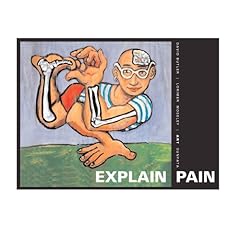 pain, and getting an approach to movement/nervous system communication that can start to rewire the very neurological and brain-based experience of pain. In the book Explain Pain, this is largely David Butler's advice: learn how pain works; learn how to move.
To this i have only added what z-health refines a wee bit: movement is a great way to talk to the nervous system. Remember that visual and vestibular issues may also be contributors to pain, so find a way to check that and engage them in one's movement rehab practice.
Doing It for Herself/Himself
What is a movement rehab practice that will also check the visual and vestibular?
Best approach: see a movement specialist for a Movement Assessment (what that is). In this list, preferably look for someone with either S or T certifications (or both), or a master trainer.
Likewise, if someone's not close with the qualifications, i do video consults, too (use the email link on this post to request info).
Secondary & Complementary approach: get a joint mobility program into your life. Moving each joint through a range of motion is an amazingly good way to talk to the nervous system. here's more on why and if you scroll down to "dig in" there's some recommended places of guided packages for that, eg the "level 1" kit.
The best part is, really, when we have an better understanding of how pain works, and how the nervous system works in terms of proprioception, vision and the vestibular sysetms, there's a path to start unwinding that. AND YOU DO IT FOR YOURSELF so it sticks.
The big take away seems to be that especially chronic low back pain is frequently not about the joints - pain is way more interesting and intriguing it seems than that, but it does make sense that the low back is where so much chronic pain gets filtered.
Moving towards an active, neurologically centered approach, based on an understanding of pain, may well offer the breakthrough that you seek.
The best part is, you will know, more or less on the spot, if this practice offers you the relief you seek, and each practice session will only enhance that benefit. Really - that's just how fast the nervous system works. Tweet Follow @begin2dig

 PDF
PDF

Monday, December 7, 2009
Supplement Curmudgeon: Does that DO anything for you?
What do we know about longitudinal responses to stuff that
 shows these refined fractions do anything marvelous? As far as i know the assessment of glutamine from 2002 that unless you're training at altitude, or have GI distress from malto/dextro carbs, it's a good thing to use, has only been reaffirmed (see overview 2007). And yet it keeps showing up in formulas of stuff.
Likewise there are legions of studies to show that BCAA's are wonderful, but when compared with plain old Whey, whey rules. It also seems that if there were any remaining doubt about creatine monohydrate vs creatine ethyl esther, this year's research has raised sufficient questions about CEE to say CM is once again affirmed as the winner. Again.
And as for nitric oxide supplements, i'm willing to own that i may be wrong, but the resaerch has only shown that without it, protein synthesis does not occur - if NO is chemically surpressed. Having more of it present doesn't - again as far as i can tell from extant research - increase protein synthesis. There are other ways to get a pump - though it's not clear getting a pump aids protein synthesis either.
Supplements That Support What we Want to Do: Work.
As far as i can tell, the supplements that seem to have the best value are those that support energy production, and then support protein synthesis. So, we seem to know that after 20 years of research, creatine monohydrate is good for grinding out a few more quality intense reps. Nice.
We also seem to see promise in Beta Alanine for energy production and some recent studies have looked at *perceived* fatigue reduction in athletic contexts like football games. Rather surprising, but interesting. Worth looking at.
After this, the most research seems to be around getting some carbs and proteins into a person after a workout (carbs are needed for protein synthesis if muscle building of any kind is the aim). But even here, nutrient timing is not established unequivocably, but the nutrient requirements are. And here, it seems things closer to a food - like whey vs bcaa's - may have better effect.
These are the basics. Now, there's all sorts of stuff out there to give one's workouts a boost - to get charged up to go GRRR. But again, as far as i can tell, the two main ingredients in such combinations usually come down to caffeine and/or l-tyrosine (sometimes taurine). Tyrosine i do like once in awhile in lieu of caffeine. But what is the point of this? Why does one need/want to get caffenated to work hard? As work earlier this year showed, one actually gets substantial performance benefits from surprisingly small amounts of caffeine (not coffee. alas, there's a difference).
Reality Check
About two years ago, determined to explore the range of possible ways to get my teeth into my workouts, i ordered as many ingredients as i could see listed on most t-nation type products like power drive, surge, or products like Xtreme ICE etc. I chatted with folks at precision nutrition's forum about various CNS stacks like this one by john berardi for competition/heavy training schedules.
80mg caffeine
--CNS stimulation
300mg of green tea extract
--CNS stimulation
3g Tyrosine - (OR 1.5g N-acetyl-L-Tyrosine)
--Epi and Norepi precursor formation (but precursors must form neurotransmitters and these neurotransmitters must be released - the green tea and caffeine assist in NT release)
1g of Lecithin (or Choline) - (OR 100-200mg DMAE)
--AcH precursor formation (but, same as above, these precursors must be released)
15mg Policosanol
--Increases AcH release, decreases AcH breakdown in NM junction, and increases AcH binding affinity (all leading to decreased reaction time)
*10mg Vitamin B6*
--Potentiates the effects of the other ingredients

Yes i gave these a go. I honestly don't know if they did much for my workouts. I think the tyrosine is a great perker upper and focuser, sometimes surreally so -but - and this is the really deep part - how often do i work out when i actually need to be more in the zone of my workout? like i won't complete it without that? Or, should i not do so (hasn't happened in ages), it would make a difference in the not even grand but rather immediate scheme of things?
My workouts are generally pretty pre-planned: eg today is medium day of RTK; tomorrow will be VWC. A good sleep will enable each better than anything else, i'm finding, more than priming with coffee, taurine or anything else. What am i missing? Am i missing something?
Going Clear: personal realities
About a week ago i gave away a shed load of supplements from DMEA, chocomine, and related cns stack ingredients listed above, and even including a bag of maltodextrin. The latter was because i knew it was produced from corn in the US that is GMO'd sourced, and since seeing Food Inc, i do not want to go there. But more on that anon.
It was shortly after this, i saw word of a new product from t-nation called Anaconda.
"The only question is, are you that serious?" the ad asks. - Where one is already Huge and into working out three times a day. No. i guess i'm not that serious, if that's what serious means.
And that's sorta what my supplement curmudgeonliness has come down to: what will work to best support what i ACTUALLY do, as opposed to imagining the scenario for which most of these supplements are designed - with a mix of science perhaps and a lot of speculation - to support? Because of course to state the obvious, taking supplements won't make it so, where IT is whatever the body comp goal is.
For me, the complexity is now at about is there really a benefit to taking the protien/carbs (and i happen to add creatine then so i don't forget it) right before and right after the workout or not? And if not, does it really matter? is that what's going to be the real difference between me adding another fraction of an inch of mass to my arms or not? Hard to see from this vantage point that it would.
Getting Real is Sometimes More Challenging than Getting Intrigued
When we get into health and fitness it seems we work so hard to get the details perfect. There's a certain satisfaction, isn't there, to things being just so. The gymboss timer is set for exactly 36/36 for those intervals or 8/12 or whatever. I have been just as particular. To the point of ripping the skin off my hands in doing snatches in a VWC set lest pausing to tape up so i can actually get through the workout break the stride. I must get through the workout without pause.
It's taken awhile for the Voice to come through the noise to say "Why? "
Indeed, what real difference will it make to my fitness goals if i stop to wrap? what real difference will it definitely make if i don't?
Metabolic Flexibility
Listening to Mike T Nelson talk this summer at the Sustenance course about Metabolic Flexibility has helped me start to get my head around the awesome adaptability of our embodied selves. If we ain't got it raw, our bodies will try to manufacture it. If we don't have it right NOW our bodies will find mechanisms to find what it needs. In fact the more non-predictive we become in our patterns potentially the more robust our systems will be - that's just a guess.
So i guess i've gotten either rather skeptical about supplementation or way more relaxed about thinking one supplement will help, for instance, unlock a "hard" workout.
I keep thinking about Clarence Bass: he likes creatine (and that only after quite a period of personal testing and validating with research) and he likes whey protein powder and he is the daddio of whole foods lean eating. He may be a sample size of one but lots of folks using his approach seem very happy with their body comp and health.
Me, i like creatine - and do notice a difference between creapure, the nice pure german stuff, and generics. I like a hydo whey for post workouts, along with a nice mix of non-gmo starchy carbs and electrolytes. I personally tend to do half before a workout and half right after for convenience, and i personally seem to feel better than delaying on that.
The jury is out for me on taurine, tyrosine, beta alanine and citruline malate - though again the science seems promising on those last two.
Sleep that knits up the unraveled sleeve of care
One of the biggest things for me of late has been the difference uninterrupted sleep makes, and investigating that - and how regular nutrition/daily diet is related to that, and the benefits from that, vs just about anything else. That sounds rather boring though in comparison to a CNS stack, doesn't it? I'm not sure it's a lack of seriousness; more a oh let's get real-ness perhaps.
Know what i mean? anyone? Tweet Follow @begin2dig
Wednesday, December 2, 2009
Z-Health relative to T'ai Chi, Qigong or any other Movement Oriented Practice
 z-health practice relative to any other mobility approach. The questions go something like this: is Z-Health supposed to replace movement practice X, be as good as X, an alternative to X?
Here's my take on these questions: yes and no. Let me explain what i mean. Movement is great. Anything that has us moving in a healthful way is good. So doing Z-Health as a regular movement practice is fabulous. But if someone already has a movement practice, do they need Z-health?
Joint by Joint Specificity. In movement approaches with which i've had any experience (t'ai chi; qigong) the focus has been on the movement in general rather than on the particular range of motion or quality of movement at a particular joint involved in the full movement. One of my favorite examples of such movement is Steve Cotter's excellent series on the Tea Cup pattern:
And then there's this fabulous turn of the last century look at indian clubs with kids:
These are excellent examples of mobility work - especially as shown for the upper body.
So why Z-Health Mobility Drills? Z-Health's drills move joint by joint so that a person can focus on each joint's movement. For instance, with many versions of shoulder drill to be able to check the joint's entire range of motion, it becomes easier to see where there may be specific challenges to a movement. For instance, trying to do shoulder circles that reach behing a person, without the torso torquing back along with the shoulder suggests that may be a place for some work to get better control of that *part* of shoulder motion.
Joint by Joint Assessment. In R-phase, each of these movements are assessed in "neutral stance" - standing upright - in order to focus specifically on the joint action. In I-phase, these basics are translated to movements that can be applied to sport-specific/life type movements (more on i-phase templates here). For instance, it may be that a person has found in R-phase that their thoracic mobility seems pretty free. However, their sport requires them to turn around while running to leap up and catch a football, and their reach seems a bit restricted when turned around and extending the arms. Z-health i-phase says, ok, let's assume that position, and see what's happening in the movement - how's the thoracic freedom there? let's practice it from that position.
Speed Z-Health also suggests that beyond controlling these joint by joint movements at one speed they need to be controlled at all speeds. To this end, z-health uses four speeds - where speeds test different attributes of movement from strength to control of form.
 Eric Cobb leading cross body figure 8's in Neural Warm Up I (about)
Sport Specific Assessment Checks. For example, if a deadlift doesn't feel that great on a given day, I-phase drills offer mobility checks in that sport-specific, deadlift position. For example, suppose the weirdness is felt just as the bar comes off the floor. The person can hold that position and work through wrists, elbows, thoracics, and/or hips and so on, doing drills for one or all of these joints, doing a test for effectiveness, and then re-trying the move.
Sometimes all it takes to improve a movement is to open up the joint mobility of a particular movement to help it become smoother. These drills afford a direct route to working the joints from that sport-specific position which may be more challenging to determine with a tai chi movment. Therefore, the mobility drills offer an immediate way to assess and tune movement practice. These simple but highly specific joint-by-joint drills afford this kind of specific, testable assessment at any time. And sometimes, that's enough.
Visual and Vestibular Work. Here's something else that assessments in z-health offer, and are explored either in one-on-one's with trainers (listing), or at the Z-Health workshop (overview here) and these are visual and vestibular practices and assessments.
Sometimes, a performance issue is not related solely to muscles and joints, but to vision or balance as well. In the Nerual Warm Up I & II and in the S-Phase DVD's especially, there are suites of vision drills, and working up to S-Phase, balance work as well. By learning about visual and vestibular practices, and how these co-ordinate with mobility work to improve movement quality on-the-go, one's athletic practice may be further enhanced.
Complementary Action. This is just a brief overview of a few ideas in Z-Health and how they can complement an athletic endeavor. R, I and S offer mobility, vision and balance work on their own to complement sports/athletic work. Where one already has a full body mobility program, because of the specificity of the proprioceptive, visual and vestibular drills offered, in particular the joint-by-joint drills, it is possible to pin point areas of practice that may benefit from specific focused drills.
Related Posts
- Z-Health Article Index
- General Fitness articles
- Kettlebell practice articles
- interview with Brett Jones about Indian Club Swinging
- Kali Sticks, Indian Clubs and Rannoch
Tuesday, December 1, 2009
Eye Position to support Rowing Stroke. Awesome Efficiency
Smooth? By looking down coming into the catch and looking (not head tilting but using my eyes) up just before pushing back into the power stroke, here's what i noticed: the drive was WAY (i mean WAY) smoother. The funny part is i felt that i had more smoothness than muscle - like part of the effort was so much easier but my muscles were still fatiguing appropriately. It's weird to describe.
xeno muller talking breathing when rowing with the Water Rower
If you try it give it a go: see if you can feel the difference between rowing without thinking about eye position, and then trying with eye position.
Avoiding Back Collapse. It's important (at least for me) to avoid total flexion collapse which is a place it's real easy to degrade to: rowing with a slumped back. Good form has good back neutral throughout, uses the hips and has only some flexion at the end of the drive, complemented by good extension going into the recovery - reaching more with the arms and bending at the hips (like a kb snatch) than curving over.

The eye-up also helped get into good hip and back extension for both the end of the drive and coming back into recovery. I may play next session with keeping eyes neutral rather than down for the recovery, and just up for the drive.
The Eye's Do It. So if you row regularly or as part of your cardio/endurance regimen, consider eye movements.
And heck if you're just getting into rowing or want to consider it, take a look at xeno muller's channel. His stuff is v.good. And ok, yes if you're thinking about putting a rower into your life, sure no one ever got fired for getting a concept II, but just *listen* to the water rower in Xeno's vids. Sweet machine; great great movement. Tweet Follow @begin2dig
Saturday, November 28, 2009
Why DHA/EPA of Omega 3's (like fish oil) are Anti-Inflammatory - Q&A with G.Fear, RD

The following is part of a discussion with Georgie Fear, RD (of AskGeorgie.com), author of the awesomely easy and tasty Dig In recipe book.
The discussion took place on Precision Nutrition's Forum a little over a year ago. (by the way, this exchange is typical of the kind of discussion at PN - here's more about Precision Nutrition if you're interested).
So, the question was to unpack fish oil, glucosamine and NSAIDS. To begin, so how are fish oils anti-inflammatory?
Georgie Fear:So now you know! Taking omega 3 sources rich in EPA like fish oil is a Good Idea for healing and inflammation processing. For folks taking Algae Oil for omega 3 content, algae is higher in DHA than EPA. Work has also considered the effects of DHA on inflammation, and it's looking very good here too. Very new work considering DHA in the mix with EPA on COX2 in particular is strong. Likewise an article from the future (pub date 2010) equates DHA and EPA for their anti-inflammatory benefits. In other words, you can remain a vegetarian and get all these anti-inflam benefits.
Twenty-carbon long omega 6 and omega 6 fatty acids are metabolized in cells to eicosanoids, which are signaling molecules. Cyclooxygenases and lipoxygenases produce the eicosanoids from either arachidonic acid (omega 6) or eicosapentaenoic acid [EPA] (omega 3). The eicosanoids derived from omega 6 fats are potently inflammatory while those coming from omega 3 oils are antiinflammatory.
Critical Bit for Diet: Because the omega 3 and omega 6 fatty acids compete for the cyclooxygenases and lipoxygenases, the balance of omega 3 to omega 6 fats in the diet will influence the overall inflammatory or antiinflammatory effect. Skewing the diet with more omega 3's and less omega 6 produces fewer inflammatory eicosanoids, becuase the omega3s outcompete the 6s for the metabolizing enzymes.
Aspirin and other nonsteroidal anti-inflammatory agents (NSAIDS, like ibuprofen) work similarly, by inhibiting the cyclooxygenase which converts arachidonic acid to inflammatory prostagandin H2. (Ever heard of COX 2 inhibitors, like vioxx? COX = cyclooxygenase) Acetaminophen (Tylenol) has less anti-inflammatory effect, and the mechanism(s) by which it reduces pain aren't totally known. I've read that it may also involve the cannabinoid system in the central nervous system, but I'm not an expert in that so I cant give much detail.
Glucosamine is totally different. It helps mainly with osteoarthritis because it is a building block for the gycosaminoglycans which make up the cartilage in joints. Taking glucosamine can help rebuild the cartilage and cushion joints where the layer has broken down. But as far as I'm aware it doesn't act so directly on the inflammatory cascade.
mc - so fish oil is competing for the Cyclooxygenases but NSAIDS inhibit their production. is that right? Also, on another point: NSAIDS have some icky side effects - in particular water retention. hate that.
GF
Close, the omega 3's outcompete with omega 6s for the COX enzymes, while the NSAIDS inhibit the cyclooxygenases' activity altogether. (So the production of inflammatory eicosanoids is lessened. )
Of course there are more details, like COX1 vs COX2 vs COX3....hence all the different painkillers with different efficacies and side effects. The specificity of different drugs for each isoform varies.
Another anti-inflammatory group of compounds which can be obtained from foods are anthocyanins, thats what my PhD thesis research actually focuses on. I'll skip the mindnumbing detail, but the blue/purple compounds which give the bright colors to blueberries, blackberries, red cabbage, etc are also great functional foods for combating inflammation. And cancer, and diabetes...and cardiovascular disease......
There has been research done in which consuming about 10 tart cherries a day is equivalent to taking a daily aspirin. Personally, Ive seen remarkable benefits of eating fish (oil) and anthocyanin-rich foods in a few clients with rheumatoid arthritis. Not a scientific study, just my own experience. :)
mc so would you say tho that fish oil is going to "mask" an injury??
GF
No I wouldnt say so. Fish oil does nothing to your pain perception, so its not like you will be fooled into thinking an injury is gone when it isn't. It may reduce the discomfort caused by inflammation such as swelling, and in some cases, inflammation actually makes the injury worse. So perhaps taking fish oils could reduce the severity of the injury. Somewhat like applying ice and compression to a sprain keeps the swelling minimal and it heals faster than if you never iced it. [mc -hmm on the ice analogy - a b2d article in the offing about what we really do know about ice or not...]
I'd say its more part of the healing process than masking an injury.
additional thought: anti-inflammatories don't shut off ALL inflammation, (that would not be good!) they just tone it down a bit.
Timing of ingesting fish oil?
GF
The funny thing here is that fish oils don't work on such a short-term basis. Its not like taking them one day or not would make a difference that day. Fatty acids you eat all the assimilated into the phospholipid membranes of all your bodies cells- the downstream effects of the fatty acids are affected by overall fatty acid pool in your body (in this case the omega 6 to omega 3 ratio) - and that doesnt change in one day of taking or not taking fish oils.
Overall, another take away is that upping the ratio of Omega 3's to Omega 6's (eg eggs) may be a good idea for well-being.
Related Posts:
- About Georgie Fear's New Recipe Book for Lean TASTY EASY Eating called Dig In
- About Precision Nutrition on Sale till Dec 2, 2009
- Respect the Fat
- Bone Health (at nopain2.org/geekfit)
- other stuff for joint health: movement like z-health r-phase
Thursday, November 26, 2009
Georgie Fear's Dig In: The new easy, fast, tasty, satisfying recipe book from B2D's RD on the go - prelim Review
 you'd call drawn to the kitchen to create tasty nosh for nibbling? For whom a microwave is safe but a stove is one black box too far? Hands up anyone?
If you do know anyone that fits this description, finally there is a very cool, fast, easy, healthy and most of all wonderfully tasty, satisfying cook/recipe book for you - to give to them, of course. Tis the season. It's Georgie Fear's DIG IN.
Georgie is b2d's go to gal on nutrition. Her knowledge has informed critiques of certain diets and more recently opened up discussion on the role (or not) of additional food enzymes for digestion. In Dig In, Georgie shows she not only knows food science, but good food.
I stand amazed at her talent for seemingly seeing a neat can of something interesting on a store shelf and producing a super tasty recipe to include this item. And that's cool: Georgie does not shun the prefab when it's healthy.
Here's an example of Georgie goodness mixing up products:
The photos are Georgie's and they're fab. Every dish of every post, and every page comes with real-world, not photoshopped images of what you can expect from the dish.Calling all nut lovers…..
You just might faint when you try this yummy product! If you love nuts so much you can’t decide between them, some one has developed a delicious answer! It’s called Nuttzo, and it’s a nut butter made from not just peanuts, but cashews, almonds, sunflower seeds hazelnuts, brazil nuts and flax seeds too. Talking about having it all! Nuttzo is made from all organic ingredients with just a touch of sea salt to bring up the flavor. The dose of flaxseeds make it a rich source of omega-3 fats, one that definitely tastes superior to fish oil! Adding nuts to your diet is a great way to get vitamins, minerals, protein and heart healthy fats that help keep you full. I say aim for 1 ounce of nuts, or 2 Tablespoons nut butter for your daily dose.
The crunchy pieces of nuts and flax throughout give Nuttzo lots of texture and crunch, and the jar is cleverly designed with an upside down label for easy stirring. It definitely has a more complex nut flavor than peanut butter, which brings a new side to classics like PB&J. I also used it to whip up some yummy pumpkin nut butter muffins, recipe below. (Now if I could only bottle the smell emanating from my oven…..) Until then, you’ll have to try some Nuttzo to enjoy it yourself.
I found it online, but unfortunately here on the East Coast it isn’t any stores, but you can find it all over California. Best of all, the small company is family based, and supports good causes such as Project Left Behind which offers love, nourishment and care for orphans around the world. If you’re interested in a very unique nut butter with a unique story behind it and a truly heartfelt cause, check out gonuttzo.com.
Nuttzo Pumpkin Muffins
1 3/4 cups whole wheat flour
1 tsp baking soda
1/2 tsp baking powder
1 tsp pumpkin pie spice
1/4 tsp ground cloves
1/2 tsp salt
1 1/4 cups Splenda or sugar
1/2 cup unsweetened applesauce
1 cup canned pumpkin
1 T canola oil
1/2 cup Nuttzo multi-nut butter
(1/2 cup chocolate chips, optional)
Spray a 12-muffin tin or use paper liners, and preheat oven to 350.
Mix all the dry ingredients (flour through Splenda) in a large bowl. In a separate bowl, combine the applesauce, pumpkin, oil and Nuttzo and mix well. Gradually add the dry ingredients to the wet ones, stirring after each addition. (If desired, add chocolate chips last). Divide batter between muffin cups and bake for 25-28 minutes, or until tops spring back lightly when touched.
Be sure to breathe deep and bask in the pumpkiny, spicy, nutty aroma.


And for a more strictly from scratch full meal deal, from Georgie's site, AskGeorgie.com how about pot roast? With Georgie, it's SO MUCH easier than we might think:
How much easier can it get? As Georgie says of her inspiration for Dig In:This slow cooker meal requires very few ingredients and even less work! Meals this effortless feel like cheating.
But I love ‘em. Using the slow cooker is a great way to cook cuts of meat, like top round, which are low in fat and can end up being too dry for other cooking methods. As an added bonus, the leanest cuts of meat can be among the most affordable, so it’s a win-win-win: get that slow cooker out if you’re lazy, cheap, or want to eat less fat. All three? What are you waiting for?
I put this together one night in just a few minutes, and kept it in the fridge until morning. Then, all I had to do was set the crock to cook on Low, and when I came home… I was welcomed by a delicious aroma filling my home, and a tender, flavorful beef dinner.
The first night I ate it with some plain cooked carrots, but by the second night I had a new idea: to soak up the flavorful broth (which reminded me of French Onion soup) I stirred in half a cup of barley, and let it cook for about 40 minutes. I’ll admit, that was one of my better ideas, because it was perfect. The barley added some whole grain goodness, hearty texture, and filling complex carbs to recharge me after a tough run.
Balsamic and Sweet Onion Pot Roast
1.75 lb top round beef (aka London Broil), trimmed of all fat
Montreal Steak seasoning, paprika, garlic powder
1 tsp canola oil
1 large sweet onion
1/4 cup tomato sauce
1/4 cup balsamic vinegar
1/2 cup water
Season beef on both sides with steak seasoning, garlic, and paprika. Heat the oil in a large pan until very hot, and brown beef on both sides. Slice the onion into thick rings, and place in bottom of slow cooker. Place meat on top. In a small bowl, stir together tomato sauce, balsamic vinegar, and water. Pour over beef. Place lid on crock and cook for 6-8 hours on low.
If desired, add 1/2 cup barley for the last 30-45 minutes. (Stir it into the liquid.)
Makes 6 servings
Nutrition facts (without barley): 290 calories, 7 g fat (2 g saturated fat), 7 grams carbohydrate, 1 g fiber, 48 grams protein

I'm not sure which is more inspiring: the simplicity of the ingredients lists/instructions, or the succulent-ness (is that a word?) of the images that accompany the recipes.I wanted to make recipes that were interesting enough to make you want to eat them, without being so complicated that you don't want to cook them. I try to keep ingredients short, procedures brief. WHen I make muffins: it's dry stuff in one bowl, wet stuff in one bowl, add one to the other. Stir. Bake. I like streamlined, so if I dont think it makes a difference, say, what order you add ingredients, heck just chuck them in.
Lest folks think Georgie doesn't do vegetarian meals as well, there are LOADS of veggie friendly recipes. Indeed, if you're interested in the non-meat dishes only, there's a subset version, vegetarian only, of Dig In.
The Essentials: Just to really be clear on how straight forward (and dorm friendly) Georgie's recipes are, here's what you'd need if you wanted to make every recipe in Georgie's book, and few actually require a stove.
Fridge/Freezer
Measuring Cups & Spoons
Blender
Stove
Large Frying pan (1)
Sharp knife
Cutting board
Spatula
Oven
Bowl/Plate to eat off of
Big mixing bowls (2)
Large baking dish (13x9)
Cookie sheet (1)
Can opener
Pot (for pasta, soup, etc)
Microwave
Muffin Tin
Gifts that Go Great Together. If you're thinking of gifting someone you love (or just care about) with this great book to help them get a little healthier, a little happier in their eating choices, you might want to add one of the utensils that may be missing from their kitchen, and tie it to a card with either the link to download their copy of the book OR you can also if you prefer, order a hard copy - fun for physical wrapping to be sure. Check the site: you will be amazed at how affordable this book is. For what's in it, i'm well surprised. When online ebooks sell for 39.99 for rehashing push ups you will be amazed at what good value (and price) this book is, and it's all original content (hint it's way less than 39.99).
 Sharing the Goods It's a pleasure i find to be able to promote a great product, let folks know about stuff i've found to work really well, that you might find useful, too. When that product is from someone you've had the opportunity to connect with, that's even better, you know?
So let me help introduce you, as well, to a cool person. I mentioned in the title of this post that Georgie is a registered dietician - she's also a fitness trainer, published researcher and PhD student. If you'd like to learn more about how someone who seems to be rather busy with academics and job can find time to write up super recipes in such a gorgeous way, please take a look at my interview with Georgie Fear over at b2d's sister site for geeks who want to be healthy too, iamgeekfit
Let me know if you get this collection for yourself or for someone you want to see food empowered, and let me know what you think. In the meantime, consider not only getting Dig In, but adding a link to Geogie's site to your rss reader or mailer. There's new recipes all the time, and they're grand.
best,
mc
Related Posts
- Precision Nutrition is on Sale - the gift that keeps on giving.
- Nutrition and habits rather than calorie counting
- respect the fat: fat's awesome goodness.
- carbohydrates: the new fat
Monday, November 23, 2009
Precision Nutrition Sale! The best source to Learn about figuring out the best Nutrition and Healthy Eating FOR YOU
I was recently asked why i'm a fan of PN. This is what i said.
Baseline: Know Thyself I’ve written about this lately. Very few of us have any real baseline understanding of what works for us how in terms of the food we eat. We don’t really know ourselvesSo if this sounds good to you, here's what's on sale:with respect to food. Precision Nutrition is focused around eating habits first rather than calories.
That’s used as a vehicle to get to a place where we can know that first and foremost we’re consistently getting a basic set of required foods into us for a good nutritional balance. From there, we can use that basis as a platform from which to test other things.
Individual Responses to Food: how do you know? One of the big things tested for example is carb tolerance. So rather than saying starchy carbs bad, Berardi’s approach is: hold off starchy carbs to when we know they’re really needed – after workouts.
Do this regularly for a month so we have a clean slate, and then see what happens after that if you have some starchy carbs at other times. It may be that Person A can totally handle them but Person B cannot.
As a science geek, this get to a baseline then based on that knowledge, experiment makes so much sense. It’s a great way to get to know yourself with respect to food. I think we all deserve getting that self-knowledge around our nutrition. Otherwise, we’re simply lead by external proposals: starchy carbs bad; eat once a day, only eat fat from grass fed beef. Well ok, in what universe and for whom do these prescriptions make optimal sense?
So I used to be pretty religious about PN as a practice. Now, as said, it’s a really great way to get some core nutritional understanding about ourselves and to learn how to adjust foods for our goals.
Monitoring Success. So many ways Another part of PN that I like is that it also spends quality time on how to monitor progress for body comp related goals.
This is no small thing. Lots of folks are trapped with just the scale and when we see it stalling or going the wrong way or whatever, we can freak out. Meanwhile there may be tons of good stuff happening: upping lean body mass, better girth measures, besides better health. This program has the best most thoughtful step by step guides for taking and charting those measures [the Results Tracker service makes it easy to chart all these measures too -mc]
And likewise, as I’ve said in reviews, its forum is filled with experts who participate in discussions. I'd pay for PN just to get access to that forum.
I don’t know of a better place to get answers to nutrition queries based on science and experience without being dogmatic. Along with the PN individualization guide, it was the folks on the forum during my initial foray into leanness that helped me work through what felt like stall outs. That was GOLD.
A number of folks I respect there have been exploring intermittent fasting or eating only when hungry, and so on. But they’re all doing it from this fundamental base of knowing themselves around food, and PN has played a role there.
Right now I’m going through my first ever bulking phase. Normally if I saw these numbers going up on the scale I’d panic. But (a) I know how to assess what of that is fat and what’s muscle progrees and (b) I know how to come back from this process. And that’s because of the approaches I’ve learned more at PN than doing various coaching/training certifications. It’s the full meal deal. And I haven’t even started about the expert training advice available there. (If you're interested though, here's a two part, very detailed review of PN)
we're going to offer the Precision Nutrition System, including Gourmet Nutrition V1 and an all-access membership to our private Member Zone, plus a 1-year subscription to our Results Tracker program [usually 59.00 a year], and free shipping to the US and Canada [14USD]. All for $99.00. In other words, for the price of the PN system alone, folks also get a year's worth of results tracking AND and free shipping (US and Canada; we'll also take $10 off all international orders).As said, for me, PN is the best foundational place i've found to learn about food, nutrition, eating. You can get as much into the science of it as you want, or just get help (just! ha!) on how to get lean and healthy, or HUGE like tank.
In other words, it's not a diet, it's an approach, support, knowledge - wherever you're coming from on your path with eating, PN will get you higher up and further in with excellent reality based support, knowledge, expertise. It's a fabulous resource. Check out the new page: it will show you all the components, including the vegetarian sensitive stuff to boot!
Let me know what you think.
mc
Related Posts
- First Review of Precision Nutrition
- Change is Pain - how to work through the pain to success in Diets
- Set point theory is crap
- Fat Metabolism - a bit about how it works
Friday, November 20, 2009
Z-Health Essentials of Elite Performance Workshops: Hands on Z-Health Including Self-Assessments - way cool
This 3day workshop that started (i believe) with Dragon Door acting as host for the past two years, only offered via DD and only once a year, that provided a three day overview of three core parts of Z-Health: R (dvds | review), I (dvds | review) and S (dvds | review), a day on each. Now Z-Health is offering these workshops, lead by founders Eric Cobb and Kathy Mauck, internationally.
For UK trainers, we are in the process to have the workshop REPS certified. In the US, i believe the process may already be complete of having the workshop listed for CEU's with the various sports certification groups. Will check.
Schedule
The next one, i'm very pleased to say, is happening in London, Feb 5-7, 2010.
The one after that is Boston, March 5-7, 2010. There will be more (see the z-health calendar).
You can register by hitting the highly descriptive banner below, or using this link

What's Covered And Why Attend. This workshop is a fabulous way to check out the Z-Health program beyond the drills on the DVDs, get a hands-on check of your own practice if you've been using the DVDs - or a full, theory-meets-practice overview if you're interested in the performance benefits of the approach either as a coach or an athlete. There's stuff in here, too, that isn't covered in the certs. So this is more and other than a "best of" the Z-Health certs. It is a workshop in its own right, geared to give an athlete/trainer the theorerical and practical foundations for making our practice closer to that Perfect Rep i've spoken of before.
Indeed, at a recent Z-Health certification, we were told that even though we've gone through each of the certifications, attending this Essentials workshop is a Good Idea as there are a range of self-assessments taught that are unique to the workshop. Dang, there's more? There's more. So whether you're a trainer or an athlete there's material here to benefit everyone's practice. You can tell i'm jazzed about this, eh? And because already highly trained Z-Health trainers are encouraged to participate, you'll find yourself likely surrounded by folks who can help you get even more from the weekend experience with expert hands-on assistance.
Curriculum. The following if from the workshop page on the Z-Health site, to give you a sense of the curriculum.
But Wait! There's more. Really. So this is cool, right? Learn an awful lot of performance assessing/enhancing tools in 3 days. It does get a wee bit better. If you decide at the course that you want to get into Z-Health and certify, considerable %'s of your workshop fee, up to the complete fee, will get applied to the cert fees. The value of an already super workshop in its own right gets extended to support your education further. That's kinda cool.Day 1 introduces the basic principles of the Z-Health system from our Level 1 Certification R-Phase (Re-education, Restoration, Rehabilitation).
Learn:
1. How Z-Health targets the body's governing system, the nervous system for lightning fast results.
2. Neural training principles that will FINALLY help you sort out fact from fiction in the confusing world of fitness.
3. Dozens of dynamic joint mobility drills that can instantly create dramatic changes in your posture, strength, power, flexibility, and coordination
4. Ways to harness the governing law of human physiology, the SAID principle, to super-charge your training and results.
5. Powerful self-assessments for precise, on-the-spot decision-making to always know if a drill or exercise is the right one for you or your clients. [this is gold. period. it's also the heart of the z-health ethos: assess, test, re-assess. you need to know how to check if what you're doing is making a positive effect or not. With the focus on the nervous system, that response comes back immediately with the tools on how to evaluate that response -mc]
6. The neural principles that govern how your muscles, nerves, and joints MUST interact for truly effective and pain-free movement.
7. The six must-do high-payoff joint mobiity drills for everyone.
Day 2 shows you how to take the building blocks from R-Phase to the next level and beyond by introducing you to the principles of our Level 2 Certification I-Phase (Integration), which focuses on drills to remove the road blocks to your natural athleticism.
Learn:
1. The Z-Health athletic movement template – your guide to athletic movement mastery.
2. Your body's Neural Hierarchy (visual, vestibular, & proprioceptive) and how problems in any of them can put the brakes on your strength and performance.
3. How your visual muscles function reflexively and how to use this information to make immediate gains in your strength, speed, flexibility, and mobility.
4. Visual and vestibular (balance) self assessments that will make your nervous system run like a fine-tuned machine. [this is a great component of the course -mc]
5. The seven essential balance training drills for real-world performance. [this is a great component of the course, and it has NOTHING to do with stability balls or bosus. you will be happily impressed. -mc]
Day 3 builds on the athletic movement foundation you established in I-Phase by focusing on precise sports mechanics essentials taken from our Level 3 Certification, S-Phase (Sports Phase).
Learn:
1. The difference between your eyesight (20/20) and real-world sports vision skills.
2. 10 different sports vision assessments that will show you how to develop the eyes of a pro. [ok, this one is huge both for yourself to self check and for any athletes you may train from the very young to the elite. These simple checks can lead to profound and IMMEDIATE performance differences. no kidding -mc]
3. The Quickness Hierarchy and why there is more to your speed than just raw musculuar horsepower.
4. 6 biomechanical movements that will quickly become the foundation of your newfound sports speed.
5. 5 specific drill sets to help you master the mechanics needed for maximum linear speed and explosiveness.
6. Multiple ways in which you can utilize every drill you've learned to maximize your total body explosive power.
[each of the above speed associated suites is awesome. If you ever thought you were a slow person (me, hands up), these drills/techniques will help change your mind. I keep saying immediate, but really the benefits are that fast: do the drill, you get the blast off. IT's not muscular; it's technique. very cool]
And of course, like all Z-Health's products there's a 100% satisfaction guarentee. But just by way of context? The first time the workshop was offered, over 60 people attended and over 90% signed up on the spot to do ALL the certifications.
Ok, why am i waxing so enthusiatic about this workshop? Yes it's great that it's a sampler of big chunks of the Z-Health program, and the more people doing Z-Health the healthier and happier the planet. Yes it's a great way to get one's personal practice with Z-Health tuned, BUT because of its design, a person really DOES get the tools necessary right off the bat from this course to make huge transformations to their performance, and with the folks they may train. This is a full meal deal, real thing.
Now three days is just not enough to get into the depth of all Z-Health has to offer in any one of these areas. R-Phase for instance is a 6 day certification. But it's designed to provide such a super efficient tool box that a person just can't miss. And as said, the ratio of Z-Health trainers in the room to participants is so good that the quality of the delivery is just amplified.
This *needs* to become the workshop of choice for any trainer looking for excellent Continuing Ed credits. This *needs* to become the workshop of choice for universites to send their elite athletes and ALL their coaches to, to improve their programs immediately. That sounds like a rather bold claim, but especially if you are a trainer or coach, you'll get that after the first hour in the course. Likewise as athletes (and Cobb sees anyone who moves as an athlete), you'll see how the first technique presented will help open up the possibilities for progress.
Ok, the summary then is that the benefits of the course are not things you have to wait to try to see if they'll help. You'll get it immediately. At the speed of the nervous system. And that's cool, eh? Please, by all means, check it out (sign up :) ), and hope to see you in London or Boston in the New Year.
Related Posts
- Overview of Z-Health - what it is and why it's so fast
Sunday, November 15, 2009
Retrun of the Kettlebell update 8 - Apocalypse Now of Medium Day and Rep Quality of Heavy Days
 last medium and heavy days in particular of the second week of the third long cycle block. I love medium days; i am striving to warm to heavy days, too, and may have found a way with the Perfect Rep once more coming to the rescue.
Medium Day Swet. It's getting colder outside and darker so much sooner. The heat needs to be thrown up for a bit an night to warm us up. Sometimes that exrta heat when doing the Long Cylce gets to feeling like a bit of a bikram studio - can't ask everyone else to freeze for my workoust - but the other night huffing and puffing into the zen of the swing and the dip and the open hand push press, towards the fourth ladder, i felt like i was seeing scenes from Apocalypse Now, with the Doors screaming and fire and sweat and the president of from the West Wing surfacing like a crocodile from the swamps to go after Marlon Brando. Surreal.
Take aways from this session: i like medium days. They are my "just right" days. I get full 5*5 ladders in, feel taxed and like i'm practicing what i'm learning. They are less psychologically demanding than heavy days, and the main event takes somewhat less time, giving me extra cycles at the end to do some abs work.
Adding in Abs. Ab specific work may seem rather anathema to the hardstyle community but i've been talking with some power lifters and oly lifters about their programs and they find the extra core strength (yes i said core) let's them pull better. This may be so, so i'm giving it a go.
I do not have a pavelizer so i take one of mike mahler's fabulous tips to tip two kb's over on their sides and jam my feed against the kb's - 16's hit at just the right spot for me behind me ankles - and i janda from there with the breathing pattern of Bullet Proof Abs. Add in some more Bullet Proof abs, like russian twists with the kb and who knows? that might be getting somewhere.
Arms Emphasis. I'll share something else i've been trying after light and medium days with my arms quest, baesd on colleague and expert trainer Roland Fisher's suggestion to complement RTK: drop sets of biceps curls with overspeed eccentrics. These are relatively new, so too early to tell if they're haveing an hypertrophy effect but they are having a strength effect: i can do more sets before having to drop the load. If the speed drops, drop load. Using this metric, volume is going up.
Size? Likewise on the superficial girth measurement issue - 3 months into RTK more or less, it seems the size of my arms has evened out. There was about a quarter inch difference before between the left and right; now, they measure up pretty much even. That's kinda cool. Does anyone else think their non-dominant arm actually looks stronger or more defined than their stronger arm?
I think my left arm is also catching up with my right arm in strength from sticking with the stronger arm in all this doubles work. Both sides get the same amount of work now. Anytime i press the 20 on the right, i'm push pressing it on the left, and repping partials with the left. It's going to get there with the 20 too, just like last year getting the 16 on the left as well. Now that would be something to RTK long cycle with 20's. Hmmm.
Time and Breathing: ssshhhh on the hissss. Other places where i'm noticing improvements: speed to get through medium day ladders is going up. Time is going down - a bit. In particular i'm not huffing and puffing as loudly.
I've been trying to be more aware of my breathing volume - both kinds. Trying to get quieter and more efficient. I've been wondering if i haven't actually been wasting energy in overdoing my pressurizing breathing, and have been fascinated with what's happening when i try ONLY to quieten it down, not change anything else. That's the only deliberate adjustment i've considered and it does seem to be connecting with better movement efficiency - or it feels that way.
Hands Open. Continuing the hand position experiment, i gave the open/knife hand of Vasily Ginko pointed to by RKC TL Randy Hauer a go. Very nice. With the horns of the bells resting more firmly on the outside heel of the palm, there is a different muscle triggering happening as Pavel outlines in ETK. I can do the knife hand open for the 12's. With the 16's (heavy days) i'm more comfortable with the index finger looping lightly over the horn.
Heavy Day Clarity. And speaking of heavy day. Where i'm noticing improvement there: staying more solid in the clean. The bells feel like they are more under control coming into the rack. I'm not doing any more reps per 5 ladders yet, but the quality of the reps seems to be going up. And you know what? i'm ok with that? i'm ok with getting really good reps on heavy day and keeping fresh and getting faster before adding in more rungs.
Psychologically, setting myself the number of rungs i'm going to do at the start, and sticking with that, has meant the difference between a certain dread associated with heavy day (oh no, not the fourth rung), and a feeling of focused energy. And why not? I'm not really doing this to beat myself up, but to build myself up. Maybe that means i'm a bit of a psychological wimp. I think i can live with that right now, if that's the case. I *liked* the feeling this week of meeting my goals and just focusing on technique with a heavy bell and avoiding crappy reps, rather than feeling bad cuz i didn't grind out more than the last week's heavy day. Same number, better speed, shorter recoery, better reps. I have all the time in the world to get better at this - and add more rungs.
Less Chalk. One more way i've seen a kind of progress is that i seem to be going for the chalk bag less on even heavy days in the long cycle. Initially my hands were sweating so much the bells seemed constantly to be ready to fly from my fingers. And heh, going for the chalk bag is a few seconds more recovery between rungs. I still use chalk, especially on heavy days, but it just doesn't seem to be as much. Is that a sign of better fitness with these moves? Better conditioning?
Back in Action. Also in the news: my spine seems to be getting used to this double kettlebell work too. Before my back off week a few weeks ago, i felt i was aware of my lower thoracics in particular all the time (all the time between workouts) - in a way i hadn't ever been before. It wasn't pain i hasten to add, but it was definitely and unfamiliar sensation. Checking in with Zacharaih Salazar the the t-phase z-health cert, he assured me that this was part of the process and showed me some cool moves to open that up a bit. What i found is that just giving my back that week's break was fabulous. Sensation be gone.
Now two weeks back into it, just having finished up this long cycle block, i'm not getting that sensation/muscle awareness anymore. There's but a wee ghost of it. Neuro-muscular adaptation complete for this phase? Perhaps. It will be interesting to see how the pressing block goes, but still that's progress.
So this past long cycle suite has seen the first RTK block where i feel like i'm actually practicing the long cycle, at least a bit more, rather than learning the how to of the long cycle, RTK style. This sense doesn't mean there isn't room for tons of technique refinement and that the RKC II cert won't totally rip apart my form and rebuild it. But i guess the biggest plus is the sense a wee bit more of rhythm on each of the days: rhythm with the VPP, definitely with my middle days, and even with the heavy days.
ETK and RTK
When i write these posts i keep thinking about all the amazing things i'm finding in RTK and when i reflect(ed origitinally) on my experience with ETK (enter the kettlebell) i'm thinking "i wasn't having all these insights as i worked through ETK" - Maybe if you've just started with KB's and are doing ETK or have just done ETK you haven't either.
This lack of powerful insight is likely nothing to do with single vs double kb work per se (ie single kb just doesn't have as much to teach), but that, speaking for myself, i was just beginning to get to know KB's when i did ETK. I had neither the vocabulary nor the experience to consider these refinements. Last year's perfect rep quest series, working through a variant of Kenneth Jay's Beast pressing protocol was a beginning at exploring the single kb press work in the towards the perfect rep quest series.
This is a long way of saying that i'm seeing a return to ETK on the horizon - way down the horizon relative to where i'd like to get with RTK right now, but i'm curious to see if it will yield up some new insights coming at it this much further into KB practice. I'm particularly intrigued to be able to give Adam T. Glasses Press the Next KB size in a Month protocol a go. Maybe that one first, as the 24 still eludes me.
Related Posts
- All the previous RTK updates, and even more kettlbell articles at the b2d kb article index
Wednesday, November 11, 2009
The Raw and The Cooked of Enzyme Supplementation
 pancrease creates gagillions of digestive enzymes; our guts are full of happy bacteria by the gigaorificzillions. So why do we need to add the expense of additional stuff? I admit i have a hard time with the push for enzyme supplementation. But what's the science?
Maybe maybe maybe in the case of a specific inflammation or digestion issue there may be grounds for proteolytic enzyme supplementation. But as a general rule? Likewise the argument that we need such supplementation because we eat cooked food and that destroys food enzymes making it difficult to get nutrients from the food? Surely there's good science to show the opposite is true?
So in such a state of quandry, who'm i gonna call? Why, RD and PhD candidate Georgie Fear of askgeorgie.com. We looked at some common claims around enzymes, and Georgie put together the following points.
1. The common division [often seen on the web] of enzymes into "digestive", "food", and "metabolic" enzymes is arbitrary. Many of them do the same things. Proteolytic enzymes from papaya, for example (which you'd call a "food" enzyme), function in the same manner as proteolytic enzymes pepsin produced in the stomach. They all cleave peptide bonds. Similarly, collagenases (completely unrelated to digestion) are present in joints and other sites throughout the body. They also cleave peptide bonds to remodel cartilage and connective tissue, etc. So classify enzymes based on the source if you like, but it is only a simplification. This has no utility in actual science however, where enzymes are commonly classified by chemical process (example) or mechanism.
2. Claims that Cooked foods containing NO enzymes is a similar oversimplification, not that it matters, as I'll point out in #3. Cooking is a spectrum of exposure to various degrees of heat for various lengths of time. Enzymes vary in their heat stability, resistance to denaturation by acid, etc. To do RNA replication in the lab we use a polymerase from organisms that thrive near thermal vents (T. aquaticus), precisely because it won't be denatured even after many many cycles of heating and cooling. I'm not going to bother looking up individual food enzymes and their denaturation points, but suffice to say a blanched vegetable (cooked for 1 min) is different than one broiled for an hour. I'm sure different foods, cooked for different amounts of time and different temperatures, would contain varying amounts of enzyme activity.
(Why can't you use canned pineapple to make jello? Because it has natural protease activity. Hmm, survived the canning process didnt it?)
But I'm going to get to why it doesn't matter.
3. Why doesn't it matter that cooking supposedly decreases enzymes in food? Because you don't need any enzymes from food. It wouldn't matter if you intentionally destroyed every enzyme from every morsel you ate. Your body is wonderfully designed to efficiently digest and assimilate any and all digestibles you give it with its own enzymes. There are a multitude of enzymes used in the gut, starting with ptyalin right in your saliva which starts working as soon as you bite. The stomach provides acid and more enzymes (which are activated by the acid environment.) Upon proceeding to the small intestine, bicarbonate ions neutralize the stomach acid and activate yet another set of enzymes supplied by the pancreas, which function best at the higher pH. Further enzymes are produced by the small intestine itself. You have quite an array, you dont need any enzymes from your meals.
4. Food enzymes may not have any in vivo activity. Take papain from papaya for example, which some people think will help them digest protein. Optimal ph for papain activity is 6.0-7.0. Neutral. Not what you'd find in the stomach. Your own protein digestion is optimized work in that acid environment, and then continue at ph8.0 in the small intestine. I don't know if most plant enzymes will still be active after getting dumped in to the acid environment of the human stomach, but I'd guess that most would be denatured by the acid.
5 So-called Enzyme Limitation: in a proponent's paraphrase of Edward Howell's Enzyme Nutrition:We have a limited enzyme potential. In other words, we do not manufacture an unlimited supply of enzymes. The more our body is required to make food enzymes, the less it makes metabolic enzymes.Well that would likely fall under the "Completely wrong" category.
You also will not run out of heartbeats and die early if you exercise. This is based on the fact that enzymes are not themselves changed in their reactions, but can catalyze millions of reactions. Second, enzyme synthesis, activation, and kinetic activity are regulated. Enzyme production can be increased or decreased at the synthesis step. Many enzymes are also synthesized as zymogens, which need cleavage before becoming active. This also is a step for up- or down- regulation. Natural inhibitors or activators can further fine tune activity, you make both. Natural inhibitors keep enzymes from running rampant in the body, and coactivators/coenzymes also help keep enzymatic activity in check.
(Scroll to The Catalytic Activities on Enzymes are Regulated)
As for the second sentence, that's what polite company might call "complete garbage." Read about gene expression here for example
6. Supposed Enzyme Inhibitors action of raw seeds, etc
Another claim from Enzyme Nutrition proponents: "Raw grains, nuts, seeds, and beans contain enzyme-inhibitors. If they are germinated or properly soaked, the enzyme-inhibitors are neutralized."
Again, alas, wrong based on what we know in the science. Sprouting grains does cause dramatic changes in enzyme concentration and inhibitor activity, (in my experiments I carefully sprouted peas to isolate glucosidase, which is many times higher than before sprouting them). However, most enzyme inhibitors are not neutralized or destroyed by soaking. This is the reason why some foods are not safe to eat without full cooking (yes, boiling. Until cooked.) Soybeans for example contain many protease inhibitors, which will not be altered by a soak. Many other legumes and beans also shouldn't be eaten raw, because the enzyme inhibitors will make digestion difficult.
Granted, consuming raw beans would make for digestive trouble, but not all enzyme inhibition is bad. Alpha-glucosidase inhibitors (which are isolated from white kidney beans) are helpful to slow down carbohydrate digestion, which assists diabetics in managing blood glucose. Many protease inhibitors have medicinal uses for disease states.
Here's a well-cited article published in 2007 on deriving medicinal protease inhibitors from plants (note the author -mc).
7. Raw food isn't more easily absorbed or digested than cooked. In contrast, cooking makes many nutrients far more bioavailable. Carotenes and lycopene for example. If there is any item which we aren't capable of digesting, it's cellulose, since humans lack the enzyme to cleave beta linkages. Thus, carbohydrates with these linkages go undigested and we call it fiber.
My last point is that enzymes may be helpful for people with certain medical conditions, but none of these are "food enzymes". T Primarily - lactose intolerance (which occurs when your body doesn't make enough lactose) can be treated by taking exogenous lactase. People with cystic fibrosis or pancreatic diseases often benefit from taking supplemental digestive enzymes, but these also are not found in plants. Human (or bioidentical) enzymes do the job best. That's why we take extra human enzymes when disease restricts the production of our own. Its not a matter of eating more raw plants.
Evolution has created the human body with a well-organized and efficient set of enzymes to digest food as well as control myriad other processes.
It's important to consider the source of information proponents are quoting to back up their assertions about enzymes. Belief in the need to take in exogenous enzymes from food is evidence of someone who seems to be not best aware of recent biology. For reference, the popular reference that many proponents cite for backup, Enzyme Nutrition, was written by a person born in 1898 and published in the 1980s. A lot of research has happened since then in understanding food and enzymes.
Georgie Fear RD
www.askGeorgie.com
Thank you Georgie!
By all means, please visit Georgie's site - often.
She has a new cookbook i'll be reviewing soon, and as a preview: if you want to eat well but don't feel like a suave chef in the kitchen, but you have a knife and a nuker - check out the cook book called Dig In. Served with smarts and love. Tweet Follow @begin2dig

 COACHING with dr. m.c.