Tuesday, November 10, 2009
Food Inc.: the unbearable lightness of the food industry
Follow @mcphoo
Tweet
Don't care if anyone ever says again there's no  difference between organic and not; free range or not. I get that much of what gets labelled as free range is specious in the UK for instance, but we all really do need a cold reality check about food production in the West.
Food Inc delivers that view without taking us right to the sharp end of the air gun as did Fast Food Nation. With some basic knowledge about the production of animals, the way the FDA and USDA has been allowed to go toothless, the fact that at least in Europe GMO crops are actually labelled as such becomes something to hang onto and hold dear. The EU may have value after all.
If you haven't seen Food Inc., it's on DVD; now's the time. It's interesting without being bombastic. If you like Michael Pollen of the Omnivore's Dilema you get a lot of him, too. And again, with just basic info that's pretty compelling. Walmart though in the film turns out not to be the big(gest) villain. Nope, it's the laws of states that prohibit anyone publishing a photo of a food production lot at a plant where animals are kept. It's the change of seed practices in the states so that the One Big Seed Company with its GMO corn ensures that farmers can't harvest their own seeds for regrowing. That's patent infringement.
You think you're not eating GMO products? Think again: Arnie vetoed a bill that had been passed in the Cal. Legislature to have GMO/cloned products labelled as such. All the corn based products like Coke, chips, most stuff with soy product or corn bi-products is GMO corn.
13 companies pack 90% of all the meat in america. I could just go on and on.
Ok one more thing: the special relationship meat packing houses have with law enforcement about shipping in illegals to work in the plants and then busting the immigrants, not the companies, when there's a hint of a Union about to emerge. What synergies.
But the most powerful take away is that consumers do affect the system: the meat industry changed because of fast food. Fast food wouldn't have that power if people didn't buy it. Walmart has had to get rid of growth hormoned milk because of consumer demand. Amazing.
So let's ask our stores about the provenance of our food and opt out of the crap. Food Inc gives some pretty compelling rationales of why that's not just Right it's critical. Monocultures eventually crash and take a lot down with them. Tweet Follow @begin2dig
difference between organic and not; free range or not. I get that much of what gets labelled as free range is specious in the UK for instance, but we all really do need a cold reality check about food production in the West.Food Inc delivers that view without taking us right to the sharp end of the air gun as did Fast Food Nation. With some basic knowledge about the production of animals, the way the FDA and USDA has been allowed to go toothless, the fact that at least in Europe GMO crops are actually labelled as such becomes something to hang onto and hold dear. The EU may have value after all.
If you haven't seen Food Inc., it's on DVD; now's the time. It's interesting without being bombastic. If you like Michael Pollen of the Omnivore's Dilema you get a lot of him, too. And again, with just basic info that's pretty compelling. Walmart though in the film turns out not to be the big(gest) villain. Nope, it's the laws of states that prohibit anyone publishing a photo of a food production lot at a plant where animals are kept. It's the change of seed practices in the states so that the One Big Seed Company with its GMO corn ensures that farmers can't harvest their own seeds for regrowing. That's patent infringement.
You think you're not eating GMO products? Think again: Arnie vetoed a bill that had been passed in the Cal. Legislature to have GMO/cloned products labelled as such. All the corn based products like Coke, chips, most stuff with soy product or corn bi-products is GMO corn.
13 companies pack 90% of all the meat in america. I could just go on and on.
Ok one more thing: the special relationship meat packing houses have with law enforcement about shipping in illegals to work in the plants and then busting the immigrants, not the companies, when there's a hint of a Union about to emerge. What synergies.
But the most powerful take away is that consumers do affect the system: the meat industry changed because of fast food. Fast food wouldn't have that power if people didn't buy it. Walmart has had to get rid of growth hormoned milk because of consumer demand. Amazing.
So let's ask our stores about the provenance of our food and opt out of the crap. Food Inc gives some pretty compelling rationales of why that's not just Right it's critical. Monocultures eventually crash and take a lot down with them. Tweet Follow @begin2dig

 PDF
PDF

Sunday, November 8, 2009
The Changing Foot of the Vibram FiveFingeres Wearer: Review of feet size change over time
Follow @mcphoo
Tweet
I've been wearing Vibram 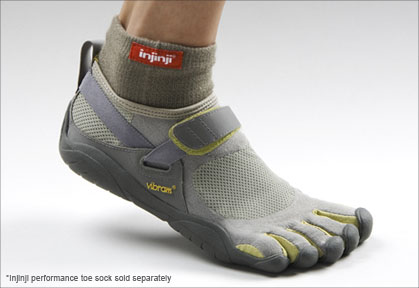 FiveFingers (VFF's) for about a year now. Yup, a year. While the challenge of what to do out doors when either sub zero or wet wintery are still a mystery, wearing these shoes for this length of time has let me observe/experience an intriguing phenomena about which i've seen little (ok no) comment: feet changing size.
I'll say right now that i measure my feet by my second toe - happens to be the longest (tips on fitting VFF's here). Thus i have room in my VFF's in the big toe pocket. So much so that wearing the same size VFF's with or without socks was no problem. Initially. Something happened in mid may after wearing VFF's indoors from nov - march, and then just all the time from march - may. My vff's with sox started to feel small. On the right foot only and mainly pulling on the big toe. Where i'd had room.
 I didn't know how to make sense of this. At a z-heath s-phase cert talking with DC Eric Cobb, i asked if one's foot size could change in shifting shoe types. Oh yes, he laughed. Great. Fortunately summer weather was coming and the sox could be dispensed with and the shoes were ok again.
Now it's getting cold, sox are coming back on and funny thing, the vff's (mainly the kso's) do not seem to be as tight now. Have they stretched out?
I asked z-health master trainer Zachariah Salazar at another recent z-health ho down - and a guy who's almost as footwear fanatical as i am - and he said that he's watched his feet change in both directions: as his shoes got flatter and more open, the feet got longer/bigger. But now, he says, as his muscles seem to be readapting in the feet again, they're pulling back in as his shoe size has come back down again. Perhaps that's what's happening with my feet - a re, re-adjustment.
Dunno. But it's interesting. I recently got to try on a pair one size up in the kso with socks. i'm sure this is what the current size *used* to feel like. time to think upping the size for winter wear - but they don't even feel that big without the sox. yup there's been a change in me, as the song goes.
Any other VFF wearers out there had any similar experiences?
Please post your foot size changing experiences.
Related Posts:
FiveFingers (VFF's) for about a year now. Yup, a year. While the challenge of what to do out doors when either sub zero or wet wintery are still a mystery, wearing these shoes for this length of time has let me observe/experience an intriguing phenomena about which i've seen little (ok no) comment: feet changing size.I'll say right now that i measure my feet by my second toe - happens to be the longest (tips on fitting VFF's here). Thus i have room in my VFF's in the big toe pocket. So much so that wearing the same size VFF's with or without socks was no problem. Initially. Something happened in mid may after wearing VFF's indoors from nov - march, and then just all the time from march - may. My vff's with sox started to feel small. On the right foot only and mainly pulling on the big toe. Where i'd had room.
I didn't know how to make sense of this. At a z-heath s-phase cert talking with DC Eric Cobb, i asked if one's foot size could change in shifting shoe types. Oh yes, he laughed. Great. Fortunately summer weather was coming and the sox could be dispensed with and the shoes were ok again.Now it's getting cold, sox are coming back on and funny thing, the vff's (mainly the kso's) do not seem to be as tight now. Have they stretched out?
I asked z-health master trainer Zachariah Salazar at another recent z-health ho down - and a guy who's almost as footwear fanatical as i am - and he said that he's watched his feet change in both directions: as his shoes got flatter and more open, the feet got longer/bigger. But now, he says, as his muscles seem to be readapting in the feet again, they're pulling back in as his shoe size has come back down again. Perhaps that's what's happening with my feet - a re, re-adjustment.
Dunno. But it's interesting. I recently got to try on a pair one size up in the kso with socks. i'm sure this is what the current size *used* to feel like. time to think upping the size for winter wear - but they don't even feel that big without the sox. yup there's been a change in me, as the song goes.
Any other VFF wearers out there had any similar experiences?
Please post your foot size changing experiences.
Related Posts:
- a year's worth of VFF articles at begin2dig
Friday, November 6, 2009
Getting the Rhythm of the RTK Long Cycle Dips (i think): Return of the Kettlebell Update 7
Follow @mcphoo
Tweet
This past Medium Day of Return of the Kettlebell was the Middle Weight  Long Cycle day. Having been away from this for the past few weeks, i was curious to see if i could get back in the groove and what it would feel like. It felt GOOD. Why? i think i've got the rhythm of this sucker figured out - at least for myself. Why? i understand the double dip function better - i think - thanks to getting to spend some time with an champ Olympic lifter (and GS lifter) and z-health movement specialist Chris Hoffman a week ago, learning the clean of the clean and jerk, oly style. A revelation. It's amazing what the bar in front of one's face does to drive home how the dips in these moves are working. There's pretty much no move for move comparison between the C&J with KB's and one with an oly bar. But the rationale for the dips is pretty much the same, and that can be instructive.
So Phase 1 of smoothing out the Hard Style C&J - again - for me; your mileage may differ. Smooth swing up to the rack. Pavel talks about the importance of the clean all the time. Sara Cheatham has recently written about her experience of same. Last year i looked at how the clean had made all the difference for my work in the press.
The part of the clean i'd like to talk about though, is really the swing. It's feeling the double bells and arms and chest and hips move like a fluid unit when picking up the bells and getting the swing first back then up going. It's all connected, and, i might add, feels rather effortless. It was a joy and revelation to feel the smoothness of the down stroke go to the hike pass (described in Enter the Kettlebell if that's not familiar) and come up to the momentary rack/dip combo sweet spot. Once i became aware of that groove i started using it deliberately. I know i know it sounds obvious but there it was.
Phase 2 of effortless: connecting the up to the rack with the first dip.
From the cleaned bells comes the first dip. The dip down is getting the rocket fuel primed for the shoot up (to use a rough version of Pavel's RTK analogy). This loading by dipping down is taking some advantage of the elastic energy component of muscle. This is a pre-load. To be effective, that loading has to be turned around pretty fast, or the energy dissipates. So it's down then UP to get the bells moving up to the sky, taking off. And as they hit apogee, getting ready to go down again for the "jerk dip." Bone rhythmn can come to play here too where the hip and knee, and knee and ankle are working together to get the butt down, timed and coordinated with the load to make the most of the boost up.
Phase 3 of effortless: second dip - remembering "getting under the bar"
Pardon a digression that may not sound sensible if you haven't tried this with an oly bar. The clean is really different than the KB clean and it's a lot of fun. I encourage everyone to get with a trainer to give it a go. IT's a beautiful move. The main part of comparison - to me - is going from the clean rack to the second dip for the jerk. Again this is going to sound so basic to people who know this stuff, so forgive me for stating the well known like a revelation.
It's my understanding, in the oly clean & Jerk that the second dip is to get under the racked bar, so that (and here comes the "duh!" ) rather than pushing the weight overhead with our poor arms from the rack, a la a military press, we get down (way down) to get under the bar suspended in the air, to get an arm lock out under it, and then, voila, drive up with the legs. While the legs are going down the arms are straightening out and pushing the bar (nice bone rhythm). So dip one to power load and initiate the first stage of the rocket; dip two, as the bells are going up, to get an extra stage advantage getting under the bell. And this happens FAST because we're trying to beat gravity: we go down faster than the bell to maximize force coming back up under it to get it locked out standing up.
Time In the Rack and Depth of Dip
Two differences i've noticed with the KB/Oly C&J is time in the rack and the depth of the drop.
In the Oly C&J you can really pause in the rack before going for that second dip. In the KB version, we don't pause as long in the rack it seems. We move from a stable clean to the power drive first dip.
Another difference with the Oly C&J and KB C&J is that the second dip seems to be not nearly so low - which makes sense given the load differences and also again, we're not pausing under the load once our arms are straightening. We're getting down to get under but we don't stop under. We're generating more momentum, more stretched elastic component energy in this semi-dip to drive the bell up to full lock out. Still, the principles are the same with coordinating the dip down with the arms going up and then the next step the straightening up for the final hold.
As said, some of you may be saying what are you making a fuss out of? Yes you've just described what you're supposed to be doing in a C&J: getting under the weight so you can push more up than you can press. Yup, but sometimes seeing how similar but different things work help explain the model.
I'm currently C&J'ing the same weights i press. I don't really need to jerk these weights up. SO getting a sense mechanically of what their rationale is in a context where one CANNOT press the same weight one jerks for a 1RM is instructive. At least it has been for me.
I can now better take advantage of the physics where it IS necessary to understand what it's doing in what becomes more of an endurance / hyertrophy session (C&J'ing for reps as designed in RTK) than for strength/power of Oly lifting. This is likely pretty basic for folks well versed in both arts, but as said, for me: revelation. I like it.
And one may note the Hard Style C&J is thus z subtly different beast from the GS Long cycle where one does indeed rest and recover in the rack before dips. There's a difference therefore in the curvature of the thoracics, it seems, to hold the load and refresh, but not a huge difference.
Phase 4, power up: get up stand up, stand up
This actually seemed in some ways the hardest part of the move: once i had the bells up over my head, and locked out, i had to remind myself the fist few times to remember to finish the move by standing up all the way; it felt more comfortable to keep a bit of a bend in my knees when rep'ping, but no no, must get up and finish each rep. ta da.
Aside 1: grip
I was quite surprised by how much smoother this iteration through the cycle felt than the last time i did it. Even for the high rep rungs of the ladder. Definitely felt like i was getting to a more efficient movement (within hardstyle constraints).
And then i noticed it: my grip was different than it had been. Formally i had studiously practiced the clean up to the rack then fold the fingers into the bell against the handle. This time, i simply used a near fingerless grip for the press up rather than folding my fingers inside and against the handle. For me that seems to take less energy and just feels smoother.
After the sets were over i did some tests comparing the open grip to the folded fingers grip, and found that the open fingers (including loose thumb) worked the same muscularly, but again, less effort/energy on playing with finger positioning, and also felt like i was able to control the decent of the bell more readily.
I've been looking at the hand grips of various male and female GS master of sport holders, and it seems to be a personal thing: some do the fold; some do the loose grip. IF you note the grip of Scott Helsley in the vid above, you'll see something of what i'm describing with the open grip. I'm ok with that. Unless i learn of a specific reason to spend time reforging the grip to do the fold, i think i might just stay with this. We'll see.
Getting to the Bottom of the RTK HS C&J
So, in review, what happened in this session - it's the first time (3rd go through of the whole thing) where i've felt like i was starting to practice skills instead of learn new ones. Obviously each rep brings refinements, and i'm in no way saying i have all the skills for these moves. NOOOO. But what i am saying is that it feels like i'm moving past just the learning stage and into the practice stage. Things are starting to make sense. And the cool thing is when they make sense they feel far more powerful, smooth and effective. Which it to be preferred. Heavy Day next and i get to test if all this sweet talk about effortless form translates to the heavy bells for the long cycle.
Smiles everyone. Smiles.
Related Posts
Long Cycle day. Having been away from this for the past few weeks, i was curious to see if i could get back in the groove and what it would feel like. It felt GOOD. Why? i think i've got the rhythm of this sucker figured out - at least for myself. Why? i understand the double dip function better - i think - thanks to getting to spend some time with an champ Olympic lifter (and GS lifter) and z-health movement specialist Chris Hoffman a week ago, learning the clean of the clean and jerk, oly style. A revelation. It's amazing what the bar in front of one's face does to drive home how the dips in these moves are working. There's pretty much no move for move comparison between the C&J with KB's and one with an oly bar. But the rationale for the dips is pretty much the same, and that can be instructive.So Phase 1 of smoothing out the Hard Style C&J - again - for me; your mileage may differ. Smooth swing up to the rack. Pavel talks about the importance of the clean all the time. Sara Cheatham has recently written about her experience of same. Last year i looked at how the clean had made all the difference for my work in the press.
The part of the clean i'd like to talk about though, is really the swing. It's feeling the double bells and arms and chest and hips move like a fluid unit when picking up the bells and getting the swing first back then up going. It's all connected, and, i might add, feels rather effortless. It was a joy and revelation to feel the smoothness of the down stroke go to the hike pass (described in Enter the Kettlebell if that's not familiar) and come up to the momentary rack/dip combo sweet spot. Once i became aware of that groove i started using it deliberately. I know i know it sounds obvious but there it was.
Phase 2 of effortless: connecting the up to the rack with the first dip.
From the cleaned bells comes the first dip. The dip down is getting the rocket fuel primed for the shoot up (to use a rough version of Pavel's RTK analogy). This loading by dipping down is taking some advantage of the elastic energy component of muscle. This is a pre-load. To be effective, that loading has to be turned around pretty fast, or the energy dissipates. So it's down then UP to get the bells moving up to the sky, taking off. And as they hit apogee, getting ready to go down again for the "jerk dip." Bone rhythmn can come to play here too where the hip and knee, and knee and ankle are working together to get the butt down, timed and coordinated with the load to make the most of the boost up.
Phase 3 of effortless: second dip - remembering "getting under the bar"
Pardon a digression that may not sound sensible if you haven't tried this with an oly bar. The clean is really different than the KB clean and it's a lot of fun. I encourage everyone to get with a trainer to give it a go. IT's a beautiful move. The main part of comparison - to me - is going from the clean rack to the second dip for the jerk. Again this is going to sound so basic to people who know this stuff, so forgive me for stating the well known like a revelation.
It's my understanding, in the oly clean & Jerk that the second dip is to get under the racked bar, so that (and here comes the "duh!" ) rather than pushing the weight overhead with our poor arms from the rack, a la a military press, we get down (way down) to get under the bar suspended in the air, to get an arm lock out under it, and then, voila, drive up with the legs. While the legs are going down the arms are straightening out and pushing the bar (nice bone rhythm). So dip one to power load and initiate the first stage of the rocket; dip two, as the bells are going up, to get an extra stage advantage getting under the bell. And this happens FAST because we're trying to beat gravity: we go down faster than the bell to maximize force coming back up under it to get it locked out standing up.
Time In the Rack and Depth of Dip
Two differences i've noticed with the KB/Oly C&J is time in the rack and the depth of the drop.
In the Oly C&J you can really pause in the rack before going for that second dip. In the KB version, we don't pause as long in the rack it seems. We move from a stable clean to the power drive first dip.
Another difference with the Oly C&J and KB C&J is that the second dip seems to be not nearly so low - which makes sense given the load differences and also again, we're not pausing under the load once our arms are straightening. We're getting down to get under but we don't stop under. We're generating more momentum, more stretched elastic component energy in this semi-dip to drive the bell up to full lock out. Still, the principles are the same with coordinating the dip down with the arms going up and then the next step the straightening up for the final hold.
As said, some of you may be saying what are you making a fuss out of? Yes you've just described what you're supposed to be doing in a C&J: getting under the weight so you can push more up than you can press. Yup, but sometimes seeing how similar but different things work help explain the model.
I'm currently C&J'ing the same weights i press. I don't really need to jerk these weights up. SO getting a sense mechanically of what their rationale is in a context where one CANNOT press the same weight one jerks for a 1RM is instructive. At least it has been for me.
I can now better take advantage of the physics where it IS necessary to understand what it's doing in what becomes more of an endurance / hyertrophy session (C&J'ing for reps as designed in RTK) than for strength/power of Oly lifting. This is likely pretty basic for folks well versed in both arts, but as said, for me: revelation. I like it.
And one may note the Hard Style C&J is thus z subtly different beast from the GS Long cycle where one does indeed rest and recover in the rack before dips. There's a difference therefore in the curvature of the thoracics, it seems, to hold the load and refresh, but not a huge difference.
Phase 4, power up: get up stand up, stand up
This actually seemed in some ways the hardest part of the move: once i had the bells up over my head, and locked out, i had to remind myself the fist few times to remember to finish the move by standing up all the way; it felt more comfortable to keep a bit of a bend in my knees when rep'ping, but no no, must get up and finish each rep. ta da.
Aside 1: grip
I was quite surprised by how much smoother this iteration through the cycle felt than the last time i did it. Even for the high rep rungs of the ladder. Definitely felt like i was getting to a more efficient movement (within hardstyle constraints).
And then i noticed it: my grip was different than it had been. Formally i had studiously practiced the clean up to the rack then fold the fingers into the bell against the handle. This time, i simply used a near fingerless grip for the press up rather than folding my fingers inside and against the handle. For me that seems to take less energy and just feels smoother.
After the sets were over i did some tests comparing the open grip to the folded fingers grip, and found that the open fingers (including loose thumb) worked the same muscularly, but again, less effort/energy on playing with finger positioning, and also felt like i was able to control the decent of the bell more readily.
I've been looking at the hand grips of various male and female GS master of sport holders, and it seems to be a personal thing: some do the fold; some do the loose grip. IF you note the grip of Scott Helsley in the vid above, you'll see something of what i'm describing with the open grip. I'm ok with that. Unless i learn of a specific reason to spend time reforging the grip to do the fold, i think i might just stay with this. We'll see.
Getting to the Bottom of the RTK HS C&J
So, in review, what happened in this session - it's the first time (3rd go through of the whole thing) where i've felt like i was starting to practice skills instead of learn new ones. Obviously each rep brings refinements, and i'm in no way saying i have all the skills for these moves. NOOOO. But what i am saying is that it feels like i'm moving past just the learning stage and into the practice stage. Things are starting to make sense. And the cool thing is when they make sense they feel far more powerful, smooth and effective. Which it to be preferred. Heavy Day next and i get to test if all this sweet talk about effortless form translates to the heavy bells for the long cycle.
Smiles everyone. Smiles.
Related Posts
- b2d kettlebell article index, with the other RTK updates and the perfect rep series.
Thursday, November 5, 2009
Vibrams FiveFingers Update: Airports and Running up that Hill - in winter?
Follow @mcphoo
Tweet
 Well, after months of successful walkthroughs through security at international airports in VFF's with no footwear removal requests, i finally hit an airport - Phoenix Arizona - where the staff said "those are classified as shoes; take them off" Is there no end to the in(s)anity? Is it ridiculous to see thin-soled foot wear as possible explosive material? is there a rationale for this? or have these folks jumped the shark? So just to note, at least one airport is catching wise to VFF's. Drat. What's your experience been? On the plus side more positive running experiences:
Of late i've been trying to gate my runs to be able to maintain breathing in through my nose throughout. I dunno, but they sure feel less stressful, easier, when this becomes the limiter for just transport runs (getting from a to b). Anyone else tried this? The pattern seems to go so well with the forefoot touch of VFF running
And what about hills and running up them? The VFF barefoot run pattern also seems to make hills less obdurate, smoother. I know that VFF is just enabling this style; it's not because of the shoes. I know i know. But. Without these i'd nay have discovered these changes.
As to those changes no doubt most of you have seen this comparison video on an evil treadmill, but in case not, here goes again.
Winter Wet and VFF Strategy?
I have a question as well: what are VFF faithful going to do for footwear when winter hits? Whether that's winter in Seattle/UK where the rain it raineth every day (and of personal interest), or in the Great White North where it's just dam cold (at least there are rubber footed snowshoe boots that can be brought to bear on city streets - effectively cheap moccasins with some tread). But what are you all doing? Post a comment and please let me know.
thanks
mc
ps
Thanks to birthdayshoes.com Justin for the early alert about women's KSO Trek's making it to The Rest of Us in early 2010. If any gals have experience fitting the boys Treks, please share.
Related Posts
Well, after months of successful walkthroughs through security at international airports in VFF's with no footwear removal requests, i finally hit an airport - Phoenix Arizona - where the staff said "those are classified as shoes; take them off" Is there no end to the in(s)anity? Is it ridiculous to see thin-soled foot wear as possible explosive material? is there a rationale for this? or have these folks jumped the shark? So just to note, at least one airport is catching wise to VFF's. Drat. What's your experience been? On the plus side more positive running experiences:Of late i've been trying to gate my runs to be able to maintain breathing in through my nose throughout. I dunno, but they sure feel less stressful, easier, when this becomes the limiter for
 just transport runs (getting from a to b). Anyone else tried this? The pattern seems to go so well with the forefoot touch of VFF running
And what about hills and running up them? The VFF barefoot run pattern also seems to make hills less obdurate, smoother. I know that VFF is just enabling this style; it's not because of the shoes. I know i know. But. Without these i'd nay have discovered these changes.
As to those changes no doubt most of you have seen this comparison video on an evil treadmill, but in case not, here goes again.
Winter Wet and VFF Strategy?
I have a question as well: what are VFF faithful going to do for footwear when winter hits? Whether that's winter in Seattle/UK where the rain it raineth every day (and of personal interest), or in the Great White North where it's just dam cold (at least there are rubber footed snowshoe boots that can be brought to bear on city streets - effectively cheap moccasins with some tread). But what are you all doing? Post a comment and please let me know.
thanks
mc
ps
Thanks to birthdayshoes.com Justin for the early alert about women's KSO Trek's making it to The Rest of Us in early 2010. If any gals have experience fitting the boys Treks, please share.
Related Posts
- the entire B2D VFF article index
- and of course birthdayshoes.com
Tuesday, November 3, 2009
Why Not "Train Through Pain"?
Follow @mcphoo
Tweet
Lately i've had the opportunity to listen to a lot of athletes talk about various injuries, ongoing problems, and how many of them have tried to "train through the pain." Probably we've all done it (do it). The way our nervous systems are wired, however, that's a sub-optimal response to pain that can often lead to more problems. This post is meant to be a quick look at some strategies on how to respond to a pain cue to get back in the game.
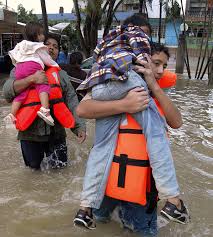
Who needs to "work through the pain"?
In a life and death situation, a person may need to work through the pain. The price of staying alive might be worth the potential long term cost of whatever damage is sustained.
 A workout in a gym is not the same (is it?) Getting in a few extra reps so as not to spoil a set and "working through the pain" may have untold consequences for no benefit. Seriously.
Apparently we just don't know what the consequences of even a seemingly trivial injury can be for cascading through our systems and causing other issues. Knowing that there may be significant consequences when we break ourselves, we may need to ask ourselves: when there's pain, why not just stop and figure it out? why put our bodies at risk just to finish a set? who cares really, ultimately, if we get in 10 reps rather than 8? or 2?
I think a lot of this just-work-through-it comes from most of us not knowing what pain really is or not having tools specifically to respond to it appropriately. So i'd like to offer a little bit about what pain is, and some simple but effective pain response strategies.
Background A lot of the work i'm summarizing stems from pain research. Books like David Butler's Explain Pain, and the Blakeslee's the Body has a Mind of It's Own are super general references in this space. I was introduced to the following models/work on pain by Eric Cobb at the first Z-Health certification. When we focus on the nervous system, as Z-Heath does, and get that Pain is an action signal from the brain manifesting through the nervous sytem, we have a whole lot more tools to deal with pain as events.
Pain is in the brain, first and foremost, and it means Threat is caused by what we're doing. So CHANGE.
Pain is not what happens at the site of pain - like the ache in the wrist or the sharp pain in the back coming up from a poor lift. It's a kind of summation of a lot of information. We've all had experiences where a paper cut means nothing we ignore it and get on with our day, and other days where the same paper cut really HURTS and demands attention. This is because pain is not about the thing itself (the injury); it's about the whole system context of how our entire system is doing at that moment, including perceived threat. Yup, we can feel pain in response to the anticipation of something occurring.
Pain is not isolated; Pain takes place in the brain. It is an action signal; it's an event that is telling the body that something, somewhere is wrong (ie under threat) and to deal with it. We ignore it at our peril, and working through the pain like an ache in a rep is actually being stupid in a non life threatening situation.
Here's part of why.
 In a tissue injury, nociceptors (things that detect noxious stimulus in the body, and that live particularly around joints and in muscle) get fired up and a whole chemical soup gets going around the site of trauma to deal with it. Incredibly, that response in and of itself can be pretty varied and doesn't mean there's PAIN yet. Based on whatever else is going on in the body, signals go up to the brain, and based on that context, the brain decides whether to signal or even surpress a pain event.
If the brain says this is pain, however, it means, for whatever reason, we need to attend to it.
Pain is a Threat Response - real or perceived. The nervous system is always on; it only checks a single binary condition: threat or no threat. The response to threat to the body is to respond to the area where there is threat. Often that's a kind of shut down sequence.
Consider what happens dramatically if we have an inflamed finger. The range of motion is restricted, right? Or sore quads from DOMS - range of motion and also power can often be restricted. We are being held back from injuring ourselves further in the current circumstances.
Pain becomes a clear action signal not necessarily to stop what we're doing but to change what we're doing (which sometimes does mean "stop" - temporarily)
If we decide to go ahead with that lift anyway, when the body is pulling muscular firing power away from the site and sending up pain events to say this is not a happy thing, then we're stressing our bodies out further which cranks up stressor chemicals, cortisol can get going and well, we're well far away from an ideal environment for performance, right?
 It's a feedback loop for more shutdown, more pain: by working against ourselves we start setting up the body to act more to defend itself, while we're taxing it further and potentially injuring ourselves more.
I've spoken with experts about what's going on with people who say they trained through the pain and after awhile it went away. The consensus seems to be that in those cases (a) the person is actually most likely developing new movement patterns away from the site of pain (b) doing so sub-optimally at a potential cost to overly sensitizing those sites to future pain/trauma events. Similar people who "work through" pain will often also talk about the same kind of pain showing up months/years later as a now more persistent ache, or have other physical issues.
The costs of risking "breaking" ourselves in some way by working through pain are potentially complex. We really have no idea what might be the one seemingly trivial thing that can set up a cascade of events in our nervous system that will have repercussions. So even though we're very robust, and will adapt to almost anything, to ensure the robustness of the system it's really easy just to learn some strategies to respond to a pain/threat event.
Here's an analogy with stress. Stress or anxiety like we might feel before having to get up in front of a group of people and give a talk is an example of a threat response. Chemicals start to get released from the brain to get us ready for fight or flight. Often people who are stressed are encouraged to go for a walk or move and they report feeling better: we effectively start to use those chemicals for the purpose they've been stirred up - to move. The same chemicals (catecholamines) pretty much get fired up every time we work out and get our heart rate up. So they're not bad, they're just physical, and there is a physical response available. If we become aware of "getting stressed" - note the breathing responses etc and respond, we can quickly get back to normal performance.
Pain is a similar kind of response to threat - perceived or actual - and is an action signal. Again, often (not 100% of the time, but often) movement can likewise help both diagnosis that there's an issue and check if there's a good response to the action signal.
The right mobility can be an optimal response to the pain action signal
So, with all the athletes i work with, i recommend that at a minimum they consider making mobility practice a regular part of their daily routine. If you're interested in more of the details of why, here's an article. Likewise, if you haven't and especially if you're concerned about your performance goals, consider getting your movement in general and your specific ahtletic form checked by a movement specialist to make sure you're repping in good patterns.
Scenario of Pain Event Listening
 SO let's say you're doing something that fires up a pain signal in the elbow or forearm.
You check your shoulder range of motion.
You can only get your arm up to the start of your ear - usually you're behind it. Something's wrong.
You do some opposing joint drills and recheck - your arm mobility is back to normal. awesome.
You recheck your form for whatever was hurting, remember your form: tall spine, good breathing, focus on open form, pain is gone, life is good again.
Yes it can happen that fast. The nervous system mechanoreceptors fire at 300mph. And with the SAID principle, we respond exactly and immediately to what we're doing.
Now there may be instances where the ROM does not come back; where the pain is acute when doing ANY ROM of the given move. That may be time to bag it. Rule no. 1: never move through pain because of all the above: upping threat, further shut down, more threat response chemical events etc. Related strategies are, when and as possible: reduce the range of motion of a movement that causes pain so you work outside the pain zone; reduce the load that brings on pain in any ROM.
An intriguing benefit of regular mobility practice is that, by practicing regular and better movement, better information is getting to the nervous system about where we are and what our options are, so there is a decreased incidence of injury and in no small part increased performance as well. Why? Mobility work helps us achieve the Perfect Rep - or at least efficient movement (discussed mid article here), which is the least likely to result in problems, because it also enables the best ROM from which to respond to the unexpected.
An example of mobility and connecting up nervous system communication we've talked about at b2d before is with the arthrokinetic reflex - a powerful example of what happens (1) with a threat response in the nervous system - when it senses even the slightest impingement - and how to fix that with self-mobilization and (2) how performance improves when connecting the neuro-reflexes in the body: here connecting eye movement with hip movement.
So why shouldn't we train though Pain, in brief?
We really don't know the extent to which a pain event can screw ourselves up for right now, or for some event in the future. Like a stress fracture in metal, it may be fine for some time, but it becomes a progressive site of deterioration until suddenly there's a potentially catastrophic break. By not stopping to deal with the pain, we set up a cascade effect of progressive responses in the body to get us to attend to the ever amping up signal. These further events have further costs on our performance. A way the body may deal with unattended pain is to bring on a compensation that will lead to other/new pains. Likewise, ignoring pain can also set up various sensitizations to pain that can trip the pain from a single acute incident to something that gets would up into our nervous system and goes chronic, also potentially harder to address. All in all, it's not nice.
Bottom line?
Who needs to "work through the pain"?
In a life and death situation, a person may need to work through the pain. The price of staying alive might be worth the potential long term cost of whatever damage is sustained.
A workout in a gym is not the same (is it?) Getting in a few extra reps so as not to spoil a set and "working through the pain" may have untold consequences for no benefit. Seriously.Apparently we just don't know what the consequences of even a seemingly trivial injury can be for cascading through our systems and causing other issues. Knowing that there may be significant consequences when we break ourselves, we may need to ask ourselves: when there's pain, why not just stop and figure it out? why put our bodies at risk just to finish a set? who cares really, ultimately, if we get in 10 reps rather than 8? or 2?
I think a lot of this just-work-through-it comes from most of us not knowing what pain really is or not having tools specifically to respond to it appropriately. So i'd like to offer a little bit about what pain is, and some simple but effective pain response strategies.
Background A lot of the work i'm summarizing stems from pain research. Books like David Butler's Explain Pain, and the Blakeslee's the Body has a Mind of It's Own are super general references in this space. I was introduced to the following models/work on pain by Eric Cobb at the first Z-Health certification. When we focus on the nervous system, as Z-Heath does, and get that Pain is an action signal from the brain manifesting through the nervous sytem, we have a whole lot more tools to deal with pain as events.
Pain is in the brain, first and foremost, and it means Threat is caused by what we're doing. So CHANGE.
Pain is not what happens at the site of pain - like the ache in the wrist or the sharp pain in the back coming up from a poor lift. It's a kind of summation of a lot of information. We've all had experiences where a paper cut means nothing we ignore it and get on with our day, and other days where the same paper cut really HURTS and demands attention. This is because pain is not about the thing itself (the injury); it's about the whole system context of how our entire system is doing at that moment, including perceived threat. Yup, we can feel pain in response to the anticipation of something occurring.
Pain is not isolated; Pain takes place in the brain. It is an action signal; it's an event that is telling the body that something, somewhere is wrong (ie under threat) and to deal with it. We ignore it at our peril, and working through the pain like an ache in a rep is actually being stupid in a non life threatening situation.
Here's part of why.
In a tissue injury, nociceptors (things that detect noxious stimulus in the body, and that live particularly around joints and in muscle) get fired up and a whole chemical soup gets going around the site of trauma to deal with it. Incredibly, that response in and of itself can be pretty varied and doesn't mean there's PAIN yet. Based on whatever else is going on in the body, signals go up to the brain, and based on that context, the brain decides whether to signal or even surpress a pain event.If the brain says this is pain, however, it means, for whatever reason, we need to attend to it.
Pain is a Threat Response - real or perceived. The nervous system is always on; it only checks a single binary condition: threat or no threat. The response to threat to the body is to respond to the area where there is threat. Often that's a kind of shut down sequence.
Consider what happens dramatically if we have an inflamed finger. The range of motion is restricted, right? Or sore quads from DOMS - range of motion and also power can often be restricted. We are being held back from injuring ourselves further in the current circumstances.
Pain becomes a clear action signal not necessarily to stop what we're doing but to change what we're doing (which sometimes does mean "stop" - temporarily)
If we decide to go ahead with that lift anyway, when the body is pulling muscular firing power away from the site and sending up pain events to say this is not a happy thing, then we're stressing our bodies out further which cranks up stressor chemicals, cortisol can get going and well, we're well far away from an ideal environment for performance, right?
It's a feedback loop for more shutdown, more pain: by working against ourselves we start setting up the body to act more to defend itself, while we're taxing it further and potentially injuring ourselves more.I've spoken with experts about what's going on with people who say they trained through the pain and after awhile it went away. The consensus seems to be that in those cases (a) the person is actually most likely developing new movement patterns away from the site of pain (b) doing so sub-optimally at a potential cost to overly sensitizing those sites to future pain/trauma events. Similar people who "work through" pain will often also talk about the same kind of pain showing up months/years later as a now more persistent ache, or have other physical issues.
The costs of risking "breaking" ourselves in some way by working through pain are potentially complex. We really have no idea what might be the one seemingly trivial thing that can set up a cascade of events in our nervous system that will have repercussions. So even though we're very robust, and will adapt to almost anything, to ensure the robustness of the system it's really easy just to learn some strategies to respond to a pain/threat event.
Here's an analogy with stress. Stress or anxiety like we might feel before having to get up in front of a group of people and give a talk is an example of a threat response. Chemicals start to get released from the brain to get us ready for fight or flight. Often people who are stressed are encouraged to go for a walk or move and they report feeling better: we effectively start to use those chemicals for the purpose they've been stirred up - to move. The same chemicals (catecholamines) pretty much get fired up every time we work out and get our heart rate up. So they're not bad, they're just physical, and there is a physical response available. If we become aware of "getting stressed" - note the breathing responses etc and respond, we can quickly get back to normal performance.
Pain is a similar kind of response to threat - perceived or actual - and is an action signal. Again, often (not 100% of the time, but often) movement can likewise help both diagnosis that there's an issue and check if there's a good response to the action signal.
The right mobility can be an optimal response to the pain action signal
- So first things first: never move through pain. If pain happens, stop and check. That stopping is a movement response.
- Next, pending severity we can quickly check where the mobility around the joints where the pain occurs may be restricted. So sore elbow - how's the shoulder movement, wrist movement, elbow movement without load (it helps also to learn what the ROM of these joints is for yourself). If there's pain through everything, just frickin' stop.
- Knowing some mobility work for the related joints, going through them where there's no pain, and rechecking range of motion - better worse no change - is again a great fast way to see how things are going. If things are improved awesome, you may want to try - gently - to see if the original move is ok, and if the load has to be reduced to move through the ROM without pain
- Recheck regularly to see where the threat is
- Move a bit as soon as you can without ever moving into pain.
So, with all the athletes i work with, i recommend that at a minimum they consider making mobility practice a regular part of their daily routine. If you're interested in more of the details of why, here's an article. Likewise, if you haven't and especially if you're concerned about your performance goals, consider getting your movement in general and your specific ahtletic form checked by a movement specialist to make sure you're repping in good patterns.
Scenario of Pain Event Listening
SO let's say you're doing something that fires up a pain signal in the elbow or forearm.You check your shoulder range of motion.
You can only get your arm up to the start of your ear - usually you're behind it. Something's wrong.
You do some opposing joint drills and recheck - your arm mobility is back to normal. awesome.
You recheck your form for whatever was hurting, remember your form: tall spine, good breathing, focus on open form, pain is gone, life is good again.
Yes it can happen that fast. The nervous system mechanoreceptors fire at 300mph. And with the SAID principle, we respond exactly and immediately to what we're doing.
Now there may be instances where the ROM does not come back; where the pain is acute when doing ANY ROM of the given move. That may be time to bag it. Rule no. 1: never move through pain because of all the above: upping threat, further shut down, more threat response chemical events etc. Related strategies are, when and as possible: reduce the range of motion of a movement that causes pain so you work outside the pain zone; reduce the load that brings on pain in any ROM.
An intriguing benefit of regular mobility practice is that, by practicing regular and better movement, better information is getting to the nervous system about where we are and what our options are, so there is a decreased incidence of injury and in no small part increased performance as well. Why? Mobility work helps us achieve the Perfect Rep - or at least efficient movement (discussed mid article here), which is the least likely to result in problems, because it also enables the best ROM from which to respond to the unexpected.
An example of mobility and connecting up nervous system communication we've talked about at b2d before is with the arthrokinetic reflex - a powerful example of what happens (1) with a threat response in the nervous system - when it senses even the slightest impingement - and how to fix that with self-mobilization and (2) how performance improves when connecting the neuro-reflexes in the body: here connecting eye movement with hip movement.
So why shouldn't we train though Pain, in brief?
We really don't know the extent to which a pain event can screw ourselves up for right now, or for some event in the future. Like a stress fracture in metal, it may be fine for some time, but it becomes a progressive site of deterioration until suddenly there's a potentially catastrophic break. By not stopping to deal with the pain, we set up a cascade effect of progressive responses in the body to get us to attend to the ever amping up signal. These further events have further costs on our performance. A way the body may deal with unattended pain is to bring on a compensation that will lead to other/new pains. Likewise, ignoring pain can also set up various sensitizations to pain that can trip the pain from a single acute incident to something that gets would up into our nervous system and goes chronic, also potentially harder to address. All in all, it's not nice.
Bottom line?
- A pain event is non-trivial. It means something. So it's a good idea to listen to that signal.
- At a minimum, never move into pain: reduce range of motion/load/speed as necessary (for awhile this may mean non-movement, but getting to possible movement is a good idea)
- Mobility work like z-health rphase/iphase is a fabulous tool kit to be able to self-assess to respond to that pain event and get back to practice asap.
- lots of articles about the z-health approach to movement/mobility
- Mike T Nelson's great exercise approach to Tendonitis/Tendonosis
- mike t nelson presents a new study on pain/performance.
Sunday, November 1, 2009
Enhancing the Viking Push Press with Bone Rhythm: more Progress with Return of the Kettlebell
Follow @mcphoo
Tweet
While the Hard Style approach teaches tension as strength, it is also concerned with movement efficiency. One of the best and most simple techniques to bring efficiency and power into a movement is to harmonize the timing and forces of the joints used in the move. Eric Cobb in z-health refers to this as Bone Rhythm. In this article on my continuing experience with the double kettlebell work of Return of the Kettlebell, i take a look at refining the efficiency, speed and power of my Viking Push Press with attention to Bone Rythmn.
Return of the Kettlebell (RTK) (early review here) provides a formal introduction to the Viking Push Press (VPP), a move that used to be taught only at the RKC II certification. One of the things this means is that the move has been field tested a lot before being introduced to a general kettlebell practice situation, and so has been found to have therefore no small benefit in practice.
In RTK, the Viking Push Press is used to kick off the explosive blocks that include the double kettlebell long cycle clean and jerk. It is well described in RTK so just a quick review is that
Connecting Bone Rhythm with the VPP
Bone Rhythm is a concept that's taught first in the R-Phase certification in Z-Health (review), then again at S-Phase and is now also available in the fabulous Z-Health Vol. 1 of the Complete Athlete (reviewed in detail here). I've discussed it here, too, in this presentation of the KB front squat. and here as well in the context of powerful, efficient movement.
Effectively, the idea of bone rhythmn is to get the timing of the joints to happen together. So for instance, in the squat, the movement of the knee finishes at the same time as the hip, both in going down and in coming up. It's well worth practicing this timing. For example, i could get BR happening in my squat really well going fast. Slowing it down, the knee always finished before the hips. I recently had the opportunity to work with Z-Health Master Trainer Katie Bigelow who had me sorted on slow control of BR in about 20 mins. I am now strong like ox. No kidding. BR = simple physics. If both ends of a lever work together, the movement around the joints at the fulcra is that much more efficient.
 The opposite of bone rythmn is what happens on a sea saw if the heavier kid decides not to cooperate when the lighter kid is trying to come down: the lighter kid is whaling away to get her end down and the other kid - isn't pushing up at the same time, so a lot of energy is just spent refee'ing. Once they get in sync, momentum takes care of the rest. Effortless movement; less force needed to keep the movement happening.
SO where/how can we apply this concept in the VPP? here's what i found and you might want to play around with this, too. I'd suggest starting unloaded/naked/no weight.
Gating the Knee Dip. If the arm is up and locked out in the starting position, as the arm comes down into the rack (somewhat different than the clean rack so good to watch Kenneth Jay demo this on the RTK video), dip the knees. Two things to connect:
Your mileage may vary, but i found that when the arm and knees sync'd up, the feel of the dip was that goldilocks "just right."
Speed of the Push into the Press. In the VPP, there's no pause in the rack; it's an explosive push back up once the arm comes down into the rack. From there it's straight back up, using the extension of the knees from the dip to help drive up the bell into lock out.
Here's where unloaded practice can help give you the feel for this next part. In this part, the goal is to have the elbow lock out at the same time as the knees finish. Let me repeat: it's much easier to get the feel of this connection without a weight. Knees and arms finish together.
Single Once you have the feel of this unloaded, take the light bell you'd use for double VPP work, and work on a few singles to keep that coordinated knee extension with arm extension. The arms are traveling further, so they're going to be a bit faster than the knees.
When you have the feel of that, time to go for double kb's - and in this case, i'd encourage you to check a mirror just for your outline - you want to check how synced you are.
Double Now as soon as you go double, you may find that your arms lag behind your knees in terms of which finishes first. Ok. But what you'll start to get is that the main part of the coordination, the power of the knees to drive with the elbows past the sticking point is the main timing connection. You'll feel the rhythm look in - especially if you have the rack and up position right. Coordinating the push of these repetitive reps will go from wearing to smooth and powerful.
The Rhythm of Life is a Powerful Thing
It is very much a rhythm that just feels sweet, and really does make the difference between moving through 5 ladders of these things fresh and strong or feeling sluggish and blick. I'm pretty sure if you spend a little time playing around with bone rhythm and the rack position you'll feel like you could go for ages on the VPP, and really get those eccentrics popping with clean good feeling reps.
Related Posts
Return of the Kettlebell (RTK) (early review here) provides a formal introduction to the Viking Push Press (VPP), a move that used to be taught only at the RKC II certification. One of the things this means is that the move has been field tested a lot before being introduced to a general kettlebell practice situation, and so has been found to have therefore no small benefit in practice.In RTK, the Viking Push Press is used to kick off the explosive blocks that include the double kettlebell long cycle clean and jerk. It is well described in RTK so just a quick review is that
- a) unlike it's cousin the regular push press, it begins in an overhead lock out position
- b) lighter weights can be used to build up reps at speed for lots of volume, so it situates as a potential overspeed eccentric practice for training that stretch cycle for speed/power
- c) there are no pauses in the rack.
Connecting Bone Rhythm with the VPP
Bone Rhythm is a concept that's taught first in the R-Phase certification in Z-Health (review), then again at S-Phase and is now also available in the fabulous Z-Health Vol. 1 of the Complete Athlete (reviewed in detail here). I've discussed it here, too, in this presentation of the KB front squat. and here as well in the context of powerful, efficient movement.
Effectively, the idea of bone rhythmn is to get the timing of the joints to happen together. So for instance, in the squat, the movement of the knee finishes at the same time as the hip, both in going down and in coming up. It's well worth practicing this timing. For example, i could get BR happening in my squat really well going fast. Slowing it down, the knee always finished before the hips. I recently had the opportunity to work with Z-Health Master Trainer Katie Bigelow who had me sorted on slow control of BR in about 20 mins. I am now strong like ox. No kidding. BR = simple physics. If both ends of a lever work together, the movement around the joints at the fulcra is that much more efficient.
The opposite of bone rythmn is what happens on a sea saw if the heavier kid decides not to cooperate when the lighter kid is trying to come down: the lighter kid is whaling away to get her end down and the other kid - isn't pushing up at the same time, so a lot of energy is just spent refee'ing. Once they get in sync, momentum takes care of the rest. Effortless movement; less force needed to keep the movement happening.SO where/how can we apply this concept in the VPP? here's what i found and you might want to play around with this, too. I'd suggest starting unloaded/naked/no weight.
Gating the Knee Dip. If the arm is up and locked out in the starting position, as the arm
 comes down into the rack (somewhat different than the clean rack so good to watch Kenneth Jay demo this on the RTK video), dip the knees. Two things to connect:
- get the speed of the arm coming down into the rack to meet the speed of the knees bending. sync these up.
- get the knee dip to keep going only until the arm comes down into the rack, so the arm and the knees finish their movement together.
Your mileage may vary, but i found that when the arm and knees sync'd up, the feel of the dip was that goldilocks "just right."
Speed of the Push into the Press. In the VPP, there's no pause in the rack; it's an explosive
 push back up once the arm comes down into the rack. From there it's straight back up, using the extension of the knees from the dip to help drive up the bell into lock out.
Here's where unloaded practice can help give you the feel for this next part. In this part, the goal is to have the elbow lock out at the same time as the knees finish. Let me repeat: it's much easier to get the feel of this connection without a weight. Knees and arms finish together.
Single Once you have the feel of this unloaded, take the light bell you'd use for double VPP work, and work on a few singles to keep that coordinated knee extension with arm extension. The arms are traveling further, so they're going to be a bit faster than the knees.
When you have the feel of that, time to go for double kb's - and in this case, i'd encourage you to check a mirror just for your outline - you want to check how synced you are.
Double Now as soon as you go double, you may find that your arms lag behind your knees in terms of which finishes first. Ok. But what you'll start to get is that the main part of the coordination, the power of the knees to drive with the elbows past the sticking point is the main timing connection. You'll feel the rhythm look in - especially if you have the rack and up position right. Coordinating the push of these repetitive reps will go from wearing to smooth and powerful.
The Rhythm of Life is a Powerful Thing
It is very much a rhythm that just feels sweet, and really does make the difference between moving through 5 ladders of these things fresh and strong or feeling sluggish and blick. I'm pretty sure if you spend a little time playing around with bone rhythm and the rack position you'll feel like you could go for ages on the VPP, and really get those eccentrics popping with clean good feeling reps.
Related Posts
- b2d kettlebell article index - including previous posts on progressing through RTK (warning, they're not all pretty) as well as other KB related articles.
- movement index - articles in the movement/neurology space from warm ups to stretches to all things Z-health.
- if you'd like hands on help with BR and other mobility concepts: Next ZKB workshop: Nov 29, Edinburgh
Wednesday, October 28, 2009
Move or Die? Movement as Optimal Path to Strength and Well Being, Part 1
Follow @mcphoo
Tweet
This post is an intro to why *good* movement is a big frikin' panacea to most of what ails us. No kidding. Move well; be well. In this series, we're going to look at different attributes of movement - joints, muscles, skin, lymph everything - but first, let's start with an overview of what movement seems to mean to our governing system - the "always on" part of our bodies that monitors and messages about every process in our bodies, our nervous system - and then consisder a pretty direct route to cuing up those happy messages to it via dynamic joint mobility.
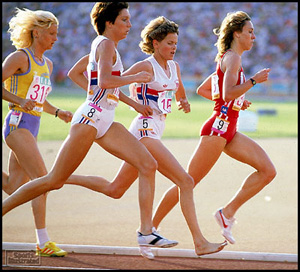 Movement = well being. We are designed to move. And apparently to move at speed: our bodies are apparently designed to support running more so than even walking. Perhaps not surprisingly, Use it or Lose it for humans could be redefined potentially as Move It or Lose It.
Our physiology works on a move it or lose it principle: by Woolf's Law and Davis' Law, we get to keep only what we use, and use is determined by - yes - movement. Don't move our muscles, function degrades; don't use our bones, bones degrade, don't move the joints, joints degrade. Movement means strength, fitness, digestion, respiration, skin tone, joint health, heart health, everything health. Could it be that simple?
Everything about our beings responds best to movement: movement therefore seems to mean a big neurological thumbs up. If we are able to move, we're good to go, to flee, to hunt or to gather.
On the other hand, if our nervous system either perceives or receives a threat of any kind, movement is what pays: sore shoulder means reduced range of motion; shoes too tight so joints are compressed and less able to function as designed means less muscle power for a deadlift. Loosen up those shoes (or get rid of them), do some foot mobilization work (ankle circles; toe waves) and power is restored to the system. We react *that* quickly, as reflected in the SAID principle.
SAID stands for "specific adaptation to imposed demand." Eric Cobb, DC, c0-founder of Z-Health adds "exactly and immediately" to the SAID mix. In other words, our bodies respond exactly and immediately to what we're doing.
We see evidence of this immediacy all the time. Go to pick something up, our muscles don't wait to turn on to support that position; they do so right away, courtesy of the nervous system. We are about to go on stage to give a talk, and our heart rate accelerates right at that moment pumping more blood to our peripheral limbs; likewise hormones are released to prepare for flight to deal with the perceived threat of our anxiety. That response happens as soon as we perceive the moment of threat - which may be long before, right before or during the event.
A huge part of that immediate adaptation is the speed at which information travels through the nervous system. Most fibers are sending info at 300miles per hour. That's fast. One might almost say immediate.
Not moving = We have a Problem, Houston. Movement is so basic, so fundamental an indicator of well being, that *not* moving is, on a gross scale, a sign of illness or duress. Our movement is reduced seemingly in proportion to the degree of perceived or actual threat to the system. Our movement is reduced if we have: a broken limb, a gut ache, a head ache, if we feel depressed. Likewise, we think of aging as a process of movement deterioration: the aged are often slower, less mobile, suffer from movement debilitations - or are entirely bed ridden, just like the acutely ill.

 Irony. We are, despite our awesome craniums, embodied beings. Our modern lives, however, have moved us to a place where, to our nervous system we generally operate, if ya think about it, from postures of illness: we don't move; we sit at desks; we sit in cars, trains and planes. We are more sedentary than ambulatory.
Likewise those postures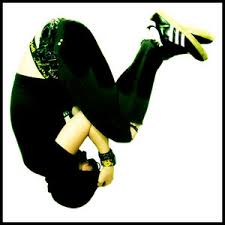 often closely resemble what's know as threat response or startle positions: hunched shoulders, head lowered, legs raised towards chest (from sitting) - if our legs and hands were pushed up a bit more we'd be in total fetal posture. And the rolling up into a ball is the big threat protection posture: cover the internal organs, protect the head, eyes and ears. That's a little, er, sick, isn't it?
Response to Modern Life:
Dynamic Joint Mobility as a first step, or movement.
If we tell our bodies that we are non mobile, our bodies also respond immediately to this - as we have seen - with Wolff's Law and Davis's Law: we are rebuilding tissue ALL the time. If we continually sit slumped, the body will work to maintain that position - go to get out of it, we feel stiff. Over a long enough time, the bones remodel to better maintain that position.
A painless and effective way to counteract less mobility is to move: move every joint in the body through its range of motion - that is - through the degree of motion we can voluntarily control. Another name for moving each joint in the body in a focused way is dynamic joint mobility work.
There are lots of joint mobility systems out there; the one i prefer, practice and teach is z-health. I've written lots about why (article index) and here's Z-Health's FAQ, but the main reason is that the movements in the R, I and S continuum are designed to move each joint
Range of motion is a great way to see how our nervous system may be doing with our body. We may feel fine but if we go to raise our arm in front of us to beside our ear and it usually gets to beside our ear but today it's only going to beside our cheek something's up. We might not perceive what it is clearly, but our nervous system does.
Doing a few joint mobility drills will often improve that range of motion. Some joints, like the wee bones in the feet and hands don't have a great deal of motion - but they do move. They're joints for a reason - if there wasn't a need for a joint, there'd be a bone, as Cobb puts it.
So smaller joint motions mean smaller range of motion, but still movements - and precise movements at that for optimal efficiency (more on efficient movement here). How to hit the target and what those targets are are important to maximize benefit of this joint librating work.
Repetition Only One Way: Bad; All ways, good. Other joints, like the wrist, pretty big obvious range of motion as we bend the hands back and forth at the wrists. But also therefore important to move those joints through those ranges of motion. Carpal Tunnel or RSI is not usually the result of too many reps, but too many reps in only ONE direction of a possible set of motions. Like typing on a keyboard - flexion flexion flexion, no extension; same with musicians. And here's one: elbows have fabulous movement possibilities but do you know some ways to move them through their complete ranges of motion in multiple directions/speeds? How often do lifters in the gym complain of tennis elbow? More than 9 times out of ten, this is the similar problem as the typing desk jockey: too many reps in one direction, exacerbated by potentially poor form with load, or just overuse.
If i could talk to the Animals - or the Nervous System...
Simple concept of why joint mobility work, like doing ZHealth R-Phase and I-Phase is so important: mechanorecption and nociception.
Mechanoreceptors populate the muscles and the tendons around joints. The give our brain information, through the nervous system of where we are in space and how fast we're moving. The other big proprioceptor around the joints are nocicpetors - nerves that react to noxious stimulus, like a cut or a kick or an impingement. If limbs are not moving well, the number of mechanoreceptors fired are way less than if they do move. Significantly. Nociceptors, which are far fewer in ratio to most mechanorecpetors are free to fire. And 1 is always louder than zero.
Signal Processing. Pain is something the brain says about a signal through the nervous system. A nociceptor may fire, but if the signal from the mechanorecptors is louder because more of these are firing, the brain mayn't interpret the action as something that needs to fire up as pain. If however the nociceptor is the only thing talking because the other mechanorecpetors in the area are inhibited from lack of mobility, then that pain signal may just get amplified.
Oh, Canada! Here's a way you might model this signal processing concept. At a recent mobility seminar, i started to sing O Canada - large room but everyone heard me. No one else was speaking. I then asked participants in the room to sing - at a normal volume not shouting or anything - God save the queen - while i sang O Canada while someone at the door listened in. What song do you think the person listening heard?
Movement Sings. So movement, on one simple level - movement through the fullest possible range of motion - helps to send positive "all clear" signals to the nervous system.
Practicing movement helps the joints learn to move through their full range of motion. Here's an example. When i started doing R-Phase in Z-Health, i looked with amazement on the thoracic circles - moving *just* the upper spine in a circle - of a fellow RKC. Me doing thoracic glides just front at back: ok i'm doing them! And there was no movement. Practicing them even though it felt like nothing was happening eventually caused rather a lot to happen, to the point the other day where a master trainer said "well you have such excellent thoracic mobility this isn't a problem for you; most people need...."
One gets joint mobility the same way one gets to carnegie hall it seems: practice practice practice.
Healing off the Table: Doing it For Ourselves:
Self movement more so than manual work (being worked on by others or having limbs moved passively) engages motor learning. That self-initiated action to control a motion fires up way more of the nervous system, building new patterns of movement with each rep. This is fabulous for self-care. Practically, the number of athletes i work with and whom colleagues work with who come in complaining of shoulder pain, elbow pain or back pain, generally speaking
It's that simple. And while we've focused on the benefit of moving joints for the nervous system due to mechanorecptors around the joints, in future we can look at movement of the skin, fascia, lymph and gut that also comes into play - how mobilty assists these other movements to feel better and perform better.
In the meantime, i hope this for me unusually brief overview helps get a handle on why mobilty work may be a good practice to consider if it's not already part of your daily practice. And here's an example of controlled movement:
Next Time: threat, pain and threat modulation.
Related Posts
Movement = well being. We are designed to move. And apparently to move at speed: our bodies are apparently designed to support running more so than even walking. Perhaps not surprisingly, Use it or Lose it for humans could be redefined potentially as Move It or Lose It.Our physiology works on a move it or lose it principle: by Woolf's Law and Davis' Law, we get to keep only what we use, and use is determined by - yes - movement. Don't move our muscles, function degrades; don't use our bones, bones degrade, don't move the joints, joints degrade. Movement means strength, fitness, digestion, respiration, skin tone, joint health, heart health, everything health. Could it be that simple?
Everything about our beings responds best to movement: movement therefore seems to
 mean a big neurological thumbs up. If we are able to move, we're good to go, to flee, to hunt or to gather.
On the other hand, if our nervous system either perceives or receives a threat of any kind, movement is what pays: sore shoulder means reduced range of motion; shoes too tight so joints are compressed and less able to function as designed means less muscle power for a deadlift. Loosen up those shoes (or get rid of them), do some foot mobilization work (ankle circles; toe waves) and power is restored to the system. We react *that* quickly, as reflected in the SAID principle.
SAID stands for "specific adaptation to imposed demand." Eric Cobb, DC, c0-founder of Z-Health adds "exactly and immediately" to the SAID mix. In other words, our bodies respond exactly and immediately to what we're doing.
We see evidence of this immediacy all the time. Go to pick something up, our muscles don't wait to turn on to support that position; they do so right away, courtesy of the nervous system. We are about to go on stage to give a talk, and our heart rate accelerates right at that moment pumping more blood to our peripheral limbs; likewise hormones are released to prepare for flight to deal with the perceived threat of our anxiety. That response happens as soon as we perceive the moment of threat - which may be long before, right before or during the event.
A huge part of that immediate adaptation is the speed at which information travels through the nervous system. Most fibers are sending info at 300miles per hour. That's fast. One might almost say immediate.
Not moving = We have a Problem, Houston. Movement is so basic, so fundamental an indicator of well being, that *not* moving is, on a gross scale, a sign of illness or duress. Our movement is reduced seemingly in proportion to the degree of perceived or actual threat to the system. Our movement is reduced if we have: a broken limb, a gut ache, a head ache, if we feel depressed. Likewise, we think of aging as a process of movement deterioration: the aged are often slower, less mobile, suffer from movement debilitations - or are entirely bed ridden, just like the acutely ill.
 Irony. We are, despite our awesome craniums, embodied beings. Our modern lives, however, have moved us to a place where, to our nervous system we generally operate, if ya think about it, from postures of illness: we don't move; we sit at desks; we sit in cars, trains and planes. We are more sedentary than ambulatory.
Likewise those postures
often closely resemble what's know as threat response or startle positions: hunched shoulders, head lowered, legs raised towards chest (from sitting) - if our legs and hands were pushed up a bit more we'd be in total fetal posture. And the rolling up into a ball is the big threat protection posture: cover the internal organs, protect the head, eyes and ears. That's a little, er, sick, isn't it?Response to Modern Life:
Dynamic Joint Mobility as a first step, or movement.
If we tell our bodies that we are non mobile, our bodies also respond immediately to this - as we have seen - with Wolff's Law and Davis's Law: we are rebuilding tissue ALL the time. If we continually sit slumped, the body will work to maintain that position - go to get out of it, we feel stiff. Over a long enough time, the bones remodel to better maintain that position.
A painless and effective way to counteract less mobility is to move: move every joint in the body through its range of motion - that is - through the degree of motion we can voluntarily control. Another name for moving each joint in the body in a focused way is dynamic joint mobility work.

There are lots of joint mobility systems out there; the one i prefer, practice and teach is z-health. I've written lots about why (article index) and here's Z-Health's FAQ, but the main reason is that the movements in the R, I and S continuum are designed to move each joint
- really: each joint, from head to foot, precisely
- through as many positions as possible
- as many speeds as possible
- with varying loads
Range of motion is a great way to see how our nervous system may be doing with our body. We may feel fine but if we go to raise our arm in front of us to beside our ear and it usually gets to beside our ear but today it's only going to beside our cheek something's up. We might not perceive what it is clearly, but our nervous system does.
Doing a few joint mobility drills will often improve that range of motion. Some joints, like the wee bones in the feet and hands don't have a great deal of motion - but they do move. They're joints for a reason - if there wasn't a need for a joint, there'd be a bone, as Cobb puts it.

So smaller joint motions mean smaller range of motion, but still movements - and precise movements at that for optimal efficiency (more on efficient movement here). How to hit the target and what those targets are are important to maximize benefit of this joint librating work.
Repetition Only One Way: Bad; All ways, good. Other joints, like the wrist, pretty big obvious range of motion as we bend the hands back and forth at the wrists. But also therefore important to move those joints through those ranges of motion. Carpal Tunnel or RSI is not usually the result of too many reps, but too many reps in only ONE direction of a possible set of motions. Like typing on a keyboard - flexion flexion flexion, no extension; same with musicians. And here's one: elbows have fabulous movement possibilities but do you know some ways to move them through their complete ranges of motion in multiple directions/speeds? How often do lifters in the gym complain of tennis elbow? More than 9 times out of ten, this is the similar problem as the typing desk jockey: too many reps in one direction, exacerbated by potentially poor form with load, or just overuse.
If i could talk to the Animals - or the Nervous System...
Simple concept of why joint mobility work, like doing ZHealth R-Phase and I-Phase is so important: mechanorecption and nociception.
Mechanoreceptors populate the muscles and the tendons around joints. The give our brain information, through the nervous system of where we are in space and how fast we're moving. The other big proprioceptor around the joints are nocicpetors - nerves that react to noxious stimulus, like a cut or a kick or an impingement. If limbs are not moving well, the number of mechanoreceptors fired are way less than if they do move. Significantly. Nociceptors, which are far fewer in ratio to most mechanorecpetors are free to fire. And 1 is always louder than zero.
Signal Processing. Pain is something the brain says about a signal through the nervous system. A nociceptor may fire, but if the signal from the mechanorecptors is louder because more of these are firing, the brain mayn't interpret the action as something that needs to fire up as pain. If however the nociceptor is the only thing talking because the other mechanorecpetors in the area are inhibited from lack of mobility, then that pain signal may just get amplified.
Oh, Canada! Here's a way you might model this signal processing concept. At a recent mobility seminar, i started to sing O Canada - large room but everyone heard me. No one else was speaking. I then asked participants in the room to sing - at a normal volume not shouting or anything - God save the queen - while i sang O Canada while someone at the door listened in. What song do you think the person listening heard?
Movement Sings. So movement, on one simple level - movement through the fullest possible range of motion - helps to send positive "all clear" signals to the nervous system.
Practicing movement helps the joints learn to move through their full range of motion. Here's an example. When i started doing R-Phase in Z-Health, i looked with amazement on the thoracic circles - moving *just* the upper spine in a circle - of a fellow RKC. Me doing thoracic glides just front at back: ok i'm doing them! And there was no movement. Practicing them even though it felt like nothing was happening eventually caused rather a lot to happen, to the point the other day where a master trainer said "well you have such excellent thoracic mobility this isn't a problem for you; most people need...."
One gets joint mobility the same way one gets to carnegie hall it seems: practice practice practice.
Healing off the Table: Doing it For Ourselves:
Self movement more so than manual work (being worked on by others or having limbs moved passively) engages motor learning. That self-initiated action to control a motion fires up way more of the nervous system, building new patterns of movement with each rep. This is fabulous for self-care. Practically, the number of athletes i work with and whom colleagues work with who come in complaining of shoulder pain, elbow pain or back pain, generally speaking
- a) get their pain significantly lessened if not eliminated in a single session by getting at a movement pattern that is not firing correctly so good mobility is inhibited
- b) are able to take care of themselves afterwards because they know and have the tools on how to reduce the problem by the mobility work, so they can get on with their strength or health or life practices
- c) as their mobility improves, they have fewer flare ups
It's that simple. And while we've focused on the benefit of moving joints for the nervous system due to mechanorecptors around the joints, in future we can look at movement of the skin, fascia, lymph and gut that also comes into play - how mobilty assists these other movements to feel better and perform better.
In the meantime, i hope this for me unusually brief overview helps get a handle on why mobilty work may be a good practice to consider if it's not already part of your daily practice. And here's an example of controlled movement:
Full Motion: Herman Cornejo executes a seeming impossible
double tours en l’air as part of David Michalek's slow dancing project.
double tours en l’air as part of David Michalek's slow dancing project.
Next Time: threat, pain and threat modulation.
Related Posts
- can be found at the z-health article index
- Mobility vs Flexibility: is there a difference?
Algae Oil vs Fish Oil & Tips to Destress
Follow @mcphoo
Tweet
Here's just a couple of pointers for b2d'ers.
Ryan D Andrews, RD, over at Precision Nutrition has written a nice summary of why we m ight want to consider algae oil in lieu of the fish stock depleting fish oil.
If you can't see the whole thing, the take aways are that fish stocks are being depleted at an alarming rate - some of this due to the 3000% raise in sales of fish oil since the start of the decade (according to the book Bottom Feeders).
Apparently the DHA/EPA levels in algae oil are great for humans - higher DHA from which EPA can be generated if we need more of it.
Various studies have looked at algae oil in many of the same contexts as fishoil:
So there are some alternatives for fish oil. Including of course being, as Andrews puts it "karma lite"
De-Stress. And in celebration of the uk's National Stress Awareness week starting Nov 4, here's my 10 tips for geeks on how to de-stress. You may want to share with the geeks you love.
best
mc Tweet Follow @begin2dig
Ryan D Andrews, RD, over at Precision Nutrition has written a nice summary of why we m
ight want to consider algae oil in lieu of the fish stock depleting fish oil.If you can't see the whole thing, the take aways are that fish stocks are being depleted at an alarming rate - some of this due to the 3000% raise in sales of fish oil since the start of the decade (according to the book Bottom Feeders).
Apparently the DHA/EPA levels in algae oil are great for humans - higher DHA from which EPA can be generated if we need more of it.
Various studies have looked at algae oil in many of the same contexts as fishoil:
The essential fats from algae may improve fatty acid balance and:
- Cardiovascular function
- Nervous system function
- Immunity
- Memory & concentration
- Mood
- Neurotransmission
- Insulin sensitivity & nutrient partitioning
- Body composition
So there are some alternatives for fish oil. Including of course being, as Andrews puts it "karma lite"
De-Stress. And in celebration of the uk's National Stress Awareness week starting Nov 4, here's my 10 tips for geeks on how to de-stress. You may want to share with the geeks you love.
best
mc Tweet Follow @begin2dig
Thursday, October 22, 2009
Mobility vs Flexibility - is there a difference?
Follow @mcphoo
Tweet
Often it seems the terms Mobility and Flexibility are used interchangeably. While related, they're different, and the differences are worth considering. It's hard to find concrete references to definitions of the terms, though. The best ones i know is that flexibility is about what a movement around a joint is possible to be, whereas mobility is about the control of the range of motion one has in an action/movement around a joint. That may seem a nice distinction, but if we look at flexibility as what's physiologically possible, and look at mobility as what we can volitionally control, then we have a perhaps better model for understanding performance, and why mobility work may be more effective than stretching or rolling for a range of issues.
The splits: mobility vs flexibility
Many people will say that doing the splits is an example of being a very flexible person. Maybe there are some cases of some people being hyper flexible, but apparently the splits are natural; not exceptional.
We see babies having no problem with the splits and all varieties of movements. Likewise, kinesiologists, chiropractors and doctors will tell us that anyone can do the splits when we are unconscious. Now why would that be? They are reflecting the physiological flexibility that is possible in that joint given its current condition (pretty relaxed).
So what happens that we lose that "flexibility" when we wake up. In the context of the definitions we have here, we'd say that our mobility is restricted. How might we address this?
The Splits as an Example of Threat Modulation.
In that seeming waking loss of mobility, partially the muscles are now contracting that previously allowed the movement.
Most training programs for learning to do the splits are about stretching - and lots of it. But what does that mean? stretching is in part a temporary condition of changing the contraction properties of the muscle; limbs will "tighten up" again. But then when we talk with some folks who stretch a lot or practice yoga alot, they say how much their range of motion has improved from their practice. Has something therefore fundamentally changed in their muscles? Or has something changed in the nervous system signalling the muscles to relax on demand better? Or have they just gotten stronger (better muscle fiber control/nervous signalling?)
Some in the joint mobility community would suggest that the ability to do the splits is more about threat modulation than stretching: it is the nervous system learning that it's safe to move into these postures. After all, the golgi tendon's job is to say it's ok to allow a muscle to assume a position - that's a nervous system response that enables muscle and tendon responses; not something that is really part of the muscle.
So if we accept the idea that we are wired for survival and not performance, and we say that learning to do the splits is a good example of threat modulation, that means that not doing the splits is detecting threat. Why would the body see the splits as a threat for some of us?
Are we able to exert force quickly if we are stretched out? Can we flee? Or does that mean there's a certain potential limitation to us if we seem to over stretch? Can we currently exercise full range of motion from that edge-of-stretch position? if not why would the CNS let us go further? Does that mean *not* doing the splits is a sign that we don't have the strength to respond from this position and so we ain't going there?
Mobility Work Rather than Stretching.
The idea of mobility work around joints - like z-health - and range of motion work - again like z-health - is that we can, leveraging properties of the nervous system like mechanoreception, demonstrate well being to the CNS to enable new ranges of motion which means better mobility which means better performance.
Just this weekend at the z-health kettlebell workshop in London, i had the privilege to work with an athlete who said he had real trouble breaking parallel in his squat. He was sure he had a tight IT, hip flexors - everything. We worked for literally about 30 secs - no stretching; just threat modulation and his butt was on the ground, first time. Why? Threat modulation. His body now perceived no threat to getting his butt down. So far that's what lengthy stretch practive has been - i speculate - in training for the splits: helping the CNS feel safer about these deep movements - that there's no threat: so PNF type stretching is a way to get that acclimatization to happen.
Dynamic joint mobility accelerates this process of acclimatisation.
No stretching required. Hence mobility improvements can be achieved rapidly for seemingly little or no direct effort: toe pulls for instance "release" what are often called "tight" hip flexors as well or better than deep lunges. How can this be that an action on the ankle lets the hip work? Systems are connected: if there is a joint mobility issue at the ankle - and its ability to flex is compromised, what's the point of letting the hamstrings relax that might compromise stability there?
Likeiwise these kinds of approaches can assist the acceleration of necessary strength work associated with actually *holding* positions (progressive isometric moves) at greater and greater degrees of former compromise (see Pavel Tsatsouline's Relax into Stretch for excellent guidance on such progressions; combine with a z-health coach (list) to get there even faster.).
The site of an issue is not always the source of an issue
So also, doing general mobility work around joints helps the *whole* system to perform optimally. As with the hip flexors, and that looking at them to relax may be inappropriate where a first step may need to be at the ankles, a general joint mobility program like R-phase moves through each joint in the body. It also suggests moving at four different speeds through these joints and of course in all directions. Why?
Try an ankle circle quickly and casually, and then try to slow it down: do some parts of the movement feel dead or jerky? does it feel different in each direction? Less control at one speed or direction than another? Speeds show the degree of control one has over a joint, and how well the muscles are firing to work that movement. Improve that simple control of range of motion and speed, and whole galaxies of performance open up. Why? mobility is related to muscular control; control muscles better in a movement, the movement improves. If there is an impedement to the range of motion, too, that also means that muscles are not getting mechanoreceptor information and that part of the muscle may not fire. At all. So getting action around a joint is a Good Idea.
Take Aways:
Related Posts
The splits: mobility vs flexibility
Many people will say that doing the splits is an example of being a very flexible person. Maybe there are some cases of some people being hyper flexible, but apparently the splits are natural; not exceptional.
We see babies having no problem with the splits and all varieties of movements. Likewise, kinesiologists, chiropractors and doctors will tell us that anyone can do the splits when we are unconscious. Now why would that be? They are reflecting the physiological flexibility that is possible in that joint given its current condition (pretty relaxed).
So what happens that we lose that "flexibility" when we wake up. In the context of the definitions we have here, we'd say that our mobility is restricted. How might we address this?
The Splits as an Example of Threat Modulation.
In that seeming waking loss of mobility, partially the muscles are now contracting that previously allowed the movement.
Most training programs for learning to do the splits are about stretching - and lots of it. But what does that mean? stretching is in part a temporary condition of changing the contraction properties of the muscle; limbs will "tighten up" again. But then when we talk with some folks who stretch a lot or practice yoga alot, they say how much their range of motion has improved from their practice. Has something therefore fundamentally changed in their muscles? Or has something changed in the nervous system signalling the muscles to relax on demand better? Or have they just gotten stronger (better muscle fiber control/nervous signalling?)
Some in the joint mobility community would suggest that the ability to do the splits is more about threat modulation than stretching: it is the nervous system learning that it's safe to move into these postures. After all, the golgi tendon's job is to say it's ok to allow a muscle to assume a position - that's a nervous system response that enables muscle and tendon responses; not something that is really part of the muscle.
So if we accept the idea that we are wired for survival and not performance, and we say that learning to do the splits is a good example of threat modulation, that means that not doing the splits is detecting threat. Why would the body see the splits as a threat for some of us?
Are we able to exert force quickly if we are stretched out? Can we flee? Or does that mean there's a certain potential limitation to us if we seem to over stretch? Can we currently exercise full range of motion from that edge-of-stretch position? if not why would the CNS let us go further? Does that mean *not* doing the splits is a sign that we don't have the strength to respond from this position and so we ain't going there?
Mobility Work Rather than Stretching.
The idea of mobility work around joints - like z-health - and range of motion work - again like z-health - is that we can, leveraging properties of the nervous system like mechanoreception, demonstrate well being to the CNS to enable new ranges of motion which means better mobility which means better performance.
Just this weekend at the z-health kettlebell workshop in London, i had the privilege to work with an athlete who said he had real trouble breaking parallel in his squat. He was sure he had a tight IT, hip flexors - everything. We worked for literally about 30 secs - no stretching; just threat modulation and his butt was on the ground, first time. Why? Threat modulation. His body now perceived no threat to getting his butt down. So far that's what lengthy stretch practive has been - i speculate - in training for the splits: helping the CNS feel safer about these deep movements - that there's no threat: so PNF type stretching is a way to get that acclimatization to happen.
Dynamic joint mobility accelerates this process of acclimatisation.
No stretching required. Hence mobility improvements can be achieved rapidly for seemingly little or no direct effort: toe pulls for instance "release" what are often called "tight" hip flexors as well or better than deep lunges. How can this be that an action on the ankle lets the hip work? Systems are connected: if there is a joint mobility issue at the ankle - and its ability to flex is compromised, what's the point of letting the hamstrings relax that might compromise stability there?
Likeiwise these kinds of approaches can assist the acceleration of necessary strength work associated with actually *holding* positions (progressive isometric moves) at greater and greater degrees of former compromise (see Pavel Tsatsouline's Relax into Stretch for excellent guidance on such progressions; combine with a z-health coach (list) to get there even faster.).
The site of an issue is not always the source of an issue
So also, doing general mobility work around joints helps the *whole* system to perform optimally. As with the hip flexors, and that looking at them to relax may be inappropriate where a first step may need to be at the ankles, a general joint mobility program like R-phase moves through each joint in the body. It also suggests moving at four different speeds through these joints and of course in all directions. Why?
Try an ankle circle quickly and casually, and then try to slow it down: do some parts of the movement feel dead or jerky? does it feel different in each direction? Less control at one speed or direction than another? Speeds show the degree of control one has over a joint, and how well the muscles are firing to work that movement. Improve that simple control of range of motion and speed, and whole galaxies of performance open up. Why? mobility is related to muscular control; control muscles better in a movement, the movement improves. If there is an impedement to the range of motion, too, that also means that muscles are not getting mechanoreceptor information and that part of the muscle may not fire. At all. So getting action around a joint is a Good Idea.
Take Aways:
- Flexibility is often associated with stretching: stretch more to improve flexibility. But flexibility is, by these definitions, just the degree of movement around a joint that is possible in that joint.
- Mobility, however, is about how we can move ourselves - what our actual range of motions are
- By doing mobility work we are communicating with the nervous system to enable optimally efficient movement.
- By doing mobility work we can see that better mobility in one joint can have consequences for movement around another joint (ankle tilts affecting hip/knee range of motion by acting on hip flexors)
- The site of an issue is not necessarily the source of an issue: wailing away on a hip flexor when the limiting factor may be the ankle is sub-optimal. General mobility work lets us get each joint happy at varrying speeds and positions.
- Mobility is about threat modulation: is it safe to move into that range? mobility work is a way to practice that safety for performance.
- Doing the splits may be about strength as a limiting factor rather than flexibility. Get the strength, do the mobility, the MOBILITY - the control of the movement will come.
Related Posts
- z-health b2d article index
- warm ups (and stretching): do we need 'em?
- doms - what works to reduce it? it ain't stretching.
Saturday, October 17, 2009
The Pump: What is it, Does it Work and if so How and for What Kind of Muscle Growth?
Follow @mcphoo
Tweet
 Ahnold reportedly loved "the pump" but what is the "pump" really in terms of muscle building? While it's easy to explain both what happens in
 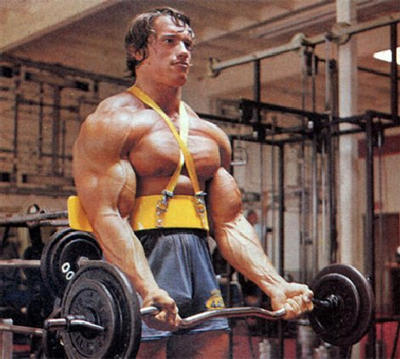 generating a pump, and how to create a pump - it's delightfully easy - it's hard to find any evidence behind the incredible claims about why this effect is said to be "essential" to achieving growth.
What is the Pump and How Get One?
Generally speaking the pump is the feeling one gets when pushing more blood into the muscle faster than it will flow out, so for a short time, until it does flow back out to a normal level, the muscle is all "pumped" up, and feels HUGE. This is also where a lot of folks get into nitric oxide products in an effort to extend the effects of the pump. Intriguingly, nitric oxide in studies has only been shown to preserver muscle not help it grow. But that's an aside.
Getting a pump is fun. It's something i've been playing with on my arms after a hard strength workout. I drop the weight to the 12RM weight and do a couple of fast sets (perfect form of course), and then, i'll go to a 20RM for one or two sets of different curls and may only do partials to really get the sweet spot. Bi's one way; tri's the other. What fun! And whip out that measuring tape. Goodness, isn't that remarkable! Strike the pose and take the picture, you bet.
Lack of Pump = Fatigue?
Now all the above does sound easy, but apparently there are times when the pump doesn't seem to be happening. Lonnie Lowery talks about this and suggests, beyond a few high rep 20 sets, making sure the potassium levels are good, and that you're warm not cold (easier vasodilation perhaps) is a good thing. Back off periods and basic carb availability are all good too. Carbs afterall help hold fluid. In fact Lowery has a whole diet here.
Interestingly, Lowery's not making any claims it seems about whether the pump actually helps muscle building or not; he's just saying it's a really nice motivating thing to have: to be able to get HUGE. What's more interesting is Lowery's correlation to lack of getting a pump as a sign of fatigue. Hence his mainly recovery and dietary advice to get that pump back. interesting.
So is this wonderful feeling contributing to muscle growth?
Muscle Hypertrophy 101: the types of muscle hypertrophy
So let's back up a bit. What is muscle growth? We know that there are usually two kinds discussed: sarcoplasmic - the tissue/fluids surrounding muscle fibers - and myofibral - the fibers of the muscles themselves getting bigger due to myofibral growth around the fibers.
It has been argued that power type training privileges myofibril hypertrophy and "hypertrophy" strength training privileges sarcoplasmic - what some folks see as fake hypertrophy because it is non-strength aiding growth of the sarcoplasm of the muscle. This assessment may be a bit cruel. It's actually very hard to get one kind of growth without the other occurring as well. All i'm saying is that different types of strength training may privilege one form over the other, but both will occur. And a good thing too. Myofibral growth demands some adaptation of the sarcomers to support them, too.
Ok, in either case, to the best of our knowledge (because there's a LOT we don't know about hypertrophy) what causes muscles to grow? Forcing them to respond to new demands. If there's no need to adapt do they adapt? well, no. And this is why if one does the same routine forever, the body doesn't change. Folks talk about plateaus. So, we usually use load or volume or a combination of both to create the conditions for adaptation.
Occlusion
Now interestingly, there is work on muscle growth (the strength kind) that has been shown to occur from something called occlusion training. This is where bloodflow is restricted around a limb, and far lighter weights are then used for reps. Intriguingly growth happens.
Ok, so now that we have some background on muscle growth, let's look at how The Pump has been described to help muscle growth
The Pump - per se.
Let's take a look at how the Pump is described to contribute to muscle growth first. An un-cited article on bodybuilding.com by "muscleTech" puts it this way:
Alas, no sources in the article to support these assertions.
Another theory of the pump expressed by Jeff Anderson is that the pump actually privileges slow twitch muscle fibers. That makes sense for two reasons: lots of low weight reps is moving into endurance world, which means oxidative capacity, aerobic energy rather than anaerobic capacity/ernergy. So Mr. Anderson says that by constantly pushing blood into these fibers, the fibers themseleves adapt to hold more blood. That means more capillaries in the fibers to help shunt the blood more effectively, and they're going to be rather densely packed as their numbers go up.
So you get the sense from this explanation that size noticed to hold more blood more of the time is going to make the muscle appear larger. Sarcoplasmic kind of growth?
Here's why i go more for Mr. Anderson's than MuscleTech's explanation. Our tissues are always adapting. If you squish more into them, they'll start to enlarge. So that's kinda funny - it's adding fluid (blood etc) into the muscle, but not increasing the number of myofibrils. So that doesn't sound like a strength gain; sounds more sarcoplasmic.
The Pump: can we get some science in here? Not easily.
The pump seems to work with two sides of something called hyperemia - active and reactive. The active one is caused by muscle contraction - do that a lot in exercise, eh? - which causes blood to congest in an area. Then there's reactive hyperemia - where blood that's supposed to get out is blocked - like there's a tourniquet causing yup, occlusion.
So, if there's occlusion, that means that blood is kinda stuck somewhere. That doesn't sound like blood is getting forced through to clear out "muscle toxins" or to induce the other popular concept of "muscle flushing" - sounds like it's getting stuck and stale.
If we look at "hyperemia" & "resistance training" in the science literature, we don't find stuff about muscle building. The kind of literature that's there is about the degree to which different kinds of training enhance the flow of blood or the dilation of the arteries. In other words, we generally apparently want to reduce reactive hyperemia.
Now while i've seen claims that moderate rep schemes are "are optimal to build muscle mass " because in part they "Enhances cellular hydration — greater muscle pump (called "reactive hyperemia") drives plasma and water to muscle which stimulates protein synthesis and inhibits proteolysis (protein breakdown)." i can't find any sources that explain that plasma and water driven to a muscle stimulates protein synthesis. We do know is that protein stimulates muscle synthesis. And we know that insulin stimulates protein synthesis and glucose stimulates protein synthesis. So maybe if there's all that stuff in plasma, yes we have protein synthesis stimulation. But that seems to happen whether we have high or low rep training. But again, is more more?
An Idea: the Pump Works Like Occlusion?
Mr. Anderson above proposes that the pump mainly effects slow twitch oxidative fibers because of capilarization (no strength; just mass). Dr. Lowery suggests that not being able to get a pump is a sign of fatigue - this i think is important. BUT if we look at occlusion training (which reactive hyperemia seems to be a type), then the pump should also be affecting both fast and slow twitch fibers' myofibral growth. Occlulusion, it seems, may indeed get fast twitch fibers involved more directly than without occlusion - that's a theory. Since we also see in low load occlusion training effects on strength: it goes up. SO is this kind of self-occlusion with self-selected low resistance weights to induce the effect having the same effect as a cuff? Could be - as per this review.
So, what about that pump?
Proposal 1: more is more: As far as i can tell, the suggestions are that it's supposed to help circulate good stuff in by vasodilateion, and then get the stale stuff out. Now for me - based on what i know - this seems the weakest case since we're not talking about steady blood flow in and out with the pump, but "reactive hyperemia" which means that blood is pumped in, and it can't get out again for a good half hour. There's no "flushing" if that's the case is there? Dave Barr talks about the "anabolic pump" - but again, i can't find this in the literature.
Proposal 2: bulking up with fluid. The other proposal that anderson suggests - and i'm not sure where he gets it from, but seems to make sense, is that pushing a lot of blood into the veins - especially of slow twitch fibers - is going to cause the fibers that hold the blood to adapt - get thicker, more and denser capillaries (the little gates that open for blood to flow in but not back out). SO that's just bulking up - what most folks talk about as sarcoplasmic type hypertrophy - but this seems even more particular as it's strictly related to blood volume taking up more room.
Proposal 3: occlusion causing real muscle fiber change - or not. What makes more sense to me is a combo of this adaptation of capillaries AND actual fiber change potentially caused by self-occlusion. BUT folks like Chad Waterbury, respected strength coach, are very skeptical of the pump and any correlation to muscle gain.
Maybe, Maybe Not, It depends
As said, there's a lot that remains unknown about the whys and hows of hypertrophy. The role of the pump seems to be just as really clearly ambiguous as to whether or not it aids hypertrophy or not.
I like the correlation Lowery seems to make implicitly between achieving the pump and fatigue. That seems useful.
For myself, right now, it's fun to play with a pump well after i've completed the hard work of the strength workouts i'm doing. Whether it's doing anything functional or not, i dunno, but since there seems *some* sense to it, i'm willing to give it a bit of a go - for now.
And so... The above is not meant as an exhaustive overview of all things to do with the pump - it's just what i could find by a couple day's digging. IF there are studies that you know of that support or study the pump with respect to muscle hypertrophy, please add a comment. Will be keen to hear.
I wonder too if a study that took the same kind of athletes and one did a regular routine and the other finished with pump sets and the other didn't if that would be conclusive or that one would just say - well they other group did a bit more volume. I suppose one could vary the loads or reps. But it would be interesting to see some kind of work.
Also, i do know that just because it hasn't been researched doesn't mean there's not an effect, but as per that first "explanation" of why the pump works - supposedly - for hypertrophy - if one is going to provide physiological rationales for an effect, please just point to the mechanisms that have been shown to result in these effects - it has to be sourced somewhere. And if not, well, the best we can say is that, in some cases, there seems to be a strong correlation between pumping and hypertrophy - either sarcoplasmic or myofibral - what that mechanism is - pretty much unknown at the moment.
Again - this is just the best i can do right now to make sense of this concept. If you have more information/sources, please share.
Thanks
Related Posts:
Citations:
Wernbom M, Augustsson J, & Raastad T (2008). Ischemic strength training: a low-load alternative to heavy resistance exercise? Scandinavian journal of medicine & science in sports, 18 (4), 401-16 PMID: 18466185
Loenneke, J., & Pujol, T. (2009). The Use of Occlusion Training to Produce Muscle Hypertrophy Strength and Conditioning Journal, 31 (3), 77-84 DOI: 10.1519/SSC.0b013e3181a5a352 Tweet Follow @begin2dig
Ahnold reportedly loved "the pump" but what is the "pump" really in terms of muscle building? While it's easy to explain both what happens in generating a pump, and how to create a pump - it's delightfully easy - it's hard to find any evidence behind the incredible claims about why this effect is said to be "essential" to achieving growth.What is the Pump and How Get One?
Generally speaking the pump is the feeling one gets when pushing more blood into the muscle faster than it will flow out, so for a short time, until it does flow back out to a normal level, the muscle is all "pumped" up, and feels HUGE. This is also where a lot of folks get into nitric oxide products in an effort to extend the effects of the pump. Intriguingly, nitric oxide in studies has only been shown to preserver muscle not help it grow. But that's an aside.
Getting a pump is fun. It's something i've been playing with on my arms after a hard strength workout. I drop the weight to the 12RM weight and do a couple of fast sets (perfect form of course), and then, i'll go to a 20RM for one or two sets of different curls and may only do partials to really get the sweet spot. Bi's one way; tri's the other. What fun! And whip out that measuring tape. Goodness, isn't that remarkable! Strike the pose and take the picture, you bet.
Lack of Pump = Fatigue?
Now all the above does sound easy, but apparently there are times when the pump doesn't seem to be happening. Lonnie Lowery talks about this and suggests, beyond a few high rep 20 sets, making sure the potassium levels are good, and that you're warm not cold (easier vasodilation perhaps) is a good thing. Back off periods and basic carb availability are all good too. Carbs afterall help hold fluid. In fact Lowery has a whole diet here.
Interestingly, Lowery's not making any claims it seems about whether the pump actually helps muscle building or not; he's just saying it's a really nice motivating thing to have: to be able to get HUGE. What's more interesting is Lowery's correlation to lack of getting a pump as a sign of fatigue. Hence his mainly recovery and dietary advice to get that pump back. interesting.
So is this wonderful feeling contributing to muscle growth?
Muscle Hypertrophy 101: the types of muscle hypertrophy
So let's back up a bit. What is muscle growth? We
know that there are usually two kinds discussed: sarcoplasmic - the tissue/fluids surrounding muscle fibers - and myofibral - the fibers of the muscles themselves getting bigger due to myofibral growth around the fibers.It has been argued that power type training privileges myofibril hypertrophy and "hypertrophy" strength training privileges sarcoplasmic - what some folks see as fake hypertrophy because it is non-strength aiding growth of the sarcoplasm of the muscle. This assessment may be a bit cruel. It's actually very hard to get one kind of growth without the other occurring as well. All i'm saying is that different types of strength training may privilege one form over the other, but both will occur. And a good thing too. Myofibral growth demands some adaptation of the sarcomers to support them, too.
Ok, in either case, to the best of our knowledge (because there's a LOT we don't know about hypertrophy) what causes muscles to grow? Forcing them to respond to new demands. If there's no need to adapt do they adapt? well, no.
And this is why if one does the same routine forever, the body doesn't change. Folks talk about plateaus. So, we usually use load or volume or a combination of both to create the conditions for adaptation.Occlusion
Now interestingly, there is work on muscle growth (the strength kind) that has been shown to occur from something called occlusion training. This is where bloodflow is restricted around a limb, and far lighter weights are then used for reps. Intriguingly growth happens.
Ok, so now that we have some background on muscle growth, let's look at how The Pump has been described to help muscle growth
The Pump - per se.
Let's take a look at how the Pump is described to contribute to muscle growth first. An un-cited article on bodybuilding.com by "muscleTech" puts it this way:
The release of nitric oxide facilitates the relaxation of the endothelial cells — smooth muscles that line the blood vessels — thereby expanding the lumen of the blood vessel (the middle space of a blood vessel where blood flows through). As the lumen expands, blood flow is enhanced, resulting in peak vasodilation. Blood plasma is the primary channel through which nutrients, amino acids, testosterone, growth hormone (GH) and insulin-like growth factor 1 (IGF-1) are delivered to your starving muscles. Therefore, by feeding your system more blood, you transport elevated amounts of the various musclebuilding catalysts directly to your hard-working muscle cells.Wow. There's a lot going on in there. What it really seems to say is that more is better. Open a Bigger Pipe to let More Stuff through. Push through more blood with more protein, growth factor, testosterone all pushed into to muscles. That must be good right? Really? And even more fresh blood to push out "muscle toxins" would be great too, right? Hmm.
Another example of how the pump powers growth is through the role of oxygen. Increasing the delivery of oxygen-rich red blood cells to your starving muscles accelerates the speed at which your system is able to cleanse itself of muscle toxins such as ammonia.
Achieving maximum vasodilation also allows your body to quickly deliver metabolized amino acids and nutrients that are derived from your pre- and post-workout nutrition, and shuttle them directly to your hypertrophying muscles — allowing for enhanced muscle recovery and growth
Alas, no sources in the article to support these assertions.
Another theory of the pump expressed by Jeff Anderson is that the pump actually privileges slow twitch muscle fibers. That makes sense for two reasons: lots of low weight reps is moving into endurance world, which means oxidative capacity, aerobic energy rather than anaerobic capacity/ernergy. So Mr. Anderson says that by constantly pushing blood into these fibers, the fibers themseleves adapt to hold more blood. That means more capillaries in the fibers to help shunt the blood more effectively, and they're going to be rather densely packed as their numbers go up.
So you get the sense from this explanation that size noticed to hold more blood more of the time is going to make the muscle appear larger. Sarcoplasmic kind of growth?
Here's why i go more for Mr. Anderson's than MuscleTech's explanation. Our tissues are always adapting. If you squish more into them, they'll start to enlarge. So that's kinda funny - it's adding fluid (blood etc) into the muscle, but not increasing the number of myofibrils. So that doesn't sound like a strength gain; sounds more sarcoplasmic.
The Pump: can we get some science in here? Not easily.
The pump seems to work with two sides of something called hyperemia - active and reactive. The active one is caused by muscle contraction - do that a lot in exercise, eh? - which causes blood to congest in an area. Then there's reactive hyperemia - where blood that's supposed to get out is blocked - like there's a tourniquet causing yup, occlusion.
So, if there's occlusion, that means that blood is kinda stuck somewhere. That doesn't sound like blood is getting forced through to clear out "muscle toxins" or to induce the other popular concept of "muscle flushing" - sounds like it's getting stuck and stale.
If we look at "hyperemia" & "resistance training" in the science literature, we don't find stuff about muscle building. The kind of literature that's there is about the degree to which different kinds of training enhance the flow of blood or the dilation of the arteries. In other words, we generally apparently want to reduce reactive hyperemia.
Now while i've seen claims that moderate rep schemes are "are optimal to build muscle mass " because in part they "Enhances cellular hydration — greater muscle pump (called "reactive hyperemia") drives plasma and water to muscle which stimulates protein synthesis and inhibits proteolysis (protein breakdown)." i can't find any sources that explain that plasma and water driven to a muscle stimulates protein synthesis. We do know is that protein stimulates muscle synthesis. And we know that insulin stimulates protein synthesis and glucose stimulates protein synthesis. So maybe if there's all that stuff in plasma, yes we have protein synthesis stimulation. But that seems to happen whether we have high or low rep training. But again, is more more?
An Idea: the Pump Works Like Occlusion?
Mr. Anderson above proposes that the pump mainly effects slow twitch oxidative fibers because of capilarization (no strength; just mass). Dr. Lowery suggests that not being able to get a pump is a sign of fatigue - this i think is important. BUT if we look at occlusion training (which reactive hyperemia seems to be a type), then the pump should also be affecting both fast and slow twitch fibers' myofibral growth. Occlulusion, it seems, may indeed get fast twitch fibers involved more directly than without occlusion - that's a theory. Since we also see in low load occlusion training effects on strength: it goes up. SO is this kind of self-occlusion with self-selected low resistance weights to induce the effect having the same effect as a cuff? Could be - as per this review.
So, what about that pump?
Proposal 1: more is more: As far as i can tell, the suggestions are that it's supposed to help circulate good stuff in by vasodilateion, and then get the stale stuff out. Now for me - based on what i know - this seems the weakest case since we're not talking about steady blood flow in and out with the pump, but "reactive hyperemia" which means that blood is pumped in, and it can't get out again for a good half hour. There's no "flushing" if that's the case is there? Dave Barr talks about the "anabolic pump" - but again, i can't find this in the literature.
Proposal 2: bulking up with fluid. The other proposal that anderson suggests - and i'm not sure where he gets it from, but seems to make sense, is that pushing a lot of blood into the veins - especially of slow twitch fibers - is going to cause the fibers that hold the blood to adapt - get thicker, more and denser capillaries (the little gates that open for blood to flow in but not back out). SO that's just bulking up - what most folks talk about as sarcoplasmic type hypertrophy - but this seems even more particular as it's strictly related to blood volume taking up more room.
Proposal 3: occlusion causing real muscle fiber change - or not. What makes more sense to me is a combo of this adaptation of capillaries AND actual fiber change potentially caused by self-occlusion. BUT folks like Chad Waterbury, respected strength coach, are very skeptical of the pump and any correlation to muscle gain.
No, look, lots of things give you a pump but don't make your muscles bigger. One of the best exercises I know for making your calves bigger is the jump squat, which doesn't cause a pump. But if you do a set of 50 calf raises, you'll get one hell of a pump, but it won't make your calves bigger.SO perhaps 50 calf raises aren't causing occlusion but then how could they cause a pump? I don't understand. Perhaps those calf raises do add muscle fiber but not mass? perhaps calves like abs are different? dunno. Interesting though.
Maybe, Maybe Not, It depends
As said, there's a lot that remains unknown about the whys and hows of hypertrophy. The role of the pump seems to be just as really clearly ambiguous as to whether or not it aids hypertrophy or not.
I like the correlation Lowery seems to make implicitly between achieving the pump and fatigue. That seems useful.
For myself, right now, it's fun to play with a pump well after i've completed the hard work of the strength workouts i'm doing. Whether it's doing anything functional or not, i dunno, but since there seems *some* sense to it, i'm willing to give it a bit of a go - for now.
And so... The above is not meant as an exhaustive overview of all things to do with the pump - it's just what i could find by a couple day's digging. IF there are studies that you know of that support or study the pump with respect to muscle hypertrophy, please add a comment. Will be keen to hear.
I wonder too if a study that took the same kind of athletes and one did a regular routine and the other finished with pump sets and the other didn't if that would be conclusive or that one would just say - well they other group did a bit more volume. I suppose one could vary the loads or reps. But it would be interesting to see some kind of work.
Also, i do know that just because it hasn't been researched doesn't mean there's not an effect, but as per that first "explanation" of why the pump works - supposedly - for hypertrophy - if one is going to provide physiological rationales for an effect, please just point to the mechanisms that have been shown to result in these effects - it has to be sourced somewhere. And if not, well, the best we can say is that, in some cases, there seems to be a strong correlation between pumping and hypertrophy - either sarcoplasmic or myofibral - what that mechanism is - pretty much unknown at the moment.
Again - this is just the best i can do right now to make sense of this concept. If you have more information/sources, please share.
Thanks
Related Posts:
- a gal deliberately trying to gain mass - eating for hypertrophy
- some recent work on occlusion training.
- general fitness practice b2d index
Citations:
Wernbom M, Augustsson J, & Raastad T (2008). Ischemic strength training: a low-load alternative to heavy resistance exercise? Scandinavian journal of medicine & science in sports, 18 (4), 401-16 PMID: 18466185
Loenneke, J., & Pujol, T. (2009). The Use of Occlusion Training to Produce Muscle Hypertrophy Strength and Conditioning Journal, 31 (3), 77-84 DOI: 10.1519/SSC.0b013e3181a5a352 Tweet Follow @begin2dig
Subscribe to:
Comments (Atom)

 COACHING with dr. m.c.