Wednesday, August 5, 2009
SunScreen Will Kill You - and other single factor melanomas about being in the sun
 very hot location to hear that sun screen causes cancer. Especially after hitting the SPF 70 pretty hard all week. Doesn't this go against everything we know to be true and holy about protecting us from the sad 20thC induced evils of the sun?
A doctor at the course argued that we are supposed to get those sun's rays, not be blocked from receiving them. Yes, but my grade 8 science fair project reminds me, that was before we destroyed the OZONE LAYER. Ok ok, ozone does mostly UV-B filtration, which is sun burn world, and it's UVA that causes apparently the real mess that can lead to melanoma in particular. Thanks for the non-help, ozone layer. And yes there are indeed reports of badder types of skin cancers happening with reduced ozone protection. So don't we need that magic chemical sealant to let us not fear the suns less mediated rays?
And what's behind this assertion of evil sun screen? Is it the sunscreen itself that is toxic, supposedly? i mean a lot of them do have titanium dioxide in them - that's metal. Are we making ourselves into carcinogenic tin men?
2004 - the year it all started to change in the Solar System
Ok, if we go back a few years, here's what's been said (as 2004/2005 seem to have been the highpoints in the public discourse around sun screen/no sun screen):
1) Complaint 1. We need the sun to generate vitamin D; if we put on sunscreen we're stopping this critical process from happening.
Hmm. Try living on the West Coast of canada. Or anywhere in the UK. You could walk around buck naked all winter and still be vitamin D deficient. In fact we are. Which is one of the main reasons we're told we need to supplement our vit d intake EXCEPT during those periods of the year where we can get 15 mins of full body solar exposure.
Ok, i was out for 20 mins for lunch in the one sunny day in seatle a month ago. No sunscreen, forgot the long sleeve shirt. My arms burned. I don't think burning is good for the immune system either, do you? No it's not.
So what do people of dark, damp northern climes do? Take Vitamin D. Good quality vitamin D (it pays to check). But it works. Here's one example of a study that says vit D and calcium supplementation reduces risk of cancer.
BUT does the assertion hold that sunscreen actually stops vitamin D photosynthesis? Er, no, not really. Sunscreens do not block all UV radiation (though i dunno, that 70SPF i tried recently seemed to keep any evidence of sun exposure well hidden, but anyway). Then the question is suppose you're out in the sun, well lathered up in SPF, is the radiation hitting the skin sufficient to trigger Vit D synthesis?
Well, a dermatologist in 2005 thinks all's wellciting a 1997 study in 2005 :
dermatologist Darrell S. Rigel, M.D., clinical professor, New York University Medical Center in New York City, did exactly that. Rigel’s message: sunscreens do NOT block all of the UV radiation hitting the skin, so that those wearing sunscreen are still able form vitamin D.Now, there's been a ton of research into Vitamin D since 1997, and much of it has shown that there is such a thing as a vit d deficiency and supplementation is necessary cuz we're not out in the sun (when there is any) enough to get what we need. Riggel, sticking with 97 research, thinks we get just enough from daily activities and "diet" without supplementing.
maybe he's right but he's increasingly alone in that conviction in the research community. It's interesting to me that it's dermatology associations that are making claims about getting enough vit d, when they're also the ones promoting sun screen. Anyone else? Yes there is. Well there's one. A piece from 2006, histrionically titled "darkness at noon" suggests that sunscreen does block vit d formation.
In fact with sunscreen applied only miniscule amounts of preDHere's what this means:3 are predicted to be made outdoors even with extensive exposure.
- typically high noon sun is the best for vit d production (also, they acknolwedge, the best time for sun burn risk).
- With SPF 15 on, according to these researchers, it would take 4-6 hours of that KIND of sun to get enough to get the right vit d levels. And, as they point out, that kind of sun just don't last that long - even if someone were out in it.
We observe that brief unprotected midday exposure is optimal for promoting healthy vitamin D status while simultaneously minimizing accumulation of sunlight related risk. We further find that SPF-15 sunscreen, regardless of exposure scenario, reduces preDSO 20 minutes of mid-day sun, assuming pretty much full body exposure (10mins front; 10 back, not kidding), is good for vit d generation. Well again, in the winter (and we might talk about seasonal effective disorder) this isn't usually possible. And in dark climates, this isn't usually possible. No wonder so much work has been done in Australia.3 effective UV to levels well below that considered to provide practical vitamin D benefit, dubbed "vitamin D winter." Wearing high SPF sunscreen, essentially turning off the lights on vitamin D, is like darkness at noon.
We'll come back to going au natural in the sun in a moment. But first, the second claim about sun screen.
2) Complaint 2: Sun screen has toxic chemicals. Artificial fragrance and other stuff that are stabilizers in some sun screens can get absorbed into the skin and play havoc with our immune system.
Well hmm again. Anything pretty much we put on our skin can be absorbed by our skin.
As for sunscreen yes back in 2004, sun screen stuff was shown to do what stuff on skin does: get absorbed - to some degree. But it also gets spit out in urine too. So is this harmful? Heh guess what, we don't KNOW.
Chemicals Good to AVOID
One chemical we do know to be problematic is oxybenzone. Avoid any sunscreen that has it. PABA was also found to be just bad, but it's illegal to have in anything, so just run screaming - really - if you see anything with that in it. There's a few others that *may* be problematic: Benzophenone (benzophenone-3), homosalate, and octy-methoxycinnamate (octinoxate); Parabens (butyl-, ethyl-, methyl-, and propyl-); Padimate-O and Parsol 1789 (2-ethylhexyl-4-dimethylaminobenzoic acid and avobenzone).
Aside: God knows what long term harm i have done to something by the amount of Muskol bug dope (active ingredient: DEET) i used for years working on summer digs along the the Red River. I know it melted the lettering off watch bands and other plastics. But after awhile, you know, i think it was sort of an aphrodisiac. costs and benefits.
Now some folks may not want to take the risk of whether this kinda stuff is damaging. Some folks may prefer to walk around outside in a bug hell covered in netting (and when tree planting in Ontario, that's exactly what you did: bug nets - but you also did bug dope because you just can't duct tape up everything. I'm not kidding. Black flies, i tell ya: all wings and teeth.)
As for sun screen effectiveness/safety, guess what an organization called The Environmental Working Group (EWG) makes of sun screen (2009)? The biggest problem is that most of them don't block the right UV rays: UVB has been the focus - and rightly so - but UVA is apparently the stuff that is an increasingly known concern.
There other finding: ironically, many products in sun screens break down in the sun! har! - no, not har. When some chemicals break down what they break down into is not good.
So, the EWG has a list of 95 sunscreens (out of 1642) it's methodology assessed as recommended - low hazard and effective. Check it out. The methodology behind the selection is pretty clear and solid. Here's a summary:
So what can we say from the above about sunscreen and cancer?
Our analyses show that products vary widely, both in their ability to protect from the sun's harmful UV radiation, and in the inherent safety of the ingredients themselves. FDA has set no mandatory standards for any of these factors, and manufacturers are free to make products that may not protect consumers from the sun and that may not be safe when slathered on the skin.What's behind our sunscreen investigation:Customized rating for each product includes:
- 1,642 sunscreens
Ingredients evaluated in these sunscreens:
- Sun hazard (effectiveness) ratings for UVA protection, UVB protection, and stability in sun
- Health hazard (safety) ratings for all ingredients
Data sources:
- 14 of 17 active ingredients approved in the U.S. (the ones found in products)
- 2 active ingredients approved in other countries (listed as "inactive" ingredients in U.S. sunscreen)
- 2,150 other ingredients (not sunscreen)
There is no direct link in any study that says generic sunscreen causes cancer. We do know that
- a) a lot of sunscreens still do not filter for UVA and that's not good cuz that can mean overexposure to these rays
- b) some sun screens have ingredients that either break down in the sun and definitely don't do their job
- c) some sun screens have chemicals in them that seem pretty clearly to do no good to the body
- d) new bit: implementation can be an issue: while nano-lotions (nano-zinc etc) may be great, because stuff seems NOT to be absorbed by them, nano-based sprays may not be so good - their may be absorption issues.
So what about going neked? Is a Tan a Good Thing? or Two Guys in a Boat
If you ever want to get a lot of press and be taken seriously, call yourself something important. Like the Council on Vitamin D. Or how about the Health Research Forum. A swishy logo that looks all medical helps too. Use the terms "we" and "us" a lot to make it look like there's more than 1 or 2 of you and have a "board of directors" - even if there's only two of you. or 1.
In 2004 a "report" was released from the Health Research Forum called Sunlight Robbery. Written by Oliver Gillie. Before we consider this, a quote from the HRF's about us page: " Health Research Forum will be run by an advisory board which at present consists of Oliver Gillie and Michael Crozier. HRF is presently recruiting more people to serve on the board. A constitution is in preparation."
The date on the page is still 2004. It's August 2009 as i write. So there's this two pony show putting out a report. Just by way of context. Let this be a lesson in marketing and press exposure. Because despite what seems like quite the cover, the report seems well done.
And what does this oft cited in the UK press of the day say? Well coolly, it re-presents in one convenient package a lot of research that had been done till that date about sun exposure relative to latitude, and why sun exposure is important for vitamin D generation, and why saying exposure of hands and face as sufficient is just wrong.
Now i have not read all the studies referenced in this report first hand, so i don't know if their use in the article is a completely fair and accurate representation of that work, but of the stuff i do know that's been cited, it seems that's pretty durn good.
It then goes into a HUGE section on why vitamin D is important in the prevention of everything, er, under the sun. Let's just say "ok" and move on. Let's get to the biggie of WHY sun screen in the first place: burns and SKIN CANCER.
 another sunny day in the UK
Risk of Skin Cancer and other Evils like Burns from non-mediated sun exposure
Well in the Sunlight Robbery report, the collection of resources seems to suggest that melanoma is pretty insiginficant relative to all types of skin cancer, and may explain why the uk's various policies on how to lather up in the sun mayn't be doing much to retard the progress of such cancers. Diet is also proposed as more of a factor in skin related issues like actinic keritosis (skin aging) than sun. Again i haven't looked at the primary studies on this, but i'd be willing to give that one the benefit of the doubt.
And so Tanning - in the Real Sun?
The lay perception that a good tan is a sign of good health has been severely criticised by those who promote sun avoidance. In fact, scientific evidence suggests that the lay perception is correct and the public has been ill-served by the sophistry involved in suggesting that a tan is unhealthy. The phrase “there is no such thing as a healthy tan” is no more than a clever slogan devised by propagandists to discourage people from seeking sun exposure. Controlled exposure to the sun is beneficial and a tan, which provides some protection against sunburn, will naturally be acquired in the course of such exposure. It is quite wrong to make people anxious about a tan when there is no sound basis for doing so.So let us leave the report then and see why tans may be a pretty good skin protection. For which i am grateful if that's the case, because while i wore a ton of deet on those happy summer digs, none of us then wore any sun screen. We were keen instead to see who could get the most dark - before slipping into a 1m square by 3m deep shaft for the end of the summer.
First, let us note that tanning beds are not a safe way to tan or generate vitamin D. No. bad. pooey. Good explanation of why over here/ An overview of the research and related badness can be viewed in this 2008 report.
Fake Tans?
that's another whole ball of wax, and i ain't going there. But remember what happened to Bond's assistant at the start of GoldFinger - the one painted in gold? If you're curious, go to pubmed.org and just put in "tanning" as a search term - most of the latest research is about tanning beds and the icky effects of a lot of fake tanning spray products.
Tanning: it's an inflammation
UV radiation damages DNA. Our bodies don't like this. Tanning is an inflammatory response to UV radiation. One of the multiple things stirred up in the UV inflammation response soup are pigment containing organalles. Now for folks with fair skin who say they "don't tan; they just burn" - this is entirely true. There are a couple of triggers in the skin of fair people that don't kick of the tan effect as part of the response to the sun. If you're interested in the detail of these factors, A Healthy Tan? in Clinical Implications of Basic Research, March 2007, is very cool. There's also a 2009 article that's looking at mathematical models of how tanning works through various layers of skin to find out more what's going on in the cells. Important.
An inflammatory response to a stimulant is a Good Thing. Muscle growth has a big chunk of inflammatory response in it, after all. Adaptation causing growth: inflammation. Good Thing. So tanning is doing the same thing, no? Natural sun screen IF you have those bits in your biology that trigger them. Fair skinned folks have a harder row to hoe for sure.
Does this mean that a really deep dark wrinkly leather tan is a good thing? Well, it's not particularly attractive. And folks i've seen with such tans don't look healthy in a whole lot of other ways, so is it far to say the problem is with the sun tan?? But overdoing anything seems usually to lead to a bad end, does it not? What if a deep tan actually inhibited vitamin d production? Combine that with an elderly, overweight, sedantary person (think cruise ships) and it's one more factor to poor health.
So why do we use sun screen again?
What if i go back to that grade 8 science project and the ozone layer and that the amount of UVA/UVB radiation filtering through our atmosphere is more intense than it used to be. And now i have to say, So? Is that really a big deal? yes! More intense rays mean faster burn times. But the big concern is less the local and controllable phenomena of burns to the risk of skin cancer in particular melanoma.
Gillies sunlight robbery report suggests we're all in a lather about low risk/low likelihood types of skin cancer from the sun - especially in the UK and similar latitudes. And while burns are bad (there's lots of uncontrovertible science that the second and third degree whole body burns from any source are Bad THings), well, there's work to show that even lighter burns can have effects like a correlation with reduced multiple sclerosis.
But a 2005 study, discussed here, seems to suggest that exactly what triggers the inflammation responses of tanning may be exactly what triggers melanoma mutations, too.
Risk management?
Of course, simply reducing exposure to the sun by getting out of it, or covering up when in sunny climes is also a way to limit harmful rays. You may say well, sun screen will keep more of those rays out.
Maybe it's like solar contraception. Sun screen is one type of device to keep all the sun rays out but it's not 100% fool proof either. It just reduces the risk. In the case of the sun, though, what we seem to be learning is that abstinence has negative side effects too.
It's a Balance? I'm going to rationalize my short term use of sun screen when in Arizona working out outside for a week as Just Fine. I did not want to burn, and i did not want to pass out from increased heat exhaustion trying to run around in full body clothing while doing sprints and i did not have time/opportunity for slow gradual exposure/adaptation.
I go back to the one time i have burned this summer was 20 mins. Just 20 fricking mins with no sun screen sitting outside in Seattle having lunch. Burn! And that was not fun. It was not severe but it was not great either. Ok, there i could grabbed a shirt rather than lather up. True.
That said, the burn did "turn into" a bit of a tan. And i'm not unpleased. But maybe i should be?
Begin2Dig sun screen/sun tan take away: death to single factor thinking.
Sun screen, it seems, does not cause cancer. It does mitigate the effects of vitamin D production, and in a country as sun poor as the UK or areas as sun starved as the Pacific North West, perhaps we're all insane to see the sun, wish to run out in it and scury back to the bathroom to put on the sun screen before rushing out.
As with anything to do with our embodied selves, there is no one stop shop answer. There are risks to being in the sun; there are risks to using sun screen; there are risks to tans; there are risks to not being in the sun. Dam dam dam.
It may just be that running around a bit without any sun screen is a Very Good Thing to do - unless you do just burn in the sun - then alas gradual exposure is super important.
We do *seem* to know that just laying out in the sun for long periods fully exposed may have some issues - but we also know that sun exposure may only be one factor in those issues. Diet and movement are pretty big ones too.
The sun is not evil - in proportion.
If anything is evil, it's got to be single factor thinking that finds an easy panacea in saying "no tan is a healthy tan; always use sunscreen" or "sunscreen is evil; expose yourself to the sun."
Things to consider:
- how long out in the sun?
- what time of day?
- how can exposure be graduated by clothing vs screening
- how ensure sufficient vit d intake no matter the approach?
So after all this, i may just cautiously step out into another cloud filled UK day tomorrow - right at Noon! in shorts and a T, and stay there for 20 mins. If it's not raining. True, it's taking a risk with those UVA and UVB rays, but it's a risk i feel more certain, if done cautiously, i'm willing to take. Tweet Follow @begin2dig

 PDF
PDF

Monday, August 3, 2009
Set Point Theory is Crap: We are Only What We Eat
 Set point theory is crap. I channeled Lyle McDonald for the title of this article. Why? Because McDonald has a reputation for cutting through the Poo to the real stuff in health and well-being stuff, and set point theory is the big poo, not the true doo and it's used to enable psuedo science and pain. Enough!
So i want to get to the real stuff here, but i fear i don't have the patience - this topic gals me so.
Suffice it to say that what's got my dander up is that there's an NHS eating disorder clinic in the UK that is promoting coming to grips with one's body image by promulgating Set Point THEORY.
This explains why sometimes a little bit of research goes a long, wrong, stupid way. Some people don't like set point theory because it's WRONG at least in terms of how it's used.The programme devised in schools by the Eating Disorder Unit would include education about set points.
Set point theory is derived from the observation that the body regulates its weight much as it regulates its own heat.
Experiments involving the starvation and feeding of rats have shown there is a biological resistance to permanent weight change. The body will compensate for being starved to retain its natural weight.
That explains why dieting can make people fatter as it interferes with the metabolic rate. It also explains why dieters tend to put back on weight they have lost. It is to do with the physiology of the body rather than lack of will power.
A person's set point is the weight he or she is on eating three meals a day, having three snacks a day and exercising moderately....
"Some people don't like set point theory because it means accepting being heavier than they want to be," says Pam.
First, set point theory didn't start, as far as i can tell, in metabolism studies or bioenergetics, but in an area of psychology (and socio-economics) called Subjective Well Being. It's about 30 years old, looks at why there seems to be a personal emotional set point, not a biological one for adipose tissue. What i can't find is who first tried to apply this psychological approach to biology and fat cells in particular. And even in psychology, the approach is being called into question as the data to support it just doesn't seem to be showing what set pointests have said it shows.
So what's wrong with set point theory?
SPT suggests that if you're fat you're gonna stay fat because the body will do what it can to preserve its prefered state. So what? we become fat because our fat cells want us to keep them enlarged to a certain size and number a certain number? we are fat cell slaves?
To quote an article from 2003 oby/gyn news,
The set point theory holds that obesity entails a metabolic defect that functions as a homeostatic mechanism. This defect is supposed to result in a slowdown of resting metabolic rate in an overweight or obese individual who has lost weight. The resultant reduction in energy expenditure is said to be responsible for the often-observed scenario in which the individual regains the weight that was lost and thereby returns to his or her set point.Set point theory can be used as an excuse, obviously: i'm fat because it's my set point. But, the above article continues:
scientific support for the set point theory is limited to old data derived from outdated methods of physiologic measurement.Note, this is a 2003 summary. The Birmingham NHS Eating Disorder Center article is from Feb, 2008. Please, wake up and smell the millennium: the ideas are burning.
Yes indeed, there are loads of signals that say when we're trying to lose weight "don't do that! protect the fuel!" - especially if we're heading towards starvation levels (50% of daily caloric needs for maintenance or of course less). But a lot of these homeostatic responses (must eat! starving. grr. find cave!) are trainable.
In other words they can be modified by learning new habits that help recognize and make new eating behaviours safe, and chemically ok. There are values to those refeeds!
As Yoni Freedhoof of Ottawa's Bariatric Medical Institute (weight loss center) puts it discussing set point:
I say this to new patients daily,Now i'm not getting into some deeper level of neuro-bio-mechanistic whatever that says some day we may find the weight gene that wants us not to drop below a certain level (though i had to read Kafka's the Hunger Artist too many times in literary studies to believe that, fiction or not) or that wants us to be a particular weight, but so what?"The more weight you'd like to permanently lose, the more of your lifestyle you'll need to permanently change"The problem is, most weight loss efforts don't really do much to address lifestyle. Weight loss usually involves a food regime - either overt overall restriction and hunger or the magic food approach of this food's good and that food's bad. Those approaches are of course non-sustainable becase they invoke the suffering of hunger or of blind, thoughtless restriction. Any weight lost through suffering will be gained back when the suffering stops and the person reverts back to their prior life that might have led them to have weight to lose, but was easy to live...
...For me lifestyle dictates set point
Right now, the biggest impact on our "set points" (which amazingly oh my have gone up over the past decades right across the west, and right into the east, and does that have anything to do with more crap food availability or have we just started to evolve into blimpoids?) is our behaviours around all too accessible food.
Consider the simple FACT (yes that's italics for emphasis) of how portion sizes have changed since the 90's (that's heading on 20 years ago. afraid?)
In a review of two research studies looking at portions Janet Frankson Lorin in 2006 showed one study that from a study in 03 at Rutgers,
But it's not just about what we put on our plates; it's the plates themselves, apparentlyIn a comparison of breakfast servings, the students in 2003 took 20% more cornflakes than students took in 1984, Schwartz said. Ditto for milk.
The glass of orange juice grew by more than 40% compared with 20 years ago.
That translates into 50 additional calories, or a weight gain of five pounds over the course of a year, if consumed on a daily basis.
Dinner and lunch servings grew, too - 50% more fruit salad wound up on the plates of the Rutgers students.
And of course there's the whole "super size me" culture."Plate size, bowl size, cup size are very deceptive," she said. "They can't estimate the amount of food in a dish and it makes it even more difficult when the dish is deeper or bigger."
A 1994 informal survey found that the standard plate size in the restaurant industry grew in the early 1990s, from 10 inches to 12.
To counter act these super sizings, there are some great alas less well know sites that try to help put portions in perspective. Like the Picture Perfect Portion Slide show.

Or the proportion distortion web site, where one looks at say a cheese burger from 20 years ago, sees its calories next to a Today Cheese Burger and has to guess its calories. THEN you get to guess how long it would take to burn off the caloric difference (the answer to this one is 1.5 hrs of weight lifting). There's even been research into how well the above approaches have helped people get a handle on better portion estimation. Result: in their current form, they sensitize us to food size differences, but don't yet help with appropriate estimation of sizes/calories alone.
The main point though is gosh, do ya think that if portions have increased by 40-50% over the past two decades, that that might also be why our supposed biologically set, set point has gone up, too? and hence, gone up in smoke? Just a question.
We need better habits around abundance. This is what i like about precision nutrition - it's habit based (review)rather than calorie based. It includes ideas on food prep and meal planning. There are other books *around* eating habits now that don't suggest what to eat but how to think about eating. I'll come back to those. Suffice it to say, set point is more set in our ways. And that's really really understandable. It's hard to go against wired to hoard store and flee. But we can. And it's what Lean People do.
Maybe part of it is to get that there IS more, there will be more, we won't starve and it's natural to feel hungry - more natural to feel hungry than not actually - and we won't break if we don't eat. Move. Easier said than done, i know. That's why i've proposed "just change one thing" - that will get us to the eating less we need to burn off excess fat.
In that respect, a set point is our behaviour points. That's it: we get back to an old weight cuz we go back to familiar habits which make us feel safe - even if super stressed. Familiarity is a toughie to break (hence my interest in approaches like the sedona method to deal with the emotional stuff, and z-health to get us moving. Movement helps produce change - both approaches offer skills to get going and optimize those neuroplastic pathways of habit and movement)
Cuz at the end of the day, when it comes to weight loss, it's set point shmet point, thermal dynamics conservation of energy law (emphasis on Law not Theory) still rules in nutrion.
The tough stuff is getting to the behaviours that will let us go against well practiced (set?) habits and let us get to that desired caloric deficit for body comp change for health and well-being.
Sunday, August 2, 2009
Sedona Method Review 5 Months On: What if what you're doing right now is exactly the right thing to do?
The following is a detailed review/overview of the Sedona Method. It's an evaluation, too, five months on from first exploring it . So what is the Sedona Method about? The sedona method, as the program states, is an easy, powerful and repeatable method for enhancing quality of life. Its main premise seems to be that we hang onto a lot of crap that makes us miserable - mainly emotions. If we learn how to let go of the crap we generate, we can see the actual situation more clearly, effectively and effortlessly, leaving us free to make choices, plans or what it calls Right Actions. The effect of this new perspective is to be more relaxed, happy, and fluid in our daily lives. That promise is what's on the tin, and it is definitely what the Sedona Method (SM) delivers.
And just to be explicit about what's on the tin, quoting from the manual, practice of the SM enables:
- Greater ease, effeciveness and joy in daily activities
- An increase in positive feelings
- A decrease in negative feelings
- More love towards one's self and other
- Positive changes in behaviour and or attitude
- More open and effective communications
- Increased problem-solving ability
- more laughter
- greater openneness and flexibility
- Clearer reason and more natural intuitive knowing
- Being more relaxed and confident in action and at rest
- Accomplishments and completions
- New beginnings
- greater ease in aquiring new abilities or skills.
 The thing is, that since going through just a month or so of real practice with this stuff, going to meetings at work that would previously have had me in a state enabled me instead to go in with well what? an easiness about expectations and outcomes that i'd not experienced before. And it was good. Very good. The results of that shift have been profound. And yes profound on a number of levels, including income and opportunity.
That more laughter, openness and flexibility stuff that has happened without thinking about it - it's just a side effect - has turned out to be HUGE - at least for me. I had no idea how heavy normal stuff had been on me until i started putting it down - or to use the SM terminology - letting go of it.
The other important thing here is that it didn't take any time to have an effect. This stuff can work instantly.
For instance, i was able to apply lessons from the Effortless Relationships programs to work and home relationship situations as soon as i'd gone through the related exercises on the disks. The speed at which these transformations occurred had those nearest to me asking what drugs i was on - especially regarding stuff they knew previously would have had me utterly in a tizzy and that was now well, just whatever it was. I wasn't taking it on.
The best way i have to describe the effect is that the Sedonam Method offers a perspective shift.
The perspective shift is from steamed, grimed up windows in a boiler room of stress and concern to the super clear intense perception of colour and form one gets when jumping out of an airplane (trust me). As soon as the shoot opens, time slows and everything takes on a sharper brighter focus and it's kind of exhilerating.

The key to this paradigm shift is the fundamental principle of SM: letting go. SM doesn't say, however, let go of goals for success, wealth, whatever and live like a monk - unless you want to do that. It really is about what happens to these desires if they're not cluttered and decorated with all sorts of emotions like stress and fear and longing and anger and lust? They may still be there, but perhaps they will be shaped differently and our approach to them may be different.
For example, what if we come to a desire with an abundance mentality rather than a scarcity mentality? To me anyway, that single shift from fear that this is the only opportunity for something to a sense that in a practically infinite universe, there is an abundance of opportunity, tends to take the urgency level down as well as the killer instinct stuff down.
Part of the Sedona Method is to learn how to move towards an abundance mentality in a way that's safe. That alone can be a big shift but really, making it really and truly does let way more good stuff in.
And the folks who designed this program understand that exploring, little own making, these kinds of paradigm shifts can be intense. Hence the programs are designed to support the process of making those shifts. It's in respect of this process that what's offered - what you purchase - is the real deal: the tools a person needs to assess the material and move through the steps progressively.
The rest of this review is to overview what's in the pacakge and how what's in the package can work. The cool thing for me is that i know enough people who have purchased these courses based on our discussions about SM that i've seen, it seems, everyone approaches the material and working throug it a little differently - and it's all good. So here we go.
The Stuff in the Tin
Just a note - i get nothing - no affiliate ties - from any of your link clicks - this is just an overview to help justify what to me is a big cost.
The package includes 20CDs and a large binder with the 200 page manual.
 The CD's make up about 21 hours of material over four courses: (1) the Sedona Method (2) Effortless Wealth and Success (3) Effortless Relationships and (4) Effortless Health and Well-Being.
Some folks have commented to me wow that's a lot of material - i don't think i can do that. My reply is generally, think of any good courses you've been on. The RKC certification weekend for instance is 21hours of instruction and drills for practice. The Franklin Covey leadership courses, likewise 3-4 days of learning and practicum. The approach here is exactly the same. So let's look at that.
The approach
Audio Program. These disks are in large part taken from recordings of real courses that are taught in, appropriately enough, Sedona Arizona. The format of the programs is that the presentor, Hale Dwoskin, introduces a concept, takes questions from participants, responds, and then offers a follow along drill to operationalize the concept being explored. These drills may be repeated a few times, which is great because it means that a concept gets PRACTICED with the course leader.
Manual. The manual supports each CD, re-viewing and representing the concepts explored on each disk, and, where appropriate, providing graphics to illustrate a concept. Likewise, notes spaces are provided too, as this is very much a course, and sometimes participants will be asked "So write down in your notebook some of your health related goals" or "write down the words that occur to you when..." and it DOES make a difference when one writes something down rather than not.
If like some of us, the goal is to keep the manual pristine, it's easy to slot in some blank pages.
Learning Styles
Personally, i didn't look at the manual when i got the course. The files were rapidly uploaded to an ipod, and i went through all the concepts on all the disks, entirely skipping all the exercises. I didn't want to do them; i wanted to get where this course was going. In reality it wasn't till i was struck down with the worst cold of my life and couldn't move - was supposed to be at a conference in fact - that i put the headphones on and listened again this time doing each of the exercises. Life changing experience. In a better state of mind when i got home, i then went through the material again, actually hitting replay quite a bit on some of the tracks that were of most interest to my process at that time.
Me, i do all my listening mainly at two times of the day: at night, before i go to sleep, and then in the am when i'm rowing or biking (stationary, both) The morning slots are generally to repeat something i've listened to before as i get pretty caught up in the activity, and can miss stuff.
In contrast, other people i know wouldn't listen to the CD's until they've read the manual cover to cover. Others listen to a CD as they're driving, and connect with the manual when they get home.
One recommendation: as each program builds on the previous one, going through the material linearly seems to be a good idea.
The Courses
The Sedona Method. SM is the first course presented. This gives an overview of the history to the method - interesting stuff - and then gets into what it actually is about. Here's where the SM basics are laid out and practiced.
This initial program presents the SM approach to Letting Go in particular in relation to our connexion first with problems and then the emotional baggage that makes problems so sticky. It moves through a hierarchy of emotions that hold us back rather than lifting us up - emotions like apathy, grief, fear, lust, anger, pride - and believe it or not, courageousness, acceptance and peace. That last one was a particular surprise: what, there's more after inner peace? there's a stickiness problem with peace? The reasons why there are a few issues with peace attachment are both challenging and compelling.
Resistance. Once we have these emotions tidied up, the prorgam looks at issues around resistance to letting go, featuring on one of my favorite intriguing words: want.
Want. The full definition of Want includes Lack. A want is a lack. So the SM spends time looking at approaches around "allowing oneself" something rather than "wanting something." Those wants include both wanting to have and wanting to figure stuff out. Dwoskin says around problems repeatedly "the only reason we want to figure out a problem is if we're planning to have it again." Such a statement can be quite challenging, but the challenge here is to say, what if there a way to let go of the emotions like want around something and see what happens? IF you don't like the result, you can always go back to where you were. But the constant framing of SM is "allow yourself to...just in this moment...as best as you can"
There is nothing scary here or threatening: allow yourself to let go of feeling afraid, just in THIS moment. Could you do this? would you let yourself do this? when? how about now, and just for now?
That small window of opportunity to safely explore imaginatively how something might be, if it didn't have to be loaded with fear, grief, loss, lust makes for a pretty incredible moment - that participants can decide to continue or abandon whenever they/we wish.
Indeed, a lot of the last part of this course is around issues of wanting relative to survival and security and fears of being alone or its inverse, and even of letting go of wanting to get away from all the crap. Amazing.
Skills Summary. So in this first course a person gains the skills to get a handle on what emotions come up around *stuff* that triggers us, makes us *feel* something. These feelings - becoming aware of them - are signals to see if there's an opportunity to explore letting go, or if there's resistance to letting go, and intriguingly NOT looking at why we don't want to let go, but just releasing the stuff to see what's there.
From here the program heads to the second Course.
Effortless Wealth and Success.
 A stat i heard once and can't recall where is that most businesses fail because they're not prepared for success. This seems kind of applicable in an inverse way to the Effortless Wealth and success course. Another way to frame this program is perhaps as the Goals Course, and it's certainly the one that resonated with me the most when i wrote a preliminary SM review a few months ago - hence the "getting rid of crap" around goals.
The key thing - at least for me - in the Effortless Wealth and Success course is the concept of what happens when we shift from coming from scarcity to coming from abundance, and even further from Scarcity to Enough.
The program recognizes that there is real fear and anxiety around our wealth and success stuff. We need, in maslov's terms, food and shelter. Most of us once we have that, start wanting more stuff and we assess ourselves according to those stuff-y achievements. So there are a lot of excercises around what it means to move through the real fear of the scarcity model into the Abundance and Enough models.
Lest i give the wrong impression, the SM is very practical. It has in this section alone, powerful drills on assessing advantages and disadvantages of a particular goal we're going for, and of letting go of wanting to be right.
As noted in my preliminary review of the SM, the approach also kicks the can of "positive visualization" as rather more escapist than practical and talks about Goal Action Steps, so those up on their SMART steps for goals needn't worry. The main thing is to make sure the goal one is going after is one's own.
There's a lot of applications of this course not just in money wealth generation but other models of effort. Awhile ago i was working on my pistols and really getting into grr focus, super challenging, grr. and then i thought wait, effortless - what if i approached this from an abundance perspective: there are many pistols to be had. Well, i pulled off considerably more than i had before. Like a lot
Meanwhile, a rower i'd suggested might find the SM helpful with some stressors in her life said she was all keyed up about a race, hadn't been sleeping. She finally got to a place doing the method excercises of what's called becomeing "hootlees" - where you get to a place with a goal that it doesn't matter if you achieve it or not - you're still going for it, but it doesn't matter the outcome. And (a) she fell asleep immediately and won her race the next day.
One can say she won because she got some rest and was relaxed. Yes absolutely. But that's sort of the point: she found a way to get to that very healthy positive place that LET her optimize recovery and LET her body do its practice - effortlessly, beautifully.
Effortless Relationships
Oh my, if one section in this course has helped me personally the most quickly it's been this one. I dunno about you, but i have been filled with situation where i have felt if only i could get people to see my side of things the world would be better. Or where i have felt that one person just drops poison into part of my world. The result is constant low-grade persistent frustration at not being able to control the situation, the people or the outcomes. Indeed, one of the repeated questions in the SM is is that whatever is wanting approval, control, separation or oneness?
And before trying to get away from whatever one is feeling, can we welcome it? could we let go of wanting to change it?
Indeed, that's a biggie: to let go of wanting to control someone (or being controlled by someone) and loving them as they are.
Again, the exercises in this section are really powerful. I can say that in practicing them - some times repeatedly. a lot. to get to that let go of place with thinking about various people - while i didn't go hug them the next time i saw them (this is England), i did feel a lot more relaxed, more able to listen to them, less invested in outcomes (i have other options; abundance mentality) and things have been easier.
These skills are rapidly transferable. The cool thing in these skills is that practiced once for one relationship, they are immeidiately applicable to another, and the more frequently practiced, the more rapid the transition from GRRR to oh. ok. done with that. smile. listening. It's quite stunning.
Perhaps one of the best examples i have of this is that a student of mine came by to discuss work and had said words to the effect that he'd anticipated it was going to be a negative experience - our last meeting had been a bit fraught - and instead it was really positive and he was glad he'd come over. I thought, ya, well, that's great. My perspective is certainly different and isn't it cool that that's helpful for someone i'm supposed to be coaching towards a goal? Right on.
Effortless Health and Well being
In a way i personally have found this to be the most challenging of the courses. While its about dealing with health - and when i first listend thoroughly to this section i was as sick as a dog - it's also about what all the SM is about - welcoming in wherever we are now before letting go to get higher up and further in.
This welcoming can be challenging, perhaps especially for those who make a part of their life focus around physical well being. Can we accept our bodies exactly as they are now? Is there guilt or shame up around anything related to our physical beings? how do we deal with that?
 And what about dis-ease? The SM does not promise to heal one's disease - though i have heard of colleagues who have killed colds and other ailments practicing these exercises. What it does help with is to let go of the stuff up around disease, including pain.
Again this latter one may seem hard to believe, but in looking at the neurophysiology of pain (and the book Explain Pain is a great overview), we know that pain is a signal, and that context has a great deal to do with how that signal is amped up or down. And that that response can have a profound effect on well-being.
I do not have a great deal of direct experience applying these exercises to health issues like an illness or a disease. I would be keen to hear from folks who have. Where i have had benefit is around fitness issues related to previous impatience around what i've perceived as a lack of progress in a timely and optimal way. The action steps for well-being here, combined with the lessons from the Success/Goals course have been very helpful in letting go of the crap sufficiently to be able to assess my practice, get additional information where necessary and to tune.
Wrap up
The final disk of the SM is a wrap up and a look forward. Folks are encouraged to practice this stuff and where there are opportunities, bring it into their organizations.
For me, this has meant sharing this approach with the students and athletes with whom i work, and with my colleagues and especially with folks i meet in places like this blog.
Practice: All the Time in the World
I've had a few folks ask me "so are you still doing that method?" The answer is yes. Indeed, as said, i'm a fan of the approach, in particular the exercises that are so related to particular circumstances. As folks who have ordered the SM and followed up with me will atest, if they have questions like "is there something i can listen to that might help with X" - a reply with "yes CD A Track B" comes back pretty quickly - normally cuz i've struggled with these things myself. Certain parts of the ipod's drive must be ground in by now.
A suggestion is that it really helps to make the course a priority for a weekend. Plan it as a retreat. I was luck: i got struck down by germs and could do nothing else. If i hadn't i'm not sure i would have had the results i did as quickly as i did in finding a path into this stuff. After that initial three day burst to go through everything, i spend the next couple months repeating areas at night or, as said, while doing intervals (or while on trains to meetings).
Indeed, the blend of instruction, discussion and practicum is very good: it makes picking what's best for the moment very straight forward and practical/practicable.
Most earth shattering take away:
-Hale Dwoskin, Living Truth - the Sedona method
For me that one question has been pretty revolutionary and it came after i'd gone through the sedonam method disks what was likely a couple of times. I was still having some stuff up around judgements of myself not seeming to get certain things done that i "should" be doing (should quickly becomes a flag to investigate further).
If we allow ourselves to consider the possibility that what we are doing right now is exactly right, i have found anyway, that a whole lot more crap falls away, enabling even more possibilities and less stress.
Now we know from so much related work in health and phsiology that a steady diet of stress is a Bad Thing. It literally wears us away with oxidative stress, ie rust. Being stressed effects our sleep our diet how are bodies process sugar all sorts of stuff. So if there are approaches that help us let go of stress - even the imaginary stress of "should" then the release that occurs from this alone for our health is substantial.
Personally, i feel better - i feel that
- Greater ease, effeciveness and joy in daily activities
- An increase in positive feelings
- A decrease in negative feelings
- More love towards one's self and other
- Positive changes in behaviour and or attitude
- More open and effective communications
- Increased problem-solving ability
- more laughter
- greater openneness and flexibility
- Clearer reason and more natural intuitive knowing
- Being more relaxed and confident in action and at rest
- Accomplishments and completions
- New beginnings
- greater ease in aquiring new abilities or skills.
One more note on practice - it is a practice. Like anything else with our brains, i've found the SM is a kind of use it or lose it. While i'd become so familiar with the CD's i didn't feel i could listen to them again, after several weeks' pause, I've recently gone back to refreshing the concepts right from scratch, and it's been very good to do so. What triggered the need is feeling myself getting caught up in some shoulding and not quite feeling the positive feelings i had. So i want to perk that up a bit again. And it's working. It's good to go over the drills as a refressher - ah yes - this is the way of letting go here.
Bonus Bliss
Yes, i can honestly say that with some of the final exercises, along with another SM product called the Bliss Mini Retreat - i have felt that bliss experience that we hear about from letting go and getting to that higher place where everything is connected. It happened while waiting for a flight and listening to the follow along "allow yourself to..." guidance. It then happened listening again while getting a ride into a conference venue.
It's pretty cool. It's pretty joyful - and something to let go of as well, but in a good way. It's nice to know that without having to leave the world and study for a lifetime, one can with a bit of practice on these courses, hit the ipod and literally bliss out. It's quite the recharge.
Value for Money
SO, all in all, the Sedona Method is great value for money. Also the guarantee is 100% refund within 6 months if you want to send it back.
But that's just price. It's equivalent to a three day course in materials, but an n'th of the cost. It's structure is that of the best of breed three day course, and while they cannot say due to legalize that practicing the SM results in health benefits, i can say that in my own experience that its practical, pragmatic approach to looking at one's crap in a way to let go of it such that one can become a more functional, concurrently de-stressed, more joyful person, means that one has improved well-being.
Even for my grad students - students always being poor - this is excellent value for money - why? Stress and emotional turmoil is the lot of too many students trying to complete their degrees - especially advanced degrees. Anything that can legally help a person see more clearly, focus, get work done, is a good thing. Without this foundation, all the time management strategies in the world won't work: they have no stable surface on which to work.
Likewise for athletes: stress at the right moment has been said to be useful to achieve a result. In watching the best of the best athletes however, the ones who *seem* to be relaxed and open seem to perform with excellence. I'm thinking of for instance Usain Bolt's 100m sprint last year at the olympics. Or Roger Federer's and even Andy Roddick's open swings on the court of the Wimbleton final.

The SM seems to offer a variety of mental strategies to cut through the dross and get to the heart of what matters, and let that material sing. Healthy, wealthy, well.
In my experience, these are all good things, and the SM has proven a great accelerator to experience them.
Tweet Follow @begin2dig
Saturday, August 1, 2009
6 minutes of Fitness: Part II - Plain Language Take Aways - esp. for kb'ers
 over a 2 week or over a 6 week period give the same benfefits as someone doing steady state cardio for hourly efforts a week.
I've been asked for a plain language version of what to make of the reseasrch. Here goes, 6 take aways, with a focus on applicability as i understand it, especially to kettlebell practice.
First: time and load
just a few (low volume)
super intense blasts of all out effort (30s)
followed by good recovery intervals of 4.5mins
a few times (3) a week
leads to the kinds of strength adaptations seen with endurance training.
These adaptations include improving the cell's capacity to take in oxygen and that means improved ability to use fat as fuel.
This result is important because the better the body can make use of fat, its most abundant and energy rich fuel source, the better off we are globally in terms of performance.
So short, few, all out blasts means super low volume for incredible pay off. that's amazing.
second: it's hard work - really really
the way to achieve these all out effort intervals (sprints) is non-trivial.
The authors use the well established Wingate test protocol where you're looking at about .75kg / kg of body weight put onto a bike, and told to go all out. So you are working really hard against resistance.
Will going all out for 30s with a light kettlebell achieve this kind of intensity? No.
 This workout is heavier, more intense than KJ's vo2max protocol.
Please note: this does not mean that vo2max VWC is a sissy protocol. it means that they are different.
In fact if you get Viking Warrior Conditioning (which i highly recommend) there IS a similar type of protocol that one works up to that uses heavier bells with longer recovery than vo2max. You work up to this protocol. It will be interesting to look at how it *might* be comparable to the wingate efforts.
third: recovery
The critical piece here is that a TON happens during the recovery interval of the wingate protocol, so if you give this a go on say a stationary bike, be sure to give yourself the critical interval period.
Here's an article on recovery and its role in different kinds of strength: the type of strength is related to recovery - note that in this case when getting to super high intensity, we're using power lifting type recovery for endurance like effect in an nth of the time. wild.
Again, if you read VWC (did i say i recommend it?), you'll see Kenneth talking about similar things: the recovery is where the good stuff happens, so be sure to take it as prescribed.
fourth: gear
This came up in the previous article. Folks in these studies (including the infamous Tabata - see review by lyle macdonald that takes that apart -- finally) is that these efforts are done on bikes - and for good reason.
An obvious parallel for any kb workout is working hard for brief periods with good recovery breaks is a GOOD idea - it's not a sissy thing as long as you're working hard and with excellent form. These ideas are not new; they're in all Pavel's books.
The main difference between that idea and these particular intervals is that these intervals are all out, so you don't have a lot in the tank after doing them.
Note that the participants in the study were not officially classed jocks but they were in decent shape, so asking a sedentary person to leap into these not smart.
This is also, especially, why using a bike is better than a kettlbell may be worth considering because form can't degrade in the same way as it is likely wont to do if you're swinging a heavy kettlebell at a pace to take you to voluntary exhaustion. that's just kinda sensible, no?
fifth: this is research
there's lots we don't know yet in terms of evaluating this kind of protocol for general fitness and bodycomp goals.
sixth: what's middle ground? real world application?
If the studies are that - research studies - is there something we can put to work now?
 In the RKC kettlebell universe, some well-experienced trainers have said they've had great results with people working 10mins a day with a kb. Tracy Reifkind is the poster child for the benefits of good nutrition and 15 mins a day with a kb, so there is something very special about the combination of the intensity of the workouts and the dynamic power generated from them.
Now these efforts are likely NOT all out gut busters for 30sec on; 4.5 mins off, repeat. When you read tracy's blog, and watch her vids, she's working pretty constantly, but she's able to talk while she's video'ing most of the time. A sign that someone is going into anaerobic overdrive which a sprint level interval requires is that you don't have much oxygen available to chit chat.
Again this ability to chat does NOT mean your workout sux. Far from it: a regular test when running x-country and NOT doing tempo runs was can you carry on a conversation? if you can't you're sucking wind and need to back off.
BUT (to ask this question again) If you just workout for 30secs with a kb, and then rest for 4.5 mins, will you get the same effects if you stick with those intervals?
No.
That doesn't mean you won't get benefits. To move is to live.
What it does mean is that it seems to get that mitochondria growth - the stuff in the cells that improves o2 - at that rate in that kinda time period (please note all those variables: at that rate in that time period) we have to work at that intensity to trigger some genetic expressions that trigger that growth. That DNA signal doesn't get turned on it seems without that intensity.
What does that mean practically?
Kenneth's vo2max program at lower intensities than this DOES get o2 benefits. PLUS it gets muscular strength happening too, which this protocol does not test.
That was my question at the end of Part I of this article. The results are great for o2 capacity but what about the other stuff we want? like muscular strength? body comp? well there's some of that for sure, but it wasn't explicitly tested, and i'd bet you might not get as much of either as snatching a kb for 40-80 sets a la VWC
SO there are trade offs. Meanwhile - if you want to use a kb to jazz your body and enhance strength and vo2max, we know KJ's VWC can be done safely to get there. It may take a few minutes more, but it works.
Final Take aways: application to kb's
- A super intense protocol like this is best done on a stationary bike for reasons not only of safety but of appropriate load to elicit effect. So many people in the Tabata craze miss that we're not just talking timed intervals but of particular intensities during those intervals and that it's near impossible to generate all those loads unless you're on something like a bike (see Lyle McDonalds recent take down of Tabata misunderstandings). That Kenneth has found a way to get something similar going with KB's for vo2max is awesome.
- Doing kj's vo2max might take a bit longer, but it gives many of the same benefits, as well as muscular development that these sprints might not, and you won't be looking at puking every three days AND they may be easier (may) on your cns. dunno about that.
- There is not a clear way to use a kettlebell to be equivalent in load (and safety) to a wingate to mirror these results with the same time interval of 30 on/4.5 off- if we could test one that could be cool. Again, worth looking at KJ's final protocol in VWC.
So what? Is there a role for 6mins a week of effort?
Well, if you want to boost your o2 capacity, have a bike on a stand, preferably one that shows you power readings, you might want to give this protocol a try for 2 weeks. Remember you're going all out - that means to voluntary exhaustion EACH TIME. IF you can only do two, do two.
What about Fat Burning?
Something to look at (and no doubt someone will) may also be the role these blasts have of fat loss. If this approach with this little effort up-regulates oxidation (which means burning fat, really), perhaps that will also mean kicking up fat mobilization for fat loss.
Now, does the fat that gets mobilized in these intervals then actually get entirely burned off, or *would* a little bit of cardio at a sane rate after the intervals lead to hoovering up some of that released fat, too? Dunno. may or may not be necessary. i muse aloud.
But if you do give this exact protocol a go,
Please come back and comment on your experience/results.
Thanks as always for dropping by. Tweet Follow @begin2dig
Friday, July 31, 2009
Fitness in 6 minutes of effort *a week* or Less? What does that mean? (Part I)
 If in a training session, we can hurl ourselves into short blasts of all out
  effort (without hurling), we may just be able to get ourselves fit in 6 (to 9) mins of effort a week. Fit, to the same level and kind of strength capacity if we were doing 2-3 hours traditional endurance work/week. While this sounds cool, what does 6 mins of fitness give us, especially, relative to any body comp and strength desires? This is part one of a two part article. Part I (what you're reading now): research review. Part II: plain language take aways form the research.
Background:
Last year when talking about the difference between cradio and vo2max training and the benefits thereof, especially for enhancing mitochondrial density, the stuff that makes fat burn in the cells, i mentioned this pretty new research out of (happiness and joy) Canada:
Here's the abstract
Low-volume 'sprint' interval training (SIT) stimulates rapid improvements in muscle oxidative capacity that are comparable to levels reached following traditional endurance training (ET) but no study has examined metabolic adaptations during exercise after these different training strategies. We hypothesized that SIT and ET would induce similar adaptations in markers of skeletal muscle carbohydrate (CHO) and lipid metabolism and metabolic control during exercise despite large differences in training volume and time commitment. Active but untrained subjects (23 ± 1 years) performed a constant-load cycling challenge (1 h at 65% of peak oxygen uptakeOn the face of it, the big take away from the study, as the authors say themselves in the Discussion part of the article: the effect on carbs in the muscle and fat metabolism were comparable to the endurance training protocols, and here's the kickerbefore and after 6 weeks of either SIT or ET (n= 5 men and 5 women per group). SIT consisted of four to six repeats of a 30 s 'all out' Wingate Test (mean power output ∼500 W) with 4.5 min recovery between repeats, 3 days per week. ET consisted of 40–60 min of continuous cycling at a workload that elicited ∼65%
(mean power output ∼150 W) per day, 5 days per week. Weekly time commitment (∼1.5 versus∼4.5 h) and total training volume (∼225 versus∼2250 kJ week
−1 ) were substantially lower in SIT versus ET. Despite these differences, both protocols induced similar increases
Similar metabolic adaptations during exercise after low volume sprint interval and traditional endurance training in humans
Pages: 151–160
Kirsten A. Burgomaster, Krista R. Howarth, Stuart M. Phillips, Mark Rakobowchuk, Maureen J. MacDonald, Sean L. McGee, Martin J. Gibala
Published Online: Jan 2 2008 12:00AM
DOI: 10.1113/jphysiol.2007.142109
quick note on terms: vo2peak is highest VO2 elicited in test to exhaustion; the more familiar vo2max which is the plateau hit for V02 when adding progressive load. So you can readily hit vo2max before exhaustion.
despite a much lower training volume and time commitment. By design, weekly training volume was ∼90% lower in the SIT group (∼225 versus∼2250 kJ week90% lower! in terms of time and effort. So, low volume (few repeats) of maximal effort with good recovery has the same effect as high volume mid intenstity.−1 for ET) and necessitated a training time commitment that was only ∼one-third of that of the ET group (∼1.5 versus 4.5 h [over 6 weeks -mc]).
Now some folks may say ya ya, we know intervals are more efficient at burning calories than lower intensity steady state: more effort you burn more. Duh. But calories burned is not the big exciting part of this story. It's the mitochondria and the carbohydrates that are kinda amazing.
Getting Endurance Effects from Resistance Like Training?
One of the big reasons people blend HIIT with steady state lower intensity (65%) cardio training is both for (1) elasticity of heart muscle health that say resistance training alone doesn't give (pick up Kenneth Jay's Viking Warrior
Conditioning for more on this) and/or (2) creating cells that are better fat burners. Aerobic workouts both privilege fat as the fuel of choice AND they enhance the qualities of cells (mitochondria) that get fat oxidized (burned) for fuel.Folks in the house who use kettlebells may be getting all smug here by saying that doing lots of swings with a mid sized bell does the endurance work, while all their presses, pulls and snatches takes care of the power/resistance stuff. Yes, it's a magic ball!
The thing is, again, the powerful finding of this work, is that it shows that that all important, highly sought-after mitochondria proliferation is occurring in super intense work in a way comparable to that 65% endurance work. That's not what we're doing in a ten minute swing set with a kb. And that's just not what would be predicted in the normal model of our metabolism. And here's why i love good science: the authors admit as much by saying they don't know why they are getting these results, citing that traditional and current understanding of strength/endurance
In other words (i love good science, did i say that?) given what we've understood about how our
While the present study demonstrates the potency of SIT [sprint interval training -mc] to elicit changes in muscle oxidative capacity and selected metabolic adjustments during exercise that resemble ET [endurance training -mc], the underlying mechanisms are unclear. From a cell signalling perspective, exercise is typically classified as either 'strength' or 'endurance', with short-duration, high-intensity work usually associated with increased skeletal muscle mass, and prolonged, low- to moderate-intensity work associated with increased mitochondrial mass and oxidative enzyme activity (Baar, 2006).
 bodies work, these results shouldn't happen (and this is the second time the authors have repeated these results - in fact that they're getting similar effects in this 6 week trial as they did in their 2 week trial is provocative in itself).
In other words the 02 deficit may be SO HIGH after this effort your body may up-regulate O2 consumption afterwards, which impacts the aerobic system. So it might be the rest intervals during and post the effort where the aerobic ET-like adaptation is occurring.
What does that mean? Time to update the model - and consider all the variables that may play a role, from the brevity of the interval (longer may be counter-productive) to an understanding of the recovery period processes. The authors speculate that part of the answer is that the intensity of effort turns on a particular gene expression PGC-1α due to a whole bunch of upregulated muscular related fuel events that we'll skip here but that are triggered by this kind of intensity burst.
Indeed, in a study by Gibala that came out just this past June, 2009, the author came back to some of these questions. And that transcripter seems to be a winner. The abstract reads, in part,
A key controller of oxidative enzyme expression in skeletal muscle is peroxisome proliferator-activated receptor gamma coactivator 1alpha (PGC-1alpha), a transcriptional coactivator that serves to coordinate mitochondrial biogenesis...Signaling through AMP-activated protein kinase and p38 mitogen-activated protein kinase to PGC-1alpha may therefore explain, in part, the metabolic remodeling induced by HIT, including mitochondrial biogenesis and an increased capacity for glucose and fatty acid oxidation.The conclusion comes away saying that this KIND (and potentially duration) of interval has magical properties that blend endurance benefits for mitochondria building while being what looks like resistance training:
High-intensity interval exercise represents a unique and understudied model for examining the molecular regulation of skeletal muscle remodeling. Like strength or resistance training, interval exercise is characterized by brief intermit- tent bouts of relatively intense muscle contraction. However, interval exercise training induces phenotypic changes that resemble those elicited after traditional endurance training. Preliminary evidence suggests that signaling through AMPK and p38 MAPK to PGC-1a may explain, in part, the meta- bolic adaptations induced by HIT, including mitochondrial biogenesis and an increased capacity for glucose and fatty acid oxidation.In other words, turning on PGC-1a is a big deal to generating this remodeling. And we know from the other studies - or at least strongly suspect - that it's hitting high intensity for these short blasts that does the turning on.
Carbohydrate AND Phosphocreatine Sparing? What's new?
But let's come back to the other big finding of this study - less sensational, but good to confirm:
The usual model is that, going anaerobic - which an all out sprint effort does - means that we burn fuel from the phosphagen system in the initial blast and then we hit carbs. Phosphagen gives us a small burn of 10-30secs. After that, carbs kick in for about another three minutes of burn. Important to note is that we mean these are the primary fuel systems - oxygen (and so some fat burning) is always working too or we'd croak.
Part of the reason folks do vo2max training is to be carbohydrate sparing - we want to make the body able to use oxygen for greater levels of work, so that it turns to carbs at only higher and higher demands for fuel. Why would we want to do this? Two reasons: we have way more fat available for fuel than we do carbs, and fat gives way more energy bang for the buck than do carbs. In other words we can go longer on a gram of fat than we can a gram of carbs.
If you're doing weight loss work, naturally getting fat burning optimized is a good thing. This effect is again why folks traditionally do lower intensity cardio: it privileges fat burning for fuel.
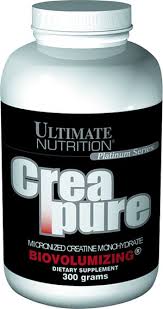 Likewise in the strength training space, the reason we supplement with creatine is to help keep the phosphagen system topped up - so we can get a few more reps in at that higher phosphogen level fuel system going.
Now here's a protocol that says it's both beneficial for phosphocreatine and carbohydrate sparing. THat's not surprising for interval training to claim. That's part of the reason, as said, we do that with resistance work to develop power, and with vo2max work for higher endurance. The kicker here is the achievement of same with very low volume.
Here's how they tested it: they tested their SIT and ET groups prior to the study commencing with a 65% of pre-training v02peak effort of cycling for an hour. They did the same thing after 6 weeks. The researchers found again comparable changes in fuel usage in both groups so there were both carb and phosocreatine benefits from super low volume training.
The results may not be cost free, but the cost may be minimal or negligible. The amount of ATP at rest in the SIT group was lower; it didn't change in the ET group. This means that amount of available material to be used for muscle contraction was lower in the SIT group. The researchers aren't sure why this was the case: it takes awhile to reamp ATP and it may just be from residual effects of the last excercise bout before the samples were taken, or it may be an effect of the chronic excercise protocol. Not sure. Dunno. Watch that space.
So finally we can dump aerobics/cardio training?
If we get all the tasty goodness of aerobic trad endurance training from these brief moments of vomitus activity, can we skip cardio entirely? Answer: we don't know (did i say i love science yet?)
It is also important to stress that the relatively limited array of metabolic measurements performed in the present study may not be representative of other physiological adaptations normally associated with ET. For example, SIT may differ from ET with respect to changes induced in the cardiovascular and respiratory systems, metabolic control in other organs (e.g. liver or adipose tissue) and protection from various factors associated with chronic inactivity (e.g. insulin resistance or lipid dysregulation).Indeed, with respect to the all important insulin, and the goal of building insulin sensitivity, in another June 09 publication, Hawley and Gibala look at insulin intensity and exercise intensity and ask "how low can you go?" The authors wanted to get as close as current research findings, when synthesized, might suggest, how *intense* does exercise need to be to have a beneficial effect on insulin sensitivity. Conclusions so far?
It remains to be determined whether high-intensity, low-volume interval training protocols can confer all of the health-related benefits associated with less intense, more prolonged traditional endurance training programmes. [Based on the review of literature to date, however -mc] it seems prudent to recommend that, for patients with insulin resistance or type 2 diabetes, the minimal dose of physical activity needed to maintain or improve health is equivalent to ~4,000 kJ/week of low- to moderate-intensity exercise. However, for patients who only show modest improvements in clinical and metabolic outcomes at this level of activity-induced energy expenditure, an increase in the intensity of exercise may be considered because of the potential additional benefits in both metabolic control and cardiorespiratory fitness.In other words going all out with sprint intervals is not for everyone or all conditions.
Is Even Less Even More?
Likewise, the current study measured 30s intervals for 6 mins of work. In a recent interview, Gibala said an upcoming study for fall 2009 will look at how low those intervals can go for benefit. Could a single two or three minute bout be as effective as those six minutes? Dunno!
A few Points on Gear.
I sense the kettlebeller within immediately wanting to give this protocol a go with kb snatching or some such. An important note, then.
The study was carried out on a stationary bike. That's the typical device for a wingate test. It's safe. Swimming is another safe place (no pounding for all those repeats) where one can get one's heart and system up to that intensity - though swimming is harder to gate. Easier on a bike.
 The wingate test is a precisely set load on the individual: from .075kg/kg of athlete to 1.3kg/kg of athlete. It would be interesting to think about how to translate this kind of resistance to a *safe* kettlebell routine.
Of course the disadvantage of thinking about such a rep set might be that one's form goes to hell, and that's totally wrong, engraining poor rep quality is rather problematic neurologically not always to be going for a perfect rep.
A few questions about fitness and body comp
Most of us workout because we want to be strong and look half decent half dressed. What this study did not measure is what these results mean for the technical body comp (bf%, say) and the visual body comp (dress size, look in the mirror, buff-ness).
For instance, in a study from 2007, it seemed that for folks to maintain their desired body look and feel, they needed to workout for 5 hours a week, mixing up cardio, intervals and strength work.
 Now while this study protocol hasn't been put forward as a training program that's sorta where the NYT interview, cited above, was coming from, and it's certaininly an interest of the folks doing the studies.
But the question might be, given body comp and strength goals, what would this 6 mins a week fitness regine get those of us who are, well, already fit enough to contemplate it?
Part II: What does this all really mean for our actual real workouts? 6 plain language take aways, next.
Burgomaster, K., Howarth, K., Phillips, S., Rakobowchuk, M., MacDonald, M., McGee, S., & Gibala, M. (2007). Similar metabolic adaptations during exercise after low volume sprint interval and traditional endurance training in humans The Journal of Physiology, 586 (1), 151-160 DOI: 10.1113/jphysiol.2007.142109 Tweet Follow @begin2dig

 COACHING with dr. m.c.